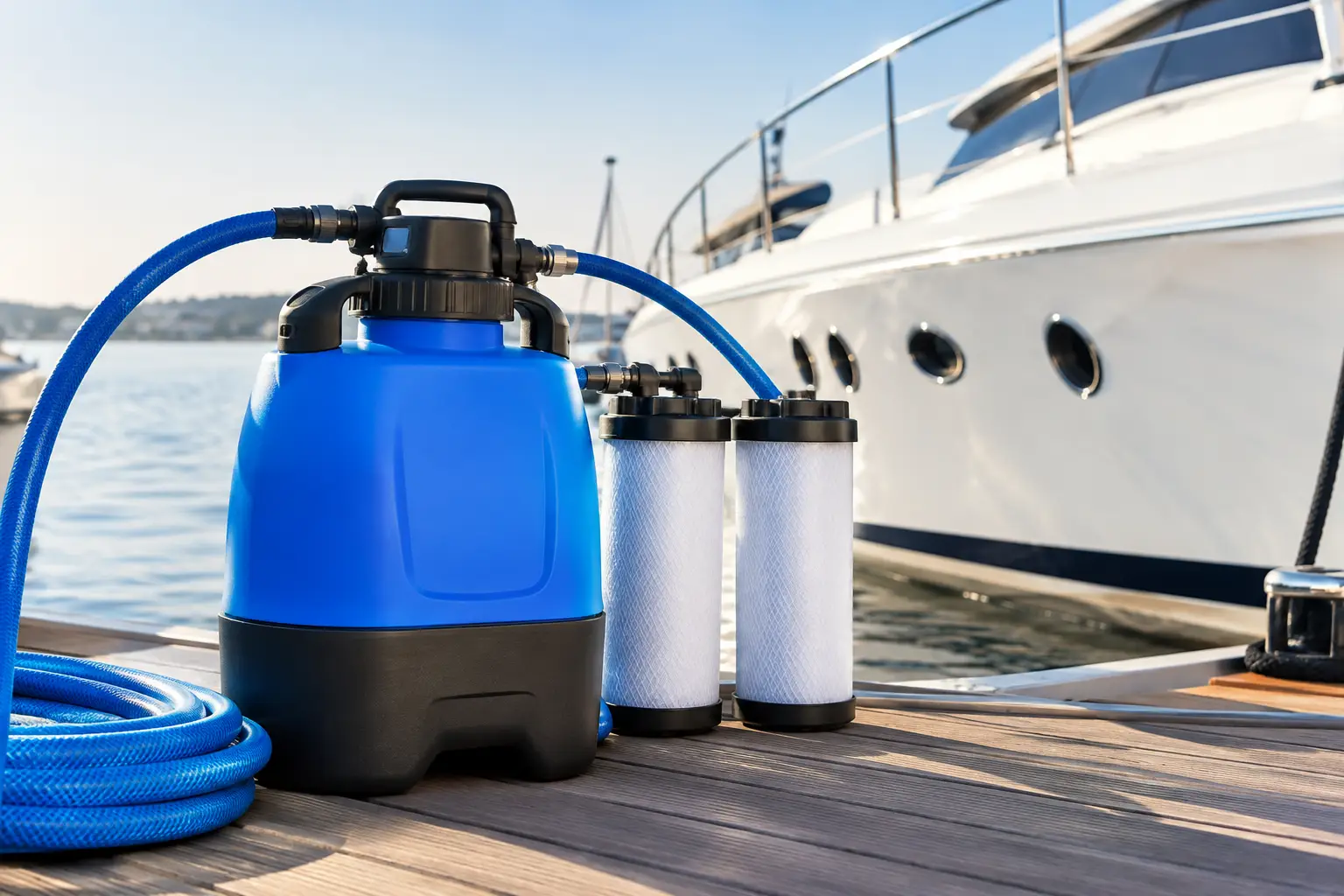
A clean boat can look perfect at the dock and still be collecting damage you cannot see. Hard-water spots on glass and gelcoat are the obvious problem, but calcium and magnesium also leave scale inside hoses, fixtures, water heaters, and other onboard equipment. When choosing a water softener vs filter for boats, the key question is simple: are you trying to remove hardness minerals, contaminants, or both?
A filter and a water softener serve different jobs. One does not replace the other. The right setup depends on your water source, how you use onboard water, and whether your priority is a spotless washdown, better-tasting water, appliance protection, or all three.
Water Softener vs Filter for Boats: The Core Difference
A water filter captures or reduces specific materials in water. Depending on the filter media and rating, it may remove sediment, rust particles, chlorine, odor-causing compounds, or certain contaminants. Filters are often used to improve water clarity, taste, and odor, or to protect pumps and fixtures from debris.
A water softener is built to address hard water. It uses ion exchange resin to remove calcium and magnesium, the minerals responsible for water spots, lime scale, stiff wash mitts, poor soap performance, and crusty buildup around fixtures. Those minerals are exchanged for sodium ions, producing soft water that rinses cleanly.
That difference matters at the dock. A sediment or carbon filter may make water look cleaner and smell better, but it will not stop mineral spotting if calcium and magnesium are still present. Likewise, a softener will not disinfect water, remove saltwater, or serve as a substitute for a properly selected drinking-water filter.
For owners who take pride in the condition of their vessel, soft water is usually the answer to washdown spots and scale. Filtration may still be valuable, especially when the marina supply contains visible sediment or unpleasant taste and odor.
What a Boat Water Filter Does Well
Boat water filters have a legitimate role, particularly when you are filling tanks or connecting to water from an unfamiliar dock. Their purpose varies by cartridge type.
A sediment filter protects equipment by catching sand, rust, silt, and other particles. This can help prevent clogged aerators, fouled valves, and unnecessary wear on pumps. Carbon filtration can reduce chlorine taste and odor, which can make onboard water more pleasant for cooking, showering, and drinking when the filter is rated for that use.
Some specialized filters are designed for additional contaminants. Their performance depends on the filter media, flow rate, contact time, cartridge condition, and the specific contaminants present in the source water. A broad claim that a filter makes all water safe is not enough. Boat owners should select potable-water equipment based on its stated rating and maintain it on schedule.
What filters generally do not do is remove hardness at a meaningful level. If a boat is washed with hard dock water through a typical inline filter, the water may be clearer, but mineral deposits can still dry onto windows, stainless, canvas hardware, non-skid, and gelcoat.
What a Portable Water Softener Does Well
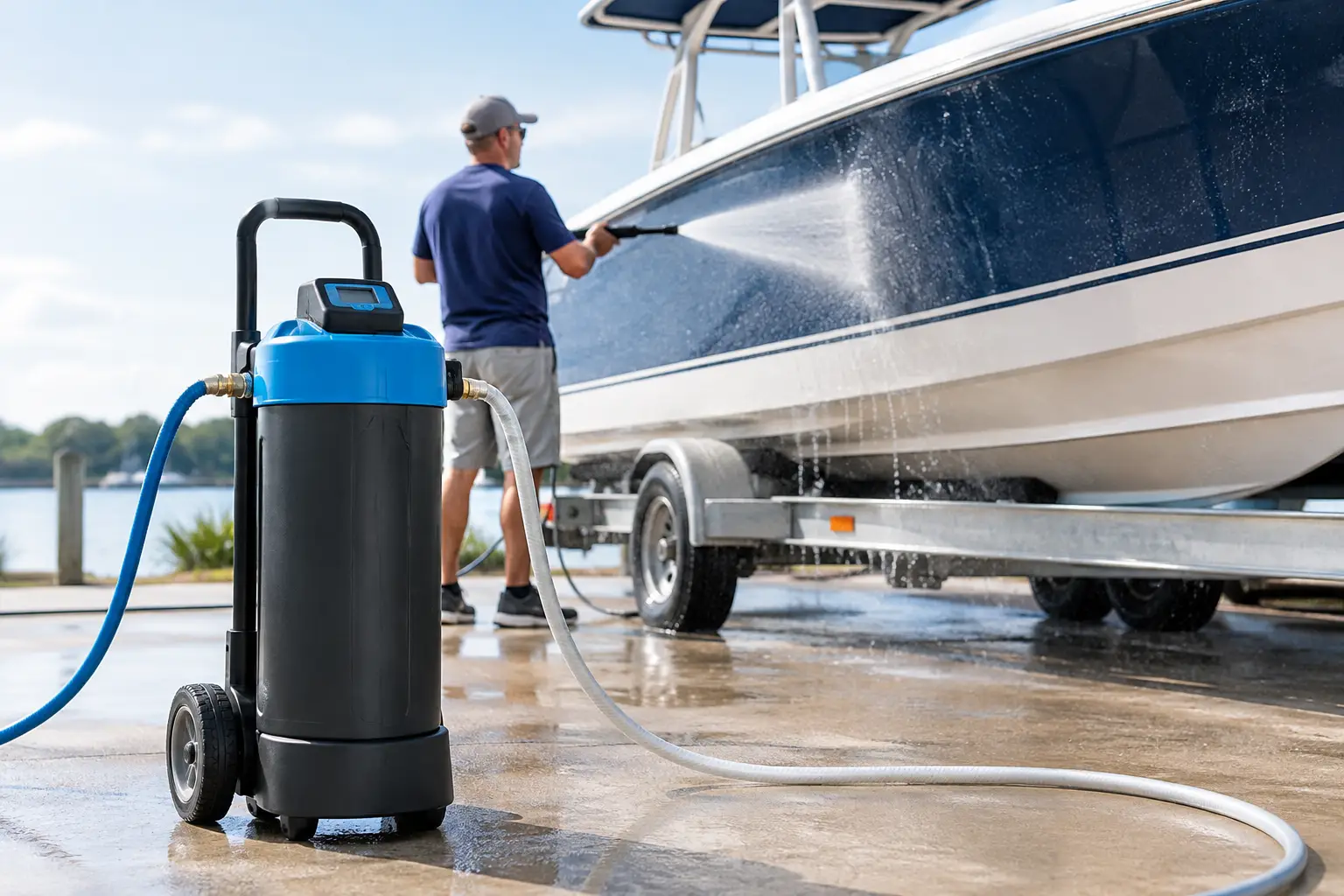
A portable softener is purpose-built for hard-water protection. Connect it between the dock supply and your washdown hose, and it treats the water before it reaches the boat. No electrical hookup is needed, and a properly sized unit maintains usable water pressure for normal washdown work.
The result is water that allows soap to work better and rinse more completely. Instead of spending time chasing white spots after every wash, owners can rinse and let surfaces dry with far less mineral residue. That is especially valuable on dark hulls, polished metal, clear vinyl, glass, and high-gloss finishes where spots show immediately.
The benefits continue beyond appearance. Hard-water scale can accumulate in hose fittings, showerheads, faucets, water heaters, ice makers, and other equipment that sees dock water. Soft water reduces the mineral load entering those systems. It is a practical way to protect expensive onboard finishes and plumbing without permanently installing a treatment system at every slip.
Portable units require periodic manual regeneration with salt. That is normal maintenance, not a drawback to ignore. Regeneration restores the resin’s ability to exchange hardness minerals. Capacity depends on how hard the source water is and how much water you use, so a boat that receives frequent full washdowns in a hard-water area will need service more often than a vessel used occasionally in a low-hardness region.
When a Filter Is the Better First Step
If dock water contains visible debris, sediment filtration should come before a softener. Sediment can foul fittings and interfere with the softener resin over time. A prefilter is also sensible when the water supply is inconsistent from marina to marina.
For drinking and galley water, a dedicated potable-water filter may be the more relevant tool. It can improve taste and reduce contaminants that a softener is not intended to handle. The same is true when odor or chlorine is the complaint rather than spotting and scale.
If the water is already naturally soft, a softener may provide less noticeable value. That said, water hardness can change from one port to another. Owners who cruise across regions should not assume every marina supply behaves the same way. A quick hardness test can remove the guesswork.
When a Water Softener Is the Better Choice
Choose a softener when the symptoms are mineral-related: white spots after washing, chalky residue on glass, crust around fixtures, rough-feeling towels, soap that will not rinse well, or scale in water-using equipment. These are hard-water problems, and filtration alone rarely solves them.
A softener is also the practical choice when appearance and maintenance time matter. A yacht owner protecting polished stainless and large glass surfaces has different needs than someone filling a small water tank for a weekend trip, but both can benefit from fewer spots and less scale. The more surface area you wash, the more time soft water can save.
Wet Spot portable softeners are sized by vessel length, including options for boats up to 70 feet, 70 to 100 feet, and vessels over 100 feet. Proper sizing matters because it gives the owner enough soft-water capacity for the way the boat is actually maintained. Buying too small can mean more frequent regeneration. Buying according to vessel size and washdown demand keeps the process straightforward.
Can You Use Both on a Boat?
Yes. In many cases, using both is the most complete approach. The preferred order is usually sediment filtration first, then the water softener. The filter catches debris before it reaches the softening system, while the softener removes the calcium and magnesium that cause spots and scale.
For potable water, consider a separate point-of-use filter at the galley or a dedicated system for tank filling. This keeps the jobs clear. The portable softener handles washdown water and hard-water protection, while the potable filter is selected specifically for drinking-water needs.
Do not treat this as a one-size-fits-all arrangement. A boat used at one marina with clean but extremely hard water may need only a softener for washdowns. A cruising boat that regularly encounters sediment-heavy dock water may benefit from a prefilter and softener combination. A vessel with sensitive drinking-water requirements may need an additional, purpose-rated drinking-water filter.
A Practical Setup for Easier Washdowns
Start by identifying the problem you see most often. If your boat dries with white spots and your fixtures collect scale, make softening the priority. Connect the portable unit to the dock water supply, then run the softened water to your washdown hose. Use normal boat soap, rinse thoroughly, and allow the soft water to do what hard water cannot: leave far less mineral residue behind.
Keep the unit protected and secure while in use, follow the regeneration instructions, and recharge it before its capacity is exhausted. If you see sediment in the dock supply, add an appropriate prefilter ahead of the unit. A clean water path protects the system and helps preserve consistent performance.
Water treatment should make boat ownership easier, not add another complicated chore. Match the equipment to the problem, keep up with simple maintenance, and every washdown becomes a better opportunity to protect the boat you worked hard to own.