A dockside washdown can leave more behind than a clean hull. When hard water dries on gelcoat, glass, stainless, Eisenglass, and painted surfaces, calcium and magnesium remain behind as visible spots and scale. To reduce dock minerals, the goal is not simply to use more water. It is to control the water quality before it reaches the boat.
That matters because mineral residue compounds over time. A few spots after a Saturday wash may seem cosmetic. Repeated exposure can turn into dull gelcoat, etched glass, crusted fixtures, restricted plumbing, and more hours spent polishing surfaces that should have stayed clean.
Why Dock Water Creates Mineral Problems
Water supplied at marinas varies widely. Some docks have relatively soft municipal water, while others draw from sources with substantial hardness. Hardness is primarily caused by dissolved calcium and magnesium. Those minerals are harmless in a glass of water, but they become a maintenance issue when water evaporates on expensive finishes.
Heat, sun, and wind make the problem worse. Water that dries quickly leaves its mineral load behind quickly. Dark hulls, windows, polished metal, and glass enclosures tend to show the evidence first, but the buildup does not stop at the exterior. The same hard water can affect shower fixtures, sinks, water heaters, ice makers, and other onboard systems.
Saltwater is a separate concern. A freshwater rinse is still necessary after salt exposure, and a water softener is not a substitute for proper rinsing. The advantage of soft water is that the freshwater rinse itself is less likely to leave calcium and magnesium deposits as it dries.
How to Reduce Dock Minerals at the Source
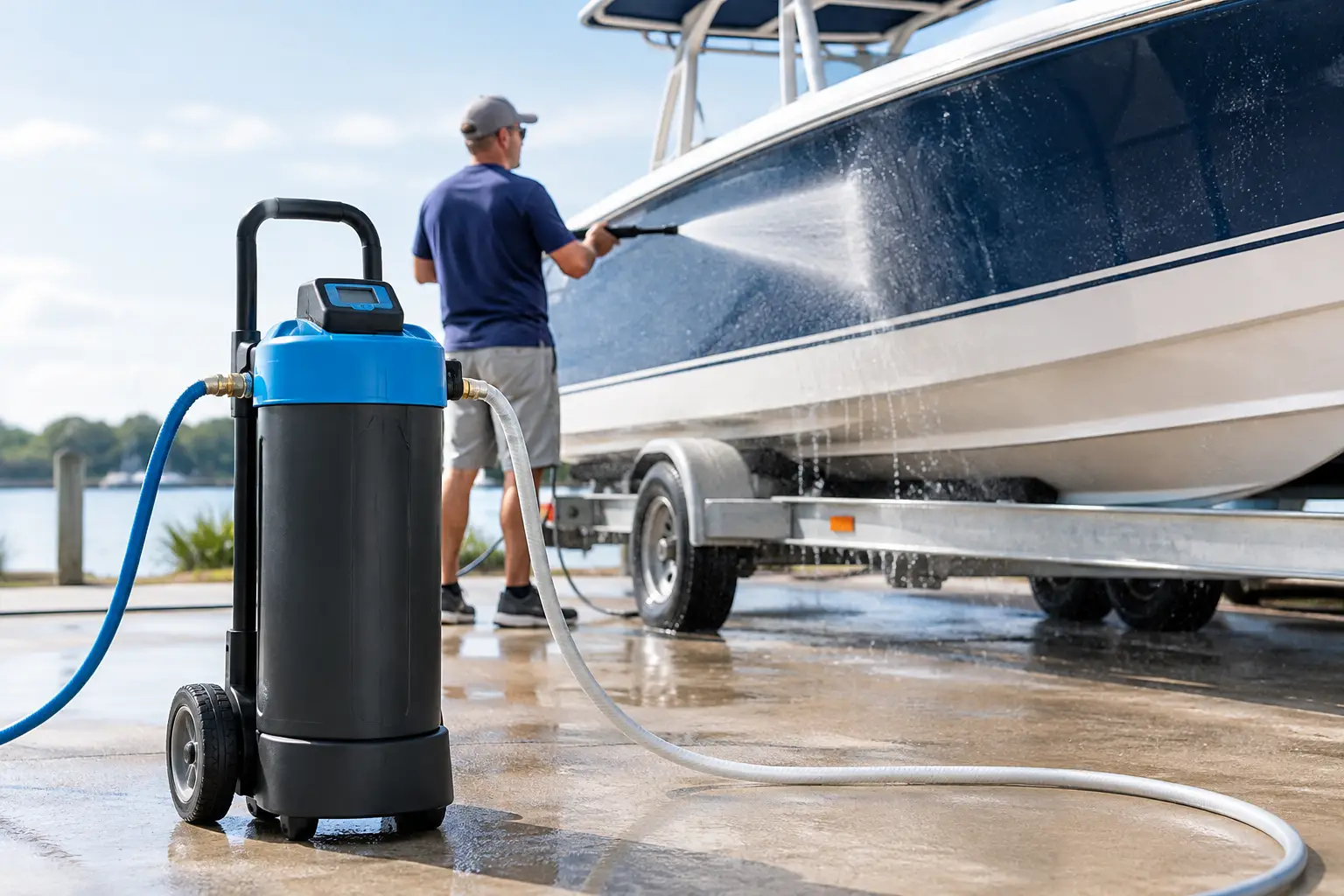
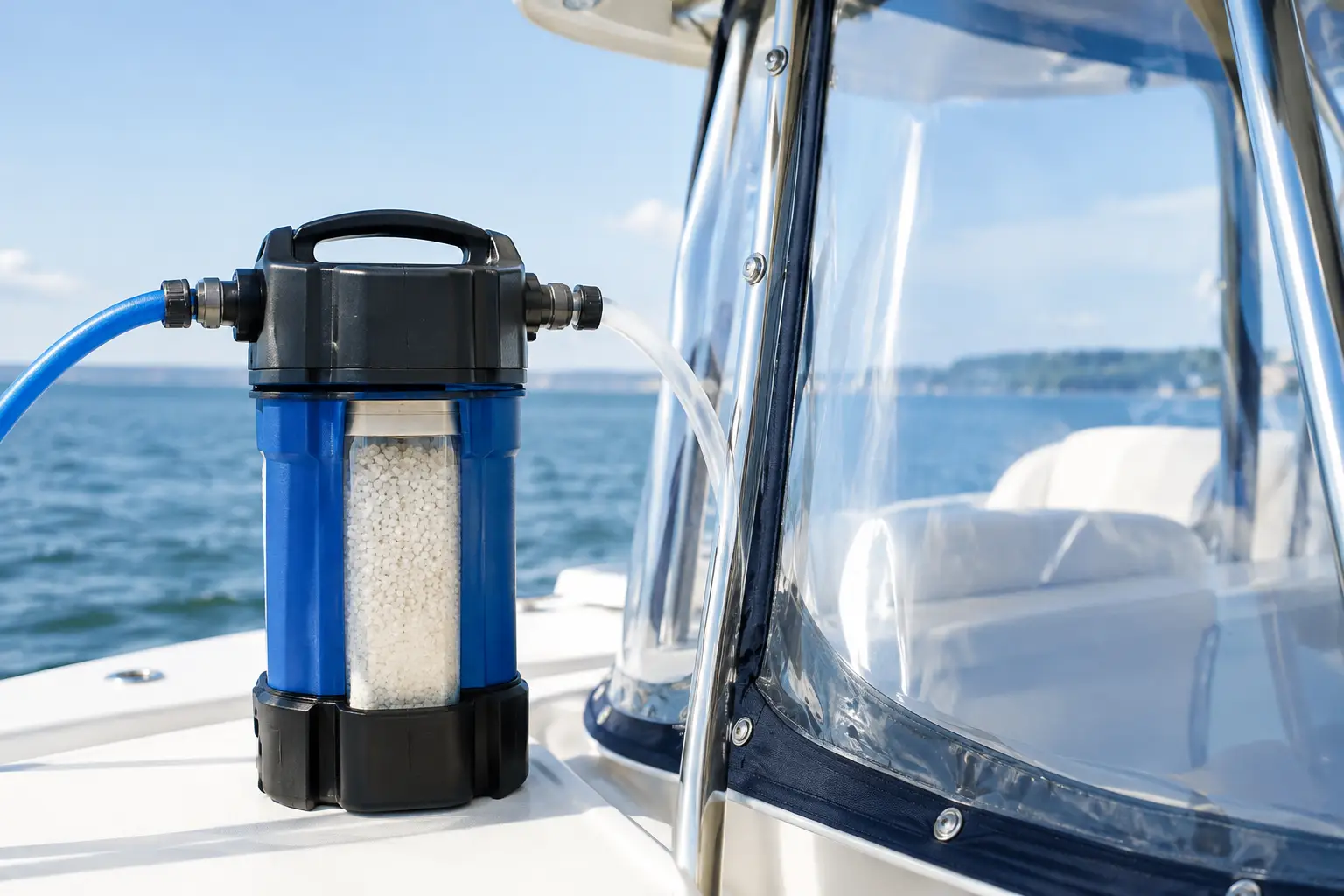
The most practical approach is to soften the dock water before beginning the washdown. A portable water softener connects between the dock supply and your hose, treating water as it flows to the boat. This reduces the calcium and magnesium that create hard-water spotting and scale.
For boat owners, portability is a major advantage. There is no permanent installation to plan around, no electrical connection required, and no need to alter the vessel’s plumbing. Connect the unit at the dock, run water through it, and use softened water for washdowns, rinsing, and selected onboard freshwater needs.
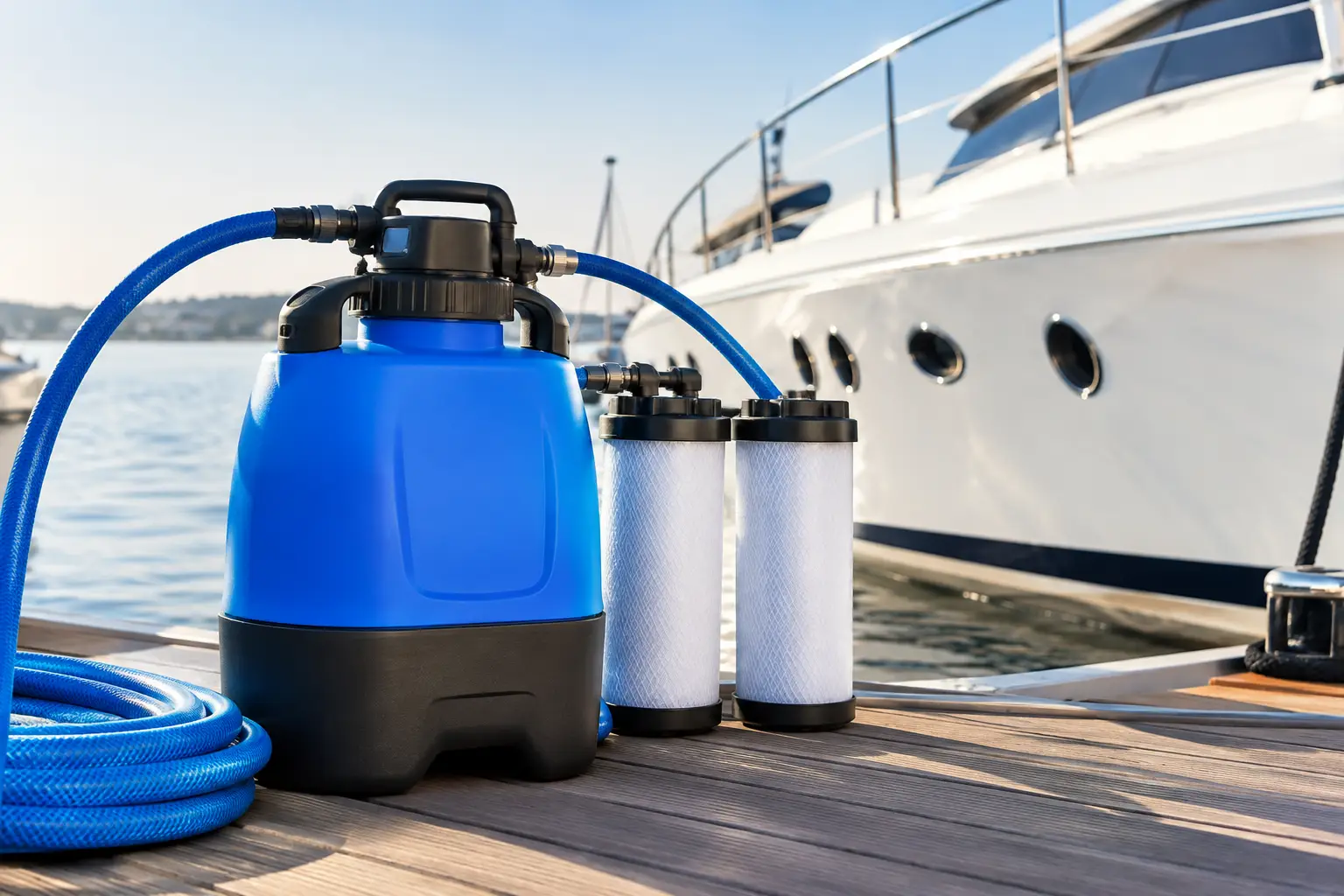
Wet Spot portable systems are designed for this kind of regular marine use. The right capacity depends on vessel size and how much water your cleaning routine demands. A smaller boat with occasional washdowns has different needs than a yacht with multiple decks, extensive glass, and frequent dockside detailing. Choosing enough capacity means fewer interruptions for recharge and more consistent protection when the boat needs attention.
Soft Water Helps Cleaning Products Work Better
Hard water makes soaps and detergents less effective. It can leave a film behind even when the surface has been washed thoroughly. Soft water allows soap to rinse more cleanly, so less product may be needed and fewer passes are required to remove residue.
That does not mean every cleaner becomes interchangeable. Use products appropriate for marine finishes, follow their dilution instructions, and avoid aggressive compounds on sensitive surfaces. Softened water improves the rinse side of the job, which is often where spotting begins.
Use a Controlled Washdown Routine
Soft water delivers the best results when paired with a disciplined wash routine. Start with a thorough freshwater rinse to remove loose dust, salt, and dock grime. Wash manageable sections instead of allowing soap to dry across a large area. Then rinse each section completely before moving on.
On hot days, work early or later in the day whenever possible. Direct sun can dry water faster than a crew can rinse it away, especially on large hull sides or broad glass panels. If conditions force a midday wash, divide the work into smaller zones and keep each zone wet until the final rinse.
A clean, absorbent drying towel or chamois remains useful for high-visibility areas. Soft water greatly reduces the mineral residue left after evaporation, but drying windows, mirrors, stainless, and dark-colored finishes provides another level of control. It also lets you inspect the surface while it is still wet and address missed grime before it sets.
Protect More Than the Exterior
The visible white rings on a rail or windshield are only part of the hard-water problem. Calcium and magnesium can collect inside components that are harder to inspect and more expensive to repair. Faucets, showerheads, hose fittings, hot-water equipment, and appliances can all develop scale when supplied with hard water over time.
If your vessel uses dock water to fill tanks, a portable softener can help reduce the hardness entering the system. The right approach depends on the vessel’s plumbing arrangement, tank capacity, onboard equipment, and water-use habits. Some owners primarily use softened water for exterior washdowns, while others also use it as part of their freshwater fill routine.
Be realistic about what a softener does. It targets hardness minerals, not every possible water contaminant. If dock water has an odor, discoloration, sediment, or a known water-quality issue, additional filtration or a different water source may be appropriate. Softening is a focused solution for calcium and magnesium, and that focus is exactly why it is effective against spotting and scale.
Keep the Softener Ready for the Dock
A portable water softener is straightforward equipment, but it needs routine attention. Recharge the resin according to the system instructions and based on your actual water use. Harder dock water and heavier washdowns use treatment capacity more quickly than light use in an area with moderate hardness.
It helps to make recharge part of the normal boat-care schedule. Recharge after a demanding wash weekend rather than discovering depleted capacity midway through a rinse. Keep the needed recharge material aboard or in the dock box, and inspect hose connections, fittings, and the unit exterior before each use.
Do not leave the system exposed to conditions it was not designed to handle. Protect it from freezing temperatures, secure it where it will not shift on the dock, and avoid running over hoses with carts or vehicles. Simple handling habits protect the equipment and prevent interruptions when it is time to wash the boat.
Common Mistakes That Leave Mineral Spots Behind
The first mistake is assuming a final rinse with untreated dock water is good enough. It may look fine while wet, then dry into spots across the same surfaces you just cleaned. If you are using softened water, make it the final rinse water, not just the water used to mix soap.
Another mistake is washing too much surface area at once. Even softened water should not be allowed to sit and bake in the sun with soap or dirt on the surface. Work in sections, rinse thoroughly, and dry the areas where appearance matters most.
Finally, do not confuse old buildup with new spotting. A soft-water routine prevents new hard-water deposits, but it will not instantly remove scale that has accumulated for months or years. Existing deposits may need a finish-safe cleaner and careful detailing. Once the surface is restored, softened-water washdowns make it far easier to keep it that way.
A Better Standard for Dockside Care
The easiest maintenance is the maintenance you avoid creating. Reducing calcium and magnesium at the dock means less time chasing spots off glass, less scale around fixtures, and less wear from repeated corrective cleaning. For owners who take pride in keeping a vessel ready to use, soft water turns the final rinse into protection that continues after the hose is put away.