A white ring around the galley faucet, a showerhead that sprays in uneven streams, and a water heater that takes longer to recover are not minor cosmetic issues. They are early signs of hard-water minerals at work. To prevent limescale in boat plumbing, the best approach is to stop calcium and magnesium from entering the system before they can settle inside fixtures, hoses, pumps, and appliances.
For boat owners, hard water is more than a dockside nuisance. It can leave washdown spots on gelcoat and glass, reduce soap performance, and slowly restrict water flow through the systems you depend on. A practical soft-water routine protects the appearance of the boat while reducing unnecessary maintenance below deck.
Why Limescale Builds Up on Boats
Limescale forms when hard water dries or is heated. The water itself evaporates, but dissolved calcium and magnesium remain behind as a hard, chalky deposit. At the dock, those minerals can appear quickly on stainless railings, windshields, enclosure panels, and painted or gelcoat surfaces after a washdown.
Inside the boat, the process is less visible but potentially more expensive. Warm surfaces accelerate scale formation, which is why water heaters, coffee makers, ice makers, showerheads, faucet aerators, and hot-water plumbing are common problem areas. Mineral buildup can narrow small passages, make valves harder to operate, and force equipment to work harder than it should.
The severity depends on where you take on water. Some marinas have relatively soft water, while others draw from sources with significant mineral content. A boat that moves between regions may see changing water quality throughout the season. You cannot judge hardness reliably by taste or appearance, so it makes sense to treat hard-water exposure as a routine maintenance concern rather than wait for visible scale.
Prevent Limescale in Boat Plumbing at the Source
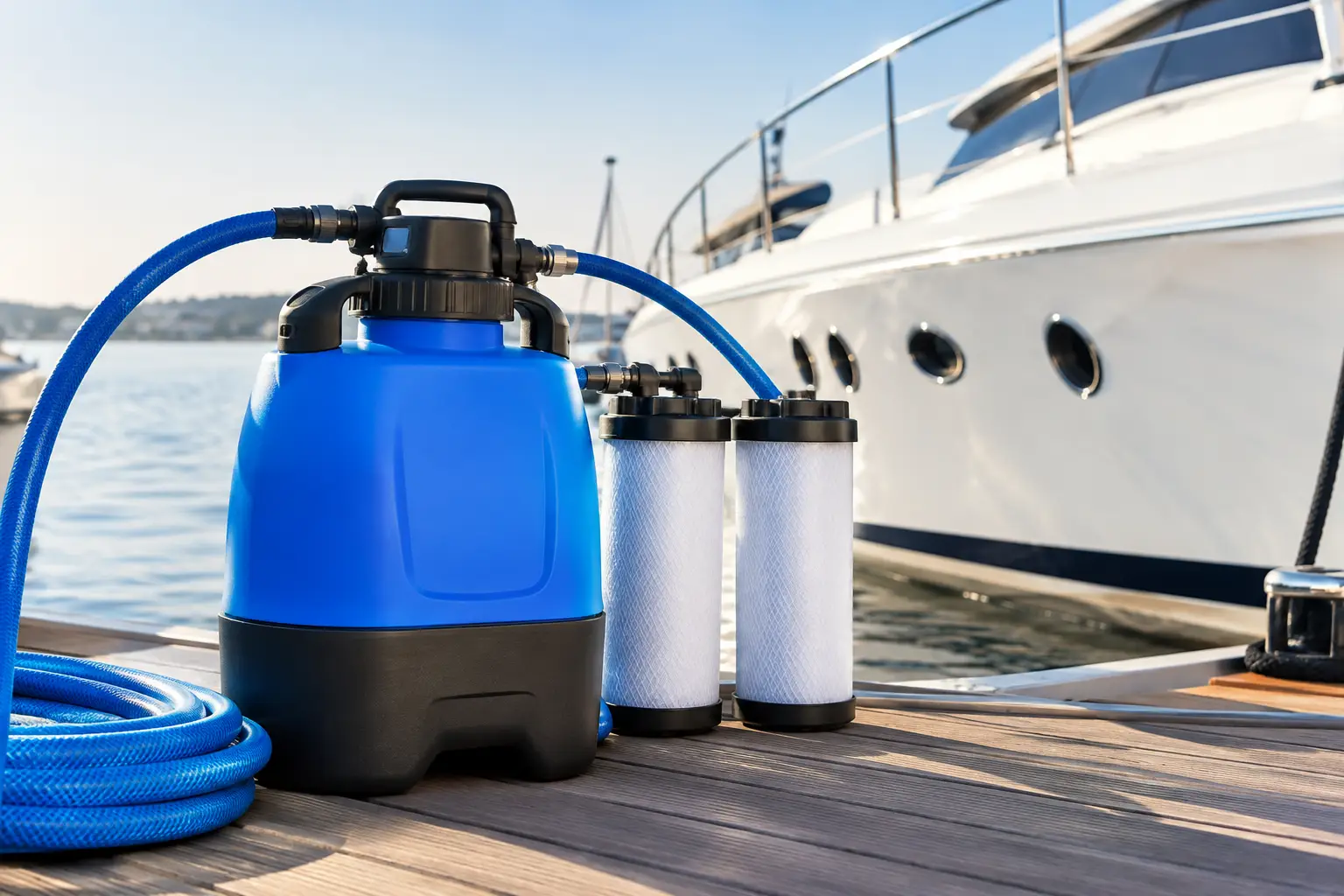
The most effective way to prevent limescale in boat plumbing is to soften the incoming water before it enters your freshwater tank or onboard system. A portable water softener exchanges hardness minerals for sodium ions, reducing the calcium and magnesium that cause scale and spotting.
This is different from a basic sediment filter. A sediment filter can catch sand, rust, or other particles, but it does not remove dissolved hardness minerals. Both can have a place in a water setup, especially where dock water quality is inconsistent, but only softening directly addresses the minerals responsible for limescale.
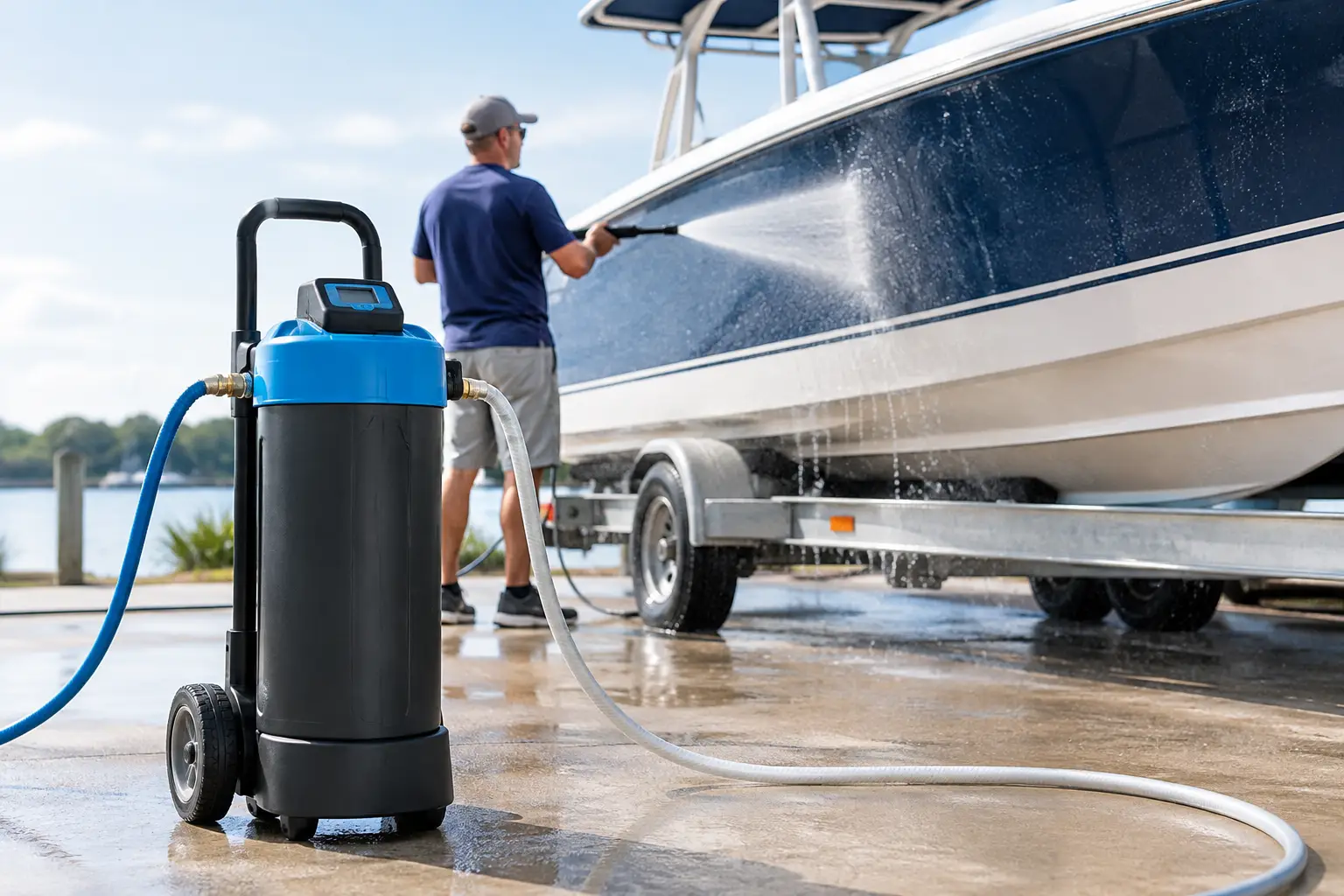
A portable system is especially useful for boats because it does not require a permanent installation, electrical hookup, or a reduction in water pressure. Connect it during tank fills or washdowns, then store it when the job is done. This gives owners and operators a straightforward way to control water quality whether the vessel is at its home marina or traveling.
Wet Spot portable soft water systems are built for this type of work, with vessel-size options that help owners match soft-water capacity to the demands of their boat. The goal is simple: use treated water before mineral deposits have the opportunity to form.
Use Soft Water for Tank Fills When Possible
Filling the freshwater tank with softened water provides the broadest protection because every onboard fixture receives lower-mineral water. The galley sink, head, shower, water heater, and connected appliances all benefit from the same source water.
This is particularly valuable before a long trip or a period of heavy onboard use. If your boat has a water heater, filling with soft water helps limit scale inside the tank and on heating components, where deposits can reduce efficiency over time.
There is a practical trade-off. Large tank fills require enough softener capacity for the volume of water being treated. Choose equipment sized for the boat and plan for regular recharging based on water hardness and usage. A system that is too small for the vessel will need more frequent attention, while the right capacity keeps the process simple.
Use Soft Water for Washdowns Too
Even if you are not filling the tank, soft water is worth using for exterior washdowns. Hard water dries into spots and deposits that can make detailing take longer, especially on dark finishes, glass, chrome, stainless, and clear enclosure materials.
Soft water rinses cleaner and helps soap work more effectively, so less product and less elbow grease may be needed to get a clean finish. It also reduces the urge to aggressively polish away mineral spots, which can be tough on surfaces when repeated over time.
Maintain the Parts Limescale Reaches First
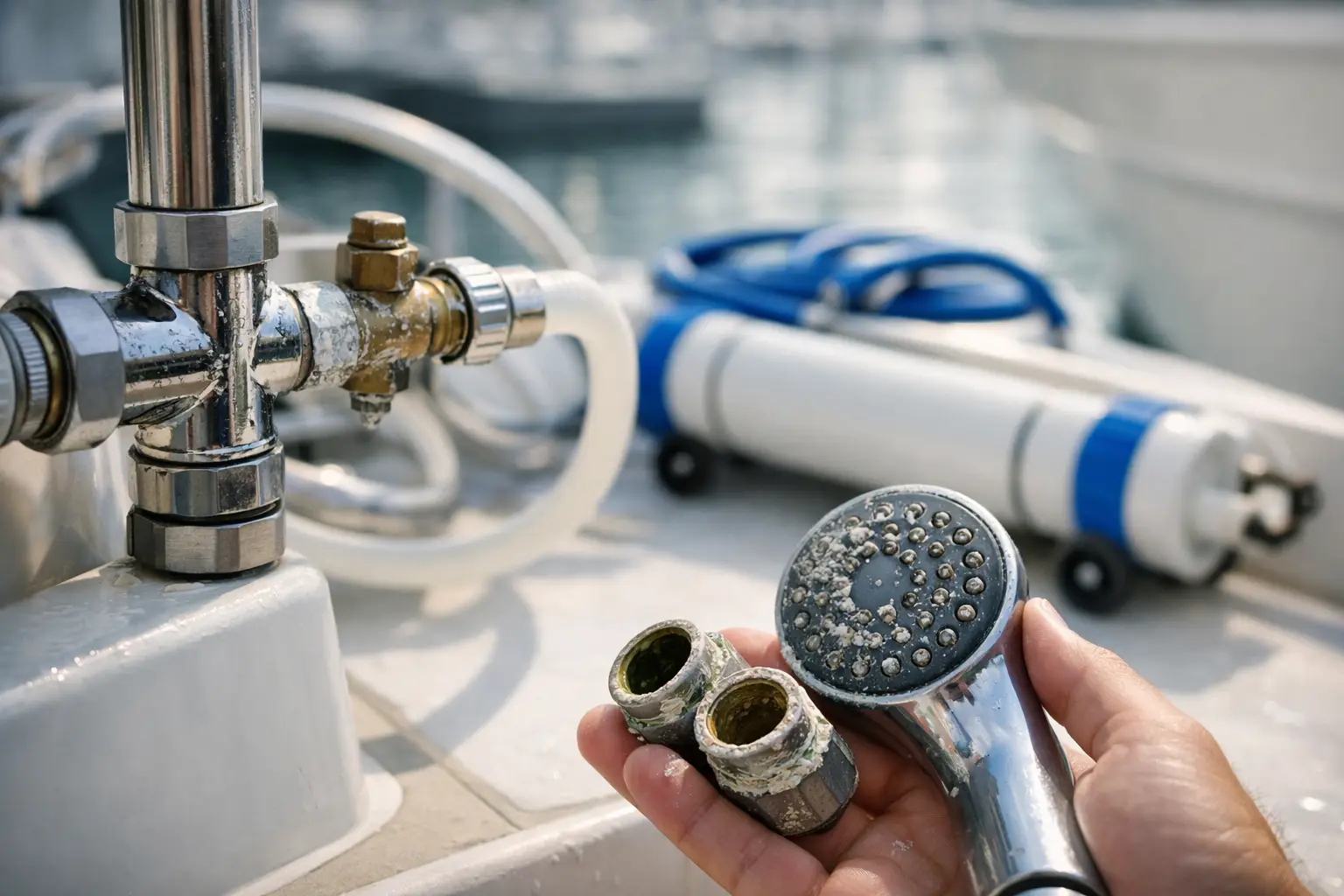
Softening incoming water is the main defense, but existing scale may still need attention. Start with the small, accessible components where mineral deposits often show up first: faucet aerators, showerheads, hose-end sprayers, and appliance screens. If flow has weakened or spray patterns have become uneven, inspect these parts before assuming there is a pump problem.
Clean removable components according to the manufacturer’s instructions. Mild, marine-appropriate descaling products can help with established deposits, but avoid harsh chemicals that may damage finishes, seals, plastic fittings, or nearby surfaces. The right cleaner depends on the component material and the severity of buildup.
Water heaters deserve extra attention. Scale inside a heater is not always obvious from the outside, yet it can affect performance and service life. Follow the heater manufacturer’s recommended inspection and flushing schedule. If the boat has already spent years on hard water, a qualified marine technician may be the right choice for a deeper assessment rather than trying to force a chemical treatment through an unfamiliar system.
Recharge Your Softener Before It Is Spent
A portable water softener needs periodic recharging to continue removing hardness minerals. This is normal maintenance, not a drawback. The resin inside has a finite capacity, and once that capacity is used, the unit must be regenerated with the appropriate salt solution before it can soften water again.
How often that happens depends on three factors: water hardness, the amount of water used, and the softener’s capacity. A weekend washdown at a moderately hard-water marina may use far less capacity than repeated tank fills at a location with very hard water.
Keep a simple record during the first few uses. Note the marina, approximate gallons treated, and whether the water is being used for washdowns, tank fills, or both. After a short learning period, you will have a reliable recharge rhythm for your boat instead of guessing. Recharging on schedule is what keeps the system doing its job when you need it.
Avoid Habits That Make Scale Worse
A few operating habits can reduce mineral buildup even further. Do not leave hard-water residue sitting on exterior surfaces after a washdown. If softened water is unavailable, a quick final rinse and thorough dry-down can limit spotting. Pay special attention to polished metal, glass, and enclosure panels, where deposits become noticeable fast.
Below deck, address slow flow early. A restricted faucet aerator is easier to clean than a heavily scaled fitting or appliance line. If you notice white crust around a faucet base, shower controls, or hose connection, clean it before it hardens and spreads into less accessible areas.
Also avoid assuming every white deposit is limescale. Salt residue, corrosion products, cleaning-product residue, and mineral scale can look similar at first glance. The water source, location of the deposit, and response to an appropriate cleaner all provide clues. When in doubt, inspect before treating, especially around electrical equipment, metal finishes, and sealed plumbing connections.
Protect More Than the Plumbing
The benefit of soft water reaches beyond the pipes. On a boat, the same hard water that scales a showerhead can leave spots on gelcoat, haze on glass, deposits on stainless hardware, and residue on clear panels. Reducing hardness helps preserve the details that make a well-kept vessel look properly cared for.
It can also reduce the ongoing workload. Less spotting means less time chasing water marks after each washdown. Fewer mineral deposits in fixtures means less frequent cleaning and fewer surprises when a faucet or shower starts performing poorly. For owners and caretakers, that is practical protection for both the vessel and the time spent maintaining it.
Treat water quality as part of regular boat care, just like checking dock lines, batteries, or bilge systems. A portable softener, a consistent recharge schedule, and early attention to small deposits can keep hard water from becoming a plumbing repair list. Your boat should spend its time ready for the next departure, not fighting the last marina’s water.