A clean boat can look neglected after one hard-water washdown. White rings on glass, chalky marks on gelcoat, and crusty residue around stainless hardware are not simply dirt. They are mineral deposits left behind when water evaporates. The best ways to avoid boat water spots start with controlling the water itself, then using washdown and drying habits that keep minerals from settling onto expensive surfaces.
For boat owners, this is more than a cosmetic issue. Repeated mineral exposure can dull gelcoat, stain metal, cloud clear vinyl, and create scale inside plumbing fixtures and onboard appliances. A better wash routine reduces detailing time today while helping protect the value of the vessel over time.
Why Boat Water Spots Keep Coming Back
Water spots form when droplets dry on a surface. If the water contains calcium, magnesium, iron, or other dissolved minerals, those minerals remain after the water is gone. The hotter the surface and the harder the water, the faster the problem becomes visible.
Marina water quality varies widely. A boat may be spotless at one dock and heavily spotted after a rinse at another, even when the same soap and technique are used. That is why changing cleaners alone often produces disappointing results. A cleaner can remove existing spotting, but it does not stop mineral-heavy water from leaving new deposits behind.
Sun, wind, and dark-colored surfaces add another challenge. A black hull stripe, tinted glass panel, or polished stainless rail can dry before the next section is rinsed. By that point, minerals have already begun bonding to the surface. The practical answer is to reduce minerals before washdown and avoid letting rinse water dry in place.
Start With Soft Water at the Dock
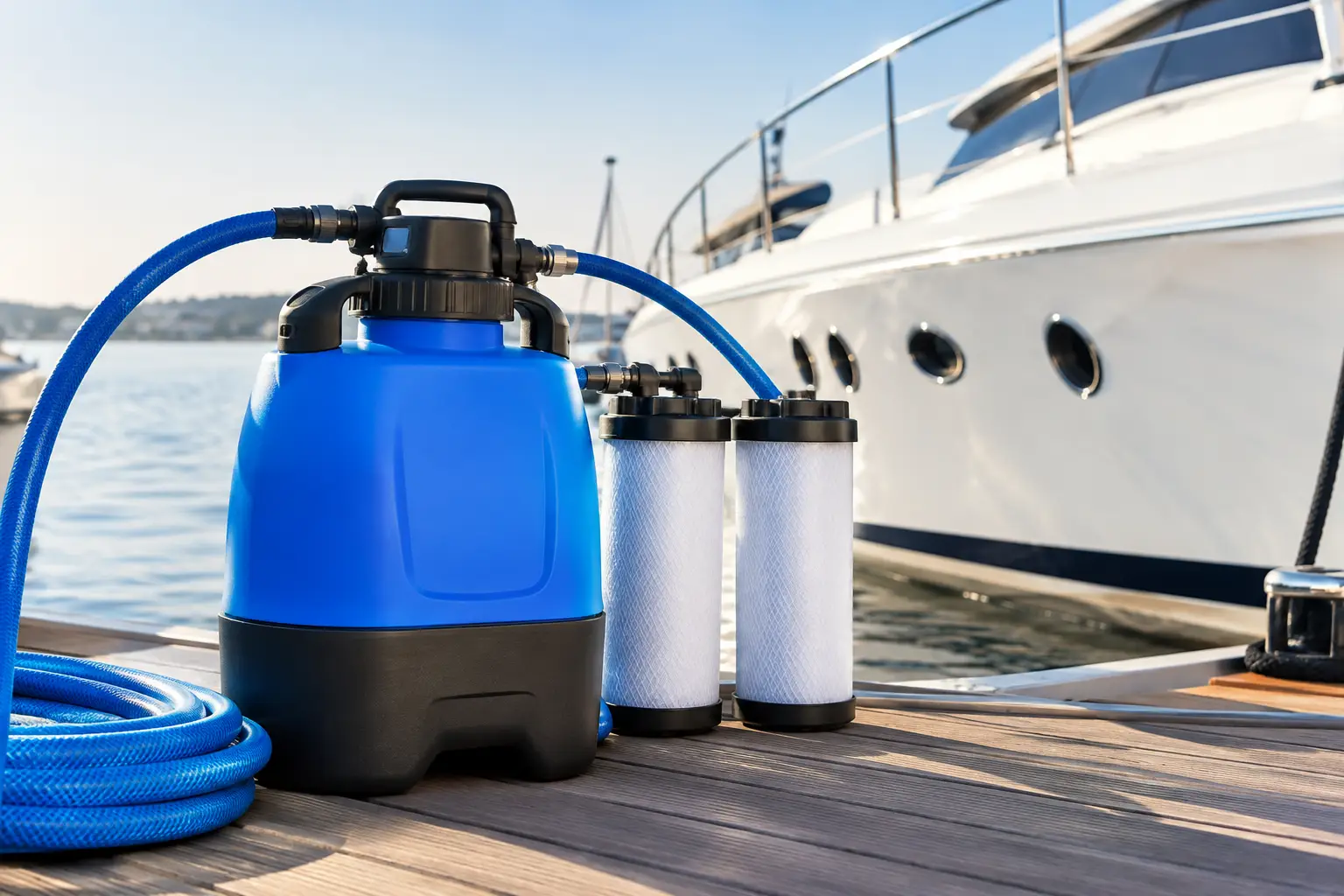
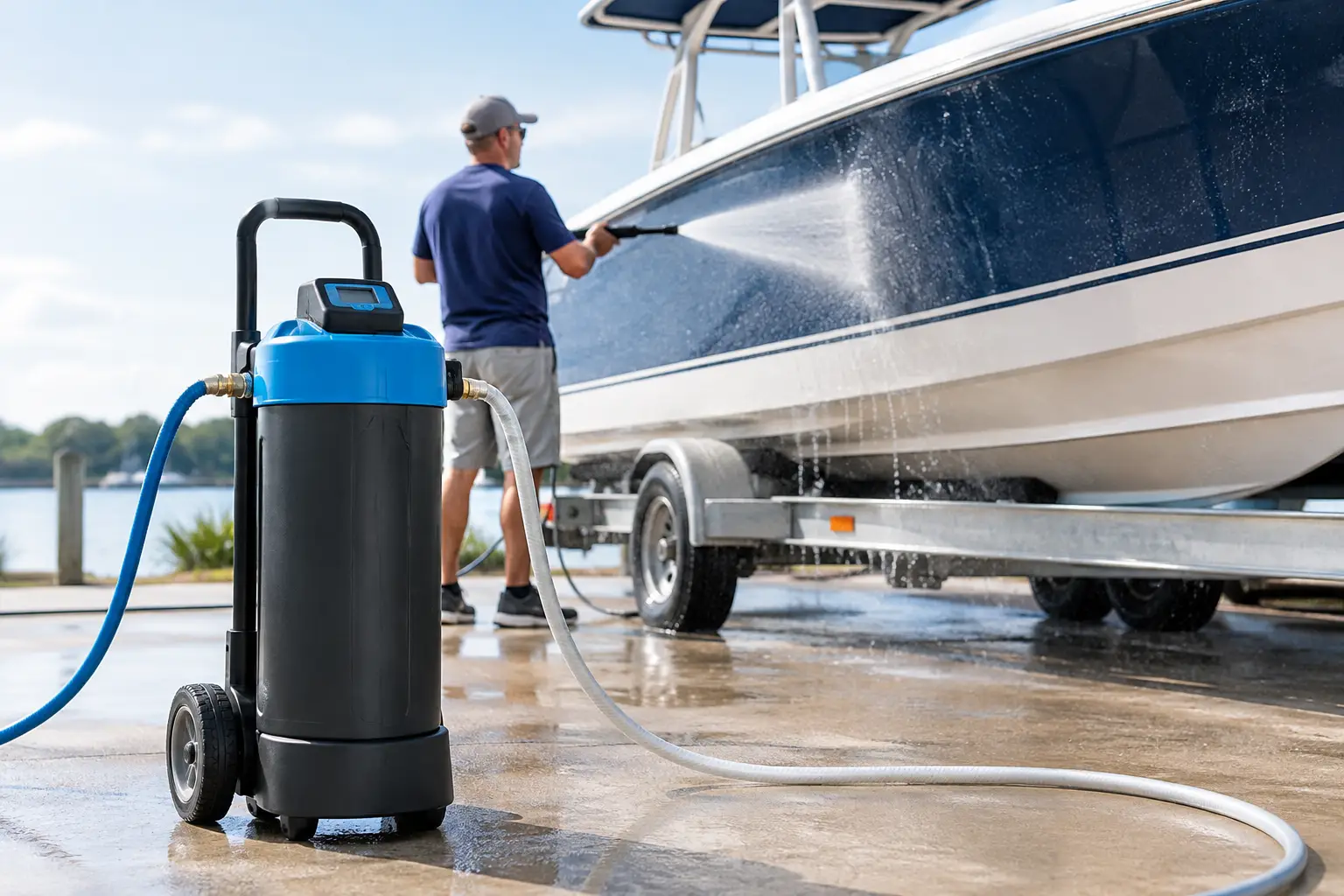
Using softened water is the most effective long-term step for preventing water spots. A portable water softener removes the calcium and magnesium that create hard-water spotting and lime scale. The result is rinse water that dries far more cleanly on gelcoat, glass, metal, plastic, and clear vinyl.
Soft water also changes the wash process. Soap lathers and rinses more effectively, so less product is needed and less residue is left behind. Instead of fighting mineral deposits after every wash, the owner or crew can focus on routine cleaning and inspection.
For boats that regularly use dock water, a portable soft water system is especially practical because it does not require permanent installation or electrical power. It can be connected for washdowns, filling tasks, and other freshwater needs, then moved or stored when not in use. Wet Spot portable units are sized by vessel length, making it easier to match soft-water capacity to the way a boat is actually used.
A softener does require periodic manual recharge. That is a reasonable trade-off for owners who want consistent results, but it should be part of the maintenance schedule. If spotting begins to return sooner than expected, recharge status is one of the first things to check.
Wash in Sections, Not All at Once
Even with soft water, good technique matters. Do not wet the entire boat and then work your way around slowly. In warm or windy conditions, large areas can dry before they are rinsed, leaving soap residue and any remaining dissolved solids behind.
Work in manageable sections. Start high and move down so dirty water does not run over surfaces that have already been cleaned. Wash a panel, rinse it thoroughly, and move on. For a larger boat, divide the job by practical areas such as the flybridge, cockpit, windshield, cabin sides, and hull sections.
The right section size depends on the conditions. On a cool, overcast morning, a larger area may stay wet long enough to wash and rinse comfortably. In direct afternoon sun, even a small section can dry quickly. There is no advantage in rushing through a washdown only to spend extra time removing spots afterward.
Use a clean, soft wash mitt or brush designed for marine finishes. Grit trapped in a dirty tool can create fine scratches that make gelcoat and clear plastic look hazy. Rinse tools often, especially around non-skid decks and waterlines where abrasive particles collect.
Keep Surfaces Cool Whenever Possible
Direct sun turns water spotting into a race against evaporation. When possible, wash early in the morning, later in the day, or while the boat is shaded. This is particularly important for dark gelcoat, painted surfaces, glass, and polished metal.
If shade is not available, shorten the working area and keep a steady rinse going. Avoid spraying a fine mist across a hot surface and walking away. Fine droplets dry fast and can leave a field of small spots that are difficult to see until the light changes.
Pay attention to areas that hold water. Window frames, hatch gutters, deck hardware, rub rails, mirror housings, and the bases of rails can trap rinse water long after the main surface looks dry. These locations are common sources of stubborn mineral streaks and scale.
Dry the Areas That Matter Most
Soft water greatly reduces the need for labor-intensive hand drying, but it does not eliminate the value of a final pass on high-visibility surfaces. Glass, clear vinyl, polished stainless, mirrors, and dark paint or gelcoat benefit from being dried promptly with a clean microfiber towel or a dedicated marine drying cloth.
Use separate towels for different tasks. A towel used on a dirty hull or dock line should not be used on a windshield. Keep drying towels clean, absorbent, and free of fabric softener, which can leave a film on glass and clear vinyl.
Blot or pull water away rather than grinding the towel across the surface. On clear vinyl and enclosure panels, use only materials approved for that surface. Aggressive rubbing or unsuitable cleaners can scratch the material, and scratches make future spots and haze more noticeable.
Do Not Let the Rinse Step Become the Problem
A common mistake is washing carefully with quality soap, then giving the boat a final rinse with untreated dock water. That last rinse can deposit the same minerals the wash process was meant to remove. If soft water is available, use it through the final rinse.
Another issue is using too much soap. More soap does not mean a better clean. Overconcentrated soap can leave its own residue, especially if it is not rinsed completely. Follow the product directions, use the amount needed for the soil level, and rinse thoroughly.
For saltwater exposure, rinse as soon as practical after use. Salt, airborne grime, and hard-water minerals can combine into a stubborn film if left on the boat. A quick freshwater rinse with softened water is far easier than a full correction job after several outings.
Protect the Finish So Water Releases More Easily
A clean, protected surface sheds water better than an oxidized or contaminated one. Routine wax, sealant, or marine-grade protective coatings can make washdowns faster and reduce how strongly residue adheres to gelcoat and painted surfaces.
Protection is not a substitute for soft water. A coated surface can still spot if hard water dries on it repeatedly. Think of surface protection as a second line of defense: it improves water behavior, reduces grime buildup, and makes cleanup easier when the boat has been exposed to rain, spray, or dock water.
Before applying any protective product, remove existing mineral deposits properly. Sealing over spots can make the finish look uneven and may lock in residue. Use a marine-safe spot remover appropriate for the surface, then wash, rinse, and dry before applying protection.
Watch the Often-Missed Areas
The most visible water spots are usually on windshields and hull sides, but the most expensive damage can occur where it is less obvious. Hard water can create scale on shower fixtures, faucets, ice makers, water heaters, and other onboard equipment that uses freshwater. Mineral buildup can reduce efficiency and shorten service life over time.
During routine washdowns, inspect stainless fittings, cleats, rail bases, vents, and drain channels. These areas collect water and can develop white buildup around edges and fasteners. Addressing light residue early is easier than trying to remove hardened scale later.
A practical maintenance routine is simple: use softened water when possible, wash in small sections, rinse thoroughly, dry sensitive surfaces, and inspect the places where water hides. It takes less time than repeated spot removal and helps preserve the surfaces that make a boat look properly cared for.
The best boat maintenance systems are the ones people will actually use after a long day on the water. Make clean, low-mineral rinse water part of the normal dock routine, and water spots stop being a recurring chore waiting for the next washdown.