A fresh washdown should make a boat look better. Instead, many owners come back after the water dries to find white rings on the gelcoat, hazy glass, dull stainless, and marks across the windshield. Why do boats get water spots? The short answer is that the water evaporates, but the minerals in it do not.
Those marks may look cosmetic at first, but repeated hard-water exposure can create a much bigger maintenance problem. Mineral deposits cling to smooth surfaces, attract grime, reduce shine, and require more aggressive cleaning over time. On a boat, where gelcoat, brightwork, clear plastics, plumbing, and appliances are all exposed to water, preventing spots is easier than constantly correcting them.
Why Do Boats Get Water Spots After a Washdown?
Most boat water spots are left behind by hard water. Hard water contains dissolved minerals, primarily calcium and magnesium. When wash water lands on the boat and dries in the sun or wind, the water evaporates and those minerals remain on the surface.
The result is a visible outline of each droplet. On dark hull colors, glass, and polished metal, the spots can appear almost immediately. On white gelcoat, they may be less noticeable at first, but deposits can still build up and leave the surface looking chalky or uneven.
A marina water connection, dock hose, home hose, or onboard freshwater tank can all supply hard water. Water quality changes by location, so an owner who rarely saw spots in one marina may suddenly deal with them at another. The source does not have to taste bad or look dirty to contain enough minerals to leave deposits.
The faster water dries, the more likely it is to spot. Hot gelcoat, direct sun, salt air, and a steady breeze all shorten drying time. That is why a boat can be rinsed thoroughly and still look spotted before the job is finished.
Hard Water Is Different From Salt Residue
Saltwater spray can also leave a film on a boat, and it is common to confuse salt residue with hard-water spotting. Both show up after water dries, but they behave differently.
Salt residue usually feels gritty or sticky and often rinses away with fresh water. Hard-water spots are mineral deposits that can feel rough, look white or cloudy, and remain after a normal rinse. If the spots return after every freshwater washdown, especially around spray patterns and runoff paths, hard water is usually the cause.
In many boating environments, owners are dealing with both problems at once. Salt spray lands on the vessel while underway, then a hard-water dock rinse leaves minerals behind. Rinsing with better-quality water addresses the mineral side of the problem and gives salt less opportunity to dry into a stubborn film.
The Surfaces That Show Spots First
Water spots can form anywhere water dries, but certain marine surfaces show damage sooner or more clearly.
Gelcoat and Painted Surfaces
Gelcoat is durable, but it is not immune to mineral buildup. Repeated spotting can make the finish look dull, especially on dark colors and high-gloss areas. If deposits are allowed to sit, owners may reach for stronger cleaners, compounds, or polishing products more often than necessary. That adds labor and can gradually wear down protective waxes or sealants.
Painted hulls and topsides have the same issue. A clean, protected finish sheds water better than a neglected one, but protection alone does not remove the minerals from the rinse water. It only gives you a little more time before deposits bond to the surface.
Glass, Windshields, and Eisenglass
Glass makes water spotting obvious. Mineral deposits scatter light, creating the hazy look that reduces clarity when you are trying to see through a windshield or enclosure. Eisenglass and other clear vinyl materials require even more care. Abrasive cleaning or overly strong chemical spot removers can scratch, cloud, or shorten the life of the material.
Preventing mineral deposits is the safer approach. It reduces the need to scrub a surface that was designed for visibility, not aggressive cleaning.
Stainless Steel, Chrome, and Hardware
Stainless steel does not stay spotless just because it resists corrosion. Dried mineral deposits can leave white marks around railings, fittings, cleats, and trim. They make brightwork look neglected and can hide early signs of corrosion or staining.
Polished metal rewards regular care, but it also makes every spot visible. A soft-water rinse helps hardware dry cleaner, reducing the time spent wiping down rails and fittings after every wash.
Plumbing, Showers, and Onboard Appliances
The water that spots the exterior can also create scale inside the boat. Calcium and magnesium can accumulate on shower fixtures, in water heaters, on faucet aerators, and in appliances that use water. Exterior spots are often the visible warning that the same mineral load is moving through onboard systems.
This is where prevention protects more than appearance. Less scale can mean better water flow, easier fixture cleaning, and fewer mineral-related maintenance headaches in expensive onboard equipment.
Why Drying With a Chamois Is Not a Complete Fix
Hand-drying is useful, but it is not a full solution to hard water. A chamois or microfiber towel can remove water before it evaporates, which helps reduce visible spots. The problem is that boats have large surface areas, tight spaces, railings, windows, non-skid decks, and hardware that are difficult to dry completely.
A towel also picks up minerals as it works. If it is not rinsed often, it can spread residue across the finish. And on a hot day, sections of the boat may dry before you can reach them.
Drying is best viewed as a finishing step, not the primary defense. Start with water that has fewer spot-forming minerals, then use clean microfiber towels for the areas where a flawless finish matters most.
How Soft Water Prevents Water Spots on Boats
Soft water removes the calcium and magnesium that cause hard-water spotting and lime scale. With those minerals greatly reduced, rinse water dries with far less visible residue. Soap also performs better in soft water, so you can get more cleaning power with less product and less rinsing.
For boat owners, the advantage is practical. A soft-water washdown can reduce spotting on gelcoat, glass, metal, plastic, and clear enclosures. It can also help protect plumbing fixtures and appliances from mineral buildup when used for onboard freshwater needs.
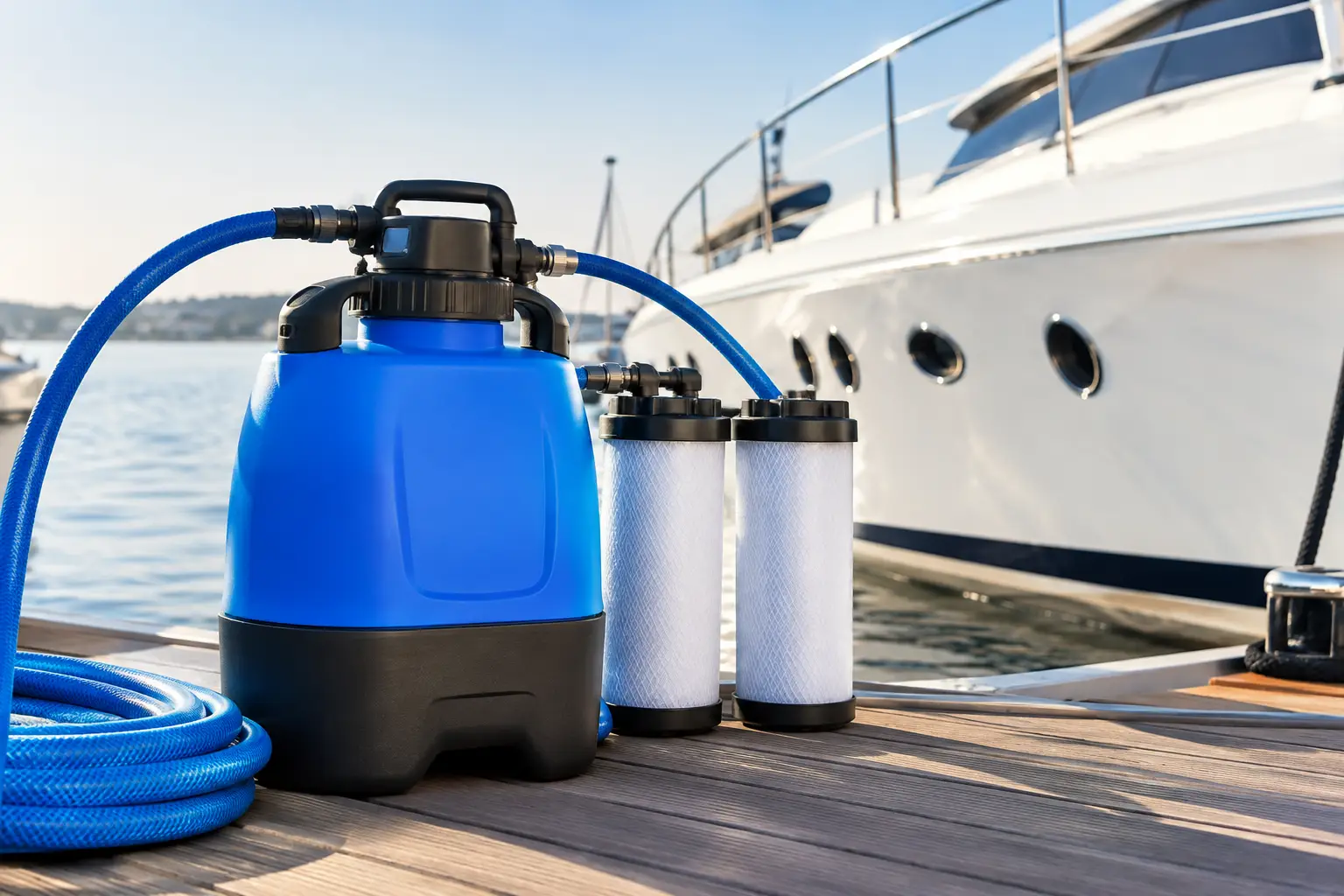
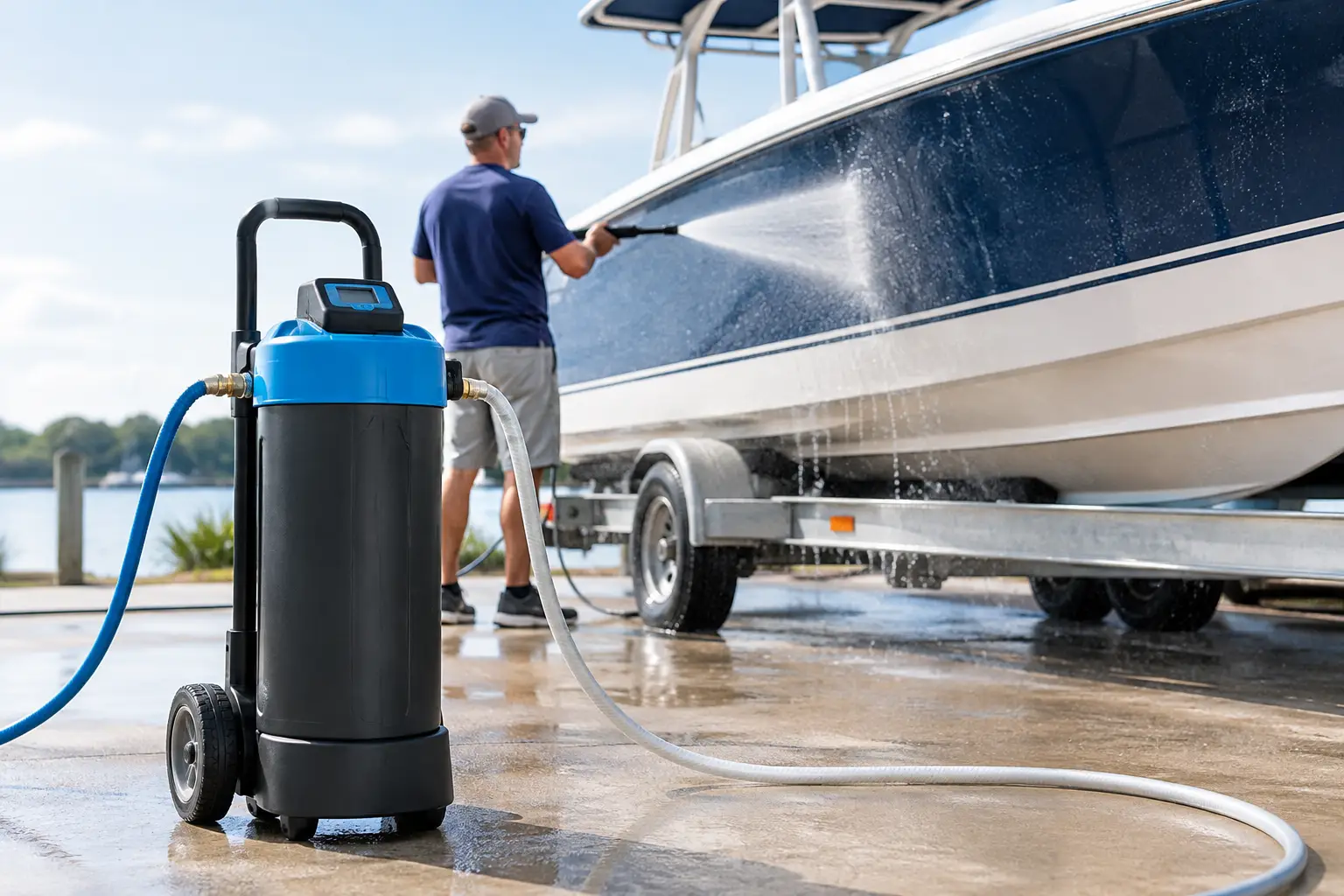
A portable soft water system is particularly useful because marina water quality is not consistent. Rather than relying on the water available at a dock, owners can soften the water before it reaches the hose or vessel. There is no need for electrical power, permanent installation, or sacrificing water pressure to get the benefit.
Wet Spot portable water softening systems are built for this exact kind of mobile use. The right system size depends on the vessel and water demand, but the goal stays the same: reduce the minerals that create spots, scale, and unnecessary cleaning work.
A Better Washdown Routine for Spot-Free Results
The most effective routine combines good timing, a thorough rinse, and softened water. Wash early or late in the day when surfaces are cooler if possible. Work from the top down so dirty water does not run over areas you have already cleaned. Keep the surface wet while washing, and do not let soap dry in place.
After cleaning, rinse thoroughly with soft water. Pay attention to windshield frames, stainless joints, deck hardware, and low points where water pools. These are the places minerals tend to concentrate as water runs off and evaporates.
Use a clean microfiber towel to remove remaining water from glass, polished metal, and other high-visibility surfaces. You may still want to dry these areas for the best finish, but with soft water, you are removing clean rinse water rather than racing against mineral deposits.
Do not assume a stronger cleaner is the answer when spots appear. Acidic spot removers can be effective on some surfaces, but they must be selected carefully and used according to the surface manufacturer’s guidance. Frequent chemical correction is a poor substitute for preventing deposits in the first place.
When Water Spots Need More Than a Rinse
Fresh mineral spots are usually easier to remove than old, baked-on deposits. If a normal wash does not clear them, use a marine-safe cleaner appropriate for the specific material. Test any product in a small, inconspicuous area first, particularly on painted surfaces, clear vinyl, anodized aluminum, and polished metal.
Etching is different from a deposit. If minerals or contaminants have been left on a hot surface for long periods, they can damage or dull the finish beneath them. At that point, cleaning may not restore the original appearance. Compounding, polishing, or professional detailing may be required.
That distinction matters because it changes the cost of waiting. A simple soft-water rinse can prevent a recurring problem. Ignoring spots until they become etched marks can turn routine upkeep into a restoration project.
A boat is always exposed to water. It does not have to be exposed to the mineral residue water leaves behind. Make soft water part of the washdown process, and you can spend less time chasing spots and more time keeping the vessel ready to use.