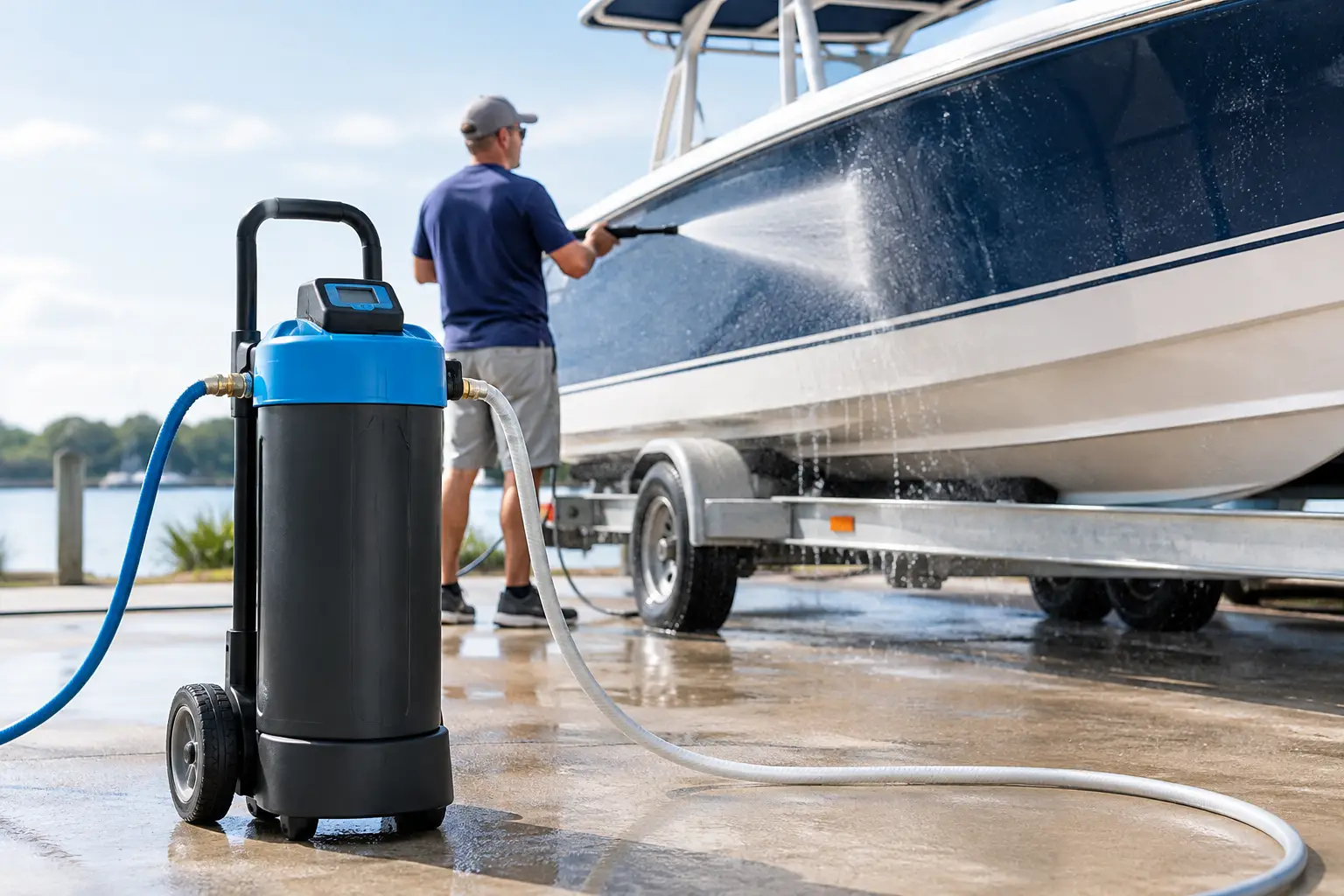
A boat can look clean at the dock and still be covered in the evidence of a hard-water washdown. White spots on dark gelcoat, haze on glass, crust around hardware, and streaks on polished metal all add time to a job that should have been finished when the hose was turned off. Better boat wash efficiency starts with the quality of the water, not simply the soap, brush, or drying towel.
Hard water contains calcium and magnesium minerals. As wash water dries, those minerals remain on the surface. The result is spotting and buildup that can require repeated rinsing, hand drying, polishing, or corrective detailing. For owners and crews responsible for expensive finishes, the goal is not just to wash faster. It is to get a cleaner result with less labor and less exposure to mineral damage over time.
What Reduces Boat Wash Efficiency?
Most washdowns become inefficient for a simple reason: the process creates extra work after the cleaning is done. Hard water can leave deposits behind even when dirt, salt, fish residue, and airborne grime have been removed. That means a crew may need to re-rinse, chase spots with towels, or use additional cleaning products to restore a clear finish.
This is especially noticeable on black or navy hulls, stainless steel railings, windshield glass, eisenglass, chrome, painted surfaces, and smooth gelcoat. These materials show mineral residue quickly. In warm weather, the problem gets worse because water evaporates faster, leaving minerals behind before the surface can be dried.
Pressure is not usually the answer. Higher water pressure can help remove loose dirt and salt, but it does not remove the minerals dissolved in the water. More pressure can also use more water, increase overspray, and make a controlled washdown harder in a crowded marina. Efficient boat care comes from using the right water and applying it with purpose.
Why Soft Water Makes Boat Washing Easier
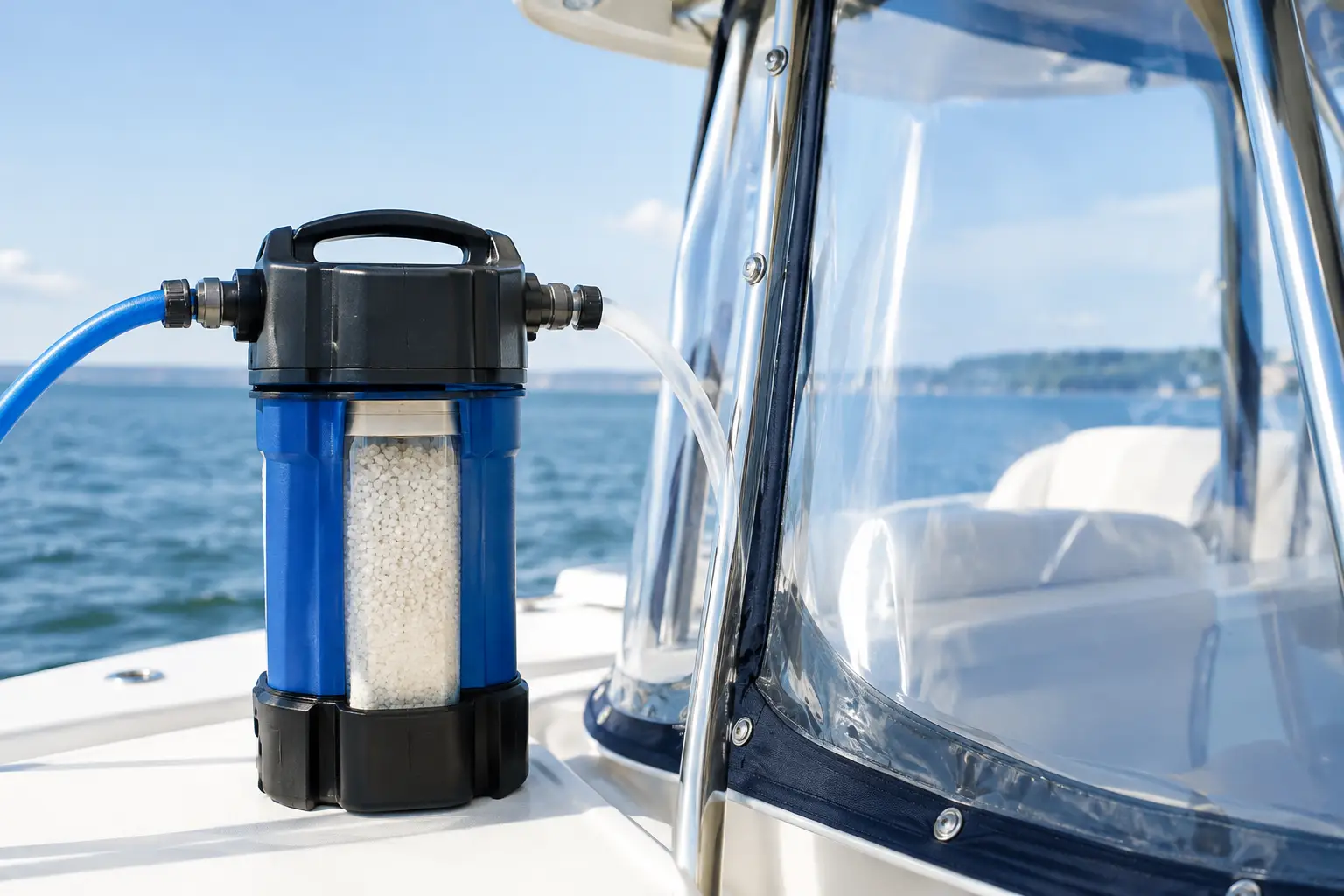
Soft water has had calcium and magnesium removed. That change affects the entire wash process. Soap can lather and rinse more effectively, so less product may be needed to clean the same surface. More importantly, the rinse water is far less likely to leave mineral spots as it dries.
The practical benefit is fewer steps after the wash. Instead of washing, rinsing, towel drying every section, then returning to remove spots, owners can spend more time on the actual cleaning work and less time correcting the rinse. A final wipe-down may still be worthwhile for a show-ready finish, especially on glass and high-gloss surfaces, but it becomes a finishing step rather than a rescue operation.
Soft water is also useful beyond the exterior wash. It can help reduce scale exposure in onboard fixtures, shower areas, deck equipment, washdown hoses, and appliances that use water. No water treatment system eliminates the need for routine maintenance, but reducing mineral load helps prevent hard-water buildup from becoming another recurring job.
Build a More Efficient Boat Wash Routine
A faster wash is not a rushed wash. It is a repeatable process that prevents dirt, salt, and minerals from creating extra work later. Start by rinsing the vessel from the top down. This carries loose contaminants away from cleaned areas and prevents dirty runoff from streaking lower surfaces.
Work in manageable sections rather than trying to soap the entire boat at once. On a large vessel or in direct sun, soap can dry before it is rinsed, leaving residue that has to be removed later. Wash a section, rinse it thoroughly, and move on. If conditions are hot and dry, begin on the shaded side of the boat when possible.
Use the least aggressive tool that will do the job. A soft wash mitt or marine-safe brush is generally better for gelcoat and painted surfaces than stiff bristles. Give attention to non-skid, which holds dirt and can require more agitation, but avoid transferring grit from non-skid areas to smooth, glossy surfaces.
The final rinse matters as much as the wash step. A soft-water rinse helps prevent the mineral residue that makes boats look neglected immediately after a cleaning. Let water sheet off broad surfaces where possible, then use clean microfiber towels for remaining water on windows, metal, mirrors, and other areas where a perfect finish matters.
Match Your Equipment to Your Vessel and Routine
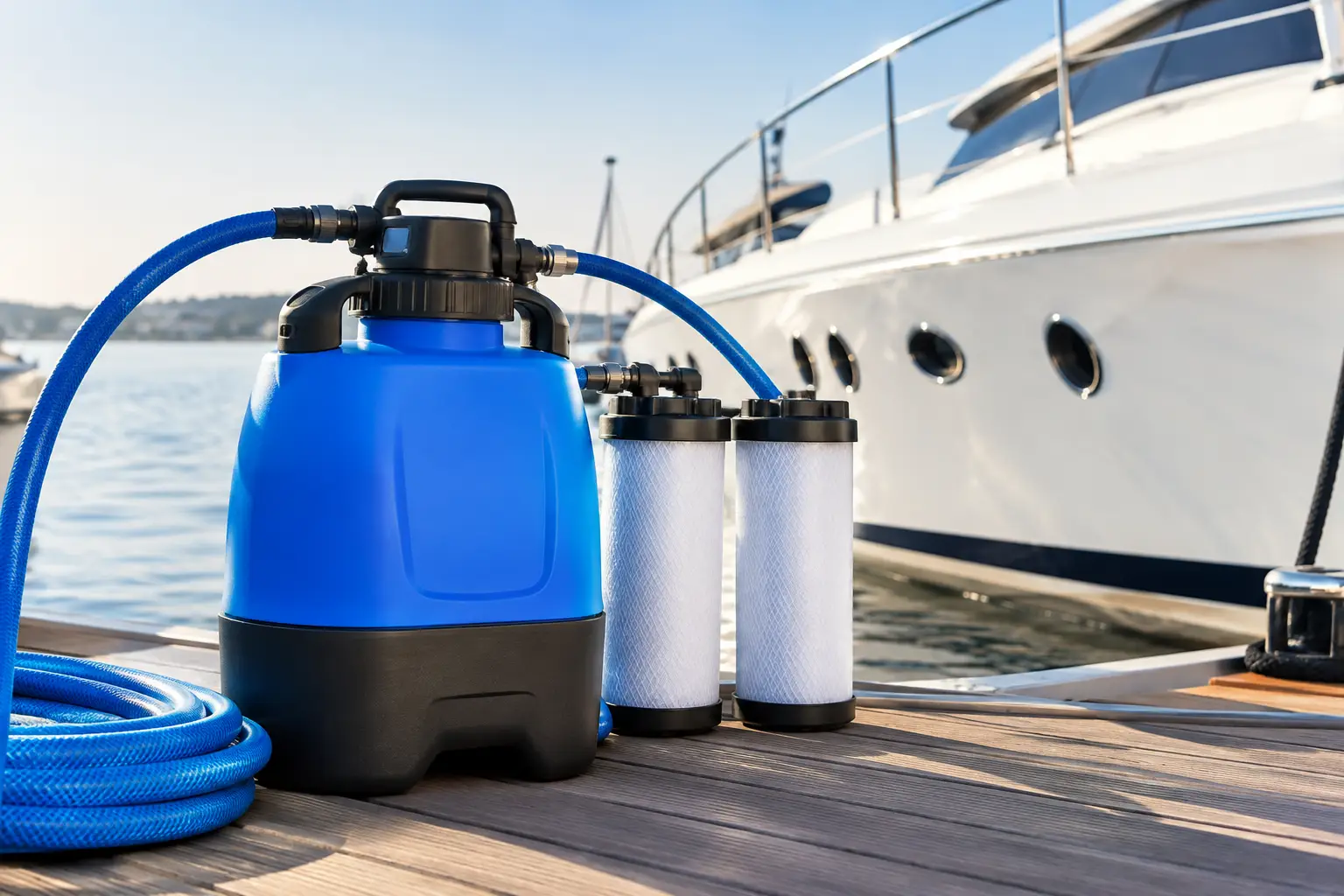
Portable soft water equipment is particularly practical for boat owners because it does not require a permanent installation or electrical hookup. The right system connects into the washdown process, allowing soft water to be used where it delivers the most value: rinsing exterior surfaces and protecting water-contact areas.
System capacity should match the vessel size and the way the boat is maintained. A small center console that receives a quick rinse after each outing has different needs than a 90-foot yacht with multiple decks, extensive stainless, large glass areas, and frequent dockside washing. Choosing too small a unit can mean more frequent recharging. Choosing a larger capacity can make sense when washdowns are frequent, the vessel has a large surface area, or multiple onboard uses are planned.
Wet Spot portable soft water systems are built around those practical differences, with options sized for boats up to 70 feet, from 70 to 100 feet, and 100 feet and above. The point is straightforward: match the water-softening capacity to the asset you are protecting and the amount of water you expect to use.
Manual recharge is part of ownership, and it should be treated as scheduled maintenance rather than an inconvenience. A properly maintained unit continues to provide soft water without power, complicated plumbing changes, or a permanent dockside setup. For boat owners who travel between marinas or keep their vessel where water quality varies, portability is a real advantage.
Where Soft Water Delivers the Biggest Return
The biggest benefit often appears on the surfaces that cost the most to restore. Gelcoat can lose its clean appearance when mineral deposits build up. Stainless hardware may develop water marks and require repeated polishing. Glass and eisenglass can show spotting that reduces clarity and demands careful cleaning. On a larger yacht, the labor involved in correcting these issues adds up quickly.
Soft water does not replace proper marine cleaning products, regular salt removal, or careful technique. It makes those efforts work better. If a boat has existing oxidation, embedded stains, or heavy scale, a dedicated restoration process may still be needed. But once the surface is corrected, soft-water washing helps maintain that result instead of reintroducing mineral residue after every rinse.
There is also a water-use benefit worth considering. When rinse water leaves fewer spots, there is less reason to repeatedly hose down the same section. That does not mean every job will use dramatically less water. A heavily soiled boat still needs a thorough rinse. It means the water used is more productive because it is less likely to create a second cleaning task.
Protect the Finish Between Washdowns
Boat wash efficiency is easier to maintain when contamination is addressed early. Salt spray, bird droppings, sunscreen residue, fuel drips, and fish residue become harder to remove when they sit on a surface. A prompt freshwater rinse after use is one of the simplest ways to protect gelcoat, hardware, and glass.
Keep wash tools clean, use separate tools for hull and non-skid areas, and avoid washing in the strongest midday sun when practical. These habits cost very little, yet they prevent swirls, streaks, and dried-on product that can turn routine maintenance into a detailing project.
The best washdown routine is the one you can repeat after every trip without adding hours to the day. Start with better water, use a controlled process, and let each rinse protect the finish instead of leaving more work behind.