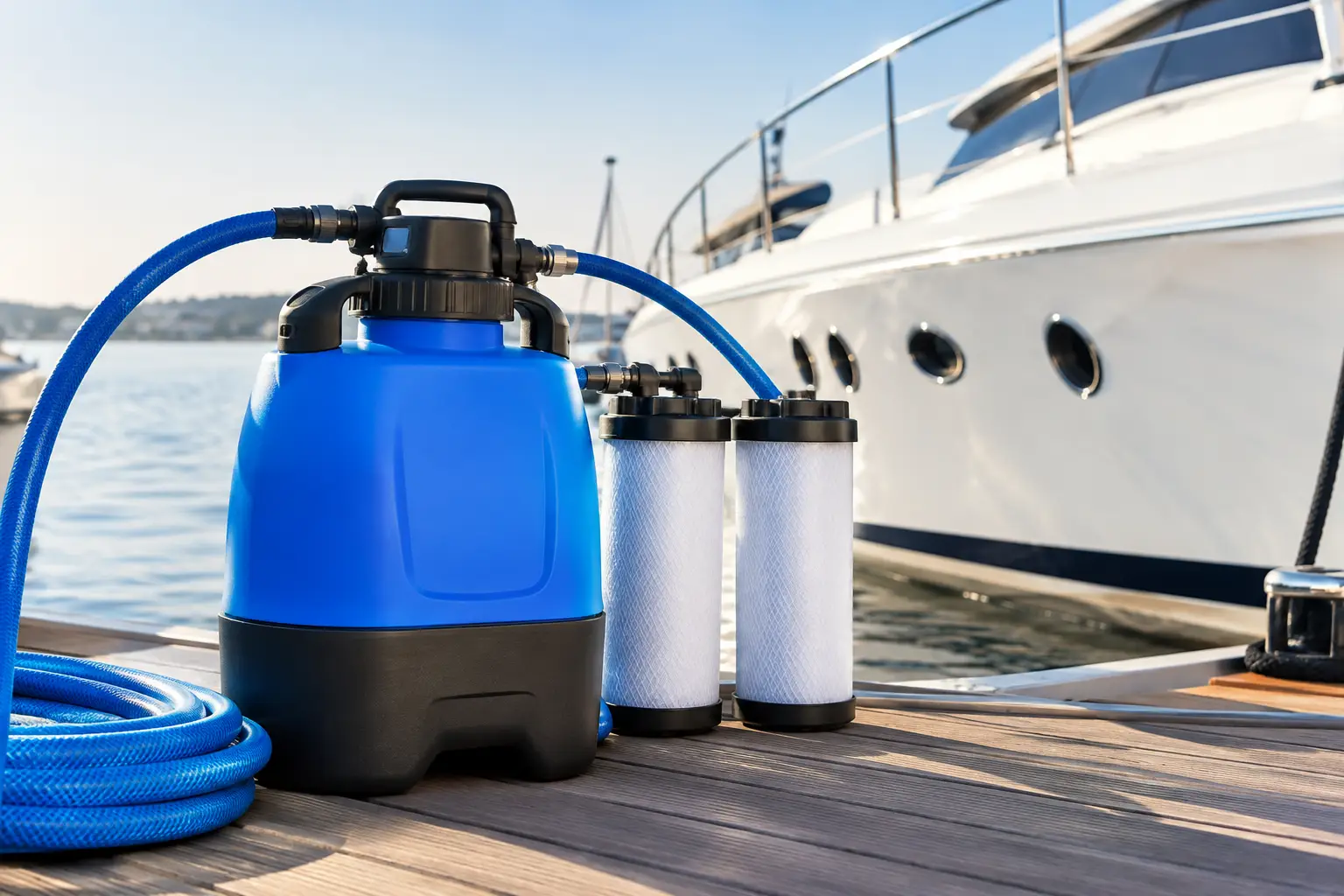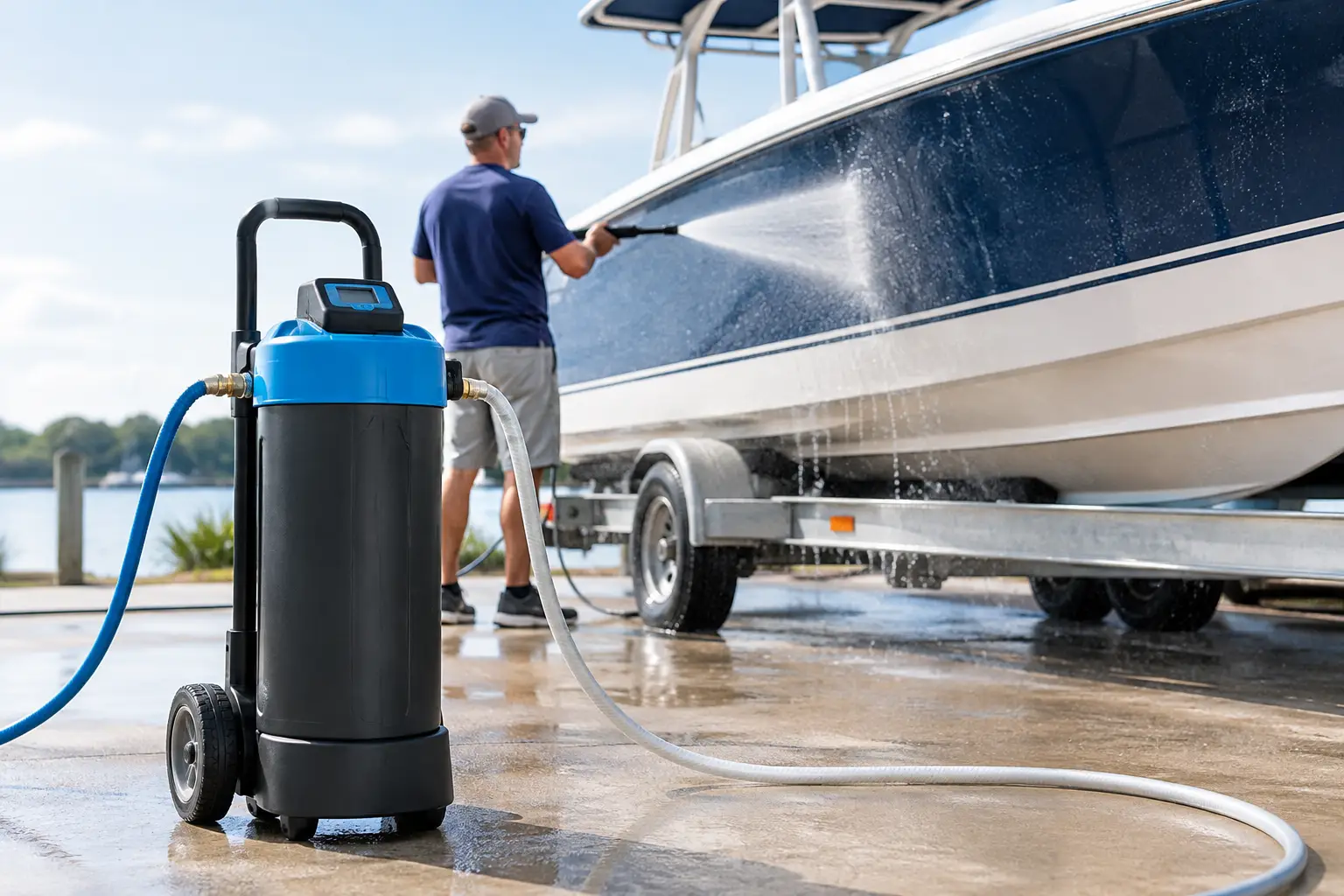
A clean boat can look weathered again as soon as hard water dries on the glass, gelcoat, metal, and eisenglass. The problem is not the washdown itself. It is the calcium and magnesium left behind when the water evaporates. A manual recharge water softener removes those hardness minerals before they reach your hose, making every rinse more effective and reducing the spots, film, and scale that consume detailing time.
For boat owners, RV travelers, vehicle detailers, and aircraft caretakers, soft water is a practical way to protect surfaces that are expensive to restore. It improves soap performance, helps water sheet away more cleanly, and limits the mineral residue that can collect on fixtures, plumbing, and onboard appliances. Best of all, a portable system can do the job without an electrical hookup or a permanent installation.
What a Manual Recharge Water Softener Does
A portable softener uses ion-exchange resin to remove hardness minerals from incoming water. As hard water passes through the resin tank, calcium and magnesium are captured by the resin. The outgoing water is softened and ready for washdowns, rinsing, and other onboard uses that benefit from reduced mineral content.
That process matters most where water is allowed to dry. On a boat, hard water can leave white rings on chrome, dull residue on dark gelcoat, and stubborn spotting on windows. In an RV, it can build up on faucets, shower fixtures, and exterior panels. On vehicles and aircraft, mineral spots may require extra wiping, polishing, or corrective work after every wash.
Soft water does not replace good cleaning practices. Salt spray, fuel soot, road grime, algae, and environmental contaminants still need the right cleaners and regular attention. What it does remove is the hard-water mineral burden that makes routine cleaning harder than it should be.
How Manual Recharge Restores Softening Capacity
The resin inside a water softener has a finite capacity. Eventually, it becomes loaded with the calcium and magnesium it has removed from the water. At that point, the system needs to be recharged, also called regenerated, before it can continue delivering soft water.
A manual recharge water softener restores the resin with a salt brine solution. During regeneration, sodium from the brine displaces the captured hardness minerals from the resin. Those minerals are flushed out, the resin is refreshed, and the unit is ready to soften water again.
The process is straightforward, but it should always follow the instructions for the specific unit. In general, it involves disconnecting the softener from service, adding the recommended salt and water for the brine solution, allowing the recharge cycle to work as directed, and flushing the unit before returning it to use. There is no motor to program, no electrical outlet to find, and no complicated installation to manage.
That simplicity is one of the main advantages for mobile applications. A marina slip, a remote campground, a storage yard, or a worksite may not offer convenient power. A manually recharged portable system gives the owner control of maintenance without adding another powered appliance to the operation.
When Should You Recharge the Unit?
Recharge frequency depends on two things: the hardness of the source water and the amount of water used. Very hard water consumes softening capacity faster than moderately hard water. A long washdown after a weekend on the water will use more capacity than a quick rinse of windows and deck hardware.
It is better to watch performance than to rely only on a calendar. The clearest sign is the return of hard-water spotting or mineral film after water dries. You may also notice soap is less effective, water no longer sheets cleanly from surfaces, or fixtures begin to show fresh scale. These are signals that the resin is nearing the end of its capacity.
For owners using a portable unit regularly, keeping a simple record helps. Note the source location, the approximate water use, and when you recharged. Over a few cycles, you will get a realistic sense of how long the softener lasts at your home marina, favorite campground, or service location. Water hardness can vary significantly from one location to another, so a schedule that works in one place may not fit another.
Recharging before a major cleaning day is often the smart move. If you are preparing for guests, putting a boat into storage, detailing an RV before a trip, or cleaning a vehicle for an event, starting with full softening capacity helps prevent a half-finished job from becoming a spotting problem.
Why Manual Recharge Fits Boats and Other Mobile Assets
Fixed water treatment equipment makes sense for some homes and permanent facilities. It is not always practical for a vessel, an RV, or a portable washdown setup. Mobile owners need equipment that can travel, connect quickly, and work where the water is.
A purpose-built portable softener is especially useful at marinas where water quality may be outside the owner’s control. Instead of accepting whatever mineral content comes through the dock hose, you can treat the water before it reaches the boat. That protects the surfaces you see every day and the systems you do not, including plumbing components and appliances that can collect scale over time.
The same logic applies to RVs. Campground water can vary from stop to stop, and mineral-heavy water can leave a buildup inside fixtures and water-using equipment. For vehicle and aircraft care, portable soft water helps reduce the labor required to chase spots after rinsing. Less residue means less repeated wiping, which can also reduce opportunities to drag grit across a finish.
Wet Spot portable systems are built around this real-world need: dependable soft water without electrical power, permanent plumbing changes, or a complicated maintenance routine. The goal is simple – give owners a durable tool for protecting high-value assets wherever hard water is part of the job.
Choosing the Right Capacity for Your Use
Capacity should match the asset, expected water use, and source-water conditions. A small boat that receives light, regular rinses has different needs than a large yacht with extensive deck space, multiple fixtures, and frequent washdowns. Choosing too small a unit can mean recharging more often than expected. Choosing a larger capacity can make sense when convenience, service intervals, and high-volume use matter more than compact size.
Consider how you actually use water. A careful final rinse after washing may require far less softened water than supplying soft water for broader onboard use. A yacht kept in a hard-water marina may benefit from more capacity than a boat that only occasionally connects to dock water. RV owners should consider trip length, the number of occupants, and whether the unit will be used mainly for exterior washing or for water throughout the coach.
Vessel size is a useful starting point, but it is not the only factor. Hose flow rate, washdown habits, appliance use, and local hardness all affect how often regeneration will be needed. A properly sized system gives you enough reserve to work efficiently instead of making recharge an interruption.
Getting Better Results From Soft Water
Soft water works best as part of a disciplined washdown routine. Rinse loose dirt first, use cleaners suited to the surface and soil, then use softened water for the final rinse where spotting is most noticeable. Do not assume soft water makes drying unnecessary in every situation. Heat, direct sun, airborne salt, and heavy contamination can still call for a quick dry-down, especially on glass and polished metal.
Keep the unit protected when not in use, avoid rough handling, and inspect hose connections before each setup. Use the correct recharge materials and follow the recommended procedure rather than improvising the brine mix. A few minutes of proper care helps preserve resin performance and prevents avoidable downtime at the dock or campsite.
Also separate a water-softening issue from a water-filtration issue. A softener is designed to address calcium and magnesium. If the source water has sediment, unusual odor, or other quality concerns, those may require separate treatment or a different approach. Knowing the difference keeps expectations realistic and helps you choose equipment for the problem you actually have.
Hard water does not have to dictate how much time you spend polishing spots off a finish. Keep your portable softener maintained, recharge it before it is exhausted, and let the final rinse protect the surfaces you worked to clean.