
A washdown can leave a boat looking worse than it did before. The hull is clean, but white mineral spots appear on gelcoat, stainless, windows, and dark canvas as the water dries. Soft water for marine washdown changes that outcome by removing the calcium and magnesium that create hard-water spotting and scale.
For a boat owner or captain, that means less time chasing water spots with a towel, polish, or detail spray. It also means less mineral buildup around fixtures, in hoses, and in onboard equipment that uses fresh water. On a smaller center console or a large yacht, the problem is the same: hard water leaves evidence behind.
What Hard Water Does to a Boat
Hard water is fresh water that carries dissolved minerals, primarily calcium and magnesium. When that water evaporates, the minerals remain on the surface. On a boat, they can show up as chalky rings around deck drains, haze on glass, crust on shower fixtures, and stubborn spots along the waterline after a dockside wash.
Gelcoat and painted surfaces are especially frustrating because mineral deposits dull a clean finish. Stainless steel can develop visible spotting quickly, and clear vinyl or eisenglass can become harder to keep clear when it is repeatedly dried with mineral-heavy water. The problem is not always immediate damage from one wash. It is the steady cycle of washing, drying, wiping, and using stronger products to remove what the water left behind.
That cycle costs time. It also increases the chances of unnecessary abrasion from frequent towel work, polishing, or aggressive cleaners.
Why Soft Water Makes Washdown Easier
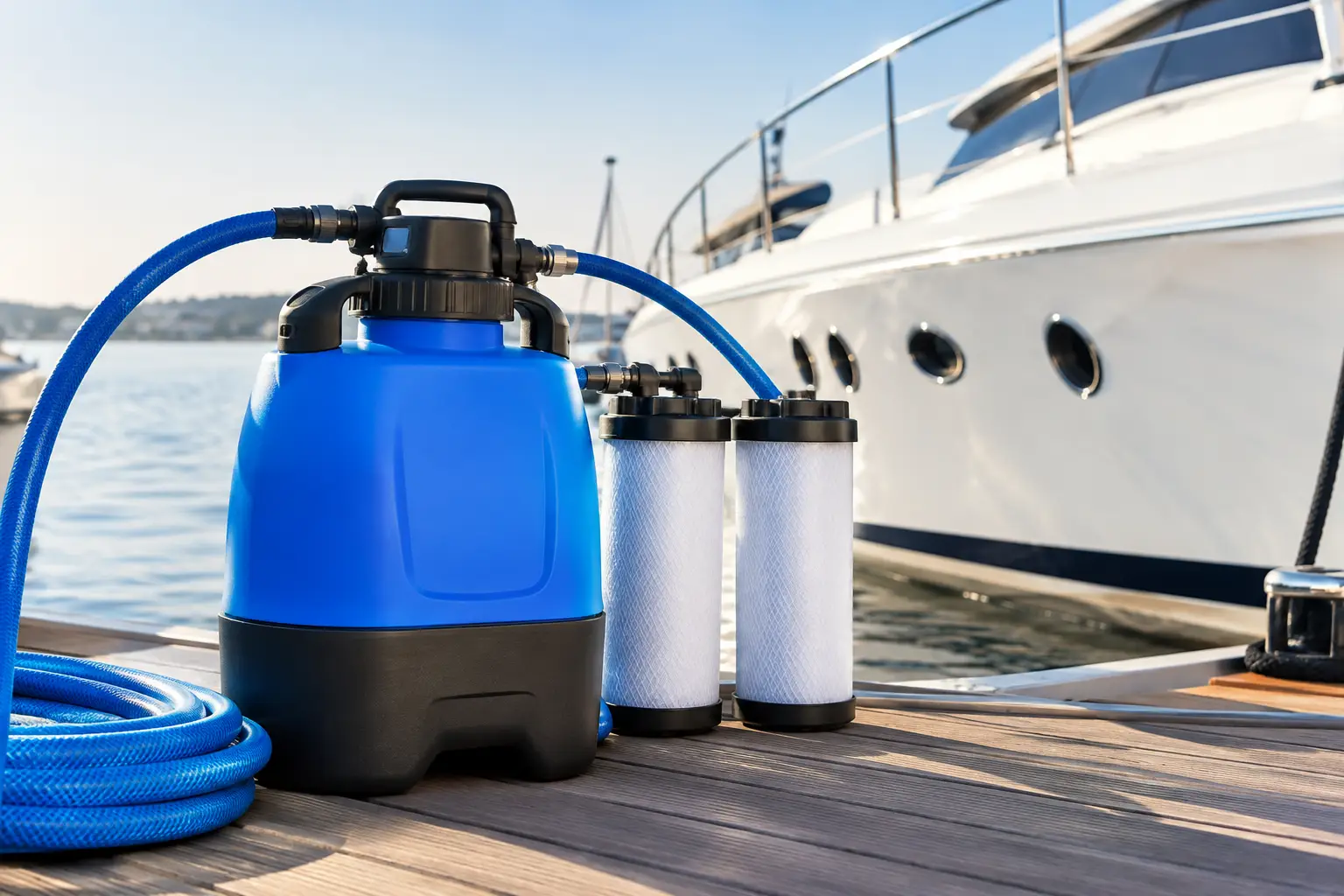
A portable water softener uses ion-exchange resin to remove hardness minerals from incoming fresh water. The result is water that rinses more cleanly and leaves far less mineral residue as it dries. Soap and boat wash products also perform better because they do not have to fight calcium and magnesium in the water.
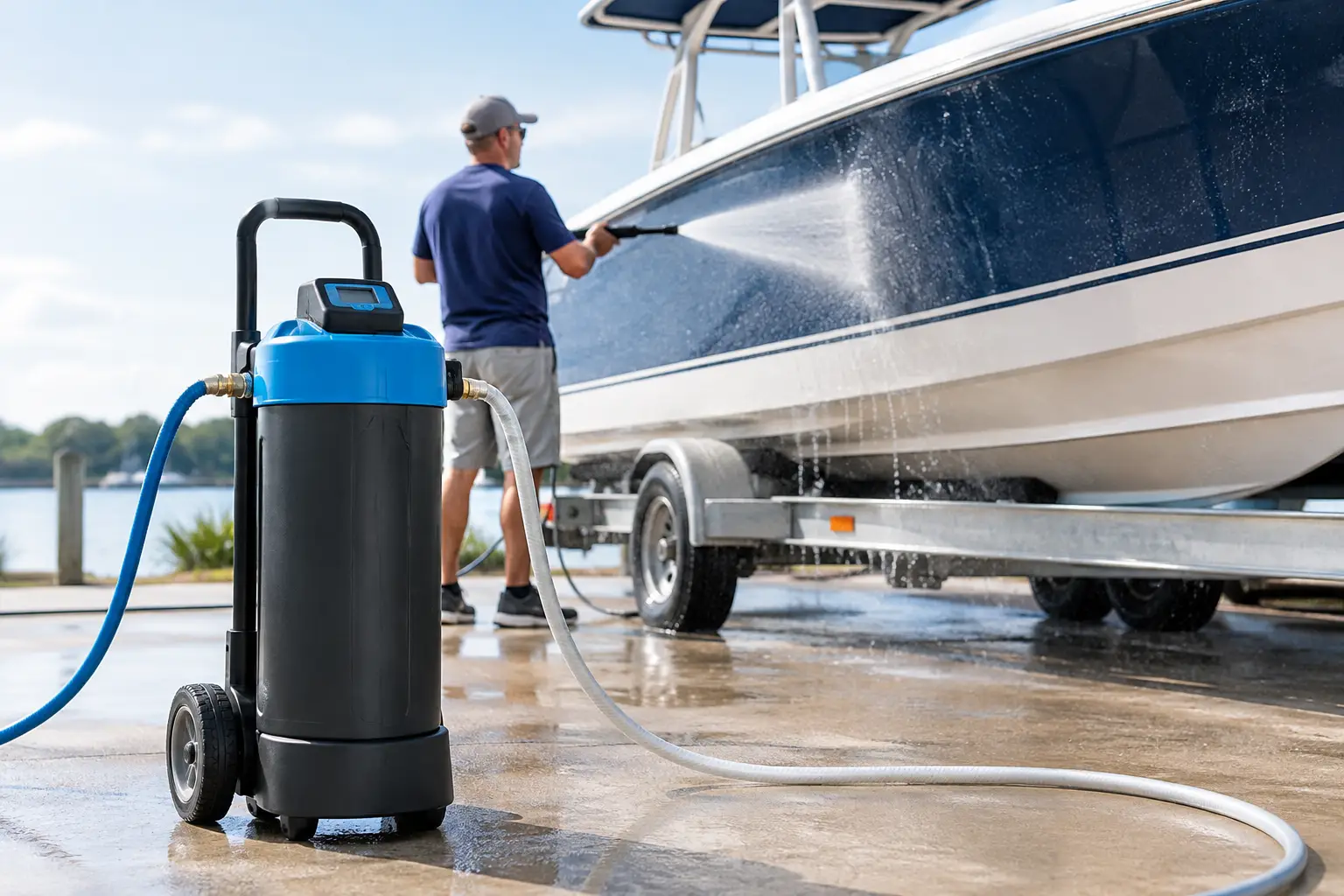
The practical benefit is simple: wash the boat, rinse it, and spend less time correcting the rinse water afterward. Soft water helps reduce spotting on gelcoat, glass, metal, plastic, and clear enclosures. It also helps soap rinse away more completely, which can make routine cleaning feel faster and more controlled.
Soft water is not a replacement for proper wash technique. Dirt, salt spray, exhaust film, and marine growth still need the right cleaning process. But when fresh water is the final rinse, removing hardness minerals takes one common source of cleanup off the deck.
Soft Water Is Not Saltwater Treatment
This distinction matters at the dock. A portable softener is intended to treat fresh water from a marina connection, shore-side spigot, or other suitable fresh-water source. It does not turn seawater into fresh water, and it does not replace a desalination system.
After operating in saltwater, rinse the vessel thoroughly with fresh water first. If that fresh water is hard, soften it before the final wash or rinse to help prevent mineral spotting. Salt residue and hard-water residue are different problems, but both can leave a boat looking neglected when they are allowed to dry.
Where Soft Water Helps Most on Board
The most visible improvement is usually on exterior finishes. Dark hull colors, black trim, polished stainless, windshields, and glass show water spots quickly. A softened final rinse helps keep those surfaces cleaner after drying, which can reduce the amount of hand-drying required.
Below deck, soft water can support the equipment and fixtures that see regular fresh-water use. Heads, sinks, faucets, shower doors, water heaters, and ice makers can all be affected by scale when supplied by hard water. The level of benefit depends on how often the boat is connected to shore water and the hardness of the local supply, but preventing scale before it begins is easier than removing it later.
Soft water also makes sense for owners who wash their vessel at home or keep it at a marina with consistently hard water. If water spots return after every wash, the issue may not be the soap, the towel, or the person doing the cleaning. It may be the water itself.
Choosing a Portable Softener for Your Vessel
The right softener should match the boat, the available water connection, and the amount of washdown water you use. Vessel size is a practical starting point. A boat up to 70 feet has different water demands than a 70- to 100-foot yacht or a vessel over 100 feet with extensive exterior surfaces and more onboard fixtures.
Portability matters at the dock. The system should be easy to carry, connect between the water source and hose, and remove when the job is done. Marine-grade construction matters too. A washdown system lives around docks, wet lockers, hoses, sun exposure, and rough handling. It needs to be built for that environment, not treated like a delicate household appliance.
Pressure is another consideration. A useful portable system should provide softened water without requiring electrical power or creating an impractical drop in water pressure. Washing a large hull already takes enough time. The equipment should make the job easier, not slow it down.
Wet Spot systems are designed around this real-world use, with portable models sized for different vessel lengths and a manual recharge process that keeps long-term maintenance straightforward.
Recharge Is Part of the Routine
A portable softener does need periodic recharging. As water passes through the resin, it gradually uses up its ability to capture hardness minerals. Recharge restores that capacity so the unit can continue producing soft water.
How often you recharge depends on two things: how hard the source water is and how much water you use. A marina in an area with very hard water will use capacity faster than a location with moderately hard water. A quick rinse of a 28-foot boat requires far less water than a full washdown of a yacht after a long run.
This is not complicated maintenance, but it should be planned. Recharging before a major washday is better than finding out mid-rinse that the resin is exhausted. Keeping the process manual and visible also gives owners more control over their equipment, without electrical hookups or disposable replacement cartridges.
A Better Marine Washdown Routine
Start by rinsing away loose salt, sand, and debris with fresh water. Wash one manageable section at a time using a marine-safe soap and a clean mitt or brush suited to the surface. Do not let soap dry in direct sun, especially on dark gelcoat or clear vinyl.
Use softened water for the rinse whenever possible. Work from higher surfaces down, allowing the water to carry away soap and residue rather than repeatedly flooding already-clean areas. If the weather is hot or the boat has a dark finish, a light final towel dry is still worthwhile. Soft water reduces mineral spotting, but windblown dust, pollen, and environmental residue can still settle on a wet surface.
Pay attention to the places that often get skipped: windshield frames, rail bases, transom hardware, deck fittings, shower fixtures, and the outside of dockside water connections. These are the areas where dried minerals tend to build up and where clean water makes a noticeable difference over time.
The Long-Term Value Is Less Correction
Soft water does not make a boat maintenance-free. It makes routine maintenance more productive. Instead of cleaning the boat and then removing marks created by the rinse water, owners can spend more of their effort on the actual dirt, salt, and wear that come with boating.
That matters when the boat is an investment, a business asset, or simply something you take pride in maintaining. Cleaner glass, brighter metal, smoother gelcoat, and fewer scale deposits all support the condition that owners want to preserve.
The next time a washdown ends with spots across the hull or haze on the glass, look past the soap bottle. The water coming through the hose may be the part of the process that needs to change.