A clean boat can look freshly detailed at the dock, then dry into a map of white spots before the afternoon is over. That is hard water at work. A no power water softener removes the calcium and magnesium responsible for those spots before the water reaches your hose, washdown gear, fixtures, or onboard appliances. For owners protecting gelcoat, stainless, glass, plastic, and plumbing, that simple change can mean less scrubbing and fewer mineral-related problems over time.
Unlike a permanently installed household system, a portable softener is built for the places where dependable water quality matters but electrical access is not guaranteed: a marina slip, boatyard, campground, hangar, driveway, or remote wash area. It is a practical tool for keeping expensive assets cleaner without adding another powered device to manage.
What Is a No Power Water Softener?
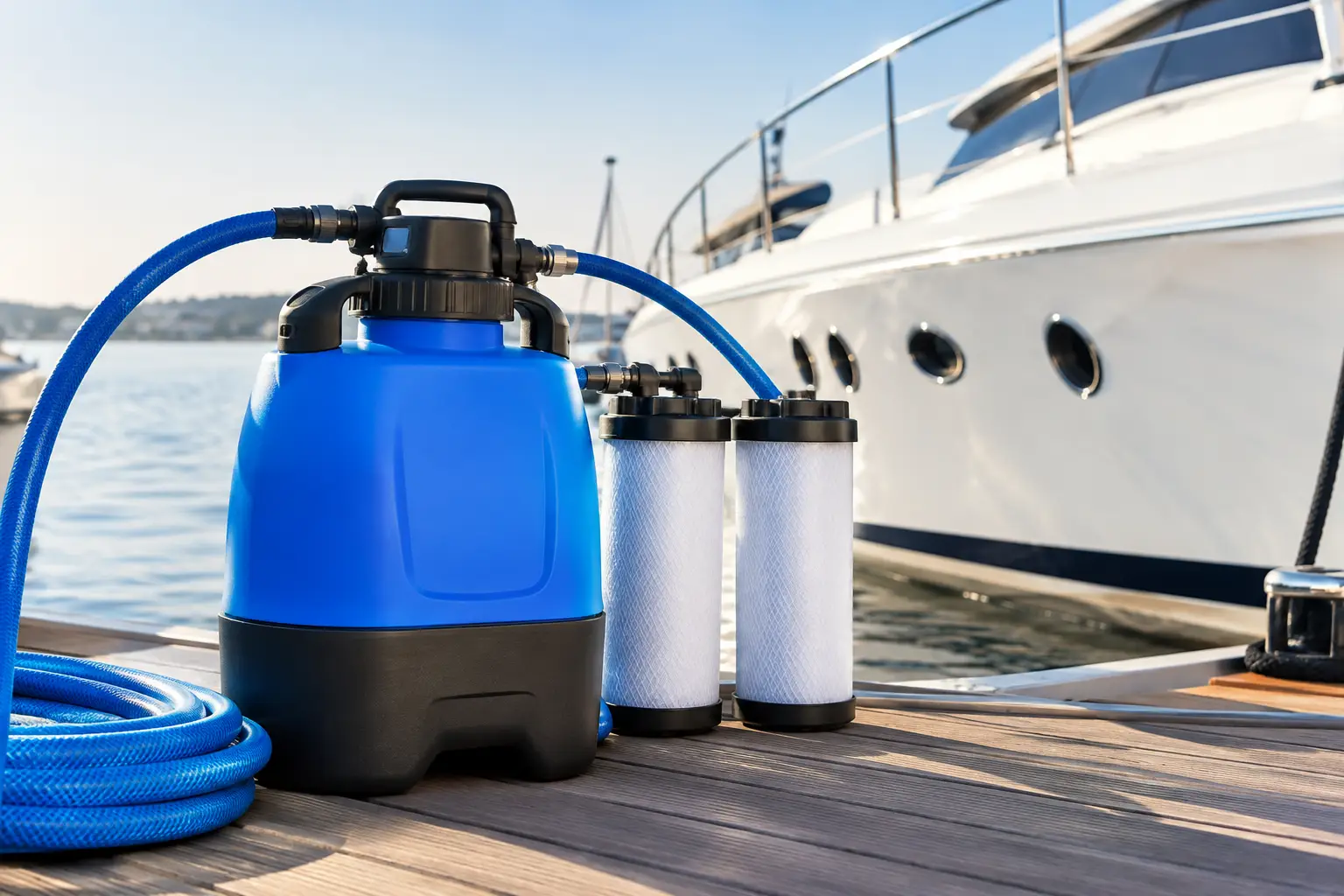
A no power water softener is a portable water treatment unit that uses ion-exchange resin to reduce hardness minerals in the incoming water. It operates from normal water pressure alone. Connect the source hose to the unit, connect an outlet hose, and soft water is available at the other end.
There is no electrical hookup, motor, pump, timer, or control panel. That matters on a boat, where available shore power may be limited, cords create clutter, and every piece of equipment needs to earn its space. It also matters for RV owners and mobile detailers who need reliable results at different locations.
The softening process is targeted. It addresses calcium and magnesium, the minerals that leave crusty residue on faucets, dull film on glass, rings around fittings, and white spotting on a freshly rinsed surface. Soft water improves how soap performs and rinses more cleanly, which can reduce the time spent chasing water spots after every washdown.
A softener is not the same as a drinking-water purifier or a filtration system designed to remove every possible contaminant. Its job is specific: control hardness minerals. For washdowns, cleaning, and protecting water-using equipment from scale, that focus is exactly what many owners need.
Why Hard Water Is Expensive Around Boats
Hard water is more than a cosmetic nuisance. On a boat, mineral deposits can collect in places that are difficult to clean and costly to replace. Stainless hardware, rails, windows, shower doors, fixtures, deck surfaces, and clear vinyl can all show the effects of repeated hard-water exposure.
The problem gets worse when water dries in the sun. As the water evaporates, the minerals remain behind. What starts as a few spots can become a chalky film that requires extra cleaner, repeated wiping, or more aggressive detailing. Aggressive cleaning has its own cost, especially when it is used frequently on gelcoat, coated metals, clear materials, and polished surfaces.
Inside the vessel, hard water can also contribute to scale in plumbing components and water-using appliances. The exact impact depends on water hardness, usage, and equipment, but the pattern is familiar: mineral buildup reduces the clean, cared-for condition that owners work hard to maintain.
Soft water helps break that cycle. It does not eliminate the need to rinse, dry, and maintain your boat properly. It makes those tasks easier by reducing the mineral residue left behind in the first place.
How a Portable Softener Works Without Power
Inside the unit is a bed of resin beads. As hard water passes through, calcium and magnesium attach to the resin, while the water leaving the unit is softened. The process happens automatically through water flow. No electricity is needed.
Eventually, the resin reaches its capacity and must be recharged. Manual recharge is a straightforward maintenance step that restores the resin so it can continue softening water. This is an advantage for mobile use: the owner is not dependent on a powered regeneration cycle, a fixed drain connection, or an installed system.
Capacity is not one-size-fits-all. A softener will process more water between recharges in a low-hardness area than it will at a marina or campground with very hard water. Water temperature, flow rate, and how the water is used can also affect real-world performance. Washing a small center console is different from supplying a long washdown for a large yacht.
That is why equipment size should match the vessel and expected water demand. A unit that is too small can require more frequent recharge, while an appropriately sized portable system keeps maintenance predictable and supports longer work sessions.
No power does not mean no maintenance
The trade-off for electrical independence is manual attention. You will need to recharge the unit when its softening capacity is used and store it properly between trips. For owners who value simple, field-ready equipment, this is usually a fair exchange. There are fewer powered components to troubleshoot, and the maintenance process stays in the owner’s control.
Where Soft Water Makes the Biggest Difference
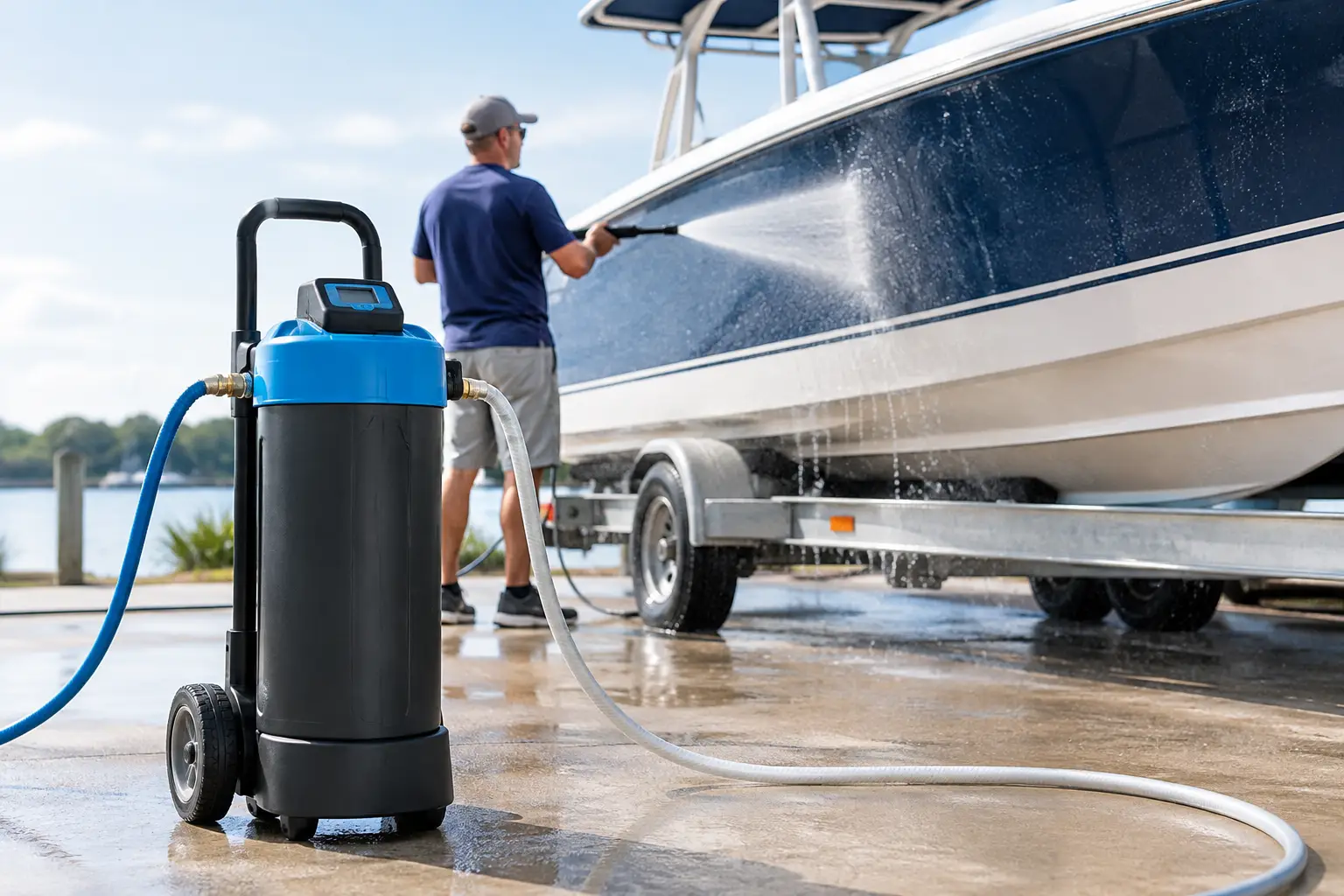
The most visible benefit is during exterior washdowns. Soft water helps prevent the white spotting that appears on gelcoat, glass, painted surfaces, and polished metal after a rinse. It can also make washing more efficient because soap lathers and rinses better in softened water.
For boat owners, the value extends beyond the hull. Use soft water for deck cleanup, cockpit washdowns, windows, shower areas, fixtures, and other surfaces exposed to repeated rinsing. The goal is not to replace sound cleaning practices. It is to stop hard water from adding residue every time you clean.
The same principle applies away from the marina. RV owners can reduce spotting on exterior panels, windows, and fixtures. Vehicle owners can get a cleaner rinse during mobile washing. Aviation owners and caretakers can use softened water to help reduce mineral spotting on exterior surfaces where finish preservation matters.
In every application, the asset is the priority. A portable unit earns its keep when it reduces avoidable cleanup and helps preserve the appearance of surfaces that are expensive to restore.
Choosing the Right No Power Water Softener
Start with the size of the asset and the amount of water you expect to use. A smaller boat with occasional washdowns has different needs than a yacht with frequent cleaning, multiple fixtures, and a larger surface area. Wet Spot portable systems are structured by vessel size, including options for boats up to 70 feet, 70 to 100 feet, and 100 feet and above, so owners can match capacity to real use rather than guess.
Construction matters just as much as capacity. Marine use is demanding. Equipment is moved, stored, exposed to wet conditions, and used around docks where durability is not optional. Look for a portable softener built for transport, with dependable connections and materials suited to demanding outdoor and marine environments.
Also consider setup. A system should be simple enough to connect when you arrive and remove when you leave. If a device adds complicated installation, requires a dedicated electrical circuit, or reduces useful water pressure, it can become one more obstacle between you and routine maintenance. A no-power design keeps the process direct: connect, soften, wash, and recharge when needed.
Get Better Results From Every Washdown
Soft water works best when paired with disciplined wash habits. Rinse salt, dirt, and loose debris before they have time to dry. Work in sections on larger vessels so soap does not bake onto the surface. When practical, dry glass, clear vinyl, polished metal, and other high-visibility areas after rinsing, especially in direct sun.
Use the softener consistently rather than saving it only for a major detail. Regular soft-water washdowns help prevent minerals from becoming a recurring maintenance problem. The benefit compounds over a season: fewer spots to remove, less scale to fight, and less effort spent restoring surfaces that should have stayed clean.
Keep recharge supplies available before a planned washday or extended trip. That small preparation keeps the system ready when dock water is hard and time is limited. Treat softened water as part of the maintenance routine, just like checking lines, rinsing salt, and protecting the finish after use.
A portable softener will not change the hardness of every water source permanently. It gives you control over the water that touches your boat or vehicle when appearance, cleaning efficiency, and equipment protection are on the line. Connect it before the next washdown, and let the water do less damage before you ever pick up a towel.