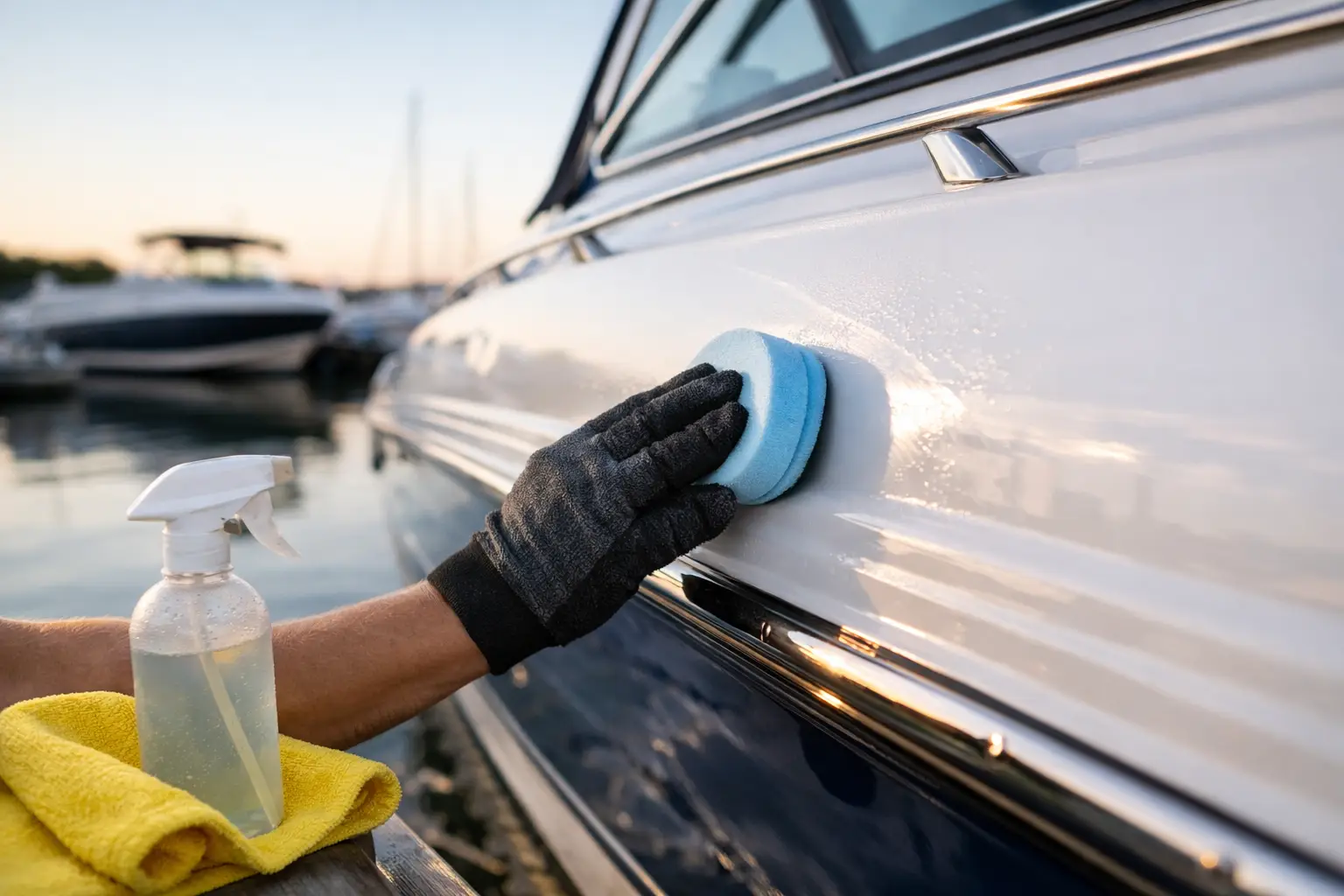
You can spend hours washing a boat, only to watch the finish haze over with white spots before the surface is even fully dry. That is why boat hard water spot prevention matters so much. On a boat, water is not just water. If it is loaded with calcium and magnesium, every rinse can leave behind minerals that cling to gelcoat, glass, stainless, paint, and fixtures.
For boat owners and captains, this is more than a cosmetic annoyance. Hard water spotting adds labor, shortens the life of finishes, and turns routine washdowns into correction work. The best prevention plan is simple: stop minerals before they hit the surface, clean in a way that does not make spotting worse, and dry with purpose instead of hoping the sun will handle it.
Why boat hard water spot prevention starts at the hose
Most hard water spots form when water evaporates and leaves dissolved minerals behind. On a boat, those deposits are easy to see on dark hulls, polished metal, glass, and eisenglass, but they do not stop there. Over time, mineral residue can bond more aggressively, making spots harder to remove and increasing the risk of buildup in plumbing, fixtures, and onboard appliances.
This is why prevention is more effective than treatment. Once minerals bake onto a surface in heat and sun, removal often requires more labor, more chemical exposure, and more risk of scratching delicate areas. If you can wash and rinse with softened water from the start, you reduce the source of the problem instead of chasing it after the fact.
Soft water changes the entire maintenance routine. Soap works better, surfaces rinse cleaner, and drying becomes faster because there are fewer minerals left behind. That means less wiping, less polishing, and less repeat work after every wash.
The real cause of water spots on boats
Boat owners often blame the sun, salty air, or the wrong soap. Those factors can make the issue look worse, but the core problem is usually mineral content in the rinse water. Hard water contains calcium and magnesium. When rinse water dries on the boat, those minerals remain.
Heat accelerates the problem. A hot deck or hull side causes water to evaporate quickly, which concentrates minerals into visible spots. Wind can also work against you by drying panels unevenly before they are properly wiped down. In marinas and coastal areas, hard municipal or well water can combine with salt residue, making surfaces look dull even after a fresh wash.
The result is familiar: spotting on glass, chalky residue on gelcoat, streaks on chrome and stainless, and a finish that never quite looks fully clean. If you are seeing that pattern after every wash, your process is not the only issue. Your water supply is part of the problem.
Boat hard water spot prevention in daily maintenance
The most reliable approach is to build prevention into every washdown, not save it for detail days. Start by washing when the surface is cool whenever possible. Early morning or late afternoon gives you more working time and reduces flash drying. If the boat is hot from direct sun, rinse and cool the section first before applying soap.
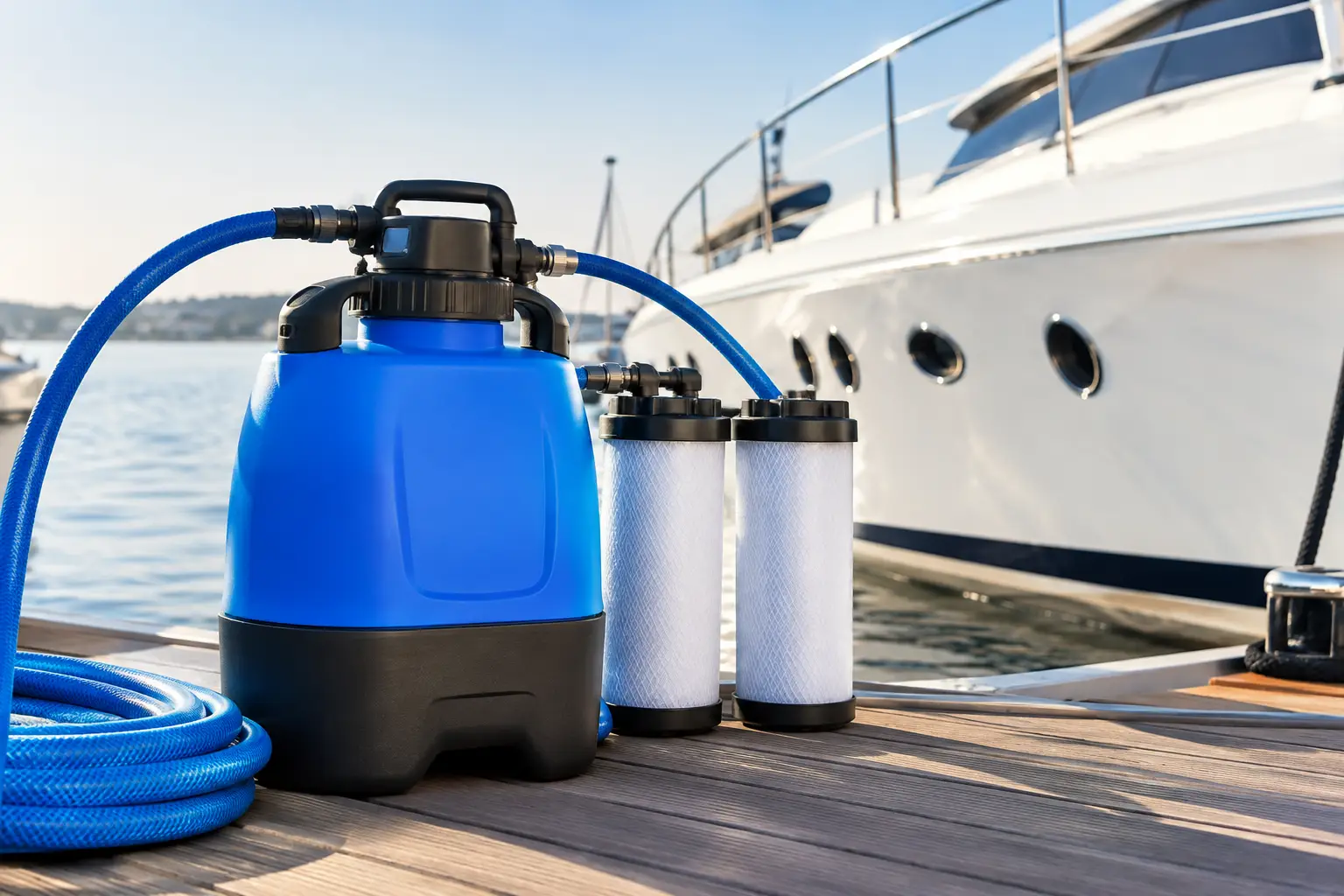
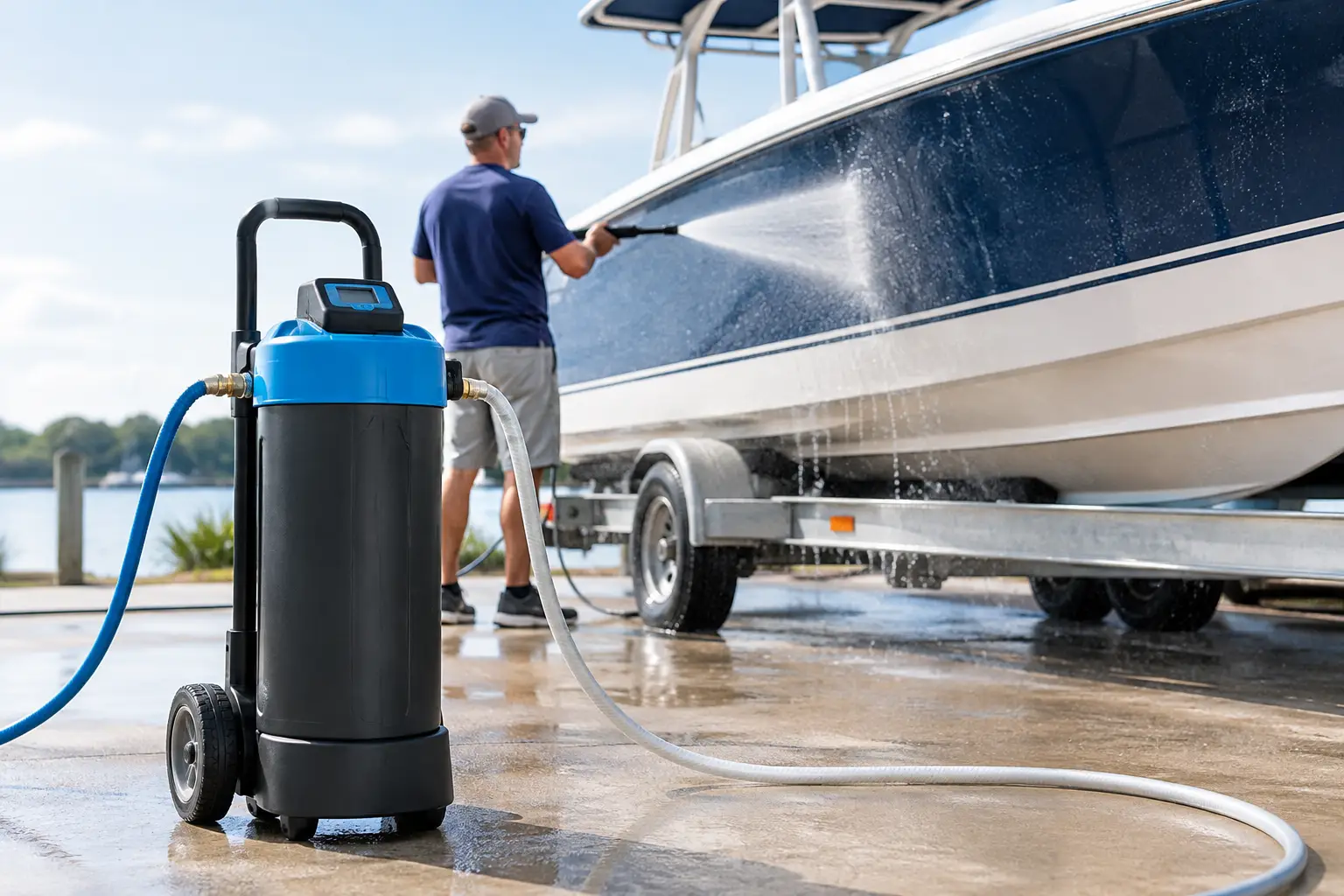
Next, use softened water for the final rinse. This is the step that has the biggest effect on spotting. You can still clean with quality marine soap and good wash tools, but if your final rinse is hard water, many of the minerals will remain on the surface as it dries. A portable soft water unit solves that problem at the source without adding complicated setup to a marina wash routine.
Drying still matters, even with soft water. Prevention does not mean neglect. It means making drying easier and more forgiving. Use clean microfiber drying towels or a soft drying tool and work panel by panel. Glass, polished metal, and dark finishes deserve extra attention because they show residue first.
The goal is not to create more steps. The goal is to stop fighting the same spots every time the boat gets washed.
Surfaces that show hard water damage fastest
Some materials reveal hard water spots immediately. Glass and eisenglass are obvious examples because any mineral film reduces clarity. Stainless steel rails, fittings, and polished metal surfaces also show spotting fast, especially in bright sun. Dark gelcoat and painted surfaces tend to highlight every dried droplet.
Other areas hide the problem at first but still suffer from buildup. Cockpit fixtures, shower heads, sinks, transom hardware, livewell components, and onboard plumbing can all collect scale over time. On larger vessels, this matters beyond appearance. Mineral buildup can affect water flow, appliance performance, and maintenance intervals.
That is why a true prevention strategy should cover both exterior washdowns and onboard water use where practical. Protecting finish quality is the visible benefit. Reducing scale in systems and fixtures is the long-term one.
What works better than spot removers
Spot removers have a place, but they should not be the foundation of your maintenance plan. Most are corrective products. They help after minerals have dried, bonded, and become visible. The trade-off is that repeated correction takes time and can be harder on sensitive surfaces if used too aggressively or too often.
Prevention is easier on the boat and easier on the owner. Softened water reduces mineral deposits before they form. Better soap performance helps contaminants release more easily. Faster drying lowers the chance of residue baking into the surface. Together, those factors reduce how often you need stronger products to restore clarity and gloss.
This matters on expensive boats because every unnecessary correction step adds wear somewhere. It may be extra wiping on eisenglass, extra polishing on metal, or more chemical use on gelcoat. Less correction generally means better long-term appearance and less labor invested to maintain it.
Choosing the right prevention setup for your boat
Not every boat needs the same soft water capacity, but the principle stays the same. The system should match the size of the vessel and the amount of water used during normal washdowns. A boat owner with a smaller vessel may need a portable unit sized for routine rinsing and wash care, while larger yachts benefit from a setup designed to handle greater demand more efficiently.
What matters most is practicality. On the dock, nobody wants a complicated system that needs power, reduces pressure, or creates extra hassle. A portable soft water system fits the boating environment when it is easy to move, simple to connect, and built to handle marine conditions. That is where products like Wet Spot have earned attention among boat owners who want straightforward protection without reinventing their wash routine.
If you wash often, prevention pays back quickly in time saved. If you keep the boat in a region with very hard water, it becomes even more valuable because the spotting cycle never really stops on its own.
Common mistakes that make spotting worse
A few habits can undermine even a good wash routine. Washing in direct midday sun is a major one because the surface dries too quickly. Letting rinse water air dry on glass or polished metal is another. So is reusing dirty towels that drag minerals and residue back across the finish.
Using hard water for the final rinse is probably the most common mistake, especially when owners assume soap choice alone will solve the issue. It usually will not. Soap can help cleaning performance, but it cannot remove dissolved minerals from the rinse supply.
There is also an overcorrection problem. Some owners attack spots with increasingly strong chemicals every weekend instead of fixing the water source. That can create a cycle of extra labor and unnecessary exposure for surfaces that would stay cleaner with a better rinse in the first place.
A better standard for clean
A properly maintained boat should not need constant spot removal just to look washed. Boat hard water spot prevention works best when it becomes part of the standard wash process: softer water, cooler surfaces, controlled drying, and fewer minerals left behind at every step.
That approach protects more than appearance. It helps preserve gelcoat, glass, metal, fixtures, plumbing, and the time you would rather spend using the boat. If your current rinse water keeps leaving proof behind, the answer is not more effort. It is a better water source and a routine built to prevent the problem before it starts.