Hard water leaves a mark fast on a boat. One rinse at the dock can dry into white spots on gelcoat, haze on glass, crust around fixtures, and mineral buildup inside plumbing. A portable water softener for boats solves that problem at the source by removing the calcium and magnesium that cause spotting, scale, and extra cleanup.
For boat owners, that matters beyond appearance. Hard water shortens the life of finishes, makes washdowns more labor intensive, and can slowly create problems in onboard systems that are expensive to fix. Soft water helps protect what you already paid for, while making routine maintenance simpler every time you wash, rinse, or fill.
Why hard water is such a problem on boats
Boats deal with enough exposure already – sun, salt, humidity, and frequent washing. Add hard water to that mix and you get a maintenance problem that keeps repeating itself. Minerals left behind after rinsing bond to surfaces and create visible spotting on dark hulls, stainless, windows, and trim. Over time, those deposits can become more stubborn and require stronger cleaners or more aggressive polishing to remove.
The bigger issue is that hard water does not stay on the surface. It also builds scale inside hoses, nozzles, faucets, showerheads, water heaters, and other onboard plumbing components. If you are pulling marina water regularly, that mineral load adds up. What starts as cosmetic annoyance can turn into restricted flow, reduced efficiency, and more wear on systems that should be working cleanly.
Soft water changes the routine. Soap works better, rinsing is easier, and surfaces dry with fewer deposits. That means less scrubbing after every washdown and less long-term buildup where you cannot see it.
What a portable water softener for boats actually does
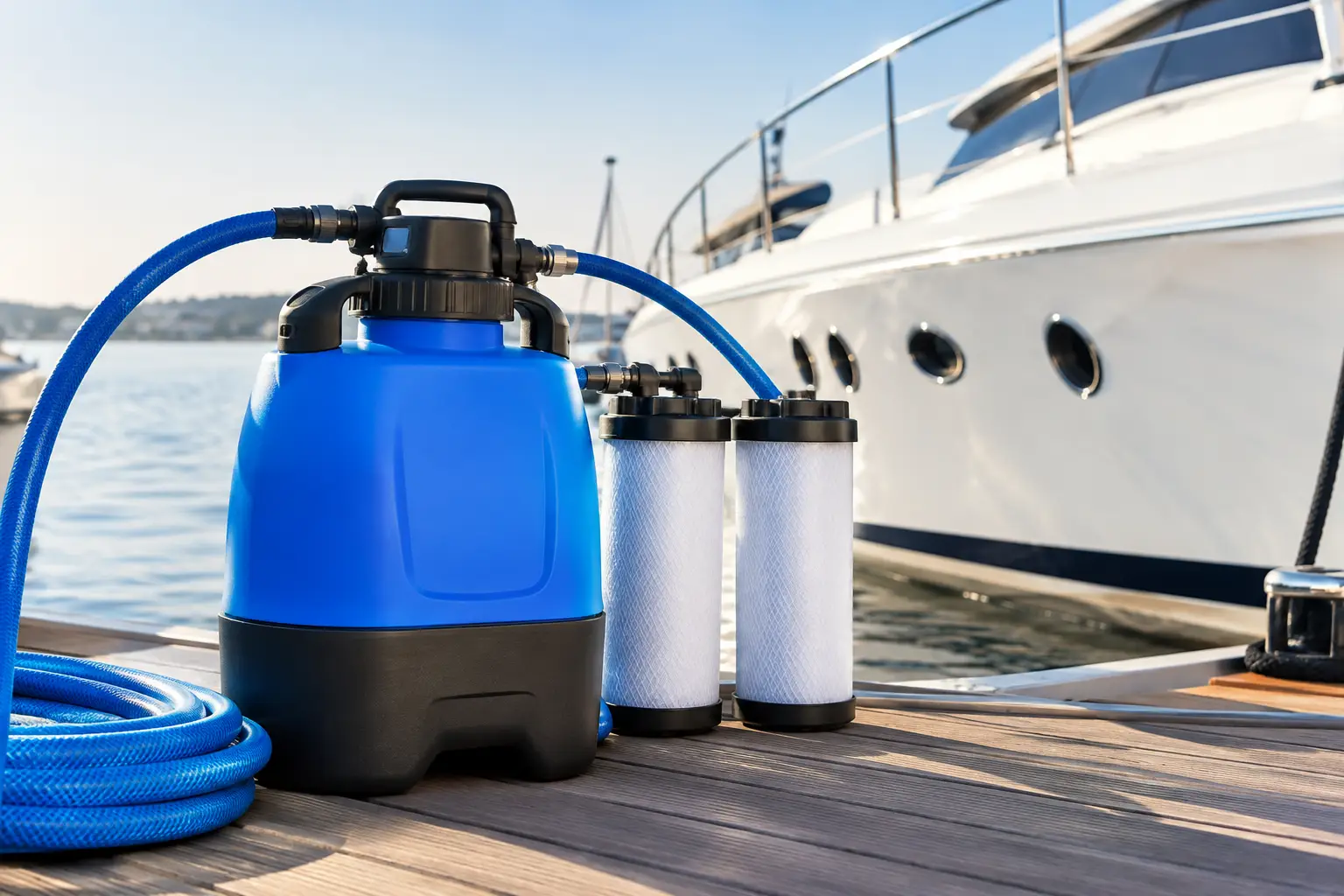
A portable water softener for boats uses ion exchange resin to remove hardness minerals from the incoming water supply. In simple terms, the unit captures calcium and magnesium before they reach your hose, wash brush, fixtures, or onboard appliances. The result is soft water that is gentler on surfaces and less likely to leave spotting or scale.
For most boat owners, the practical benefit is immediate. You wash the boat, rinse it down, and there is far less residue left behind. Glass stays clearer. Metal trim cleans up faster. Eisenglass, plastic, and painted or gelcoat surfaces are less likely to show that chalky film that hard water leaves behind.
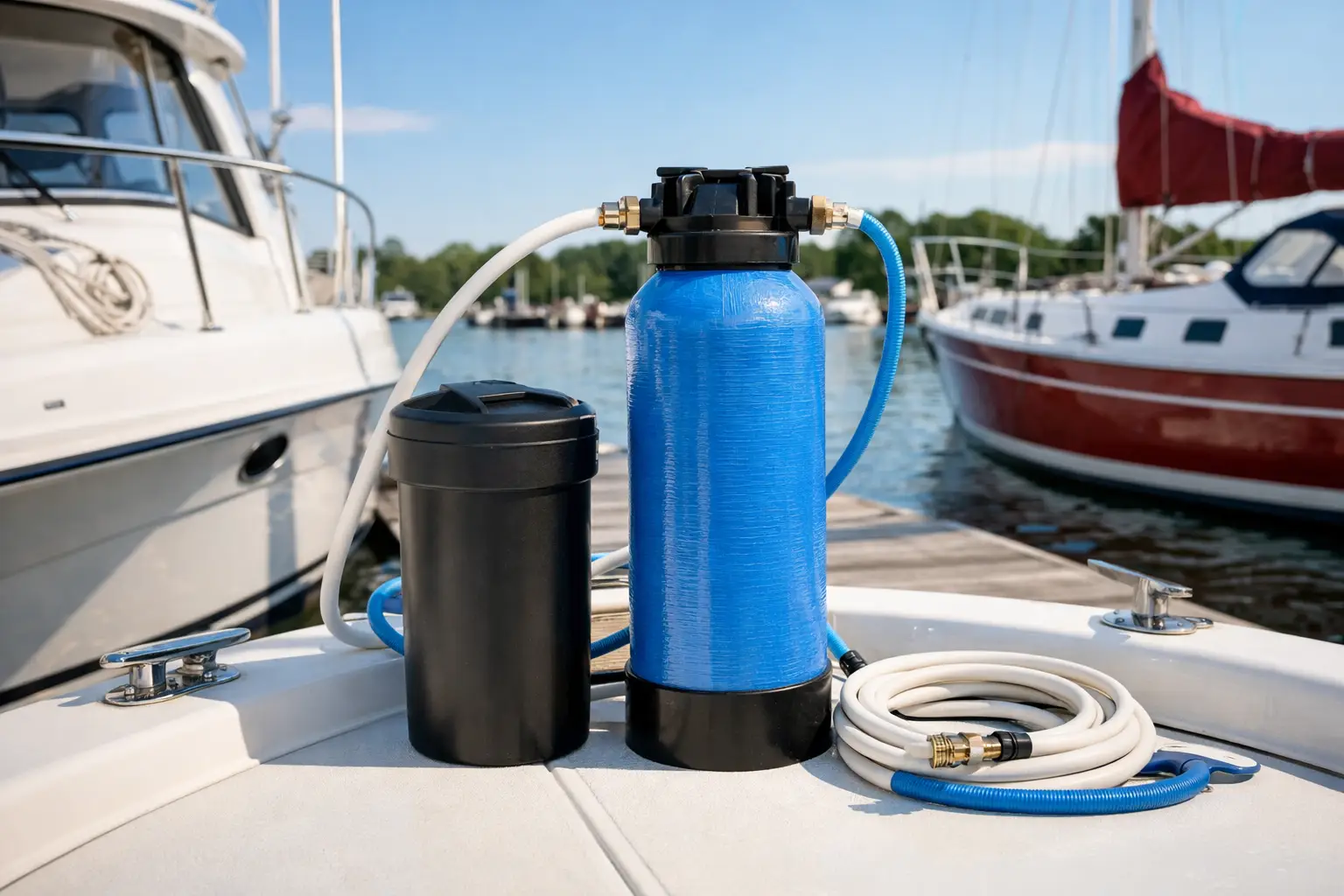
Just as important, a portable system does this without becoming a permanent install project. You connect it when and where you need it, use it for washdowns or water supply, and move it as needed. That is a major advantage for owners who keep boats at different marinas, travel seasonally, or want equipment that works across multiple uses.
Why portability matters at the dock
A built-in treatment system is not practical for every vessel. Space is limited, installation adds complexity, and many owners simply want a tool they can hook up in minutes and put away when they are done. That is where portability becomes more than a convenience. It becomes the reason the system actually gets used.
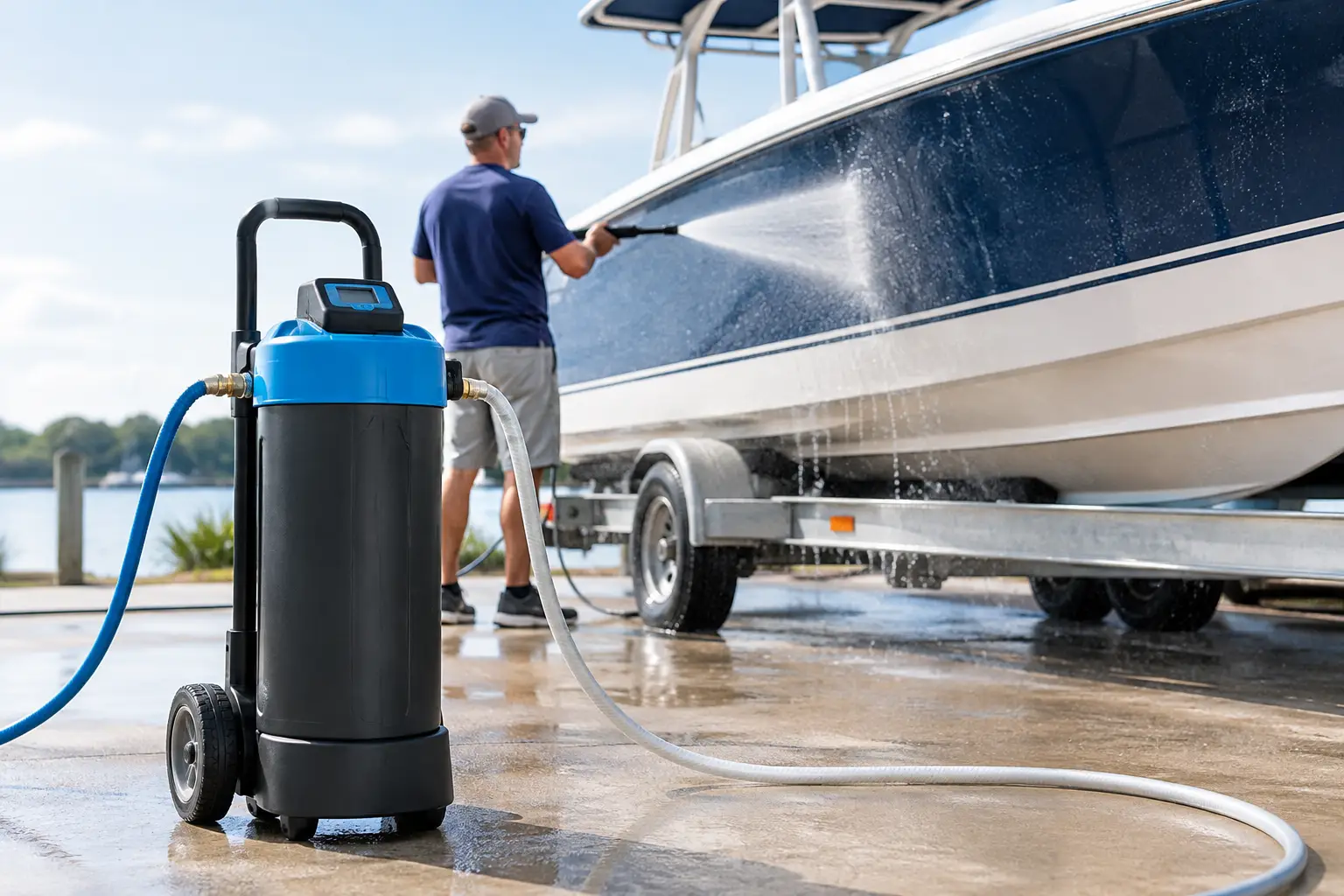
A good marine softener should be easy to transport, quick to connect, and rugged enough for a dock environment. It should also work without electrical power. At many slips and washdown areas, simplicity matters. The fewer extra steps involved, the more likely you are to protect the boat every time it is rinsed.
No-loss water pressure is another detail that matters in real use. If a system makes washing slower or weaker, owners notice immediately. A portable unit designed for marine use should deliver the benefit of soft water without turning a basic washdown into a drawn-out job.
Choosing the right portable water softener for boats
The right size depends largely on the vessel and the way you use water. A smaller recreational boat with regular rinse-downs has different needs than a larger yacht with more onboard fixtures, more frequent use, and higher water demand. Sizing the system correctly means you get enough softened water capacity for the job without overcomplicating storage or handling.
This is where generic advice falls short. Boat length is often a useful starting point because it usually reflects water demand, washdown area, and onboard system complexity. For example, one size may make sense for boats up to 70 feet, another for boats from 70 to 100 feet, and a larger option for vessels over 100 feet. That structure keeps selection practical and tied to real-world use instead of abstract specifications.
Usage habits also matter. If you mainly want spot-free washdowns after weekend trips, your needs may be different from an owner or captain managing frequent rinses, crew use, showers, and dockside supply water. There is no benefit in guessing small and running short, but there is also no reason to choose more system than your operation needs.
What to look for in a marine-ready unit
Not every portable softener is built for the realities of boat ownership. Marine use demands durable construction, simple maintenance, and dependable performance in an environment that is hard on equipment.
Start with materials and build quality. A marine-grade unit should be made to handle transport, dock storage, and repeated hookup cycles without becoming fragile or fussy. If the housing, fittings, or connections feel like they belong in a residential utility closet, that is usually a sign the unit was not designed with boats in mind.
Next, look at maintenance. Manual recharge is often the practical choice for portable softeners because it keeps the system independent of electrical hookups and complicated service requirements. When recharge is straightforward, owners are more likely to keep the unit working properly rather than postpone maintenance until performance drops.
Warranty also matters more than many buyers think. A long warranty says something about how the manufacturer expects the product to hold up over time. For owners protecting expensive assets, a durable system backed for the long haul makes more sense than replacing lesser equipment every few seasons.
Where soft water pays off on a boat
The most obvious benefit is appearance. Soft water helps reduce spotting on gelcoat, painted surfaces, stainless, glass, chrome, and trim. That means less wiping after rinsing and less corrective work later. On darker finishes, where hard water spots show up immediately, the difference can be especially noticeable.
But the real payoff is broader. Plumbing components stay cleaner. Fixtures collect less scale. Water heaters and onboard appliances are less exposed to mineral buildup that can reduce performance over time. Even basic cleaning becomes more efficient because soaps and cleaners work better in soft water than in hard water.
That improved cleaning efficiency matters for owners and crews alike. If every wash requires less scrubbing and fewer repeat passes, maintenance becomes easier to stay on top of. For a high-value vessel, easier routine care is not a small thing. It helps preserve the condition that protects resale value and reduces preventable wear.
It depends on how you use your boat
Some owners use a portable softener mainly for exterior washdowns. Others want it inline with dock water whenever the boat is supplied. Both approaches can make sense.
If your main frustration is water spotting after rinsing, using the unit during washdowns may be enough to make a visible difference. If you are more concerned about long-term plumbing scale, appliance protection, and broader onboard use, connecting it more consistently may be the better approach. The right setup depends on how often the boat is used, the hardness of the local water, and which problems you are trying to prevent first.
It is also worth being realistic about expectations. Soft water significantly reduces mineral problems, but it is still one part of proper care. Boats in salt-heavy environments still need regular cleaning, and neglected deposits are always harder to remove than fresh ones. The value of a softener is that it removes a recurring source of damage and extra labor before it starts.
A practical tool, not a luxury
For many owners, a portable water softener sounds optional until they have spent enough time fighting hard water spots, cleaning scale off fixtures, or chasing buildup through plumbing and appliances. After that, it starts to look less like an accessory and more like a preventive maintenance tool.
That is the right way to think about it. A well-built portable system protects finishes, supports cleaner onboard water use, and cuts down on the repetitive labor that hard water creates. The best units do it simply – no electrical hookup, no complicated installation, no unnecessary strain on water flow. Wet Spot built its reputation on exactly that kind of straightforward performance.
If you are serious about keeping a boat cleaner, easier to maintain, and better protected over time, soft water is one of the simplest upgrades you can put at the dock.