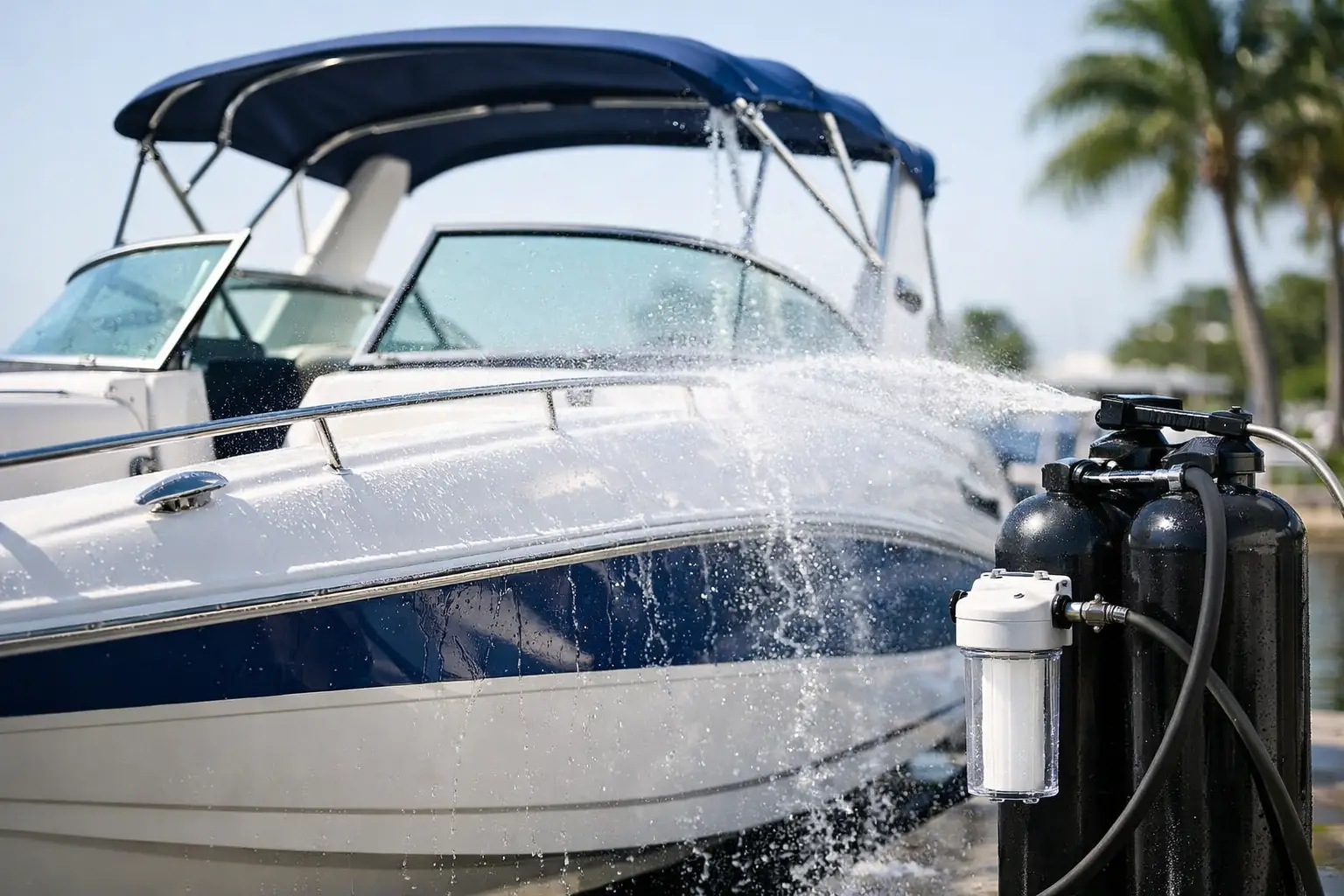
A boat can look perfect when the hose is put away and still dry with white rings on the gelcoat, haze on glass, and mineral marks around every fitting. A spot free rinse for boats addresses the problem at its source: the hard water left behind after a washdown. Instead of spending more time chasing spots with detail spray and towels, owners can rinse with softened water that is far less likely to leave calcium and magnesium deposits behind.
For boat owners and crews, that matters because washdowns are not occasional work. They are part of protecting a valuable asset. The water used at the dock, marina, or home can either make that work easier or create another round of cleaning once the boat dries.
What a Spot Free Rinse for Boats Actually Does
Hard water contains dissolved minerals, primarily calcium and magnesium. When rinse water evaporates, those minerals remain on the surface. On a dark hull, they can show up immediately as white spotting. On stainless steel, glass, plastic, and eisenglass, repeated exposure can leave dullness, crusty buildup, and stains that become more difficult to remove over time.
A portable water softener removes the calcium and magnesium responsible for hardness before water reaches the hose. Softened water also helps soap work more effectively, so wash water rinses away cleaner and with less residue. The result is a more consistent finish with less hand drying, less polishing, and fewer mineral deposits around rails, fixtures, and deck hardware.
There is a useful distinction to make. Softened water is not the same as laboratory-pure or fully deionized water. A true zero-total-dissolved-solids rinse requires different equipment and may be useful for specialty detailing applications. For routine marine washdowns, however, removing hardness minerals is the practical step that makes the biggest difference in visible spotting and scale. Results can still vary based on the source water, salt spray, air temperature, and how quickly the boat dries.
Why Hard Water Is a Maintenance Problem, Not Just a Cosmetic One
Water spots are the visible symptom. The larger concern is repeated mineral buildup in places that are harder to inspect and clean. Hard water can accumulate around shower fixtures, galley faucets, washdown connections, and onboard appliances. It can reduce cleaning performance, leave scale in plumbing, and add to the maintenance burden on a boat that already operates in a demanding environment.
On the exterior, minerals settle into the small textures and pores found in gelcoat, non-skid, vinyl, and weathered seals. If they are allowed to sit, routine washdown marks can require acidic cleaners, extra scrubbing, or professional correction. Those methods have their place, but they should not be the normal answer to rinse water residue.
Soft water gives owners a better starting point. It helps reduce the deposits that cause stubborn spotting in the first place, which means less aggressive cleanup is needed later. That is especially valuable on boats with extensive stainless, large glass surfaces, bright white gelcoat, dark painted sections, or clear vinyl enclosures that show every mark.
A Better Washdown Process Starts at the Water Source
A spot-free result is not only about the final rinse. It begins with a washdown routine that keeps salt, grime, and mineral residue from building up layer after layer.
Start by rinsing the boat thoroughly after use, particularly after exposure to saltwater. Salt should not be allowed to dry on gelcoat, metal, windows, or canvas hardware. Use a marine-appropriate soap for the wash stage, then rinse from the top down so dirty water does not run back over clean areas.
For the final rinse, use softened water where practical. This is the point where hard water usually creates the most visible trouble, since the remaining rinse water dries across the finish. Work in manageable sections when the sun is strong or the surface is hot. Even softened water dries faster in direct heat, and fast evaporation can still leave light residue from whatever remains in the water or on the surface.
If the boat has heavy salt film, old oxidation, or existing mineral staining, a softened rinse will not erase that damage on its own. The surface may need proper cleaning or correction first. Once it is restored, using softened water helps keep it that way with less work.
Why Portability Matters at the Dock
Fixed water treatment systems can make sense at a permanent location, but many boat owners need a solution that travels. The boat may be kept at a marina with no room for permanent equipment, moved between slips, stored at home during part of the year, or serviced in different locations.
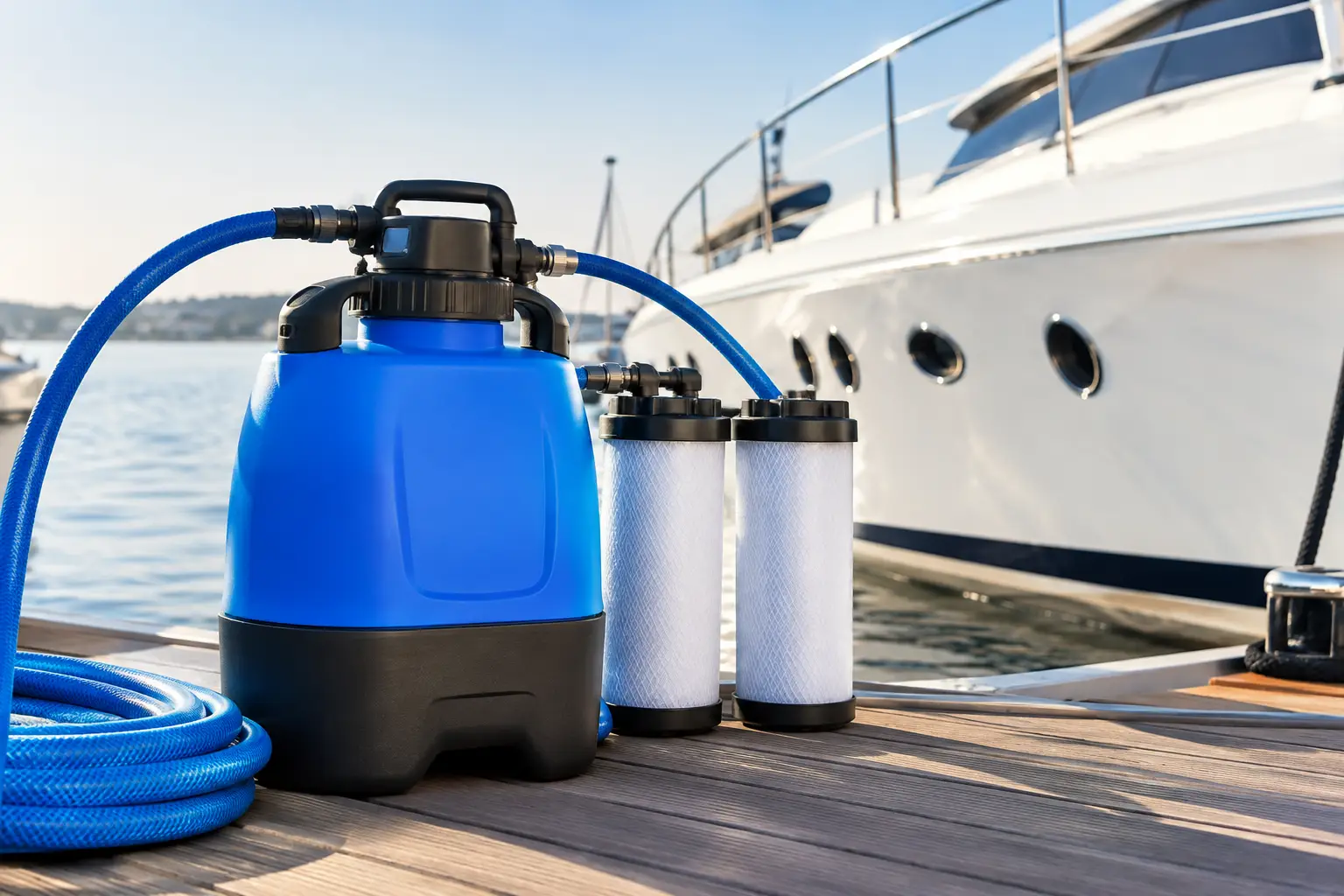
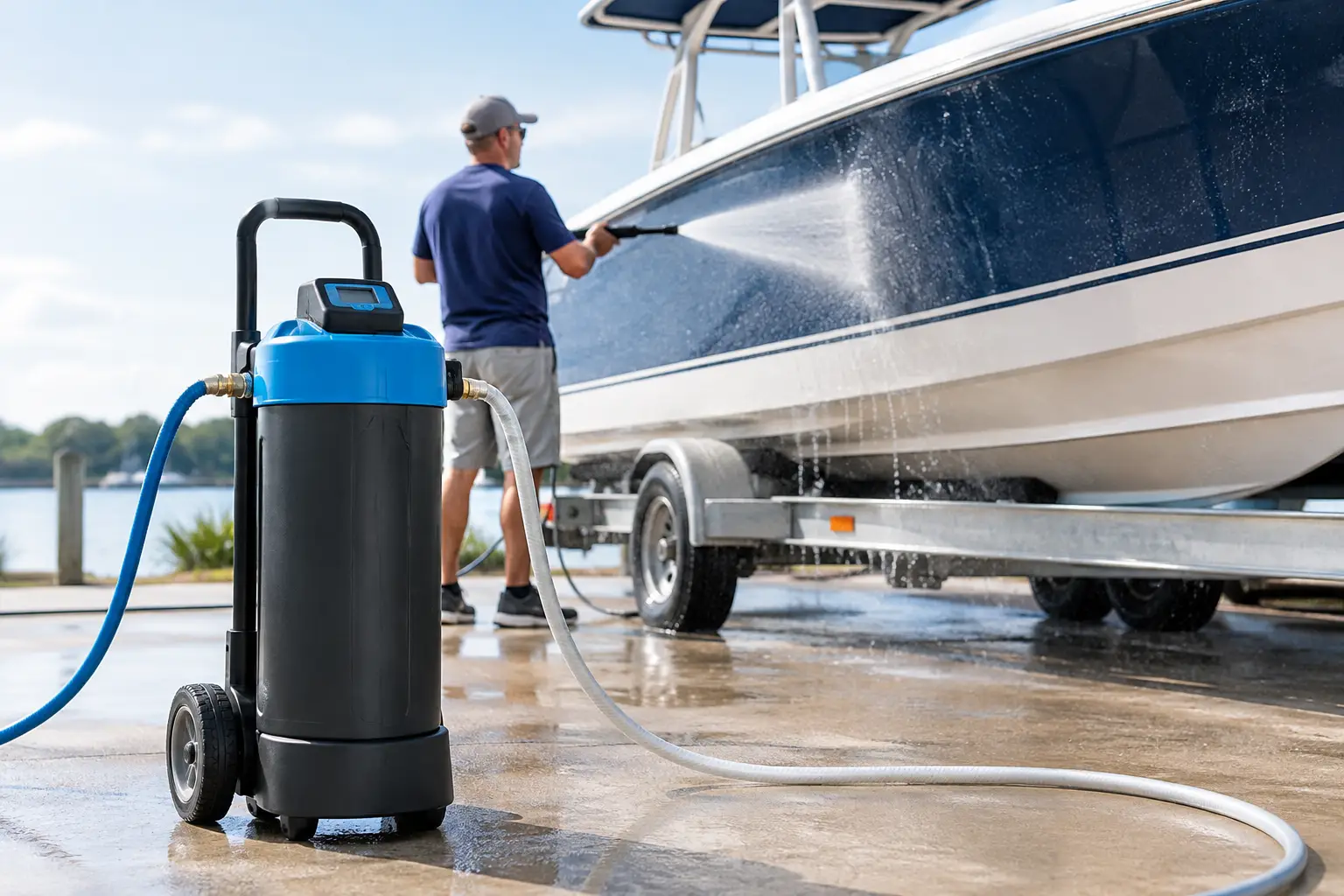
A portable soft water system connects where the water is available and does not require electrical power or a permanent installation. That is a practical advantage at a dock, on a trailer, or in a service area where dependable water pressure matters. It also allows the same equipment to be used for other hard-water jobs, such as rinsing a tow vehicle, RV, or other valuable equipment.
Capacity should match the job. A small center console and a large yacht do not have the same water demand, surface area, or rinse requirements. Choose a system sized for the vessel and typical washdown routine, not simply the shortest or least expensive option. For larger boats, enough soft-water capacity helps the crew complete a full rinse without changing the process halfway through.
Simple Maintenance Keeps Soft Water Working
Portable softeners are straightforward, but they are not maintenance-free. The resin inside the unit captures hardness minerals until it reaches capacity. It then needs to be recharged with salt according to the system instructions. This restores the resin so it can continue removing calcium and magnesium from incoming water.
Recharge timing depends on water hardness and how much water is used. A marina in an area with very hard municipal water will use capacity faster than a location with moderately hard water. Large washdowns, frequent rinsing, and onboard use also affect the schedule. Paying attention to changes in spotting or soap performance helps identify when recharge is due.
Protect the unit as you would other marine equipment. Keep fittings clean, avoid damage during transport, and store it properly when not in use. A rugged, marine-grade unit is built for real-world handling, but routine care protects the investment and keeps it ready at the dock.
Where Softened Water Pays Off Most
The benefit is easy to see on a freshly washed hull, but the value extends across the boat. Stainless rails and hardware stay easier to maintain when mineral residue is reduced. Windows and windshields dry cleaner. Clear vinyl can require less wiping, which helps avoid unnecessary scratching. Shower fixtures, faucets, and plumbing components face less exposure to scale-forming water.
Softened water is also useful when cleaning canvas, cushions, deck furniture, and other surfaces where residue can dry into seams or textured materials. It will not replace the correct cleaner for mildew, fuel stains, rust, or oxidation. What it does is remove a recurring source of deposits that makes every other maintenance task more difficult.
For owners who pay for detailing, better rinse water can also protect that work. Wax, sealants, and coatings still need proper care, but they are not constantly being covered with hard-water minerals after each washdown. That helps preserve the clean, finished appearance that detailing is meant to deliver.
Protect the Finish Between Detail Appointments
A clean boat is easier to inspect, easier to maintain, and more enjoyable to use. More importantly, it is easier to preserve. Reducing hard-water spotting means less rubbing, fewer harsh chemicals, and less time correcting problems that began with the final rinse.
Wet Spot portable soft water systems are built for that practical purpose: dependable soft water without electrical hookups, complicated installation, or lost water pressure. The right rinse water turns the last step of a washdown into protection for the surfaces, fittings, and systems you expect to last.
The next time spots appear after a wash, look past the towel and the cleaner. The better long-term fix may be the water coming out of the hose.