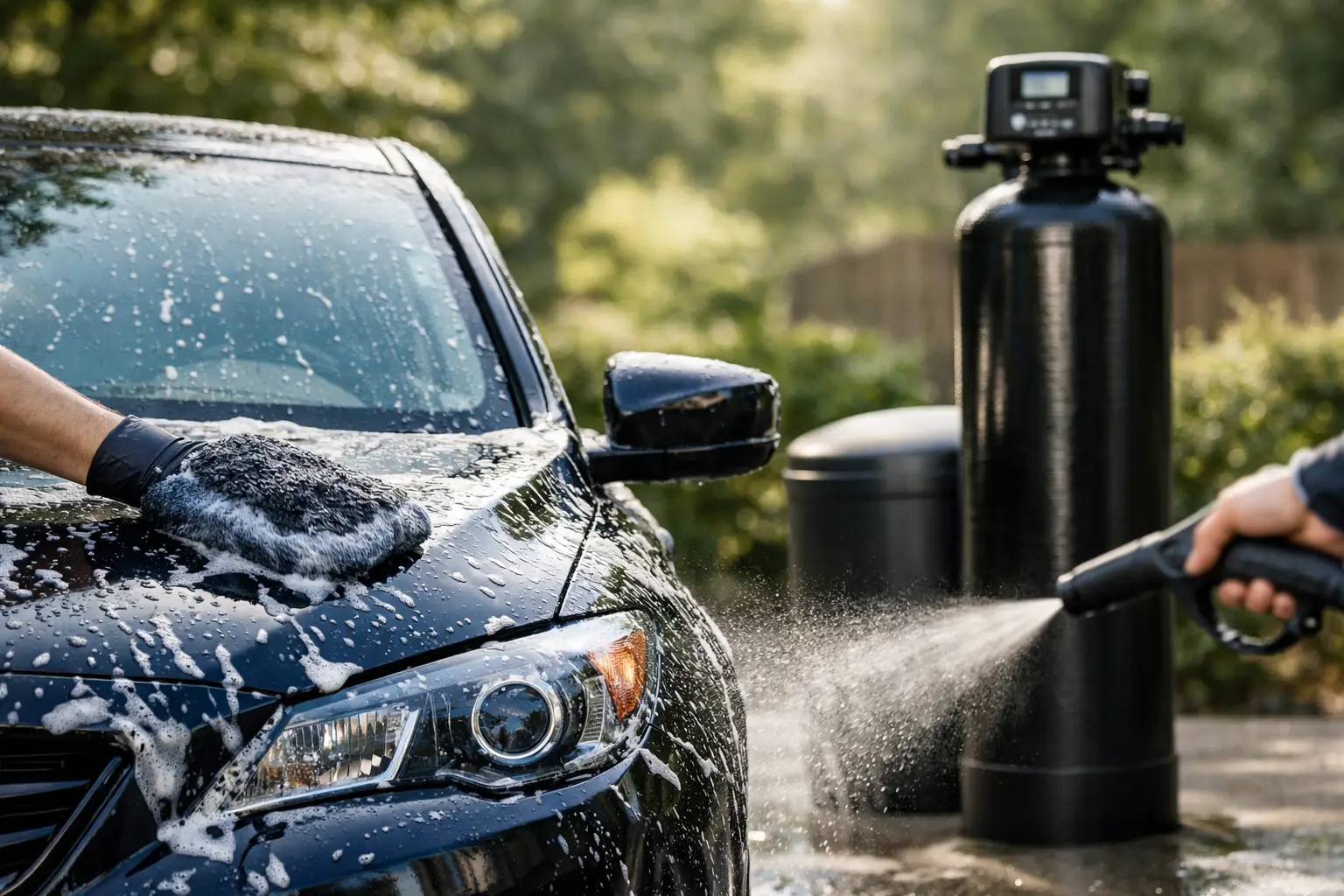
A water softener for car washing is not a luxury when your hose water dries into white spots on paint, glass, chrome, and black trim. Those marks are minerals left behind after the water evaporates. They make a clean vehicle look neglected, add time to every wash, and can become difficult to remove if they bake in the sun.
For owners who take pride in their vehicles, the goal is simple: wash with water that works with your soap instead of against it. Soft water reduces the calcium and magnesium that cause hard-water spotting and scale. It rinses more cleanly, improves soap performance, and helps protect the finish you have already invested time and money to maintain.
Why Hard Water Makes Car Washing Harder
Hard water carries dissolved minerals, primarily calcium and magnesium. While the water is flowing, those minerals are invisible. Once droplets dry, they remain on the surface as spots, haze, or a chalky film. On dark paint, glass, polished metal, and glossy trim, the result is especially obvious.
A quick wipe is not always enough. Mineral residue can cling to paint and glass, and repeated exposure can leave deposits around emblems, mirrors, door handles, wheel barrels, and body seams. On neglected vehicles, hard-water spotting may require a dedicated spot remover, polishing, or professional correction to restore clarity.
Hard water also reduces the effectiveness of car wash soap. Minerals interfere with the way soap lathers and rinses, so it can take more product and more water to get the same result. That does not make a good wash soap ineffective, but it does mean the water source is working against the wash process.
What a Water Softener for Car Washing Does
A portable water softener uses ion-exchange resin to remove hardness minerals from the incoming water. Calcium and magnesium are exchanged for sodium ions, producing soft water that is far less likely to leave mineral scale behind.
The practical difference shows up during the wash. Soap lathers more easily. Surfaces rinse with less residue. Towels glide more smoothly during drying, and you are less likely to find fresh white spots after the vehicle has been sitting in the driveway or garage.
A water softener does not replace proper washing technique. You still need a quality soap, clean wash media, safe drying towels, and attention to hot panels. It also does not remove every dissolved solid from water the way a deionization system can. But for routine washing, soft water addresses the hardness minerals responsible for many of the spots and deposits owners fight most often.
Where Soft Water Makes the Biggest Difference
The benefit is not limited to painted body panels. Soft water is useful anywhere mineral deposits can collect or become visible. This includes windshields and side glass, chrome and polished metal, wheels, grille openings, plastic trim, weather seals, and engine-bay components.
It is particularly valuable for vehicles with expensive or difficult-to-maintain finishes. Black vehicles, dark metallic paint, ceramic-coated paint, polished aluminum wheels, and large SUVs or trucks can show water spotting quickly. Owners of RVs, tow vehicles, collector cars, and vehicles stored near marinas also know how fast regular washdowns can become a recurring maintenance job.
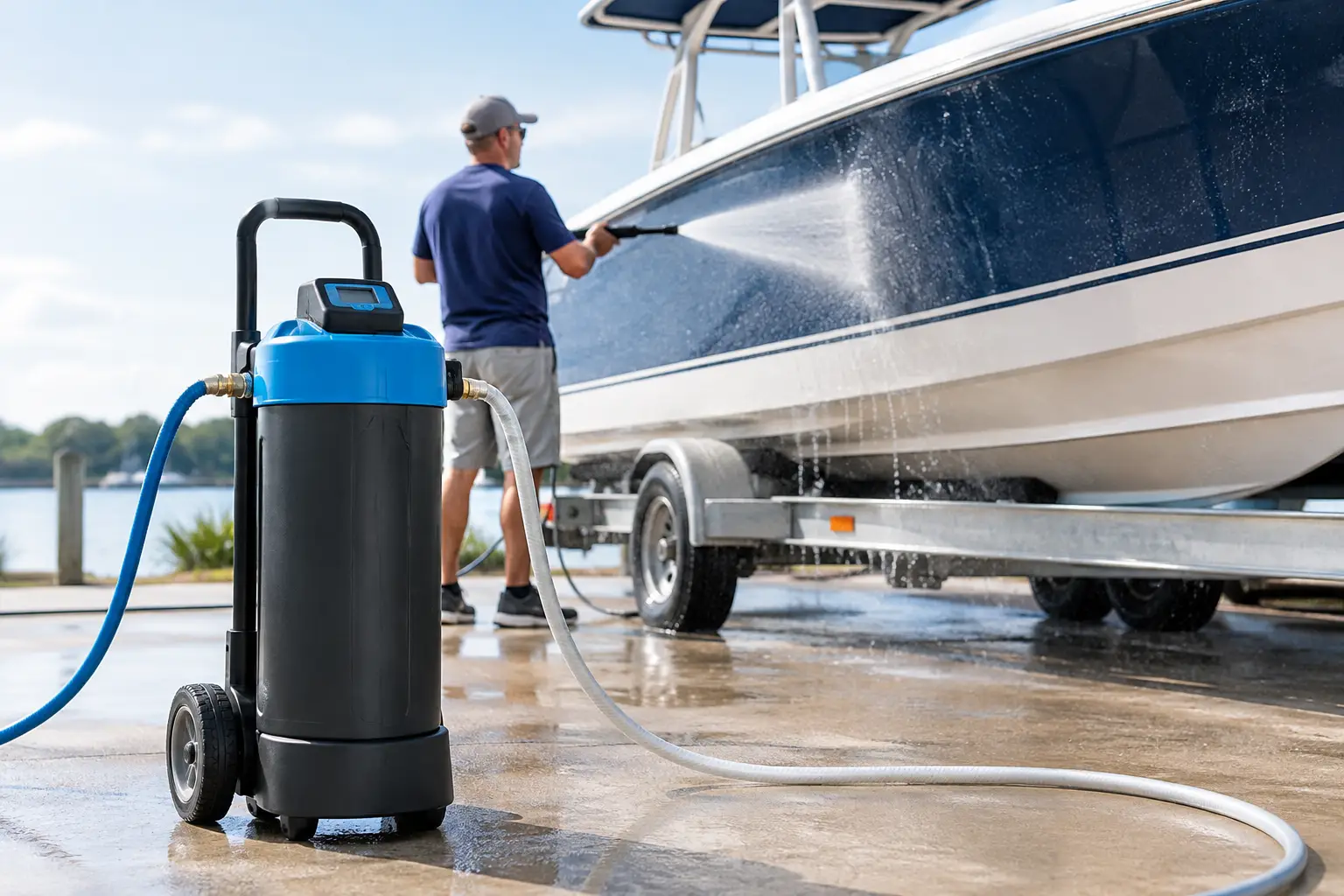
Soft water can be just as useful for mobile detailers and caretakers who wash several vehicles at different locations. Instead of relying on the water quality at every customer’s house, a portable unit gives the operator a more consistent wash water source without a permanent installation.
Soft Water Versus Deionized Water
A water softener and a deionized water system solve related but different problems. Softening removes calcium and magnesium, which are the primary causes of hard-water scale and many visible spots. Deionized water removes a broader range of dissolved minerals and is often used for a final spot-free rinse.
If you want the lowest possible risk of drying residue on a show vehicle, deionized water may have a place in your process. The trade-off is cost, water quality capacity, and maintenance. Deionization media can be consumed quickly in very hard-water areas, particularly when used for an entire wash rather than a final rinse.
For most owners, a portable softener is the more practical everyday tool. It improves the wash from start to finish, uses no electrical hookup, preserves normal water pressure, and can be recharged for continued use. It is a durable answer to hard water without turning a routine wash into a complicated water-treatment project.
Choosing the Right Portable Softener
The right size depends on how much water you use, how hard your local water is, and how often you wash. A compact unit may suit a single car owner who washes at home. Larger-capacity equipment makes more sense for frequent washing, larger vehicles, RVs, boats, or a mobile operation where downtime for recharge matters.
Do not choose by vehicle size alone. A small car washed weekly with very hard water can use softening capacity faster than a larger vehicle washed occasionally with moderately hard water. High-flow rinsing, pressure-washer use, and long washdowns also affect capacity.
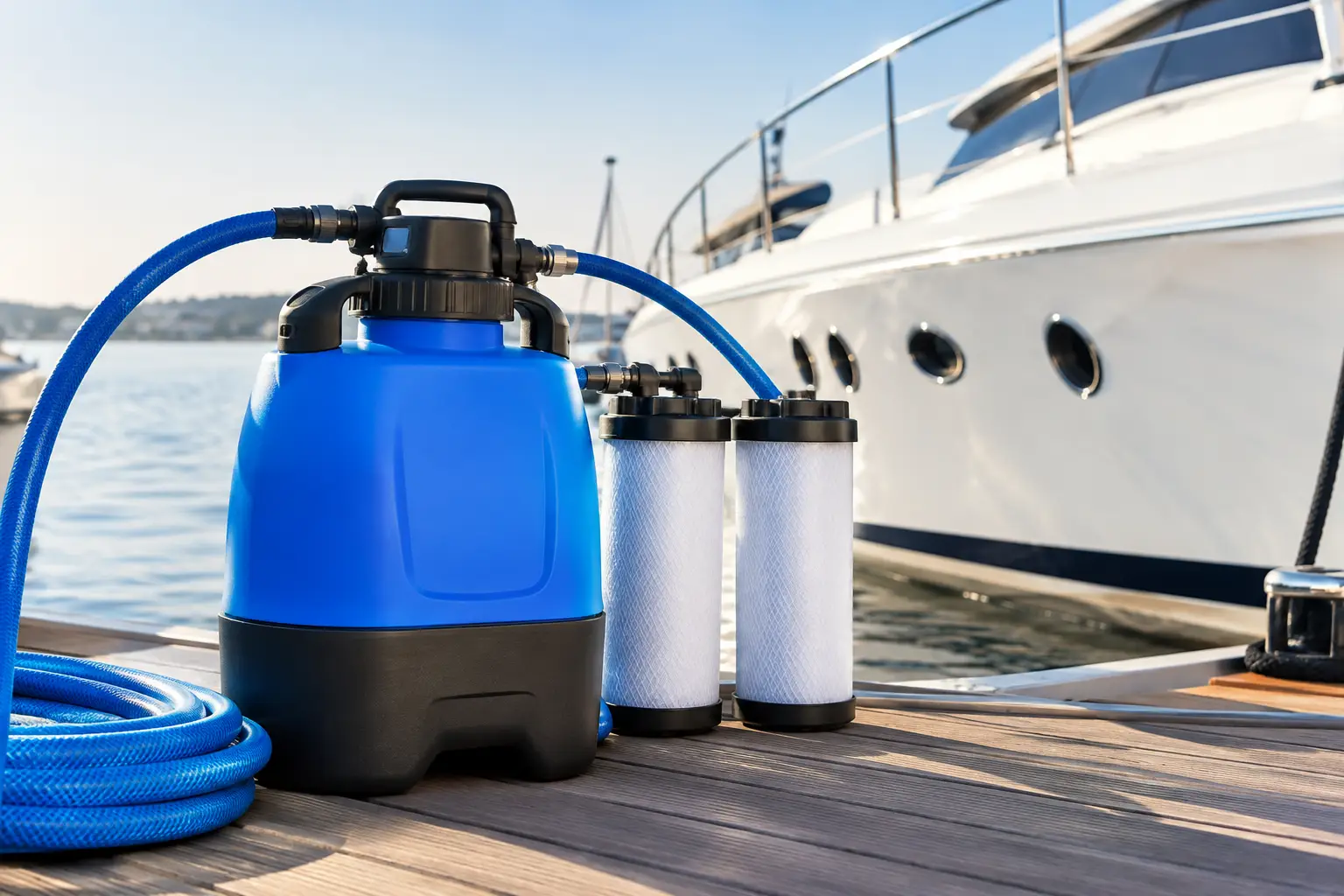
Construction matters as well. A portable system should be easy to transport, connect to a standard water source, and operate outdoors. For customers who own both vehicles and boats, rugged marine-grade construction is a practical advantage. The same unit may be used for a driveway wash, an RV washdown, or keeping a boat’s gelcoat, glass, metal, and onboard fixtures free of scale.
Wet Spot portable water softeners are built for that kind of real-world use: no power requirement, no complicated installation, and manual recharge when the resin needs to be refreshed. The point is dependable soft water where you need it, not another piece of equipment that stays in the garage because setup is a hassle.
Getting Better Results From Every Wash
Soft water improves the process, but a few habits will protect the finish even further. Work on cool surfaces whenever possible, especially in strong sun. Rinse thoroughly so loose grit does not become wash-induced scratching. Keep wash mitts and drying towels clean, and dry the vehicle before water has a chance to sit and evaporate.
Pay close attention to areas that trap water. Mirrors, fuel doors, grilles, wheel spokes, badges, trim gaps, and door jambs can release hidden water after you think the vehicle is dry. Soft water reduces mineral residue in these areas, but blowing out crevices or making a final towel pass prevents drips from spoiling the finish.
You should also follow the unit’s recharge instructions rather than waiting until spotting returns. Regenerating the resin on schedule maintains performance and helps ensure the system is ready for the next wash. It is straightforward maintenance that protects the value of the equipment and the vehicle.
Is It Worth It for Your Vehicle?
A water softener is worth considering if you regularly see white spots after washing, use more soap than expected, or spend too much time removing mineral deposits from glass, wheels, and trim. It is also a sensible investment when the vehicle itself is expensive to maintain. Paint correction, glass polishing, wheel restoration, and repeated detailing cost more than preventing hard-water buildup in the first place.
The value increases when one portable system serves several assets. A household may use it on cars, an RV, a boat trailer, and the boat itself. A caretaker can move it between storage locations. A mobile detailer can bring consistent soft water to each job.
Clean water will not replace careful washing, but it gives careful washing a better result. When hard water is no longer leaving minerals behind, the finish stays clearer, drying becomes easier, and every wash does more to preserve the vehicle than to create the next cleanup job.