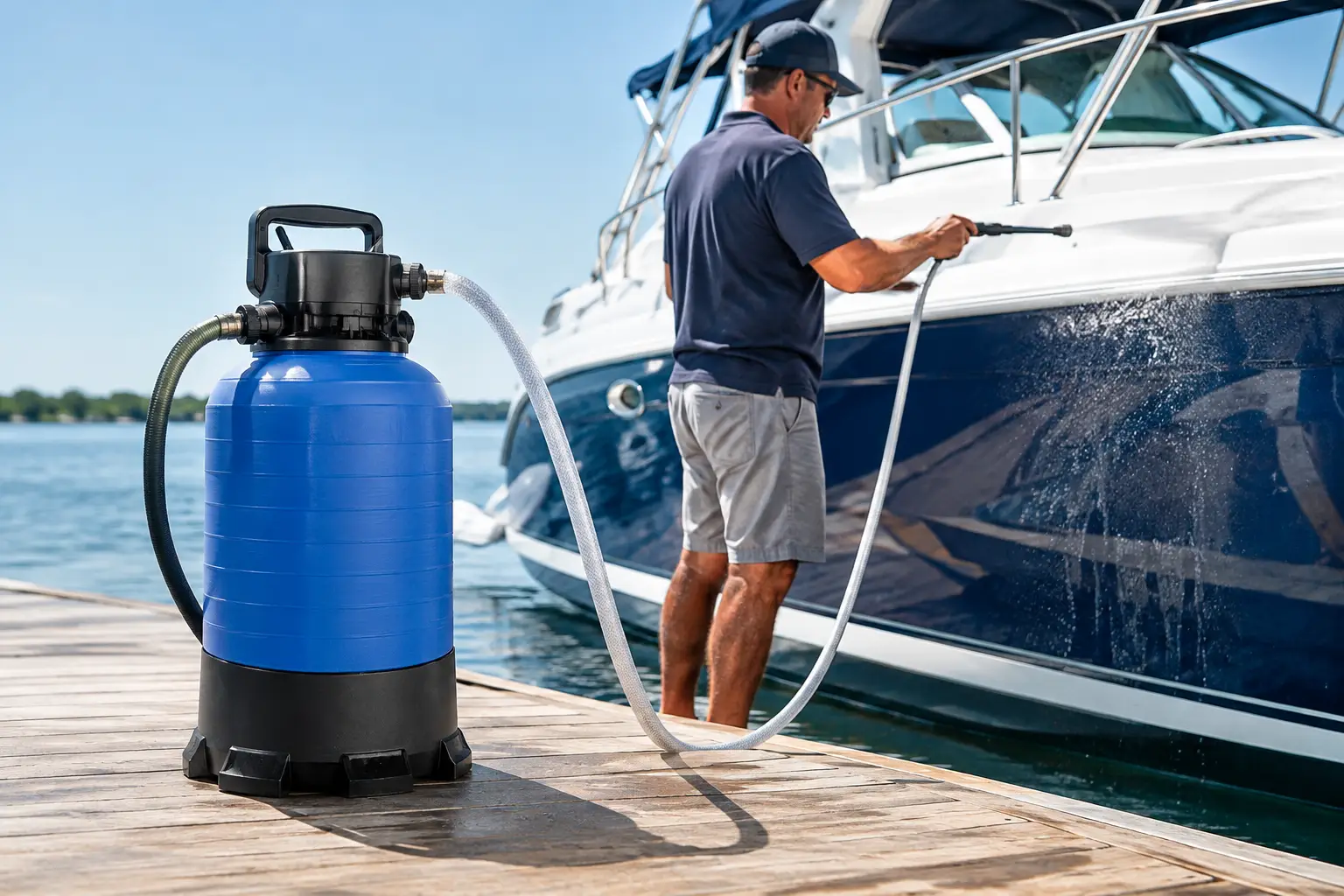
A boat can look perfectly clean at the dock, then dry into a patchwork of white spots before the next line is tied off. That is the frustrating part of boat detailing with hard water: the washing is done, but the minerals left behind keep working against the finish. Calcium and magnesium dry on gelcoat, glass, metal, plastic, and clear vinyl, turning routine washdowns into repeated polishing, wiping, and spot removal.
For boat owners and caretakers, better detailing does not begin with more products. It begins with better water. Soft water helps soap work as intended, rinses more cleanly, and leaves far less mineral residue behind. That means less time correcting the results of a washdown and more protection for the surfaces that make a boat expensive to own.
Why Hard Water Creates Boat Detailing Problems
Hard water contains dissolved minerals, primarily calcium and magnesium. While the water is wet, those minerals may not seem like much of a problem. Once the water evaporates in the sun or wind, the minerals remain on the surface. They appear as spots, hazy film, chalky streaks, and crusty buildup around hardware, drains, and fixtures.
On a boat, this happens everywhere. Gelcoat gets spotted after a rinse. Stainless rails and fittings lose their clean finish. Glass becomes difficult to see through. Clear vinyl can develop a cloudy appearance. Black trim shows every dried droplet, while polished metal quickly reveals water marks that require another pass with a towel or cleaner.
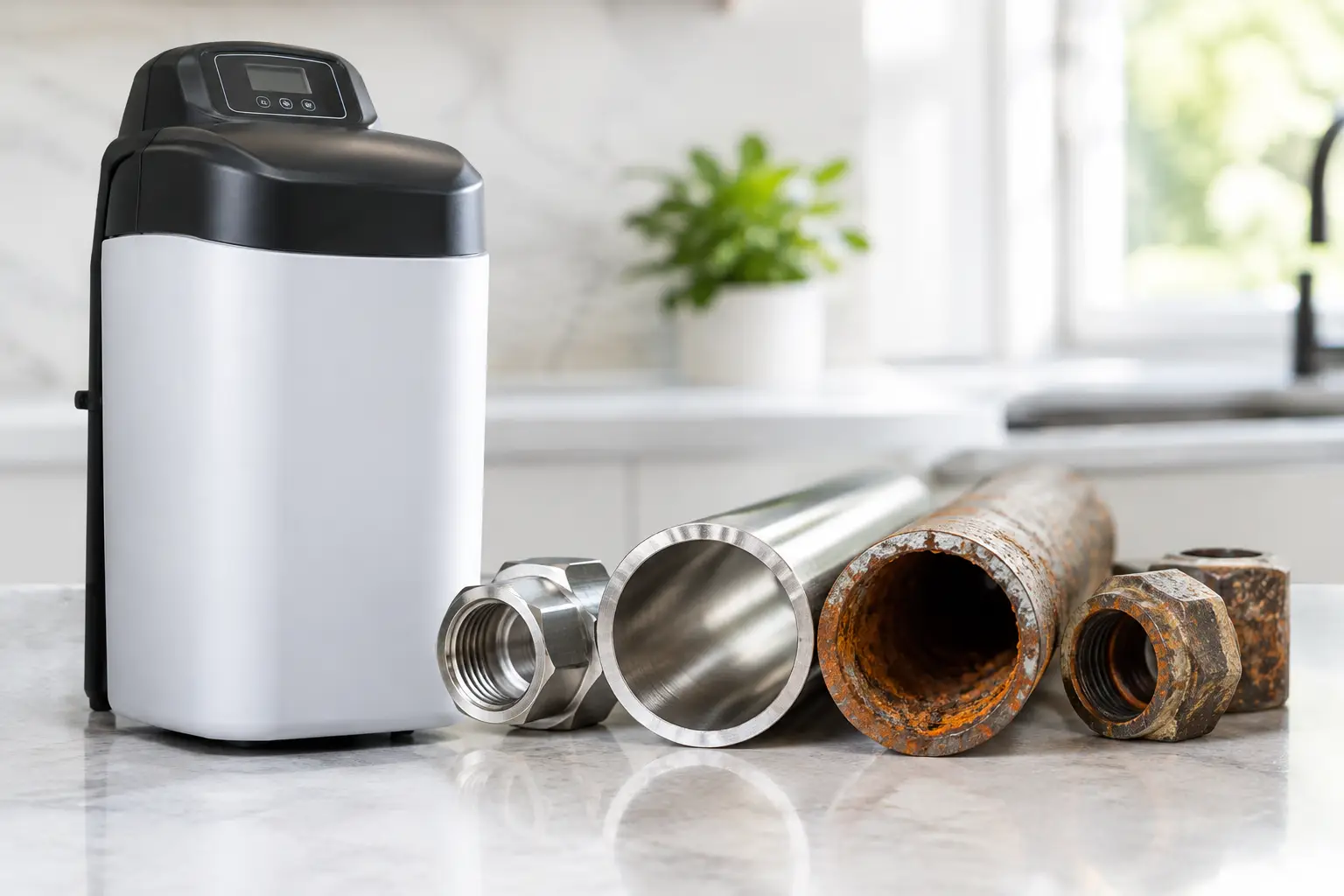
The problem is not only cosmetic. Repeated mineral deposits can make routine maintenance harder over time. Buildup around faucets, shower fixtures, washdown connections, and onboard appliances can restrict flow and leave deposits where they are difficult to clean. The longer minerals are allowed to dry and accumulate, the more aggressive the cleanup often becomes.
A detailer can remove existing spotting, but prevention is more efficient than correction. Reducing mineral content in wash water gives every washdown a better starting point.
Better Water Makes Boat Detailing More Efficient
Soft water changes the basic wash process. With fewer hardness minerals in the water, boat soap can lather and lift grime more effectively. It rinses away more completely instead of combining with minerals to leave residue on the surface. That can reduce the amount of soap required and the amount of hand drying needed after a wash.
This matters most when a boat is washed often. Owners in coastal marinas may rinse salt spray after every outing. Freshwater boaters may deal with hard dock water that leaves stubborn spotting after each weekend on the water. In either case, frequent washdowns compound the issue. A small amount of mineral residue left behind once may not be alarming. Left behind week after week, it becomes part of the maintenance workload.
Soft water does not eliminate the need for proper drying, quality marine-safe cleaners, or regular protection. Direct sun, airborne dust, salt, and organic grime still affect a boat’s finish. But it reduces one major cause of spots and film before they can form. That is a practical advantage for any owner who would rather maintain a finish than constantly restore it.
The Surfaces That Benefit From Soft Water
Gelcoat is often the first surface owners think about, and for good reason. Large white or colored gelcoat areas show spotting quickly, especially when water dries unevenly. A clean rinse with softened water helps prevent the mineral rings and streaks that can dull the appearance of a freshly washed hull or topside.
Metal hardware also benefits. Stainless steel, aluminum, chrome, and polished fittings can all show water spots. Regular exposure to salt water already calls for consistent rinsing and care. Adding hard-water deposits to the job creates more opportunities for staining, residue, and unnecessary polishing.
Glass and clear vinyl require special attention because visibility matters as much as appearance. Mineral spots on windshields, hatches, and enclosure panels can create haze and make cleaning more difficult. Using soft water for a final rinse helps reduce the residue that dries into the surface.
Do not overlook onboard systems. Hard-water minerals can collect in shower heads, faucets, ice makers, water heaters, and other components that use dockside water. The exact risk depends on how often the system is used and how hard the local water is, but scale prevention is generally easier than scale removal.
A Practical Boat Wash Process
The best boat detailing routine is the one you can repeat after a long day on the water. It should protect the boat without turning every rinse into an all-day project. Start by rinsing loose salt, dust, sand, and debris from top to bottom. This keeps abrasive particles from being dragged across the finish during washing.
Use a marine-safe soap and clean wash media, working in manageable sections. Avoid allowing soap to dry on hot surfaces. If the boat is in direct sun, wash smaller areas and rinse promptly rather than trying to soap the entire boat at once.
The final rinse is where softened water pays off. When the rinse water contains fewer minerals, there is less residue waiting to dry into spots. You should still remove standing water from seams, hardware, and low areas. A quick pass with a clean drying towel or blower is especially useful around windows, canvas, rails, and deck fittings where water tends to collect.
After the wash, inspect rather than assume. Look at the windshield from different angles, check stainless hardware, and run a hand over areas where residue often collects. This small step catches problems while they are fresh and easy to address.
Choosing a Portable Soft Water System for Your Boat
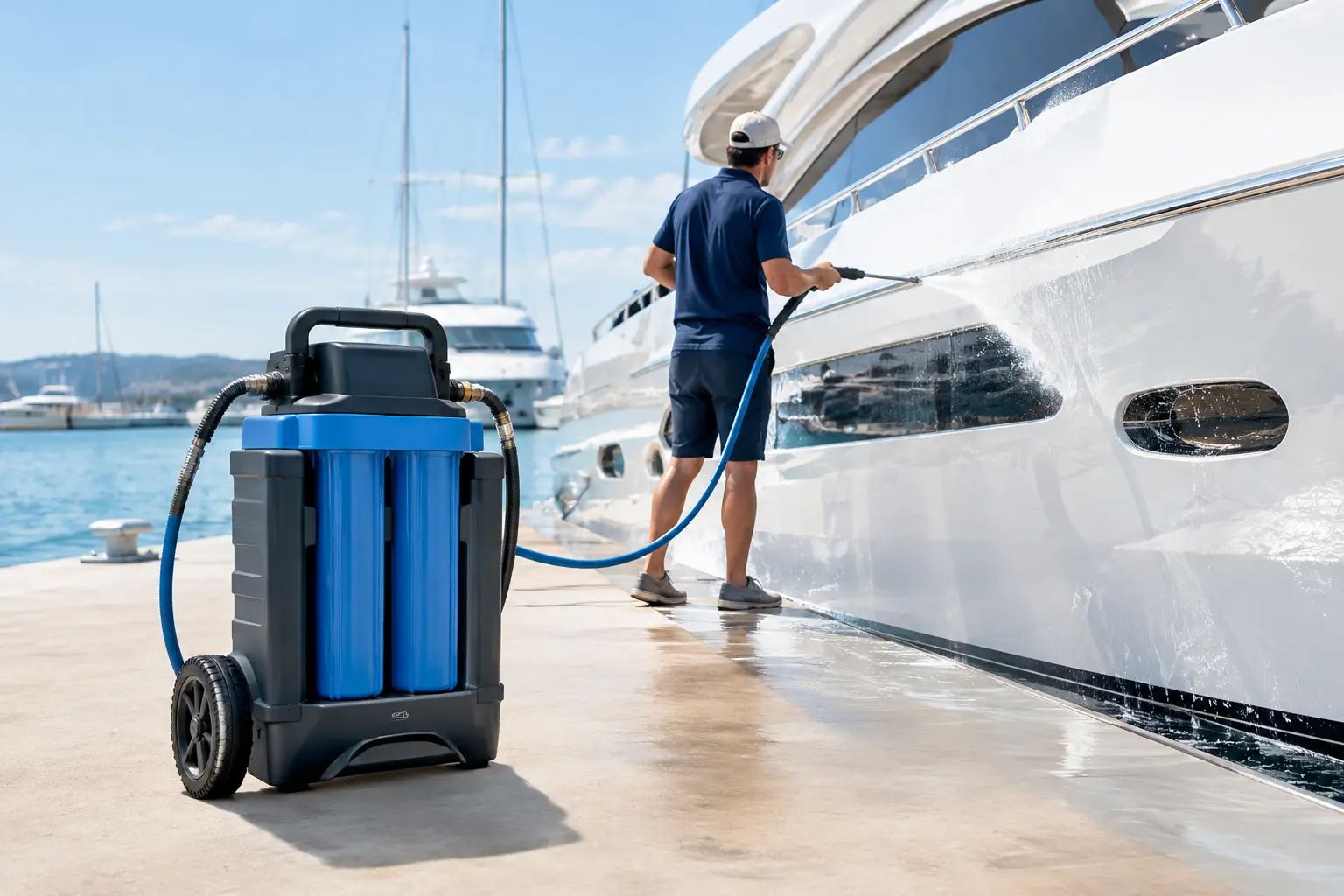
A portable soft water system should fit the way boats are actually maintained. It needs to be easy to move from dock to dock, simple to connect, and capable of providing softened water without creating a complicated installation. Electrical hookups and pressure loss add friction to a job that should stay straightforward.
Capacity is also important. A center console, a 40-foot cruiser, and a large yacht have very different water demands. Choose a system sized for the vessel and the volume of wash water you typically use. A unit that is too small may require frequent recharging, while an appropriately sized unit gives you more useful soft water between maintenance cycles.
Look for construction that can handle the marine environment. Dock equipment sees sun, moisture, bumps, hose movement, and regular transport. Rugged materials, dependable fittings, and a design made for mobile use matter more than unnecessary complexity. A manual recharge process can be a practical choice when it keeps the system independent of electrical power and easy to maintain.
Wet Spot portable water softening systems are built around those real-world needs, with vessel-size options, no electrical hookup, no loss of water pressure, and marine-grade construction. The goal is simple: provide soft water where you need it, so regular washing does more to protect the boat and less to create new cleanup.
Soft Water Supports Long-Term Value
Boat detailing is not just about making a vessel look good before guests arrive. It is part of protecting an investment. Clean gelcoat, clear windows, bright metal, and well-maintained onboard fixtures all contribute to the condition owners see, buyers notice, and service crews work around.
There is also a labor cost to hard water. Each spot that must be wiped, polished, or chemically removed adds time. Each scaled fixture that needs replacement or deep cleaning adds expense. The cost may not appear all at once, but routine mineral exposure turns simple tasks into recurring work.
Soft water is most useful when it becomes part of a consistent maintenance plan. Use it for washdowns, final rinses, and onboard water needs where mineral buildup is a concern. Combine it with proper soap, clean tools, shade when available, and regular drying. That approach is more effective than relying on a heavy correction process after spots and scale have already taken hold.
The next time you wash the boat, watch what happens after the rinse water dries. If white rings, haze, and streaks keep returning, the issue may not be your technique. Better wash water gives your detailing routine a cleaner finish and gives every protected surface a better chance to stay that way.