A yacht can look freshly washed at the dock, then show spots, streaks, and dull hardware before the crew has put the hose away. That is the frustrating reality of hard water. If you are asking how to reduce yacht washdown labor, the answer is not simply washing faster. It is preventing the mineral residue that turns a basic rinse into a time-consuming detailing job.
Washdown labor grows when every surface needs a second pass. Crew members or owners rinse, soap, rinse again, then chase water spots from glass, stainless, gelcoat, non-skid, canvas, and clear vinyl. Over time, minerals also create scale that takes more than a towel to remove. A better water source and a disciplined wash routine can reduce that repeat work while helping protect the yacht’s finish.
Start With the Water, Not the Wash Mitt
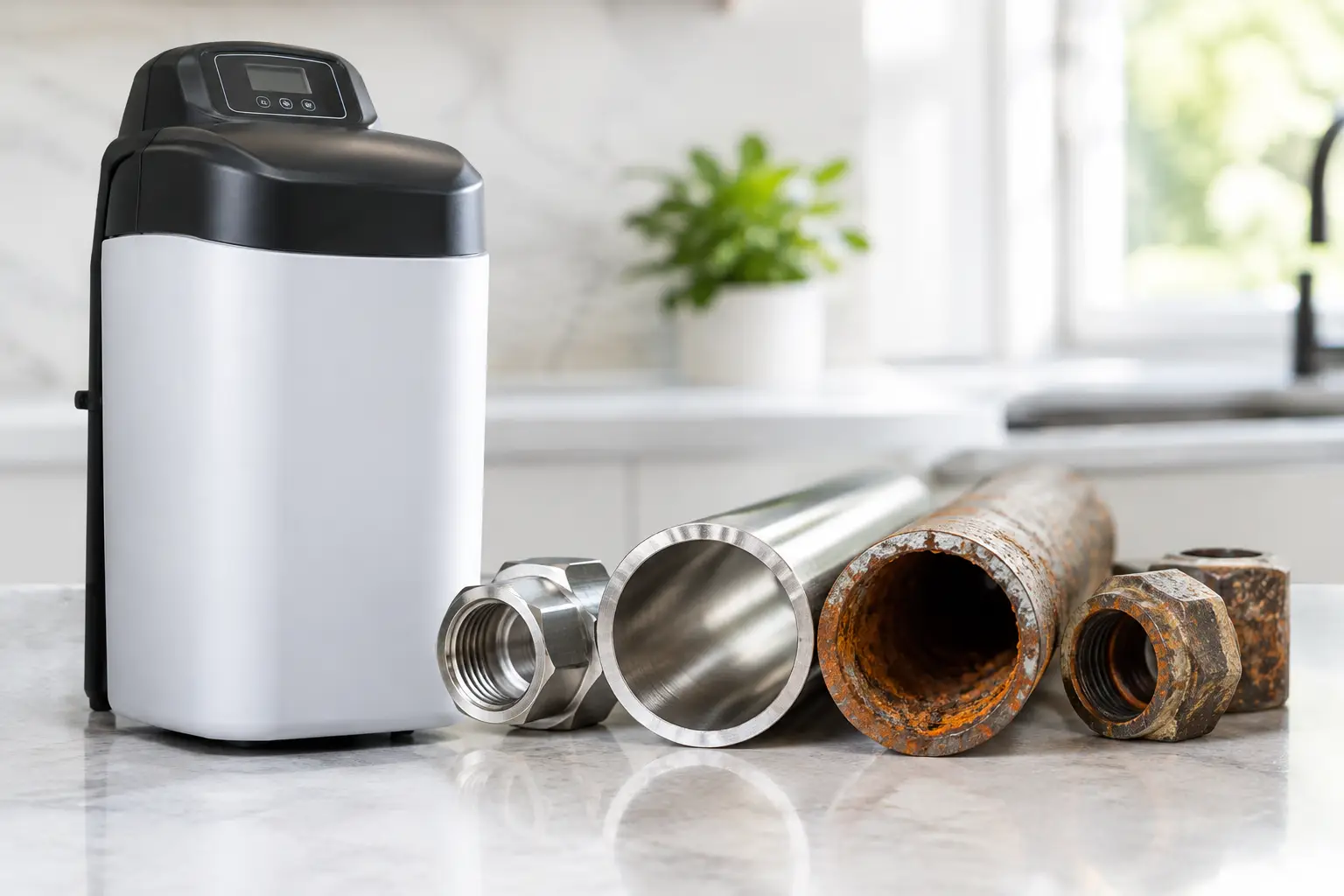
Hard water contains dissolved calcium and magnesium. When rinse water dries on the yacht, those minerals stay behind. The result is familiar: white spotting on dark gelcoat, haze on windows, residue around fittings, and crusty buildup on shower fixtures and washdown equipment.
The immediate labor problem is drying. Hard water spots force the person washing the boat to hand-dry more aggressively and return to areas that looked clean only minutes earlier. The long-term problem is worse. Mineral deposits can bond to surfaces, requiring stronger cleaners, polishing, or professional correction.
Soft water removes the hardness minerals before the water reaches the boat. Soap works more effectively, rinsing is cleaner, and the water is far less likely to leave deposits as it dries. That does not mean a yacht can be left wet in every condition. Salt spray, dust, heat, and direct sun still matter. But soft water changes the amount of follow-up work required after a normal washdown.
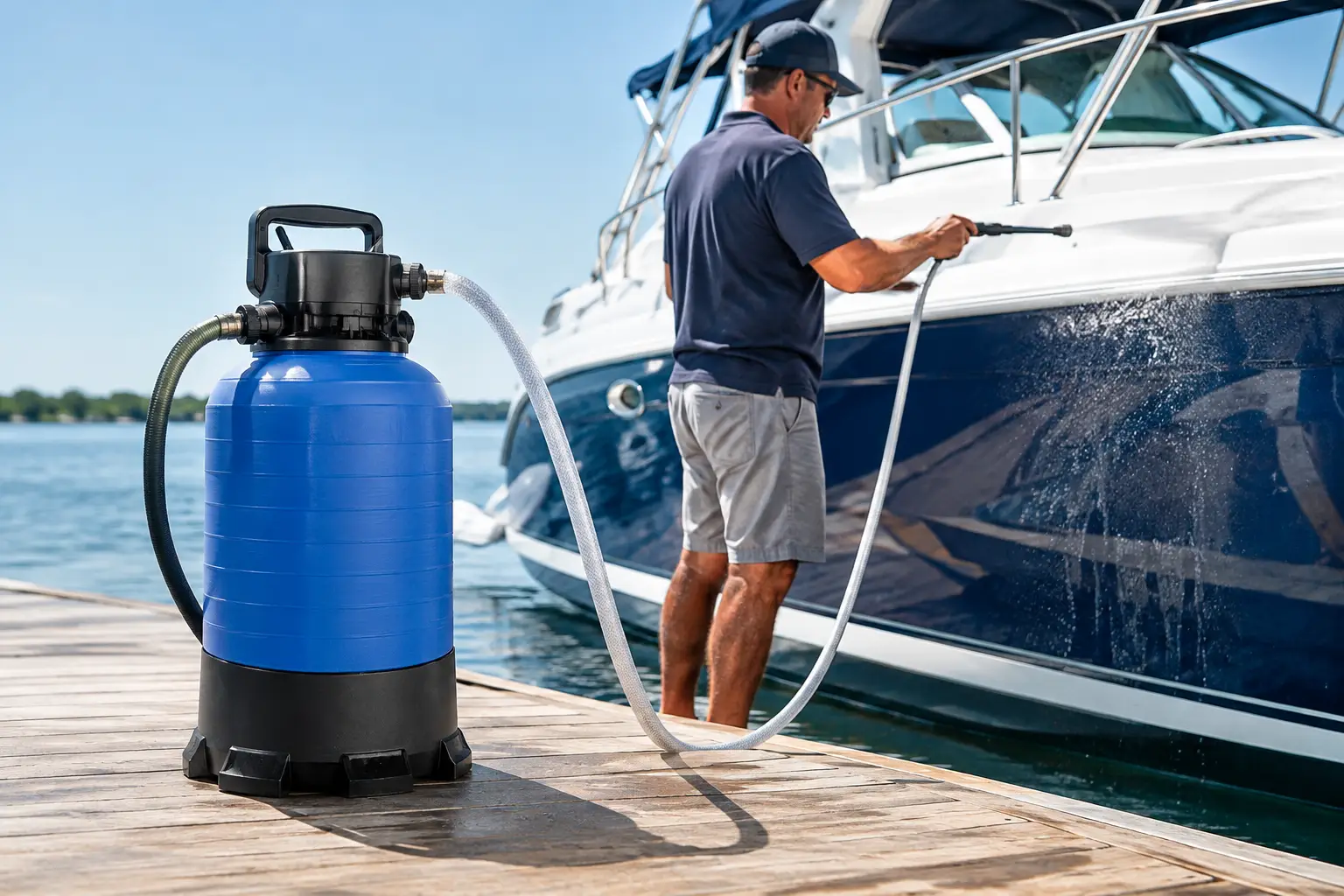
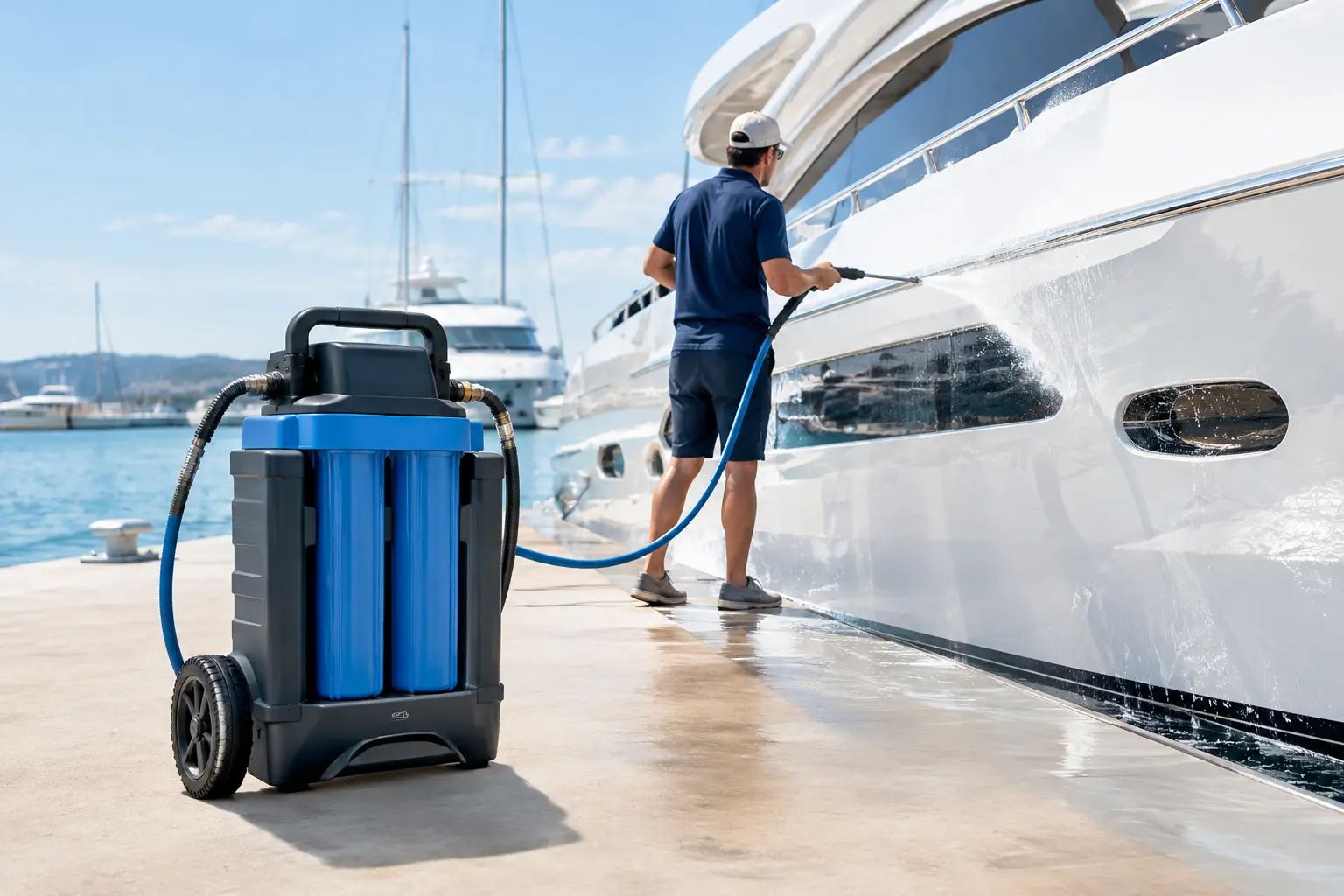
For a vessel that relies on marina water, a portable softening system is often the most practical starting point. It can be connected at the dock without electrical power or a permanent plumbing installation. Wet Spot portable systems are built for this purpose, with unit sizes matched to different vessel lengths and water demands.
Build a Washdown Routine That Avoids Rework
A faster wash is usually a more organized wash. The goal is to keep contaminants from drying on the surface and to avoid cleaning the same area twice.
Wash from the top down
Begin with upper structures, hardtops, rails, and windows, then work down to the cockpit, hull sides, and deck. Gravity will carry rinse water downward. Working in the opposite direction often means re-rinsing lower surfaces after runoff from above leaves fresh residue.
Use manageable sections on larger yachts. Complete one zone before moving to the next, especially on hot or windy days. This keeps soap and rinse water from drying before the area is finished.
Rinse salt and loose grit before applying soap
Do not use the wash mitt as a removal tool for dried salt, sand, or airborne grit. A thorough pre-rinse reduces the chance of dragging abrasive material across gelcoat and painted surfaces. It also allows the soap to work on the actual film of dirt rather than fighting loose debris.
Soft water makes this step more productive because the rinse itself does not add mineral residue to the surfaces you are trying to protect. It is a small operational change with a noticeable effect on final appearance.
Use the right amount of soap
More soap does not always mean a cleaner yacht. Excess product takes longer to rinse and can leave its own film if it dries. Follow the cleaner manufacturer’s dilution guidance, use a dedicated bucket or proportioning method, and refresh wash water when it becomes visibly dirty.
With softened water, many operators find they get better sudsing and cleaning performance without increasing product use. That can shorten both the wash step and the final rinse.
Reduce the Time Spent Chasing Water Spots
The final rinse determines whether the washdown ends at the hose or continues with towels, chamois, and spot removers. On hard-water docks, this is where labor often gets out of control.
Rinse thoroughly, but do not leave standing water in seams, around deck hardware, beneath rails, or at the base of windshields. Water trapped in these areas will drip out later and can leave trails on a clean hull. A quick pass with a blower or microfiber towel around fittings, mirrors, glass edges, and stainless can prevent callbacks to the same area.
The need for hand-drying depends on conditions. A smaller boat washed in shade with soft water may need very little towel work. A dark-hulled yacht sitting in direct summer sun will still benefit from prompt drying, even with soft water. The difference is that the crew is drying water, not correcting mineral spots after the fact.
Keep clean, dedicated microfiber towels for glass, polished metal, and painted or gelcoat surfaces. Towels that have picked up wax, grit, or metal cleaner can create streaking and slow down the finish work. Good towel management is not glamorous, but it prevents a common source of unnecessary labor.
Protect the Surfaces That Create the Most Work
Not every yacht surface requires the same method. Treating them all alike can increase labor and shorten the life of sensitive materials.
Clear vinyl and eisenglass need gentle cleaning and careful drying. Mineral spotting can quickly become a visibility problem, while harsh products or abrasive towels can scratch the surface. Rinsing with soft water helps reduce the deposits that cause owners and crew to scrub too aggressively.
Stainless steel, chrome, and polished metal show hard-water spots immediately. They also collect residue around fasteners, rail bases, and hinges. A soft-water rinse followed by a quick wipe on high-visibility metal can save substantial detailing time over a season.
Non-skid deserves its own attention. Dirt settles into the texture, and hard-water minerals can make the surface look chalky even after cleaning. Use the correct deck brush and cleaning solution, then rinse thoroughly. Avoid over-scrubbing just because the deck does not look bright after the first rinse. The issue may be mineral film, not remaining dirt.
Make Washdowns Easier to Repeat
The best washdown process is one an owner, captain, or crew member can repeat without setting up a complicated system every time. Keep hoses, soft brushes, wash mitts, buckets, and drying towels organized near the dock connection or in a dedicated locker. Replace worn brush heads before they become a source of scratching or poor cleaning performance.
Use a simple schedule based on actual exposure. A yacht in saltwater that sees frequent use may need a light freshwater rinse after each outing and a full wash weekly or as needed. A covered vessel in a low-exposure environment may need less. Washing too infrequently lets salt, soot, bird droppings, and mineral residue become harder to remove. Washing too aggressively with the wrong products can also create unnecessary wear.
Watch for the early signs that your process needs adjustment: more time spent towel-drying, repeated spotting on the same surfaces, reduced soap performance, or scale appearing around onboard fixtures. These are operational signals, not just cosmetic annoyances.
Keep the Soft Water System Ready
A portable softener reduces labor only when it is part of the normal setup, not equipment stored away until the boat looks bad. Confirm hose connections, protect the unit from damage, and recharge the resin according to the system’s capacity and your local water hardness. Manual recharge is straightforward, but it should be planned before performance drops.
Water use varies widely by vessel size, wash frequency, crew habits, and dock conditions. A quick post-cruise rinse uses far less capacity than a full wash of a large yacht with multiple decks. Choosing the properly sized system and keeping it maintained ensures the water stays soft when you need it.
A clean yacht should not require hours of spot removal after every wash. Give the crew soft water, a sensible sequence, and tools that are ready to use. The result is less labor at the dock and more time enjoying the vessel you work hard to maintain.