A streaked stainless rail after a washdown is easy to see. The scale forming inside a water heater, pump, hose, or shower valve is not. That is why essential yacht plumbing protection upgrades should address the water entering the boat as well as the components carrying it. Hard water minerals, salt exposure, vibration, and long periods between use can turn small maintenance issues into expensive onboard repairs.
For yacht owners and caretakers, the goal is straightforward: keep water flowing, protect expensive equipment, and reduce the labor required to keep the vessel looking and operating right. The best approach is not one oversized project. It is a set of practical upgrades that work together, from the dock connection to the fixtures in the head and galley.
Start With the Water Coming Aboard
Every plumbing system is affected by the quality of the water put into it. Marina water can vary widely from port to port, and hard water carries calcium and magnesium that collect wherever water is heated, sits still, or repeatedly evaporates. The result is lime scale on faucets and showerheads, spotting on glass and gelcoat, reduced water-heater efficiency, and buildup in appliances and plumbing fittings.
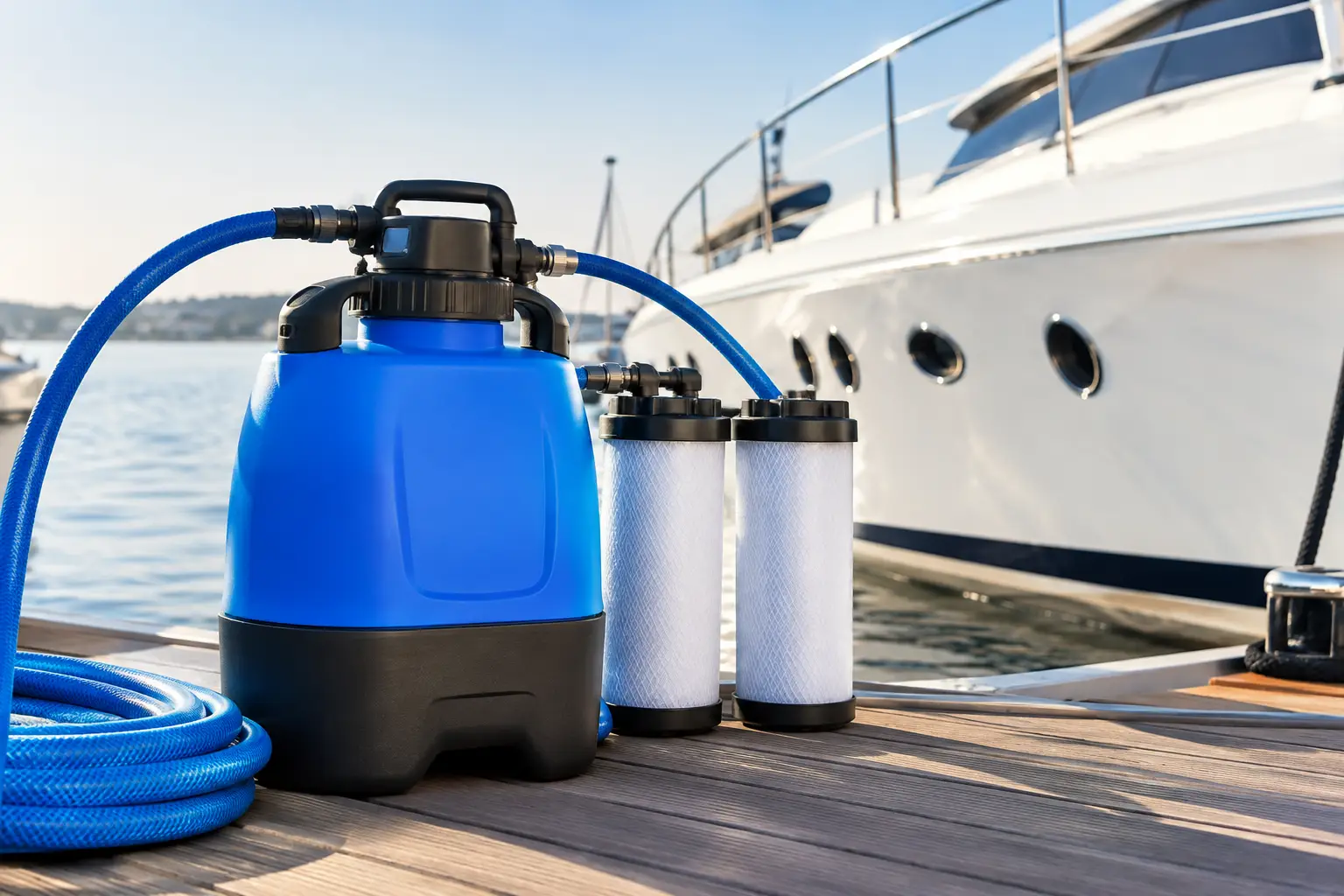
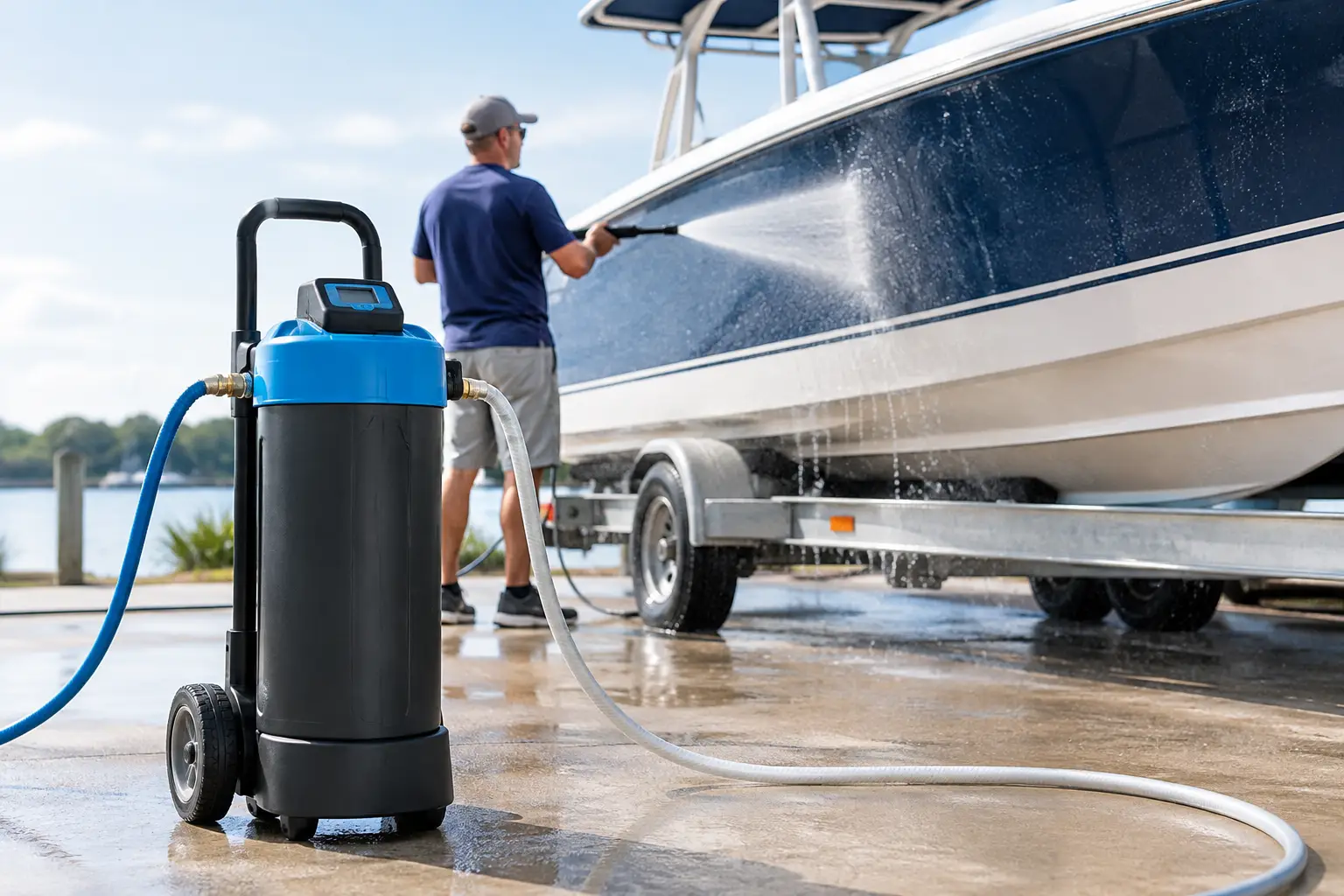
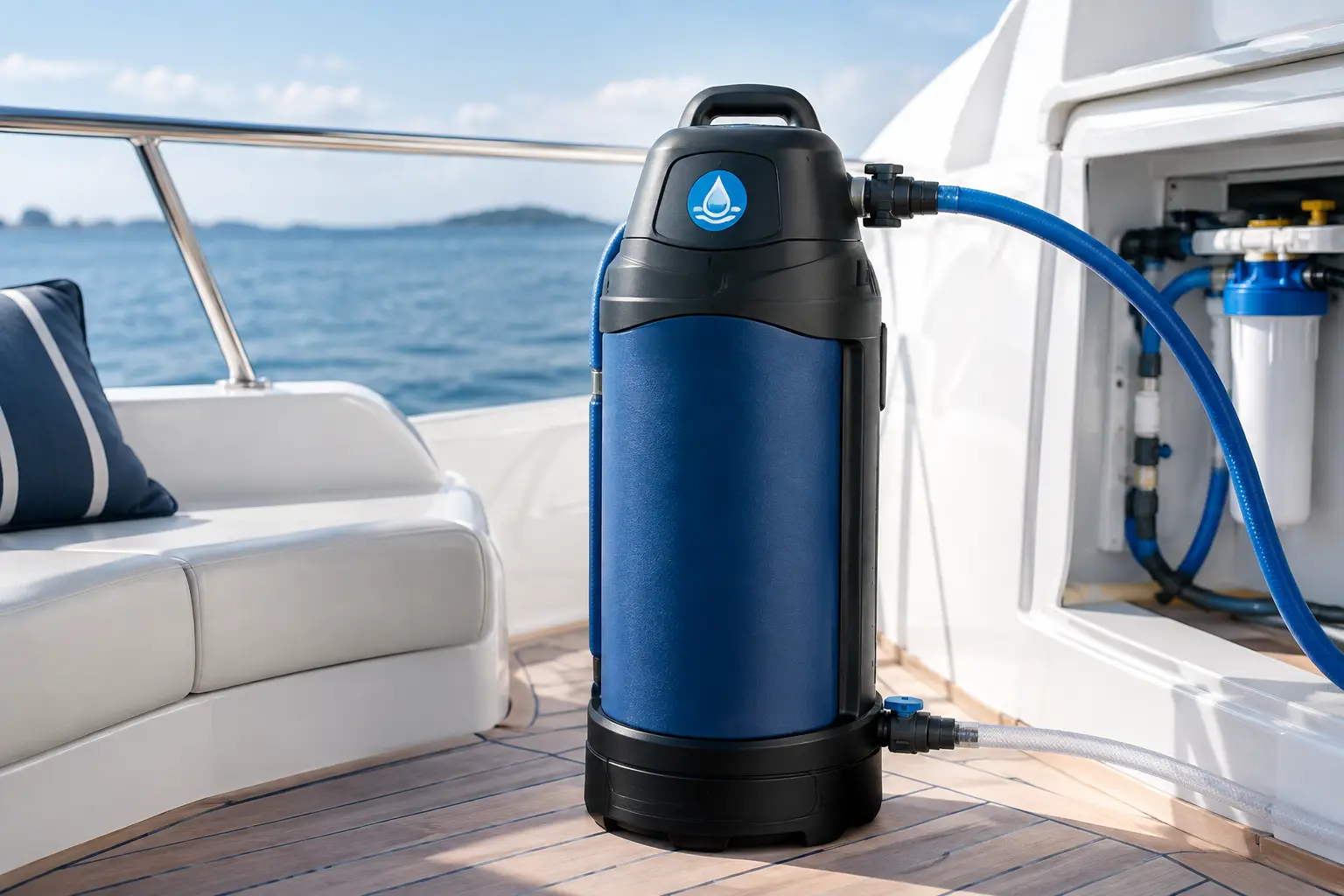
A portable water softener is one of the most practical upgrades for a yacht that regularly takes on dock water. It treats water before it reaches the onboard system without requiring electrical power, permanent installation, or a reduction in water pressure. That matters on vessels where space is limited and owners do not want another complicated system to service.
Soft water also changes the day-to-day washdown routine. Soap rinses more cleanly, water spots are reduced, and fittings, glass, eisenglass, and polished surfaces need less aggressive cleaning. Inside the boat, reducing mineral exposure helps protect the fixtures and appliances that are costly to replace and inconvenient to access.
Wet Spot portable soft water systems are sized for different vessel ranges and built for the marine environment, making them a practical fit for owners who want targeted hard-water protection without modifying the yacht’s plumbing layout.
Protect the Dockside Connection First
The shore-water hookup is often the system’s most exposed point. A quality pressure regulator should be installed between the dock supply and the boat. Marina pressure can be higher or less consistent than a yacht’s plumbing system is designed to handle. Excess pressure puts unnecessary stress on hoses, clamps, fittings, valves, and appliance connections.
Choose an adjustable regulator with a readable gauge rather than relying on a basic fixed-pressure device. The gauge gives the operator a quick way to confirm the incoming supply is within a safe range. It also helps identify unusual dock conditions before they become a burst hose or a flooded compartment.
A backflow preventer is another sensible addition at the connection point. It helps keep onboard water from moving back toward the dock supply if pressure changes. This is especially useful when multiple systems are connected and disconnected throughout a busy marina season.
Do not overlook the hose itself. A potable-water-rated hose is the right choice for filling tanks or supplying onboard domestic water. Replace hoses that have become stiff, cracked, discolored, or difficult to seal at the fittings. A hose may look acceptable from a distance while its inner liner or end connection is already nearing failure.
Upgrade Hoses, Clamps, and Fittings Where Failures Begin
Many yacht plumbing leaks do not start with a major component. They begin at an aging hose end, a corroded clamp, or a fitting that has worked loose under vibration. The critical areas are usually below sinks, around pumps, at water heaters, near heads, and anywhere a line crosses through a bulkhead or locker.
Use marine-grade, reinforced hose matched to the job. Potable water, sanitation, bilge, and raw-water applications have different requirements, so one hose type should not be used everywhere simply because it is available. Proper hose selection reduces odor permeation, collapse, cracking, and premature breakdown.
Clamp quality matters just as much. Marine-grade stainless clamps are a worthwhile upgrade, particularly in damp engine spaces and locker areas where corrosion can stay hidden. On critical connections, double clamping can add security when the fitting is designed to accept it. Position clamps so they can be inspected and tightened without removing half the compartment to reach them.
Where hoses pass through fiberglass, metal, or wood, protect them from chafe with grommets, sleeves, or properly finished pass-throughs. A line rubbing against a rough edge can fail slowly, then all at once. Supporting long hose runs with appropriate clips also prevents sagging, kinking, and vibration wear.
Add Leak Detection Where It Can Save the Most
Freshwater leaks are easy to dismiss because they are not as dramatic as a hull breach. But an unnoticed leak can drain tanks, run a pump continuously, damage cabinetry, create mildew, and leave the crew without water when it is needed. On a yacht with shore power or dock water connected, a small leak can continue for days.
Install water sensors beneath water heaters, pumps, manifolds, galley sinks, heads, and any appliance with a water connection. Basic sensors provide an audible alert, while connected models can send a notification when the boat is unattended. The right level depends on how often the vessel is used, whether it stays at a marina, and how quickly someone can get aboard.
A flow-monitoring system can provide another layer of protection. These systems watch for abnormal water use and can alert the owner or shut off supply in certain configurations. They cost more than simple sensors, but they make sense on larger yachts, remotely managed vessels, or boats with complex domestic-water systems.
An automatic shutoff valve is most useful when paired with reliable detection and a clear operating plan. It can prevent major damage, but it should not create a situation where a critical system is unexpectedly deprived of water. Have the installation reviewed by a qualified marine technician when the system ties into multiple pumps, tanks, or water sources.
Keep Pumps and Water Heaters From Working Harder Than They Should
Pumps and water heaters are the working equipment behind every comfortable shower, clean dish, and functioning head. They are also vulnerable to scale, pressure issues, dry running, and cycling caused by small leaks.
A pump strainer installed before the freshwater pump protects internal components from debris that can enter during tank filling or system maintenance. The strainer should be clear or easy to open, because it only works if it is checked and cleaned. Keep a spare screen and gasket aboard so a simple service task does not become a delayed repair.
An accumulator tank can reduce rapid pump cycling by smoothing pressure changes. It is not necessary for every yacht, and it needs periodic pressure checks, but it can improve pump life and make faucets feel more consistent on systems that cycle frequently.
Water heaters deserve close attention because heat accelerates mineral scale. Softening dock water before it enters the system helps limit deposits on heating elements and inside the tank. Inspect the pressure-relief valve, check hose connections, and follow the manufacturer’s maintenance schedule. If the heater takes longer to recover or produces inconsistent hot water, address the cause before it becomes a failure at the dock or offshore.
Make Winterization and Layup Protection Part of the Upgrade
A well-equipped yacht can still suffer plumbing damage if it is laid up carelessly. Freezing temperatures can split hoses, crack pump housings, damage filters, and ruin water heaters. Even in regions with mild winters, a sudden cold snap can expose a system that was never fully drained.
Install drain points where they allow the system to be emptied efficiently, and label valves clearly. Labels are a small upgrade with real value when a caretaker, captain, or technician needs to act quickly. A documented winterization procedure should identify tanks, pumps, filters, water heaters, outside showers, ice makers, and any branch line that can retain water.
For boats used year-round, regular flushing is still worthwhile after periods of inactivity. Stagnant water can create odor, affect taste, and leave deposits in low-flow sections. Freshwater tanks, filters, and fixtures should be serviced according to their intended use and the vessel’s operating schedule.
Build Essential Yacht Plumbing Protection Into Routine Care
The most effective upgrades are easy to inspect and simple enough to maintain. A pressure regulator is useful only if someone checks the gauge. A softener protects the system only when it is connected and recharged as needed. Leak sensors need fresh batteries or dependable power, and strainers need to be cleaned before restricted flow becomes a pump problem.
Create a short plumbing check before extended trips and after the yacht has been sitting. Look for dampness around fittings, listen for unexplained pump cycling, check hose condition, and inspect the shore-water connection before leaving the boat unattended. These are not complicated tasks, but they catch the conditions that lead to larger repairs.
Protecting a yacht’s plumbing is less about adding complexity and more about controlling the sources of wear. Treat the incoming water, manage pressure, use marine-grade connections, and make leaks easier to find. Those choices keep the system dependable when the boat is supposed to be the last place you are thinking about repairs.