A fresh washdown should leave your boat looking ready for the next outing, not covered in white spots that reappear as the water dries. To soften marina water is to remove the calcium and magnesium minerals that cause those spots, along with the scale and residue that slowly take a toll on expensive surfaces and onboard equipment.
At many marinas, dock water is perfectly usable but hard. It may come from a municipal supply, a well, or a local water system with mineral content that varies by season and location. The problem becomes obvious after a few washdowns: cloudy glass, dull gelcoat, crusted fixtures, stiff canvas hardware, and a stubborn film that makes routine cleaning take longer than it should.
Why Hard Marina Water Creates Bigger Problems
Hard water minerals do not simply disappear when washdown water evaporates. They stay behind. On dark hull colors, glass, stainless steel, chrome, and polished hardware, mineral deposits can be especially noticeable. What starts as a cosmetic issue can become an ongoing maintenance problem when deposits are allowed to build up.
Gelcoat and painted finishes lose their clean appearance when spotting becomes routine. Eisenglass and windows can develop haze or require more aggressive cleaning. Faucets, shower fixtures, hose fittings, and other onboard plumbing components can collect lime scale. Water heaters, ice makers, and other appliances that use dock water may also face mineral buildup over time.
Soap performance is another practical concern. Hard water makes soaps and cleaners less effective, so it can take more product and more effort to get the same result. That matters when you are washing a larger vessel, preparing for guests, or handling regular maintenance at the dock.
Soft water helps prevent these issues at the source. Instead of trying to remove mineral residue after it dries, you reduce the minerals in the water before it reaches the boat.
How to Soften Marina Water at the Dock
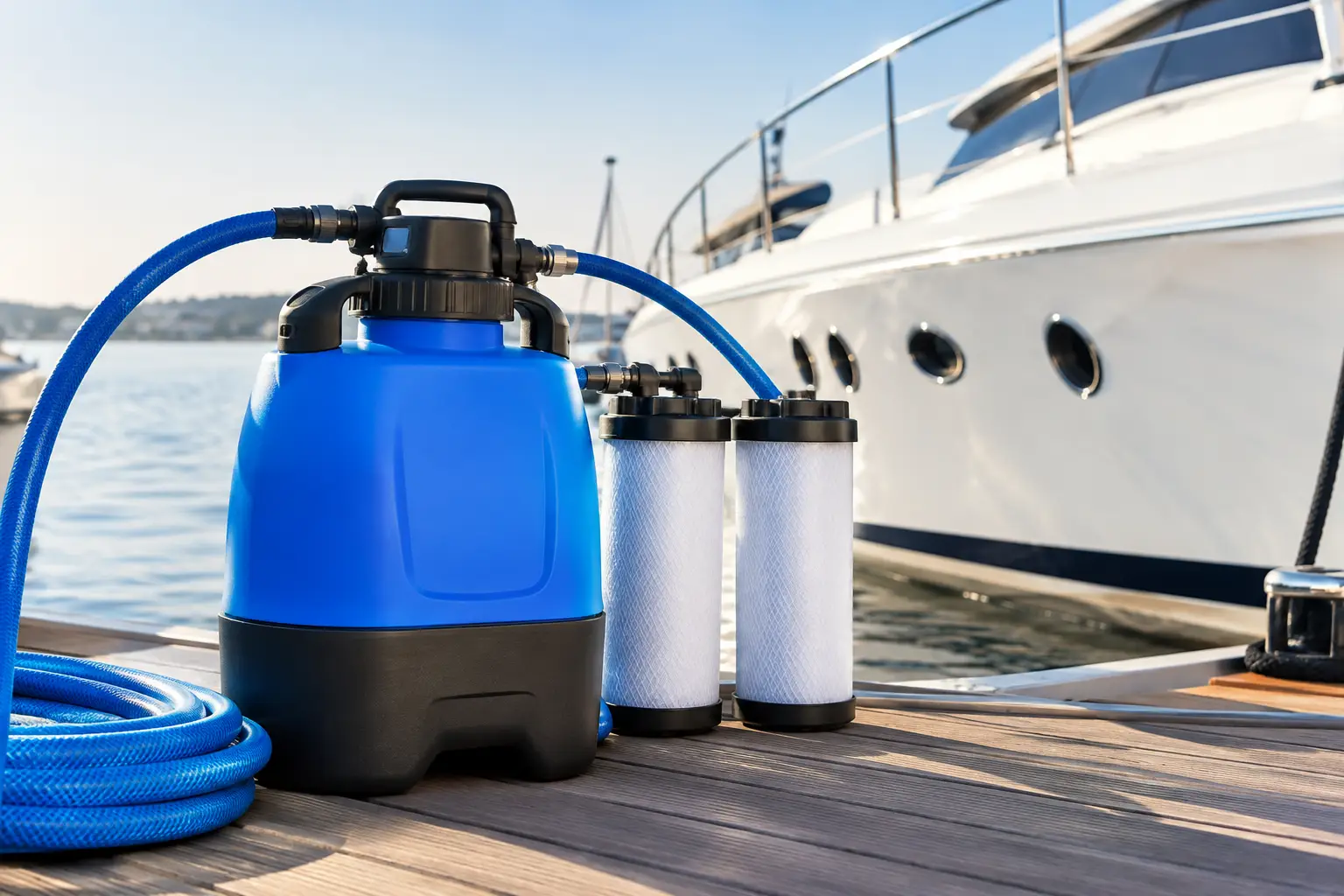
The most practical way to soften marina water is with a portable water softening system installed between the dock spigot and your boat’s freshwater inlet or washdown hose. The unit uses ion-exchange resin to capture hardness minerals, primarily calcium and magnesium, as water moves through it.
There is no need for electrical power, a permanent installation, or a complicated connection. Attach the system at the dock, connect your hose, and use softened water for washdowns, filling freshwater tanks, rinsing exterior surfaces, and supporting onboard water use. A properly sized portable softener is designed to maintain normal working water flow while providing soft water where it matters.
This setup is especially useful for boat owners who move between marinas. Water hardness can change significantly from one harbor to the next, and a portable unit gives you control over the water you put on your vessel. Rather than relying on whatever comes out of the dock spigot, you can protect your boat with the same straightforward process wherever you tie up.
Soft Water for Washdowns
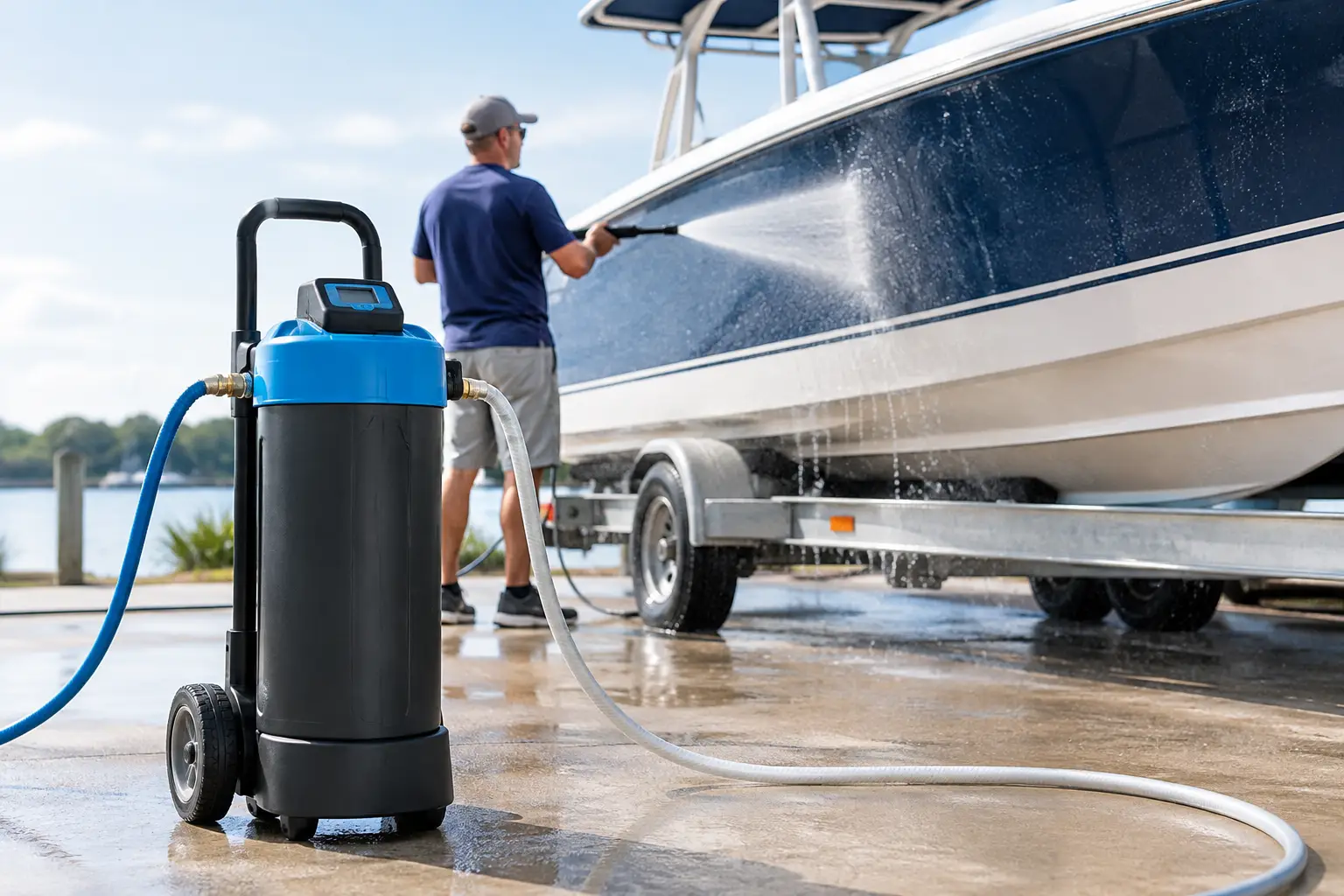
For many owners, washdowns are the most immediate benefit. Softened water reduces spotting as surfaces dry, particularly on glass, metal, gelcoat, and smooth plastic surfaces. It also helps soaps rinse more cleanly, leaving behind less film.
This does not mean every washdown can be rushed. Saltwater spray, soot, fish residue, and dock grime still need proper cleaning. But starting with soft water means you are not adding a fresh layer of mineral deposits while trying to clean the boat.
A final rinse with softened water can make a noticeable difference. It reduces the hard-water spotting that often sends owners back over the same surface with a towel, detail spray, or spot remover after the wash is complete.
Soft Water for Onboard Systems
When softened dock water is used to fill a vessel’s freshwater system, it can help limit scale buildup in plumbing and appliances. This is valuable for boats with showers, sinks, water heaters, ice makers, dishwashers, or other equipment that receives shore water.
The benefit is preventive, not corrective. Soft water can reduce new mineral scale from forming, but it will not instantly remove years of existing buildup inside plumbing or appliances. If a system is already heavily scaled, it may need separate maintenance. Once it is cleaned, softened water can help keep future mineral accumulation under control.
Choose a Softener That Fits the Vessel
Capacity matters. A small center console used for occasional washdowns does not have the same water demands as a yacht with multiple heads, galley appliances, and frequent dockside use. Choose a portable softening system based on vessel size and the amount of water you expect to use between recharges.
Wet Spot offers portable units sized for boats up to 70 feet, boats from 70 to 100 feet, and vessels 100 feet and above. Selecting the right capacity gives you a more practical service interval and helps ensure the system matches the demands of your vessel.
Larger is not always automatically better. A larger unit may provide more capacity, but it also takes up more storage space and may be unnecessary for a boat with limited freshwater use. On the other hand, undersizing a softener for a high-use vessel means more frequent recharging. The right choice depends on boat length, crew size, washdown habits, onboard appliances, and the hardness of the dock water.
Use It Correctly and Keep It Ready
Portable softeners are simple by design, but a few operating habits make a difference. Place the unit where it is stable and protected from unnecessary impact. Use clean, serviceable hoses and fittings. Before relying on it for a major washdown or freshwater fill, make sure the connections are secure and the unit has been properly regenerated.
Every ion-exchange softener eventually needs a recharge. As the resin captures hardness minerals, its capacity is gradually used up. Manual regeneration with salt restores the resin so it can continue producing soft water. The exact frequency depends on water hardness and how much water runs through the unit.
If your marina has very hard water, the softener will require recharging more often than it would at a marina with moderately hard water. That is not a product failure. It is simply the reality of treating more minerals. Owners who use softened water for frequent washdowns and full freshwater tank fills should build recharging into their regular dockside maintenance routine.
Keep enough appropriate salt on board or in your dock box, especially before extended stays, guest weekends, or a full detailing job. A quick recharge at the right time is easier than discovering the system has reached capacity halfway through a washdown.
What Soft Water Does Not Replace
Soft water is a strong preventive tool, but it is not a substitute for sound boat care. You still need to rinse saltwater promptly, use marine-safe cleaners, dry sensitive surfaces when conditions call for it, and inspect hoses, fittings, and onboard systems regularly.
It also does not remove contaminants that are unrelated to hardness. Sediment, unusual tastes, odors, bacteria, and chemical contaminants require different treatment methods. A water softener is built to address calcium and magnesium hardness, which is exactly what causes the familiar spots and scale associated with hard marina water.
That distinction matters because the best maintenance decisions are specific. If your issue is white mineral spotting and lime scale, soft water is the right answer. If the dock water has sediment or other quality concerns, address those separately rather than expecting one device to solve every water condition.
Protect the Boat Between Every Washdown
The value of softened water is not limited to how the boat looks immediately after rinsing. It is also about reducing repetitive cleanup, protecting finishes, and limiting mineral buildup in the systems you depend on. Fewer spots mean less detailing. Less scale means less effort spent cleaning fixtures and addressing preventable buildup.
Set up your portable softener before the next dockside wash, use it consistently, and recharge it as needed. Your boat will spend less time fighting marina water and more time looking like the investment it is.