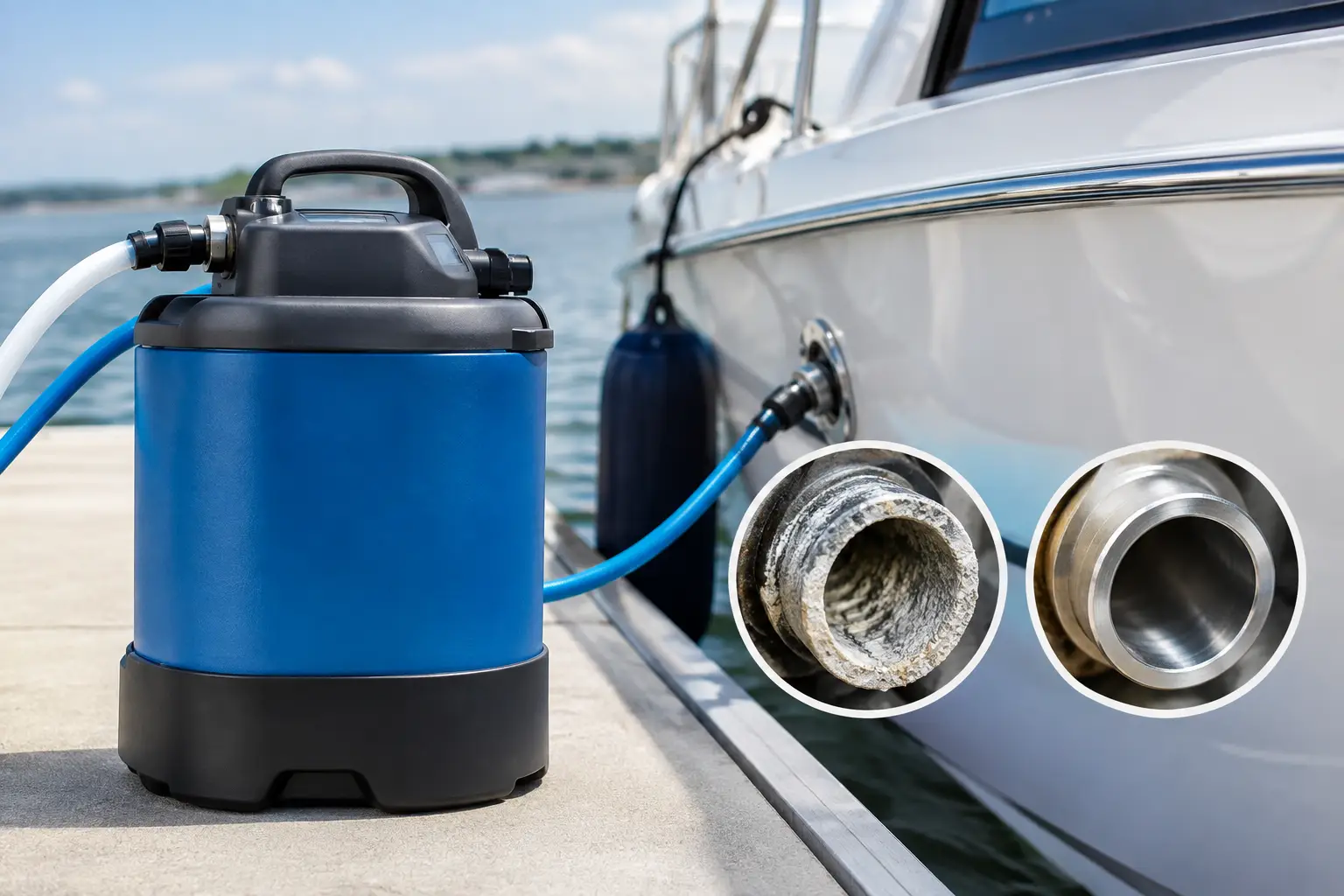
A boat can look freshly washed at the dock, then dry into a map of white spots across the glass, stainless, gelcoat, and black trim. That residue is often lime scale, and it is more than a cosmetic nuisance. Left in place, hard-water minerals can turn routine washdowns into extra detailing, dull expensive finishes, and build up inside the equipment you rely on.
For boat owners, RV travelers, vehicle detailers, and aircraft caretakers, the answer is not simply using more soap or drying faster. The real issue is the water itself. When calcium and magnesium are present in the water supply, they remain behind when water evaporates. Soft water stops those minerals before they reach the surface.
What Is Lime Scale?
Lime scale is the chalky mineral deposit left by hard water. It is commonly made up of calcium and magnesium compounds. You may see it as white spotting after a wash, a crusty ring around faucets, cloudy glass, rough metal fittings, or a hard deposit inside plumbing and appliances.
The term is often used broadly for any hard-water residue. On a boat, it can show up almost anywhere water dries: railings, windshields, shower doors, deck hardware, water heaters, ice makers, hoses, and exterior wash areas. In an RV, it can affect fixtures, tanks, shower surfaces, and appliances. On cars and aircraft, it can leave visible spotting and mineral etching on paint, glass, polished metal, and clear surfaces.
Hard water is common because water naturally picks up minerals as it moves through soil and rock. The amount varies by marina, campground, city, and region. A water source that seems fine for rinsing can still contain enough minerals to leave noticeable deposits after one sunny afternoon.
Why Lime Scale Is Hard on Valuable Equipment
A few water spots may seem minor. The problem is repetition. Every washdown, rinse, shower, and tank fill can leave another small layer of mineral residue. On high-value assets, that buildup creates both a maintenance burden and a long-term protection issue.
Exterior surfaces lose their clean finish
When hard water dries on gelcoat, painted surfaces, polished stainless, glass, plastic, or eisenglass, the minerals stay behind. Fresh spots may wipe off easily. Older deposits can bond more tightly, requiring acidic cleaners, repeated polishing, or professional detailing.
Those cleaning steps are not free. They take time, use chemicals, and can be hard on sensitive surfaces if performed aggressively or too often. Soft water reduces the source of the spots, so the final rinse is cleaner and routine maintenance stays more manageable.
Plumbing and appliances work harder
Lime scale does not stop at exterior appearance. Mineral buildup can collect in water heaters, faucets, showerheads, ice makers, hoses, pumps, and other water-handling components. As deposits accumulate, flow can be restricted and heat-transfer surfaces can become less efficient.
The exact impact depends on the water hardness, water temperature, and how often the system is used. Hot-water equipment is particularly susceptible because heat encourages minerals to come out of solution. Preventing scale before it enters onboard systems is generally easier than removing it after it has hardened inside them.
Soap and cleaning products do less
Hard water also changes the way soap behaves. Calcium and magnesium reduce lather and can leave a film behind after washing. That means more product, more rinsing, and more effort to get a surface truly clean.
Soft water improves soap performance. Wash solutions rinse more cleanly, which can shorten cleanup and reduce the residue that collects on smooth surfaces. For crews and owners who wash often, that everyday difference adds up quickly.
Where Lime Scale Starts on Boats, RVs, and Vehicles
The most visible deposits form where water pools or dries slowly. On boats, inspect windshield edges, stanchion bases, railings, non-skid corners, transom areas, shower doors, cockpit sinks, and black canvas or trim. These places often show hard-water spotting before larger surfaces do.
Inside the vessel, look at faucet aerators, showerheads, water heater connections, and appliance fittings. A reduced spray pattern or a white crust around a fixture can be an early clue that mineral deposits are building.
RV owners commonly notice scale around the kitchen and bath fixtures, water heater, exterior shower, and water hookups. Vehicle and aircraft owners see the same issue after rinsing, especially on glass, chrome, polished metal, and dark paint. Water spots are most obvious there, but light-colored surfaces are not immune.
Removing Existing Lime Scale Safely
Soft water prevents new mineral buildup. It does not instantly erase deposits that are already on the surface or inside a plumbing component. Existing scale needs to be removed with the right method for the material involved.
Start with the least aggressive approach. A purpose-made, surface-safe mineral remover may be appropriate for glass, stainless, ceramic, or certain fixtures, but always follow the product directions and test a small inconspicuous area first. Some acidic products can damage natural stone, unfinished metals, delicate coatings, clear plastics, and certain marine finishes.
Avoid scraping deposits with razor blades, abrasive pads, or harsh powders unless the surface manufacturer specifically permits it. A shortcut can leave permanent scratches that are more difficult to correct than the original scale. For stubborn buildup inside appliances, water heaters, or complex onboard plumbing, follow the equipment manufacturer’s service guidance or use a qualified marine technician.
Once the existing deposits are removed, the goal is simple: do not recreate them with every rinse.
Preventing Lime Scale at the Water Source
Drying the boat promptly and using the right cleaning products can help, but neither removes minerals from the water. The most direct prevention method is softening water before it goes through your wash hose, onboard freshwater system, or cleaning setup.
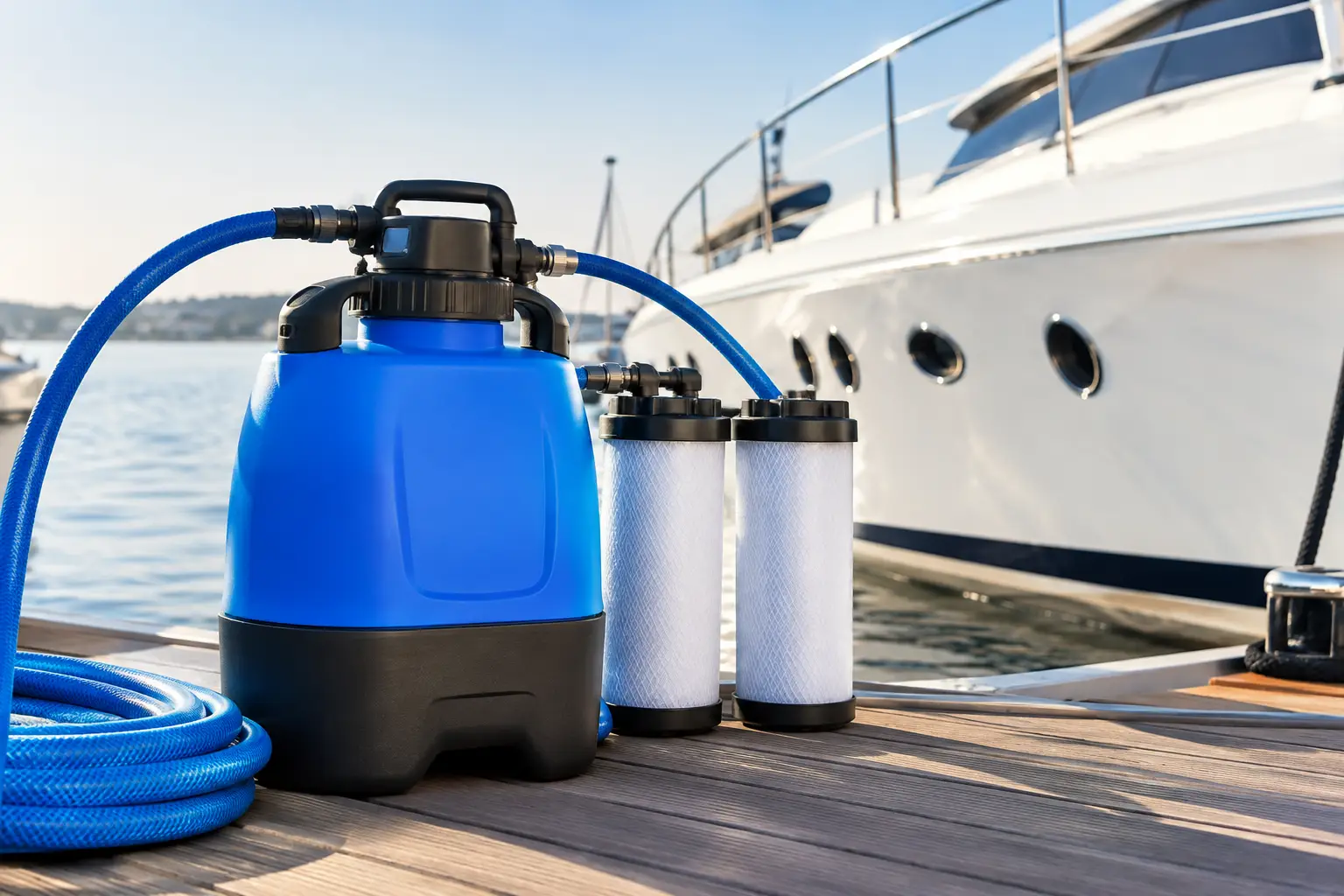
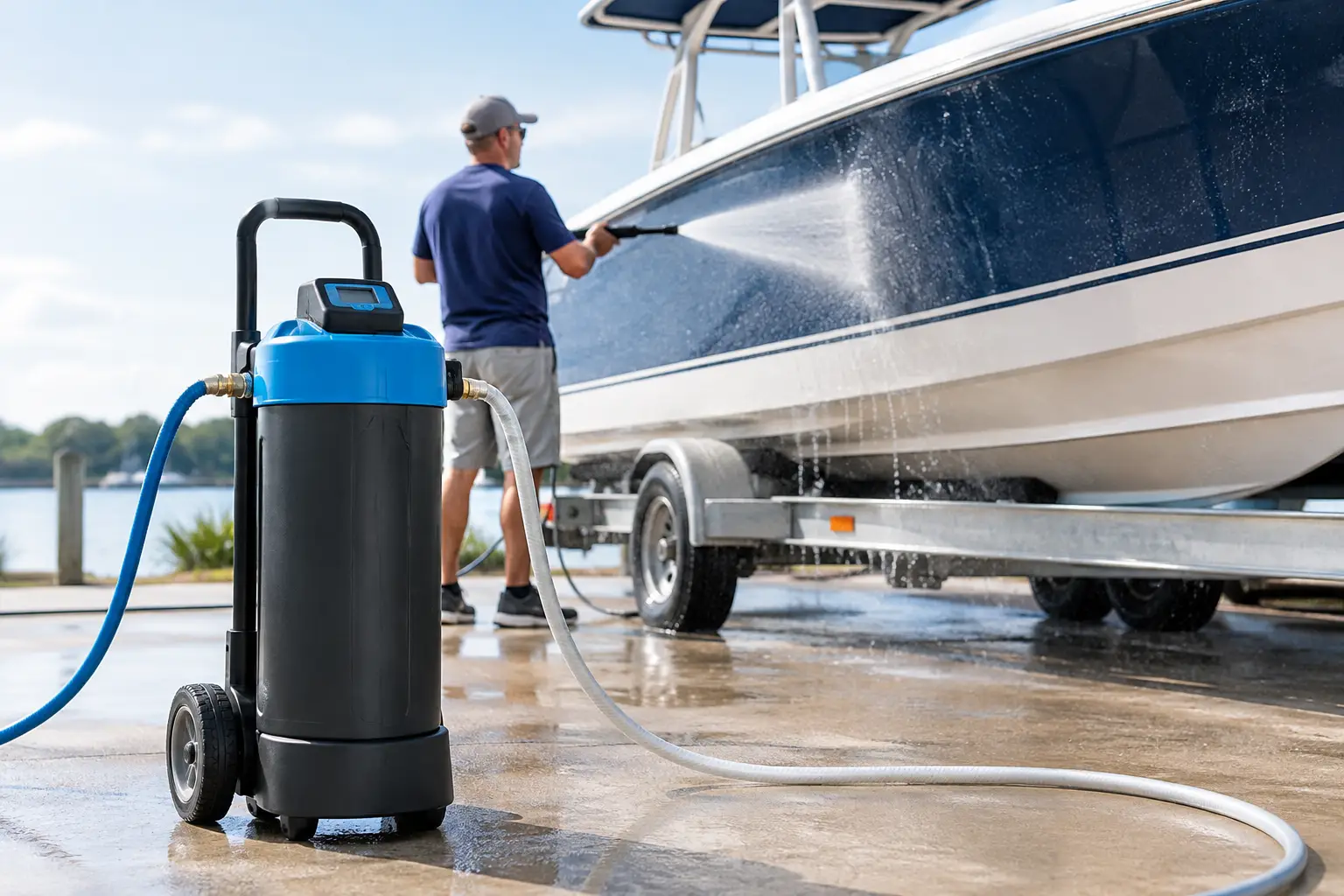
A portable water softener uses ion exchange to remove calcium and magnesium from hard water. In practical terms, it turns hard water into soft water before the minerals can leave spots, form scale, or interfere with soap. That makes it useful for dockside washdowns, filling freshwater tanks, RV hookups, vehicle rinsing, and mobile maintenance work.
A portable setup makes sense when permanent installation is not practical. Boat owners may use different marinas throughout the season. RV owners move between campgrounds with different water conditions. Detailers and aviation operators often need a reliable solution that travels with the asset or service crew.
Wet Spot portable water softeners are designed for this kind of mobile use: no electrical hookup, no loss of water pressure, and no complicated installation. The unit connects into the water path, provides soft water, and can be transported when it is time to move on.
Choose a System That Matches the Job
Capacity matters. A small boat receiving occasional washdowns does not have the same water demand as a large yacht with frequent exterior cleaning, crew use, and onboard appliances. The right softener should be selected based on vessel size, expected water use, and how often hard-water exposure occurs.
It also depends on the hardness of the local supply. Very hard water uses softening capacity faster than moderately hard water. A marina with especially mineral-heavy water may require more frequent recharging than a location with softer municipal water. That is normal maintenance, not a product failure.
Portable softeners are typically recharged manually with salt when their softening capacity is used. The process restores the resin so it can continue removing hardness minerals. Keeping a simple recharge schedule based on water use helps avoid returning to hard-water washdowns when you need soft water most.
Make Soft Water Part of Routine Care
The best time to fight scale is before the rinse water dries. Use soft water for routine washdowns, final rinses, tank fills where appropriate, and cleaning jobs that would otherwise leave mineral spotting. Then allow the surface to drain or dry it with clean, soft towels in high-visibility areas.
This approach will not replace good detailing habits. Salt spray, grime, oxidation, and environmental fallout still need proper cleaning. But it removes one major cause of avoidable residue and gives your cleaning products a better chance to work as intended.
Lime scale is a small deposit with an outsized effect on appearance, labor, and equipment life. Start with the water, stay ahead of buildup, and your boat or mobile asset will spend less time being corrected and more time ready for use.