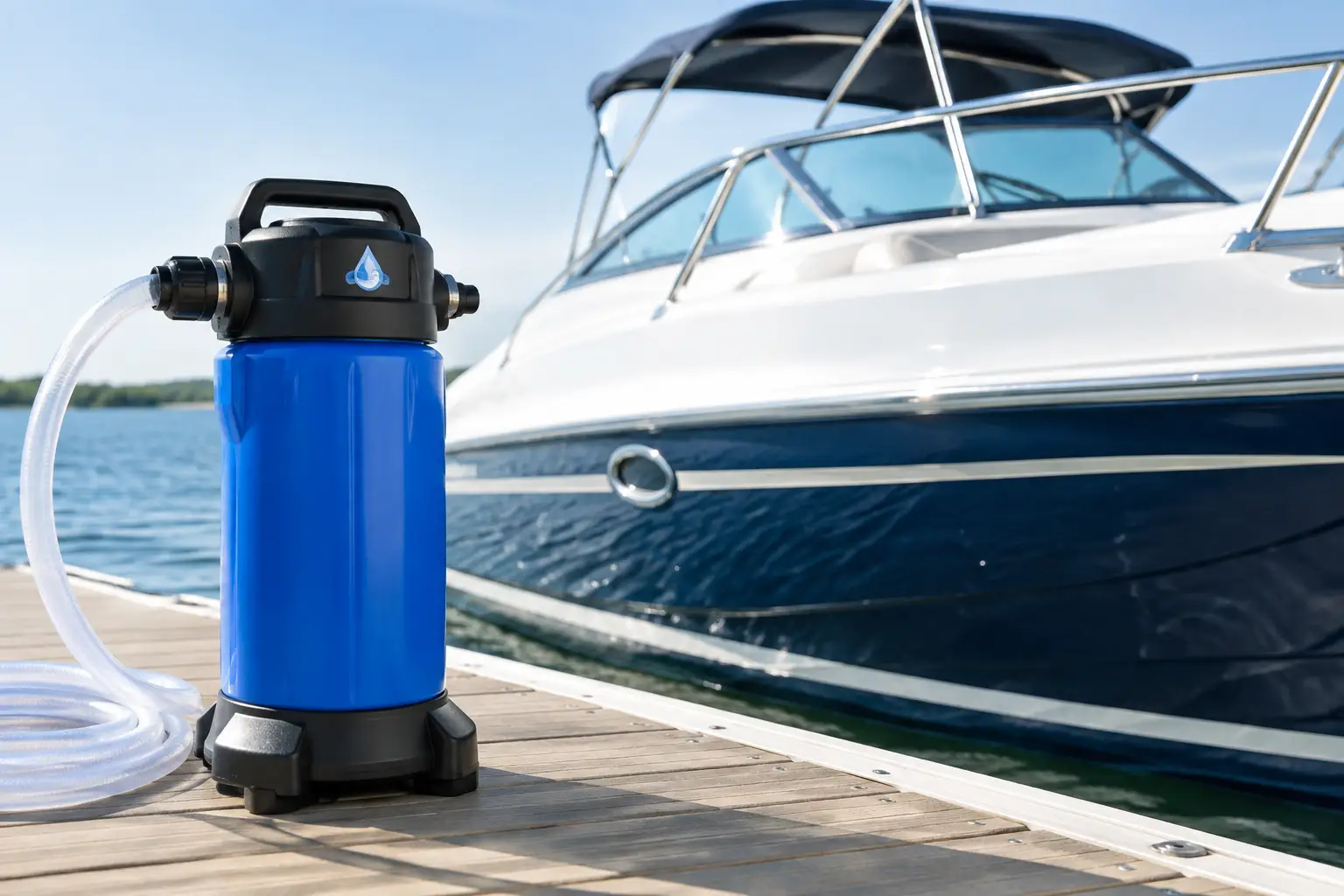
A washdown should leave your boat looking ready for the next trip, not covered in white rings after it dries. Hard water boating is a familiar problem at marinas and docks where shore water carries calcium and magnesium. Those minerals stay behind on gelcoat, glass, stainless steel, plastic, canvas hardware, and clear vinyl, turning routine cleanup into repeat detailing.
For boat owners, this is not just a cosmetic issue. Mineral deposits can dull finishes, create stubborn scale around fittings, and add unnecessary wear to onboard plumbing and appliances. Soft water gives you a practical way to protect the investment you already have while making every washdown work better.
Why Hard Water Is Tough on Boats
Hard water contains dissolved minerals, primarily calcium and magnesium. While the water is wet, those minerals are largely invisible. Once the water evaporates, they remain on the surface as spots, haze, and chalky residue.
On a boat, that residue has plenty of places to collect. It settles in the edges of windows, around rail bases, on polished metal, beneath deck hardware, and inside shower fixtures. A quick rinse with hard water can leave marks on a clean hull before you have even finished putting away the hose.
The issue gets worse in hot weather, where water dries quickly, and in areas with particularly mineral-heavy municipal or well water. It also depends on how often the boat is washed and whether it stays at the dock for long stretches. A trailer boat that is rinsed occasionally may see a manageable amount of spotting. A yacht that receives frequent washdowns can accumulate a significant maintenance burden over time.
Hard water also makes soap less effective. Minerals interfere with the way soaps and cleaners rinse, which can leave film behind and require more product, more scrubbing, and more freshwater to get the same result. That is time better spent underway, not chasing water spots with a towel.
What Hard Water Boating Can Damage Over Time
A single hard-water rinse will not ruin a boat. The concern is repetition. When mineral deposits are allowed to build up, removal becomes more difficult and more aggressive cleaning may be needed. That creates risk for surfaces that should be handled carefully.
Gelcoat and painted surfaces can lose their clean, glossy appearance under repeated mineral spotting. Stainless steel may develop dull areas around fasteners, rails, and hardware. Glass can develop stubborn water-spot etching, while clear vinyl and eisenglass can become hazy if mineral residue is left in place and repeatedly rubbed during cleaning.
Scale is equally frustrating where you cannot easily see it. Water heaters, ice makers, heads, showerheads, faucets, hoses, and other onboard water components can collect mineral deposits. Scale can restrict water flow, reduce appliance efficiency, and create maintenance issues that have little to do with how well the equipment was originally built.
The real cost is often labor. Owners and crews may spend extra time hand-drying, polishing hardware, applying spot removers, or cleaning the same area twice. Those tasks add up quickly when the boat is used regularly or maintained to a high standard.
Why Soft Water Makes Boat Care Easier
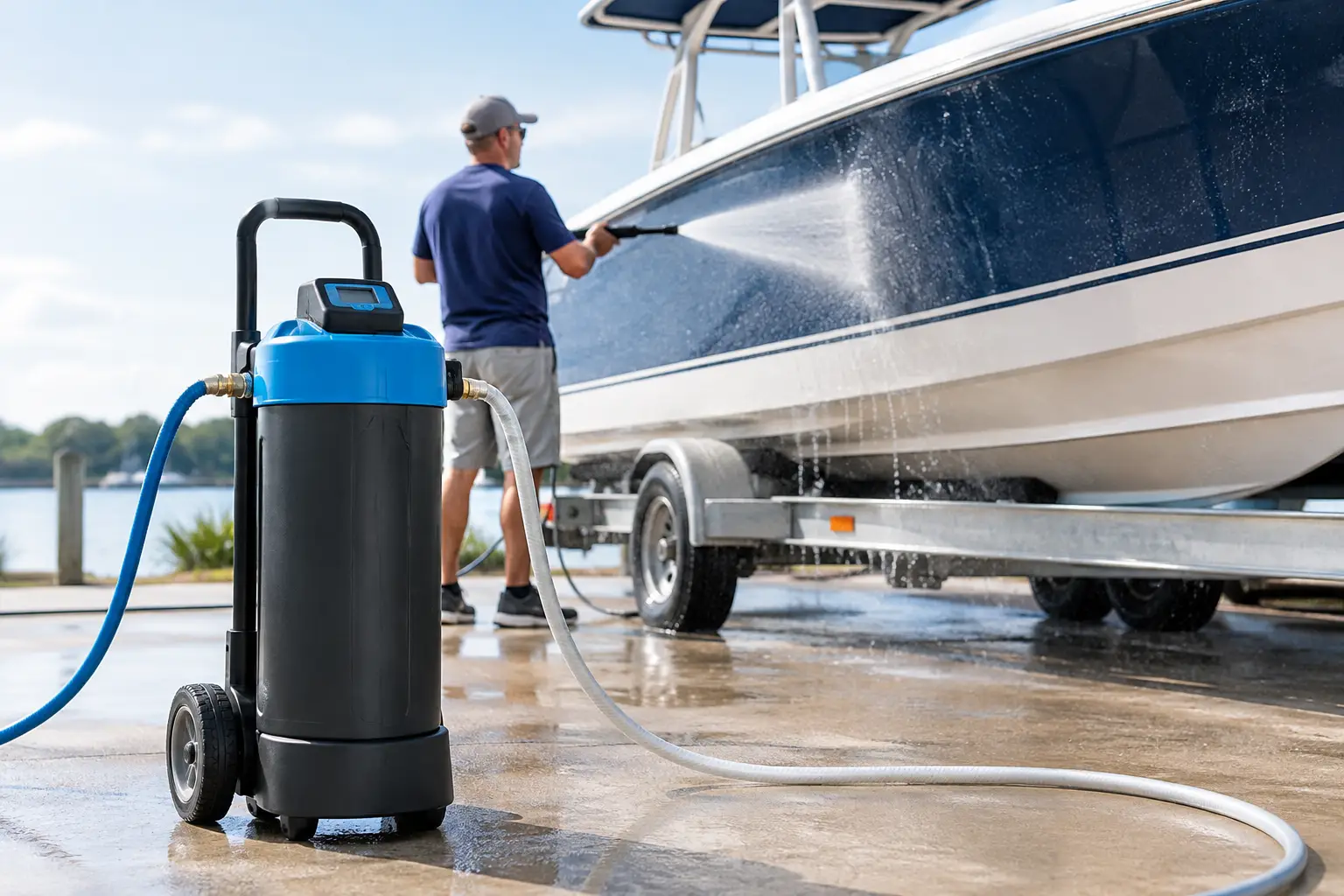
Soft water removes the calcium and magnesium that cause spotting and scale. With those minerals taken out before the water reaches your washdown hose, water dries much cleaner on exterior surfaces. Soap also rinses more effectively, leaving less film and reducing the effort required to get a clean finish.
That does not mean soft water eliminates every cleaning step. Salt, dirt, fuel residue, bird droppings, and environmental grime still need appropriate care. But it removes one major source of unnecessary cleanup: the minerals left behind by the water itself.
For many boat owners, the immediate difference is visible after the first wash. Glass stays clearer, polished surfaces need less touch-up, and the hull is less likely to show fresh spotting after drying. Over the long term, soft water can reduce the need for harsh spot removers and repeated polishing that can take a toll on expensive finishes.
Soft water is especially useful for final rinses. If water availability, time, or dock setup makes a full soft-water wash impractical, using softened water for the final rinse can still reduce mineral residue on the surfaces most likely to show spots.
A Portable Soft Water System Fits the Dock
Permanent water treatment equipment is not practical for every slip, marina, or storage location. Boats move. Dock arrangements change. Many owners need a solution that can travel with the boat or be set up only when it is time to wash.
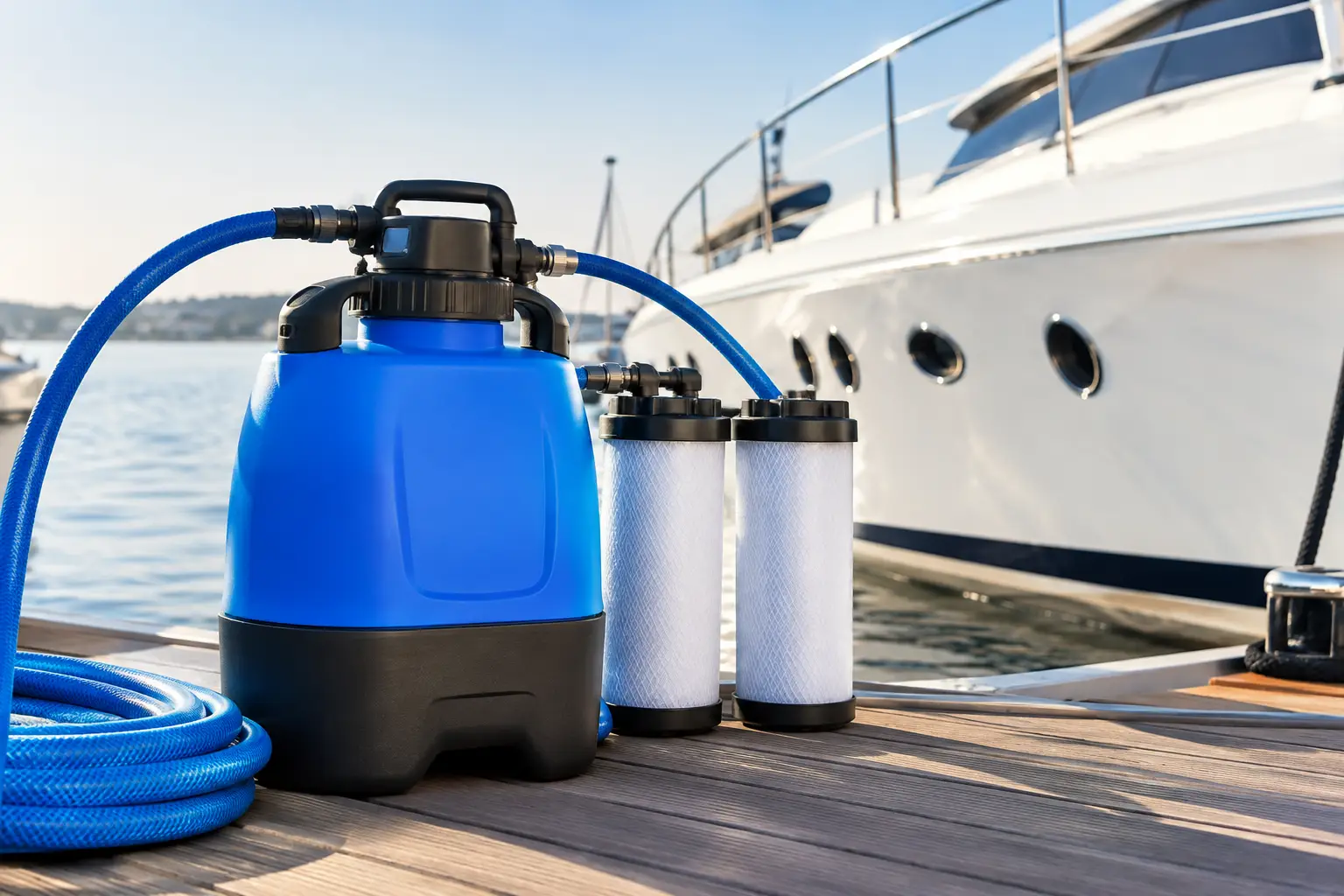
A portable water softening system connects between the water source and your hose. It uses softening media to exchange hard minerals for sodium ions, producing water that is easier on boat surfaces and onboard systems. There is no electrical hookup required, and a properly sized unit should not cost you the water pressure needed for a useful washdown.
This approach is well suited to the realities of boating. You can transport the system, connect it when you arrive at the dock, and remove it when the job is complete. When the softening media reaches capacity, it can be manually recharged rather than requiring a complicated installation or ongoing replacement hardware.
Wet Spot portable soft water systems are built for exactly this type of work, with marine-grade construction and models sized for boats up to 70 feet, 70 to 100 feet, and 100 feet and above. Selecting capacity by vessel size helps ensure the system matches the volume of water your normal maintenance routine requires.
Choose Capacity Based on How You Use Your Boat
Boat length is a useful starting point, but it is not the only factor. A 60-foot boat washed every week may use more softened water than a larger boat cleaned less often. Consider how frequently you wash, how many exterior surfaces need attention, whether you use dock water for onboard fixtures, and the hardness of the local water supply.
Smaller boats often benefit from a compact portable unit that is easy to store and carry. Owners of larger vessels may need greater capacity to handle extensive railings, multiple decks, large glass areas, and regular crew washdowns without interrupting the job for recharge.
Do not size solely for the minimum possible use. A unit that fits your normal wash routine is more useful than one that forces you to conserve softened water every time you clean. At the same time, oversized equipment may be unnecessary if storage space is limited and your boat sees only occasional freshwater rinsing. The right fit is the one that supports your actual maintenance schedule.
Best Practices for Using Soft Water at the Marina
Start with a clean hose and check the water source connection before each use. Dirt or debris inside a hose can work against a careful washdown. Connect the portable softener according to its instructions, then allow the water to run briefly before using it on finished surfaces.
Wash from the top down so loosened dirt does not run across areas you have already cleaned. Use marine-appropriate soap, soft brushes, and microfiber towels where needed. Soft water improves rinsing and reduces spots, but it does not replace proper tools or safe cleaning technique.
Pay close attention to the areas where hard water shows first: windshields, enclosure panels, chrome and stainless, dark gelcoat, black trim, transom areas, and hardware around the helm. For clear vinyl and eisenglass, use products and cloths intended for those materials. Avoid treating mineral buildup as an excuse to scrub harder.
Recharge the system on schedule. Softening media has a finite capacity, and hard water will return once that capacity is exhausted. Keeping a simple record of washes, water use, and recharge intervals helps you learn what your boat and local water demand. That is more reliable than waiting for spots to tell you the system needs attention.
Protect the Boat Between Washdowns
Soft water works best as part of a consistent care routine. Rinse saltwater exposure promptly, remove bird droppings before they bake onto the surface, and keep deck drains and fittings clear. When the boat is being stored, inspect areas where water tends to sit, including under hardware, around windshield frames, and near transom fittings.
The goal is not perfection after every outing. It is preventing small deposits from becoming a detailing project and preventing routine dock water from creating avoidable wear. A clean rinse is one of the simplest forms of asset protection available to a boat owner.
Treat the water you put on your boat with the same care you give the products you use to clean it. When wash water is soft, your finish, fixtures, and onboard equipment have one less reason to work against you.