A boat can look freshly washed at the dock, then dry into a map of white rings across the gelcoat, glass, stainless, and eisenglass. That is the problem behind the portable softener versus deionized rinse decision. Both improve wash water, but they solve different parts of the hard-water problem. Choosing the right approach comes down to how you wash, what finish you are protecting, and whether you need better water for the entire washdown or a nearly spot-free final rinse.
For most owners, the practical question is not which technology sounds more advanced. It is which one reduces labor, protects expensive surfaces, and makes routine maintenance easier without creating another complicated dockside chore.
Portable Softener Versus Deionized Rinse: The Core Difference
Hard water contains dissolved calcium and magnesium. These minerals interfere with soap, leave lime scale in plumbing and appliances, and form stubborn spots as water dries. A portable water softener addresses those hardness minerals. A deionized, or DI, rinse system removes a much broader range of dissolved ions from the water.
A softener works through ion exchange. Water passes through resin that captures calcium and magnesium and exchanges them for sodium or potassium ions. The result is soft water that rinses cleaner, lets soap work better, and greatly reduces the mineral deposits that build up on fixtures, wash equipment, and onboard systems.
A DI system also uses ion-exchange resin, but its purpose is different. It removes positively and negatively charged dissolved minerals, lowering the total dissolved solids in the rinse water. With very low dissolved solids left behind, water can dry with little to no spotting on a clean surface.
That distinction matters. Soft water is a practical answer for everyday washdowns and onboard hard-water protection. Deionized water is typically used when the final appearance of a dry surface is the priority.
What a Portable Softener Does Best
A portable softener treats the water you use, not just the last few minutes of a wash. That makes it especially useful for boat owners who regularly fill tanks, wash down decks, rinse fishing gear, clean shower areas, or protect plumbing and appliances from scale.
Soft water improves the entire cleaning process. Soap and boat wash products lather more effectively, so you can often use less product and spend less time chasing residue. Rinsing is easier because calcium and magnesium are no longer clinging to the surface. Metal, glass, vinyl, plastic, and gelcoat all benefit from less mineral buildup over time.
For a vessel that sees frequent marina water, this is a meaningful advantage. Scale does not only show up as spots on the hull. It can collect in water heaters, ice makers, fixtures, hoses, showerheads, and other onboard equipment. Preventing that buildup helps protect systems that are far more expensive to repair or replace than a washdown tool.
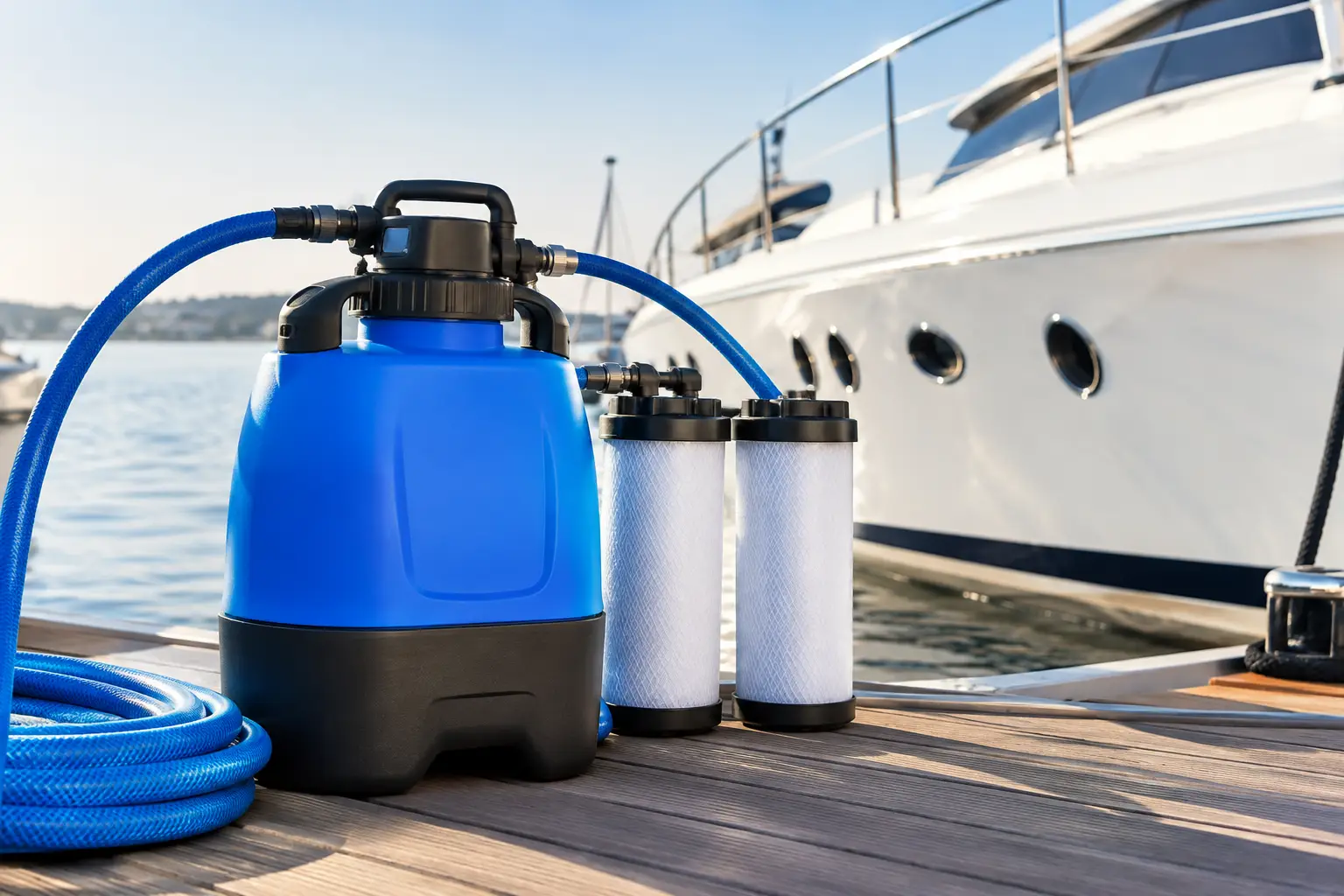
Portability is another practical benefit. A self-contained softener can be connected when needed, moved between uses, and operated without an electrical hookup. For mobile applications, that simplicity matters. The Original Portable Water Softening System from Wet Spot is built for this type of work, with vessel-size options designed to provide soft water without sacrificing water pressure.
A softener does require manual recharging when its resin capacity is used. That is normal maintenance, not a defect. Recharge frequency depends on incoming water hardness and the volume of water used. Very hard marina water will use capacity faster than moderately hard water, so owners who wash frequently should plan recharging as part of their routine.
Where a Deionized Rinse Makes Sense
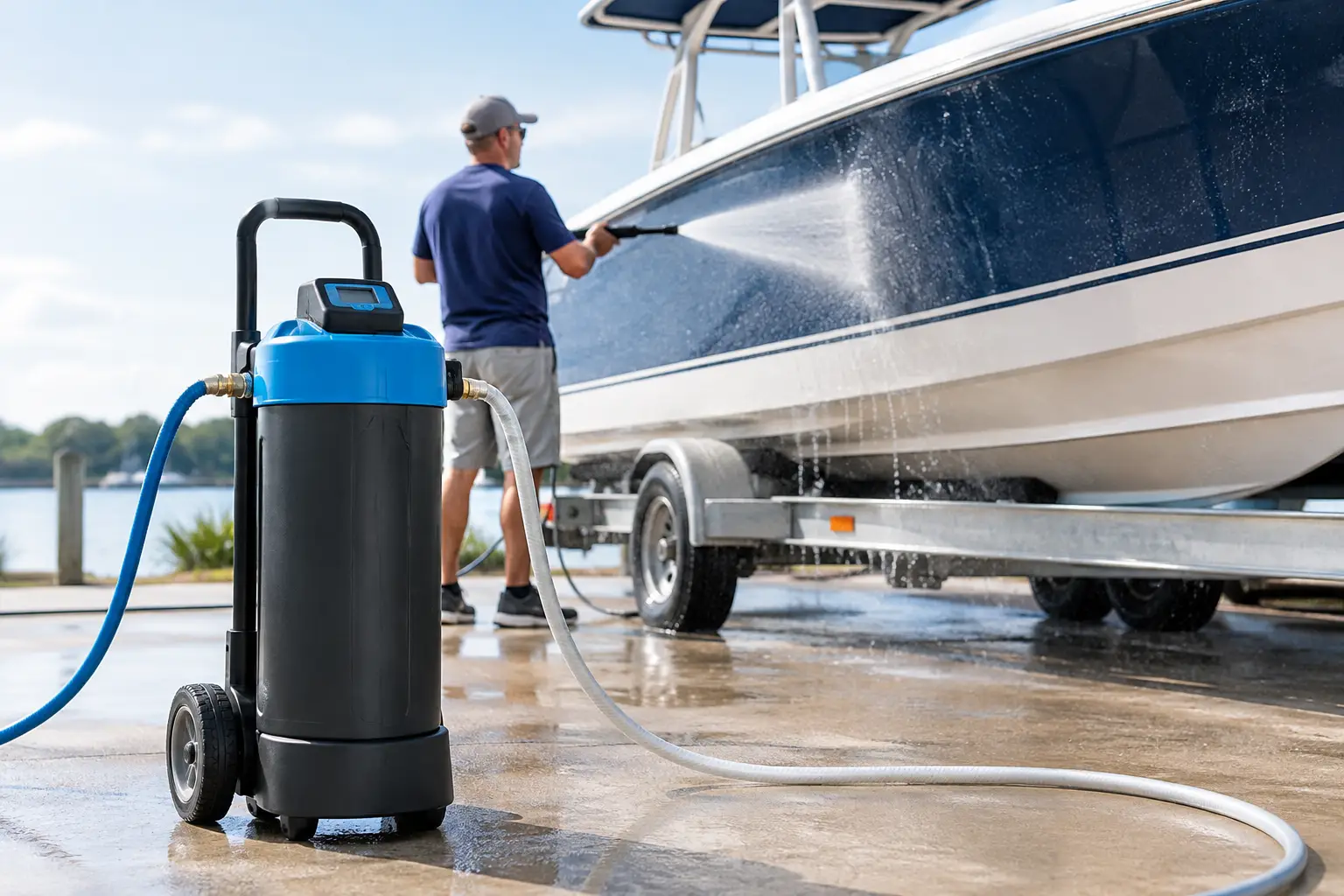
A deionized rinse is most valuable at the finish line. After washing and rinsing a boat, RV, vehicle, or aircraft, DI water can be used as a final rinse to reduce drying spots. This is particularly useful on dark paint, polished metal, glass, windows, and other surfaces where even minor spotting stands out.
Because DI water has very low mineral content, it leaves less behind when it evaporates. That can reduce towel work and help produce a cleaner dry finish, provided the surface was properly washed first. DI water does not remove dirt, salt film, oxidation, oil, or old stains by itself. It is rinse water, not a replacement for cleaning.
The trade-off is capacity and operating cost. DI resin is consumed as it captures dissolved material from the water. The harder and more mineral-heavy the source water, the faster it is exhausted. A large washdown can use a substantial amount of treated water, which makes full-time DI use costly for many owners.
DI systems also work best when the incoming water is reasonably clean. Sediment, chlorine, and heavy mineral loads can shorten resin life or require additional filtration. If your goal is a spot-free final rinse on a carefully detailed vessel, the extra attention may be worthwhile. If your goal is better water for every hose, shower, appliance, and wash bucket, DI alone may be more treatment than you need.
Soft Water Is Not Always Spot-Free Water
This is the point that causes the most confusion. Softened water contains far less calcium and magnesium, but it still contains dissolved material. A portable softener is excellent at stopping the hardness minerals responsible for scale and many common water-spot issues. It does not make water fully deionized.
That means soft water can still leave light residue if it dries on a surface, especially when the source water has high total dissolved solids from minerals other than calcium and magnesium. Wind, sun, salt spray, dust, and leftover wash product can also create marks that look like water spots.
For routine boat care, the improvement from soft water is often dramatic. You get better soap performance, less scale, easier rinsing, and fewer mineral deposits. For a show-ready finish where you want to let the final rinse air-dry with minimal spotting, DI water has the edge.
The two approaches can also complement each other. Soft water can handle the main washdown and protect the broader water system, while DI water is reserved for a controlled final rinse on high-visibility surfaces. This approach limits DI resin use while still giving detail-focused owners a cleaner finish.
Choose Based on How You Use Water
If you routinely connect to hard marina water and want to protect more than exterior surfaces, a portable softener is usually the stronger first investment. It serves the daily realities of ownership: washing the vessel, cleaning equipment, reducing scale in plumbing, and making onboard water easier to use. It is also the more practical choice when water volume is high.
If you already have a solid wash process and your main frustration is spotting after the boat dries, a DI final rinse may be the right specialty tool. It is best suited to owners who prioritize appearance after every wash, use lower volumes for the final rinse, and are prepared to monitor resin condition and replacement costs.
For RVs, vehicles, and aircraft, the same logic applies. A softener improves the cleaning water used throughout the job. DI water is most useful when paint, glass, polished trim, or clear surfaces need the cleanest possible dry-down. The right answer depends on whether you are managing hard-water damage across an entire system or refining the final presentation of a finished surface.
Consider the Ongoing Work, Not Just the Purchase
Neither option is maintenance-free. Softener resin needs periodic recharging with the appropriate salt, and DI resin eventually needs replacement or service. The difference is how each system fits your workflow.
A portable softener is designed for repeatable, high-volume use. Its maintenance is predictable, and its value grows when you regularly encounter hard water. Be sure to follow recharge instructions and local marina requirements for handling recharge discharge. If treated water may be used for drinking or food preparation, follow the equipment guidance and maintain the proper bypass arrangement where applicable.
A DI rinse system requires more attention to water quality and resin capacity. Many systems indicate when output quality has declined, but the real cost is tied to what is in your incoming water and how much you use. Running every gallon of a large washdown through DI resin can be expensive when a small final rinse would accomplish the actual goal.
The best water-treatment setup is the one you will use consistently. Start with the problem you see most often: scale and difficult washdowns call for soft water; final-rinse spotting calls for DI water. Then build a routine that keeps your boat protected before mineral buildup becomes another weekend project.