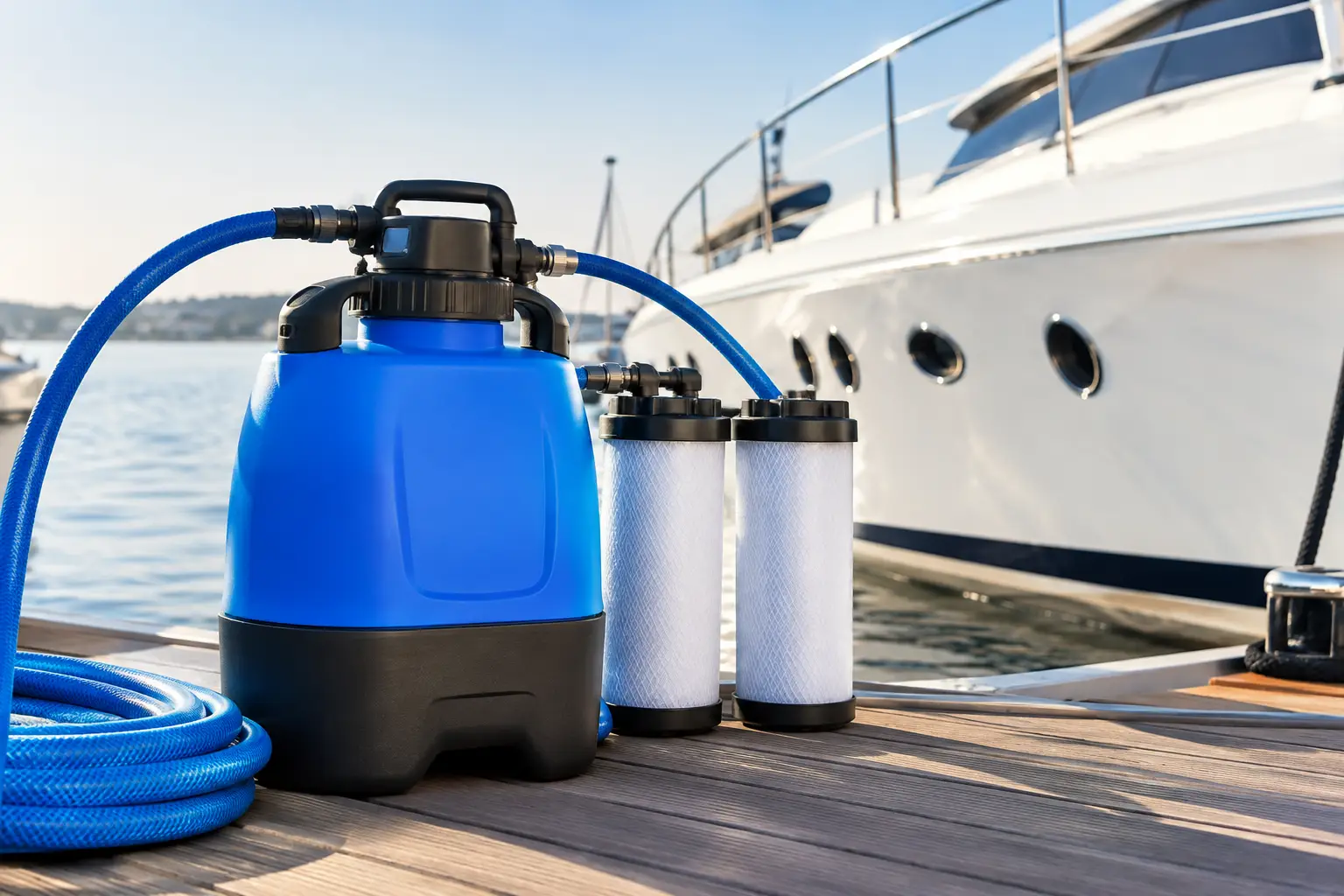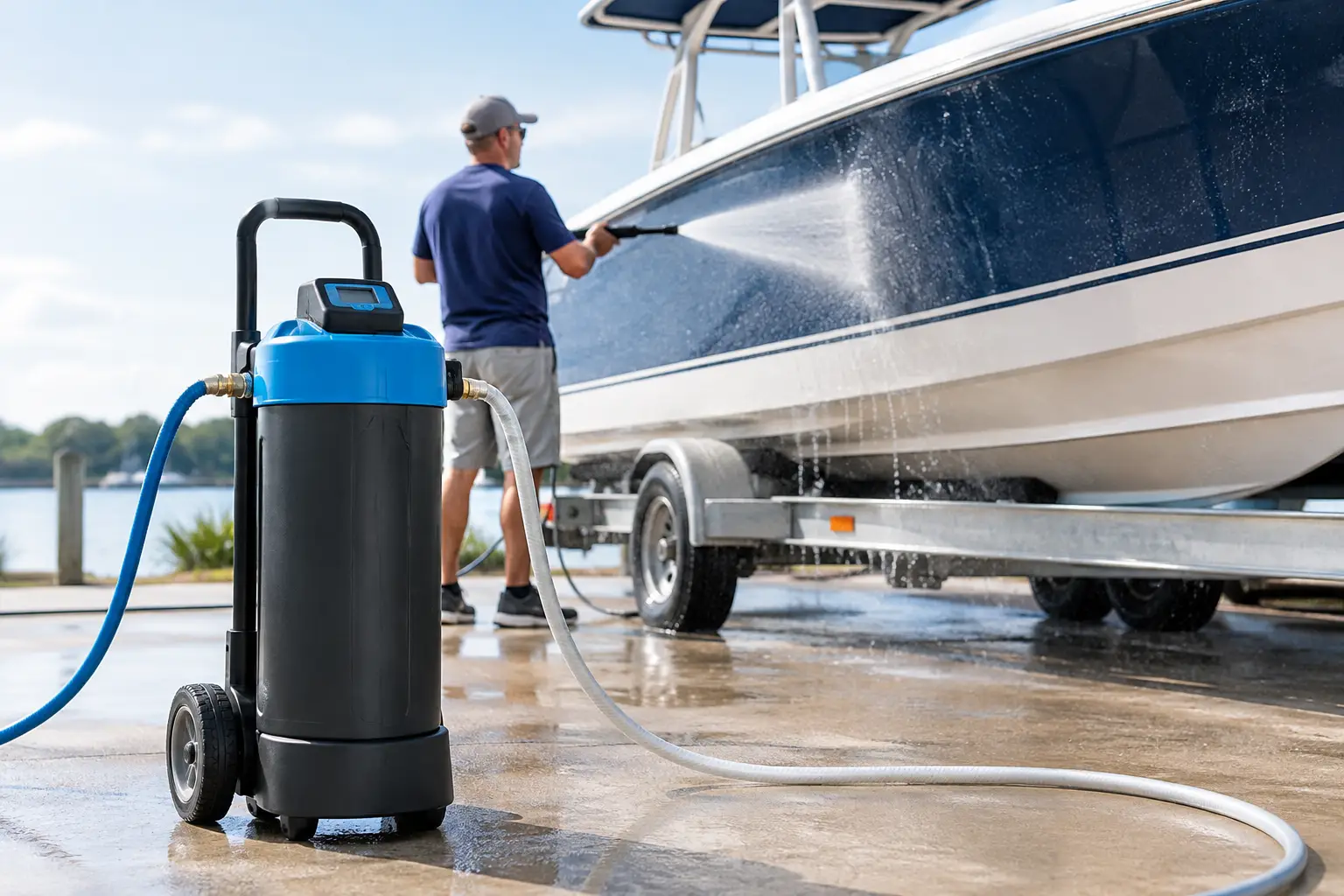
Hard water can make a freshly washed boat look neglected before the deck has even dried. White spots on glass, chalky residue on stainless, stiff canvas, and scale inside onboard fixtures all start with the minerals left behind in untreated water. This guide to portable resin water softeners explains how these systems work, where they make the biggest difference, and how to choose and maintain one for reliable soft water wherever you dock.
What a Portable Resin Water Softener Does
Hard water contains dissolved calcium and magnesium. Those minerals are harmless to drink, but they are tough on expensive surfaces and equipment. As water evaporates, the minerals remain. That is why washdowns leave spots on gelcoat and windows, why shower fixtures develop crusty buildup, and why water heaters, plumbing, and appliances can gradually collect scale.
A portable water softener uses a tank of ion-exchange resin to remove those hardness minerals from the incoming water. The resin exchanges calcium and magnesium for sodium ions. The result is soft water that rinses cleaner, allows soap to work better, and leaves far less mineral residue behind.
For boat owners, this means less time chasing spots after every washdown. For RV owners, it helps protect plumbing and makes showers and cleanup more comfortable. Vehicle and aircraft owners benefit from cleaner finishes, clearer glass, and less mineral buildup around fittings and wash equipment.
Portable systems are designed for situations where a permanent softener does not make sense. They connect to an available water source, require no electrical hookup, and can be moved between a dock, slip, driveway, hangar, campsite, or storage area.
Why Resin Matters in a Portable Softener
The resin is the working material inside the vessel, and it is the reason a compact unit can produce softened water without power. A quality resin bed provides meaningful capacity in a portable package, but capacity is not unlimited. Once the resin has collected its available share of hardness minerals, it needs to be recharged.
Recharge restores the resin with a salt solution. The process flushes the collected calcium and magnesium out of the tank and returns the resin to service. It is straightforward manual maintenance, not a reason to replace the entire system. For owners who use a softener regularly, that long service life is a major advantage over disposable or consumable-heavy approaches.
Not all water creates the same workload. A marina with moderately hard water may allow many washdowns between recharges. Very hard well water, a large yacht washdown, or frequent use of onboard showers and appliances will use capacity faster. The right question is not simply, “How large is the tank?” It is, “How much hard water will I run through it between maintenance opportunities?”
Where Soft Water Pays Off on a Boat
A boat has many surfaces that show hard-water damage quickly. Gelcoat and painted finishes can develop dull-looking spots. Glass, eisenglass, chrome, stainless steel, and polished fittings need more wiping and detailing when mineral residue dries on them. Canvas, non-skid, and deck hardware also become harder to keep clean when soap does not rinse freely.
Soft water changes the washdown process. Soap lathers more effectively, so owners often use less of it. Rinsing is easier because there are fewer minerals left behind to dry on the surface. You still need sound cleaning practices, especially in saltwater environments, but soft water removes one common cause of avoidable detailing work.
The benefit extends beyond appearance. Scale can form in freshwater plumbing, shower heads, water heaters, ice makers, and other onboard equipment. Reducing mineral exposure helps protect components that are costly or inconvenient to service. A portable softener is not a replacement for winterization, proper flushing, or scheduled maintenance. It is a practical layer of protection every time water is used.
Choosing the Right Portable Softener Size
Sizing should follow the size of the asset, expected water use, and the hardness level at the locations where you fill or wash. A small unit may be appropriate for routine washdowns on a smaller boat, a car, or a compact RV. Larger vessels and higher-use applications need more resin capacity so the system can keep up without constant recharging.
Wet Spot systems are structured around vessel size, including options for boats up to 70 feet, 70 to 100 feet, and 100 feet and above. That is a useful starting point, but usage still matters. A 60-foot boat washed occasionally at a marina with moderate hardness may have different needs than a 45-foot boat used heavily at a hard-water location.
Consider these five factors before selecting a system:
- The length of your boat or the size of the RV, vehicle, or aircraft you maintain.
- How often you wash, rinse, fill tanks, or use water onboard.
- Whether the unit will support only exterior cleaning or also freshwater plumbing and appliances.
- The hardness of the available water supply, which can vary from one marina or campground to another.
- How often you are willing to perform a manual recharge.
A larger capacity unit is not automatically the right answer for every owner. It takes up more space and may be more than a light-use application needs. But undersizing creates its own frustration: frequent recharging, reduced convenience, and a greater chance of running hard water through the system when you need soft water most.
Setup Is Simple, but Flow Direction Matters
A portable resin softener is built to be practical at the dock or on the road. In most applications, you connect the water source to the inlet, connect your hose to the outlet, and begin using softened water after following the unit’s startup instructions. No electrical outlet is required, and a properly designed portable system should not create a meaningful loss of water pressure during normal use.
Before each use, inspect the hose connections and fittings. Confirm the system is upright and secure, particularly on a dock or uneven surface. If the softener has been stored for an extended period, follow the manufacturer’s recommended rinse or startup procedure before sending water to your boat or equipment.
Do not assume every water connection has the same purpose. A system used for exterior washdowns can be connected differently than one supporting onboard freshwater needs. Know which hose feeds which part of the boat, and avoid cross-connections that could send untreated water where you expect soft water.
Knowing When to Recharge the Resin
Recharge timing depends on capacity and water hardness, not on a calendar alone. Some owners track approximate gallons used. Others recharge after a known number of washdowns or on a maintenance schedule based on experience at a particular marina. Either method can work if it prevents the resin from being left exhausted during regular use.
Common signs that a recharge is due include returning water spots, reduced soap performance, visible mineral residue, or a hardness test that shows the outlet water is no longer soft. A simple hardness test can remove guesswork, especially when you travel between locations with different water conditions.
Use the correct salt and follow the recharge instructions for your specific system. The process generally involves introducing a salt solution, allowing the resin to regenerate as directed, then thoroughly rinsing the unit before use. Skipping the rinse can leave excess salt in the output water, which is not what you want on finishes, plumbing, or onboard equipment.
Protect the unit during storage. Drain and store it according to its instructions, especially where freezing temperatures are possible. Freezing water can damage fittings, tanks, and internal components. Keep the vessel clean, check seals periodically, and address leaks early rather than forcing worn connections to keep working.
Soft Water Is Not the Same as Spot-Free Water
This distinction matters for detail-focused owners. A resin water softener removes hardness minerals, which are a major source of spotting and scale. It does not necessarily remove every dissolved substance in the water. Depending on the source, water may still contain other minerals or contaminants.
For most dockside washdowns and regular cleaning, softened water delivers the practical improvement owners want: better soap action, easier rinsing, and far less hard-water residue. If your goal is a completely mineral-free final rinse for specialty detailing, that is a different water-treatment requirement. The best choice depends on the finish standard you need, the source water, and how much water you use.
The value of a portable softener is its consistency. It gives you a dependable way to protect high-value surfaces and water systems without installing permanent equipment or relying on electrical power. Keep the resin recharged, size the system for the way you actually use water, and soft water becomes one less thing to worry about when it is time to clean up and get back on the water.