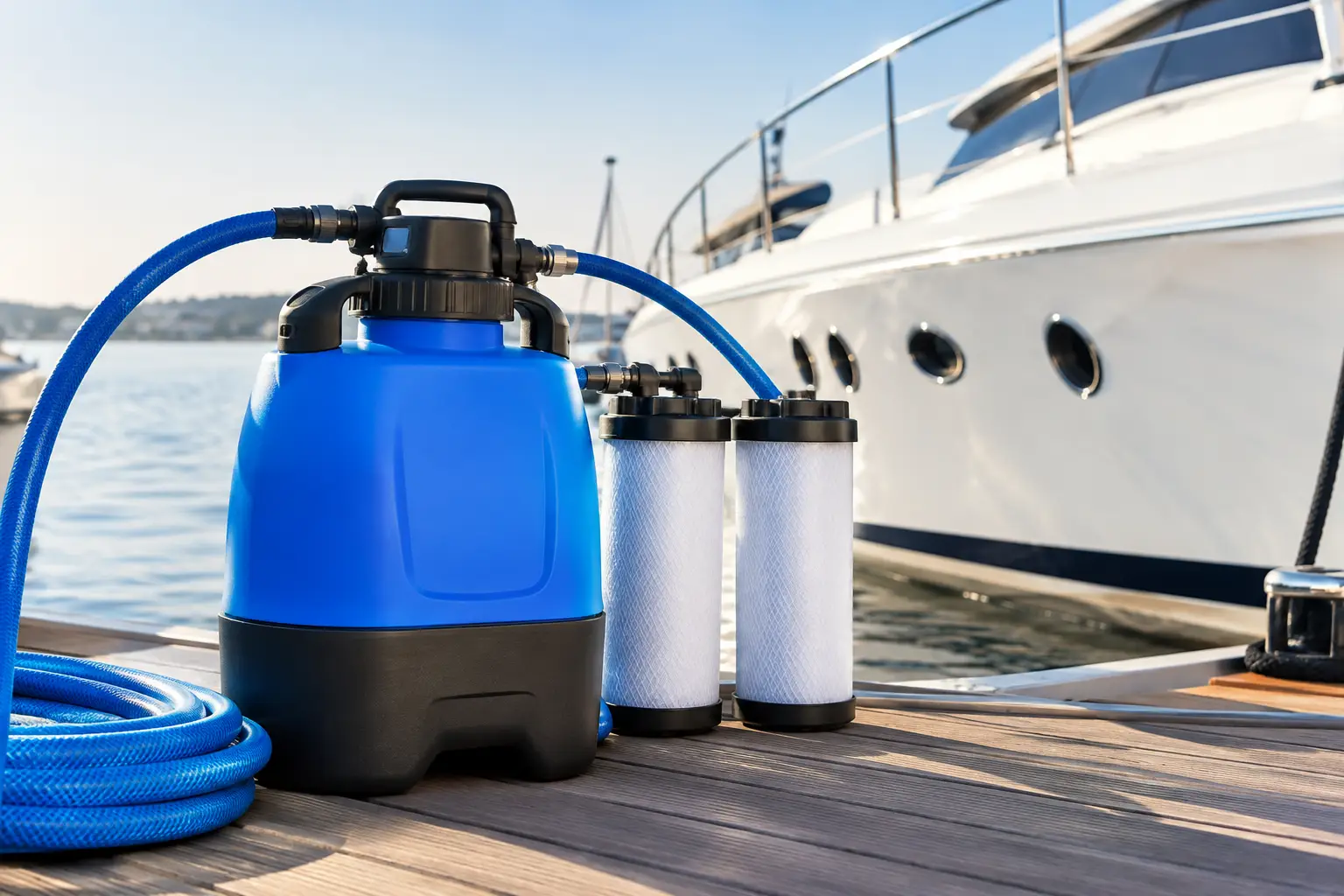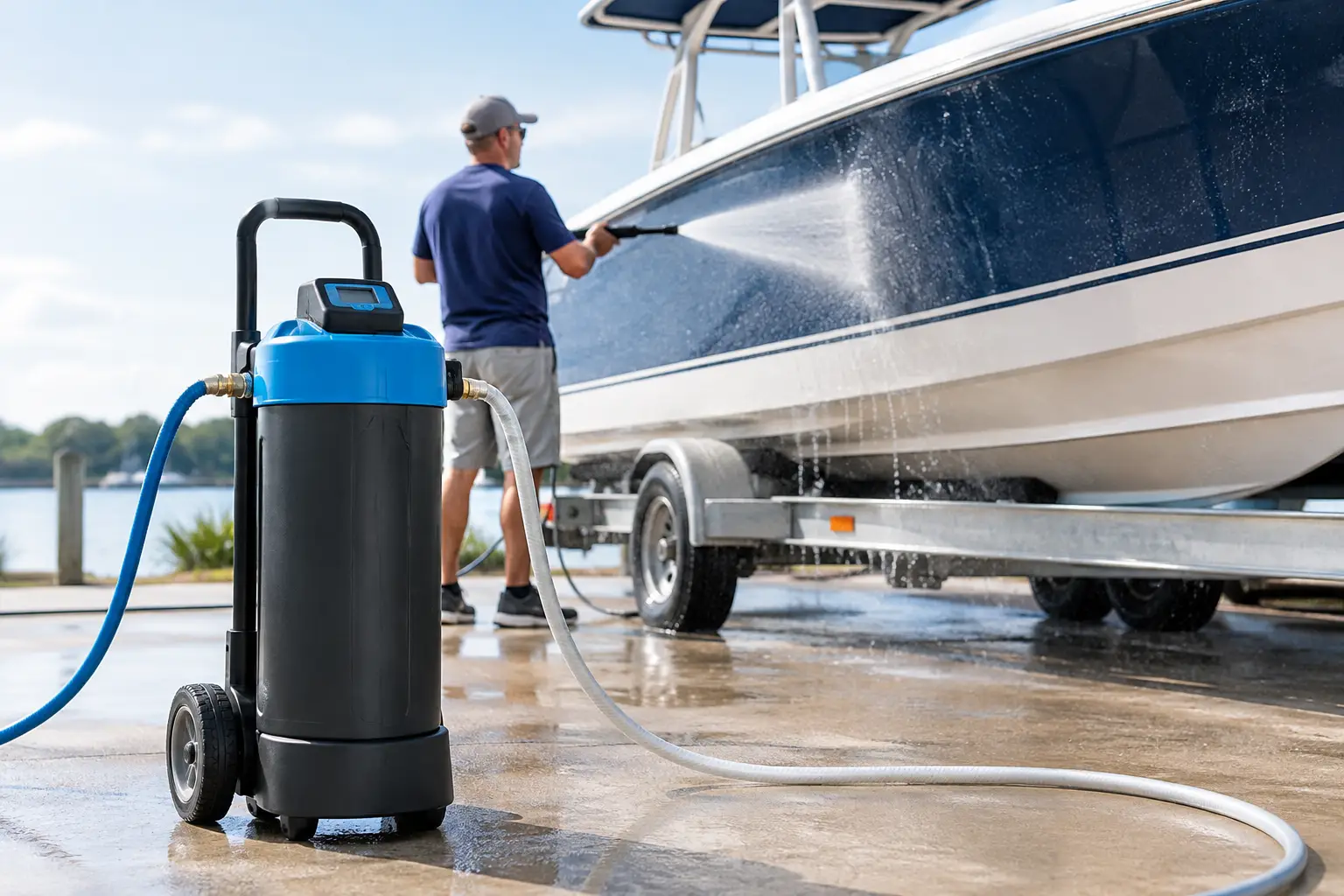
A portable softener does its best work quietly. Water runs through it, calcium and magnesium are removed, and your boat, RV, vehicle, or aircraft dries with fewer mineral spots and less scale. When hard-water minerals eventually fill the resin’s exchange sites, the unit needs a recharge. Knowing how to recharge portable softener resin keeps your system working as designed and helps protect the finishes, fixtures, plumbing, and equipment you spent money to maintain.
Recharge is straightforward. It does not require electricity, a permanent installation, or a service call. It does require the right salt, a clean brine cycle, and a thorough rinse before putting the softener back into service.
What Recharging the Resin Actually Does
Inside a portable water softener, resin beads exchange sodium ions for hardness minerals in incoming water. Those hardness minerals are primarily calcium and magnesium, the same minerals that leave white spots on gelcoat and glass, create scale in plumbing, and make washdown work harder than it should.
Over time, the resin becomes loaded with hardness minerals. Recharging exposes the resin to a concentrated saltwater solution, called brine. The sodium in that brine displaces the trapped calcium and magnesium, flushing them out of the vessel. Once rinsed, the resin is ready to soften water again.
The resin is not meant to be replaced every time the unit is exhausted. A properly maintained portable softener is designed for repeated manual recharges. That is one reason a purpose-built unit is a practical long-term tool for mobile water use.
When to Recharge a Portable Water Softener
Recharge timing depends on two things: how hard your source water is and how much water you run through the unit. Very hard marina water will use up the resin’s capacity faster than moderately hard water. A full boat washdown, several showers, or repeated vehicle rinses will also bring the system to exhaustion sooner.
The most reliable approach is to follow the capacity guidance for your specific softener size and your typical water conditions. Larger vessels and heavier-use applications need more capacity, which is why portable softeners are sized around the demands of the asset they protect.
You may also notice practical signs that it is time to recharge. Soap may not lather as well, water spots may return after drying, or your normal rinse may leave a dull mineral film. These are useful warnings, but they are not as precise as recharging on a regular schedule based on water use.
Do not wait until scale is visible on expensive surfaces. A timely recharge keeps soft water available when you need it and prevents the hard-water cleanup cycle from starting again.
How to Recharge Portable Softener Resin Step by Step
Before beginning, place the unit on a stable surface where brine and rinse water can drain safely. Disconnect it from the water supply and relieve any pressure according to the operating instructions for your system. Keep the softener upright unless its instructions specifically state otherwise.
- Use the correct salt. Use clean water-softener salt specified for portable softener regeneration. Avoid salt products that contain additives, fragrances, rust removers, or insoluble material. These can leave residue, restrict flow, or create unnecessary buildup inside the vessel. The goal is a clean, concentrated brine.
- Measure the salt and water correctly. Add the amount of salt and water specified for your particular unit. Vessel size matters. Using too little salt may not fully restore resin capacity, while adding extra salt does not improve performance and can make rinsing take longer. Follow the instructions supplied with the softener rather than estimating.
- Allow the brine to contact the resin. Let the saltwater solution move through and contact the resin for the required time. During this stage, sodium ions replace the collected hardness minerals. Do not rush the contact period. A complete brine cycle is what restores the softener’s ability to prevent spotting and scale.
- Drain the spent brine properly. The discharged water contains salt along with the calcium and magnesium removed from the resin. Direct it to an appropriate drain or disposal point. Do not release brine where it can damage sensitive landscaping, contaminate freshwater areas, or violate marina, campground, or local discharge rules.
- Rinse until the system is ready for use. Flush the softener with fresh water according to the manufacturer’s rinse procedure. This step removes remaining brine and displaced minerals. Rinsing matters just as much as the salt cycle because residual salt can affect the water coming out of the unit. Continue until the prescribed rinse volume has passed and the discharge is no longer salty.
After the rinse, reconnect the unit, check fittings for leaks, and return it to service. Your portable softener should now be ready to deliver soft water for washdowns, rinsing, onboard use, or detailing.
Salt Selection and Rinse Quality Matter
The recharge process is simple, but shortcuts can reduce results. Table salt, rock salt, and mixed-purpose salt products are poor choices unless the unit manufacturer specifically approves them. Fine additives and insoluble particles can remain behind in the system, while products with extra chemicals add nothing to the resin regeneration process.
Use the salt type recommended for your equipment, and store it dry. Moisture turns salt into hard clumps, making it harder to measure and dissolve. A sealed container is a small detail that prevents a frustrating maintenance job later.
A complete rinse is equally important. If the softener is rushed back into operation after brining, the first water out may contain excess salt. That is not what you want on painted surfaces, glass, metal hardware, or onboard plumbing. Taking a few extra minutes to rinse correctly protects the same equipment the softener is there to protect.
Avoid These Common Recharge Mistakes
The most common mistake is treating a recharge as optional until the water is visibly leaving spots. By that point, hard water may already be drying on gelcoat, stainless, windows, and fixtures. Establish a routine around your normal water use instead.
Another mistake is guessing at salt quantity or regeneration time. Portable systems are designed around specific resin volume and vessel size. The recharge instructions are not arbitrary. They are the operating procedure that gives the resin a full reset without wasting salt or water.
Also avoid using untreated hard water for a final rinse when soft water is the reason for the washdown in the first place. If your goal is a cleaner finish with less hand drying and less mineral residue, make sure the softener is fully regenerated before the final rinse begins.
Finally, do not ignore the rest of the setup. Check hoses, quick-connect fittings, screens, and seals while the unit is disconnected. A portable system is built for easy transport, but marine docks, RV storage bays, and travel conditions can loosen fittings or introduce debris over time.
Build Recharge Into Your Maintenance Routine
For boat owners, a recharge schedule works best when it follows real use: after a major washdown, before a trip with heavy onboard water demand, or at the end of a busy marina weekend. For RV, automotive, and aviation use, plan around detailing sessions, long trips, and the hardness of water at the locations you visit.
Keep a simple record of recharges until you understand your typical capacity. After a few cycles, you will know whether your water source and usage pattern call for more frequent service. This is especially useful when moving between marinas, campgrounds, or regions with noticeably different water hardness.
Wet Spot portable water softeners are built for owners who need reliable soft water without electrical hookups, pressure loss, or complicated installation. A proper manual recharge is the small maintenance task that keeps that protection working trip after trip.
Treat recharge as part of protecting the asset, not as an interruption to using it. Freshly regenerated resin means the next rinse can do what it is supposed to do: leave less mineral residue behind and reduce the work required to keep valuable surfaces looking their best.