A water heater that takes longer to recover, a showerhead that sprays unevenly, and white deposits around a faucet are not just cosmetic annoyances. They are early signs that hard water is working inside the boat. Yacht plumbing maintenance savings begin when owners stop treating mineral buildup as normal and start controlling the water entering the vessel.
Hard water carries dissolved calcium and magnesium. When that water is heated, dries on a surface, or sits in plumbing, those minerals can form lime scale. On a yacht, the result can be reduced appliance efficiency, restricted water flow, dull fixtures, extra detailing, and avoidable service calls. Soft water addresses one cause of those problems before it reaches the system.
Where Hard Water Raises Yacht Ownership Costs
The expense of hard water rarely appears as one large invoice. It shows up in small, repeated jobs: cleaning water spots from stainless, replacing aerators, flushing a water heater, descaling a coffee maker, or calling a technician when an appliance no longer performs as expected. Each task takes time, materials, or both.
The most exposed equipment is usually the equipment that heats or evaporates water. Water heaters, ice makers, dishwashers, laundry equipment, shower fixtures, galley faucets, and water-fed cleaning equipment can all collect mineral deposits when hard water is used regularly. The degree of buildup depends on local water hardness, water temperature, frequency of use, and how long water remains in the system.
A yacht that makes short marina stops may see a changing water profile from one port to the next. One marina’s supply may leave almost no residue, while another can leave visible spotting after a single washdown. This makes a consistent water-treatment approach especially useful for vessels that travel frequently or spend time in known hard-water regions.
How Soft Water Creates Yacht Plumbing Maintenance Savings
Softening removes the calcium and magnesium responsible for hard-water scale. That simple change can reduce mineral deposits before they settle in plumbing, fixtures, and onboard appliances. It does not eliminate every maintenance need, but it can make regular maintenance more predictable and less labor-intensive.
Less Scale in Water-Using Equipment
Scale acts as an insulating layer on heating surfaces. In a water heater, that can mean the unit works harder to deliver hot water. In smaller appliances, deposits can affect performance and shorten the interval between cleaning or service. Using softened water helps keep internal passages and heating surfaces cleaner.
The savings are often indirect but meaningful. Better-performing equipment may need fewer descaling treatments, spend less time out of service, and face less stress from restricted flow. For an owner or captain managing an active vessel, avoiding an inconvenient repair during a trip has value beyond the parts bill.
Faster Cleaning and Better-Looking Surfaces
Hard water leaves spots and chalky residue on glass, polished metal, gelcoat, plastic, and enclosure panels as it dries. That means more wiping, more cleaning chemical, and more opportunities to scratch sensitive finishes while trying to remove stubborn deposits.
Soft water rinses cleaner and helps soap work more effectively. Crew and owners can often use less product and less effort to achieve a spot-free finish. This matters after every washdown, not only at annual detailing time. Over a season, fewer repeat passes on rails, windows, windshields, and exterior fixtures can save a substantial amount of labor.
Fewer Small Restrictions and Fixture Replacements
Aerators, showerheads, spray nozzles, and faucet cartridges are small components, but they can create outsized frustration. Mineral accumulation can reduce flow, distort spray patterns, and make a fixture look neglected long before it actually wears out.
Soft water will not repair damaged components, and saltwater exposure remains a separate marine concern. But reducing hard-water deposits helps fixtures operate as designed and can delay replacement caused by mineral blockage. It also makes routine inspection simpler because there is less buildup hiding leaks, corrosion, or worn seals.
Start With the Water You Use Most
Not every yacht needs the same treatment plan. The best setup depends on vessel size, plumbing configuration, water use, and where the boat is filled or washed. The priority is to identify the water that creates the most mineral exposure.
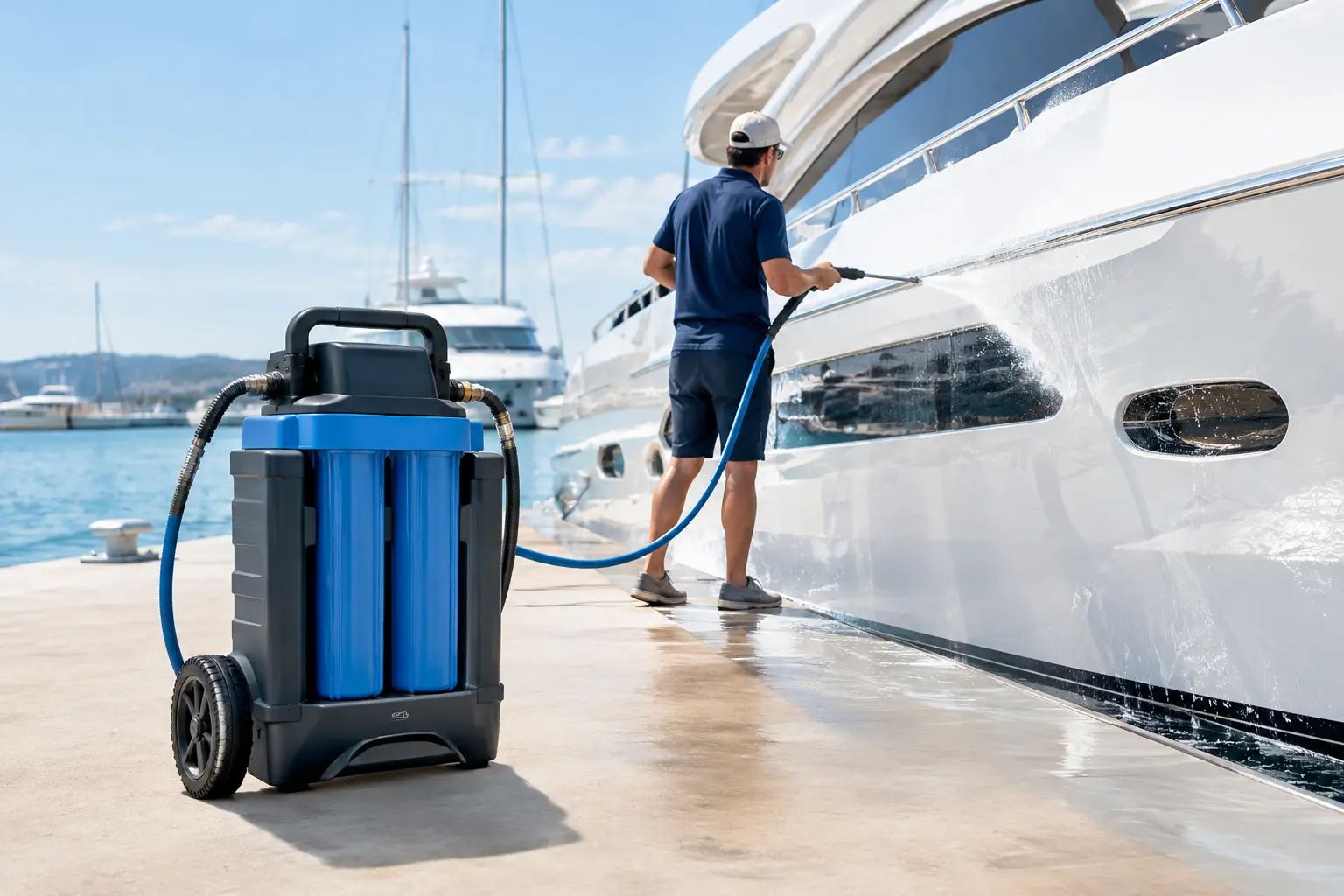
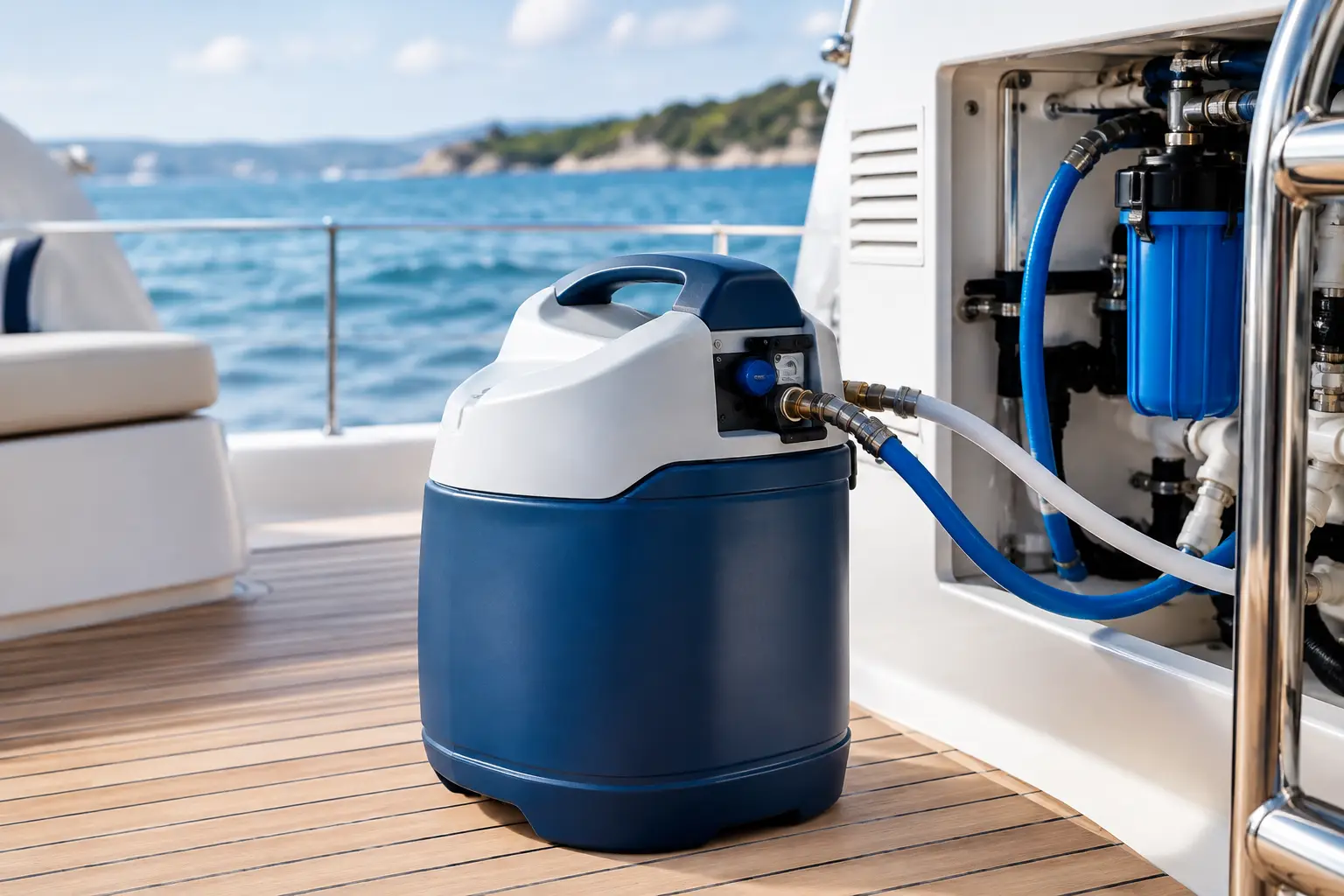
For many owners, dockside washdowns are the obvious starting point. Soft water can protect the exterior finish and reduce spotting immediately. For boats that regularly take on hard municipal water, treating water used for filling tanks can also help protect the domestic plumbing system and the appliances connected to it.
A portable softener is practical because it does not require electrical power or a permanent installation. It can be connected where water is being used, then stored when the job is finished. Wet Spot portable water softening systems are sized for different vessel ranges, allowing owners to select capacity based on the demands of their boat rather than trying to make one undersized unit do every job.
Protect the Savings With Routine Service
A softening system is a maintenance tool, not a set-it-and-forget-it accessory. It needs timely manual recharge to continue removing hardness minerals. The recharge interval varies with incoming water hardness and the amount of water processed. Very hard water uses the softening capacity faster than moderately hard water.
The practical approach is to keep track of usage and inspect results. If spotting returns, soap no longer rinses as cleanly, or known hard water has been used heavily, it may be time to recharge. Following the unit’s operating instructions and using the correct regeneration material helps maintain consistent performance.
Your broader plumbing program still matters. Inspect hoses, clamps, pumps, filters, pressure regulators, tank vents, and water-heater relief components on their normal schedule. Soft water reduces mineral scale, but it does not prevent freeze damage, leaks, contamination, corrosion from salt exposure, or failures caused by age. Good yacht care handles each risk for what it is.
Put a Dollar Value on Prevention
The clearest way to evaluate soft water is to look beyond the purchase price and consider the jobs it can reduce. Track what you spend in a season on descaling products, fixture replacements, detail labor, water-spot removal, appliance servicing, and time spent correcting hard-water residue.
There is no universal dollar amount because a lightly used weekend boat and a heavily used yacht have very different water demands. A vessel with an ice maker, multiple heads, a water heater, frequent washdowns, and regular marina stays has more opportunities for scale-related costs than a smaller boat used occasionally. The harder the source water and the more water the boat uses, the stronger the maintenance case becomes.
The other value is protection of appearance. Clean fixtures, clear glass, bright metal, and a spot-free finish support the standard owners expect from a well-kept yacht. Keeping mineral deposits off expensive surfaces is easier than restoring them after repeated exposure.
A Practical Standard for Better Water
Treat soft water as part of the vessel’s preventive-maintenance routine, just like checking filters or protecting batteries. Use it consistently where hard water enters the boat, recharge the system on schedule, and watch the difference in cleaning time and scale buildup. The payoff is not flashy: fewer deposits, less scrubbing, and more time spent using the yacht instead of correcting what the water left behind.