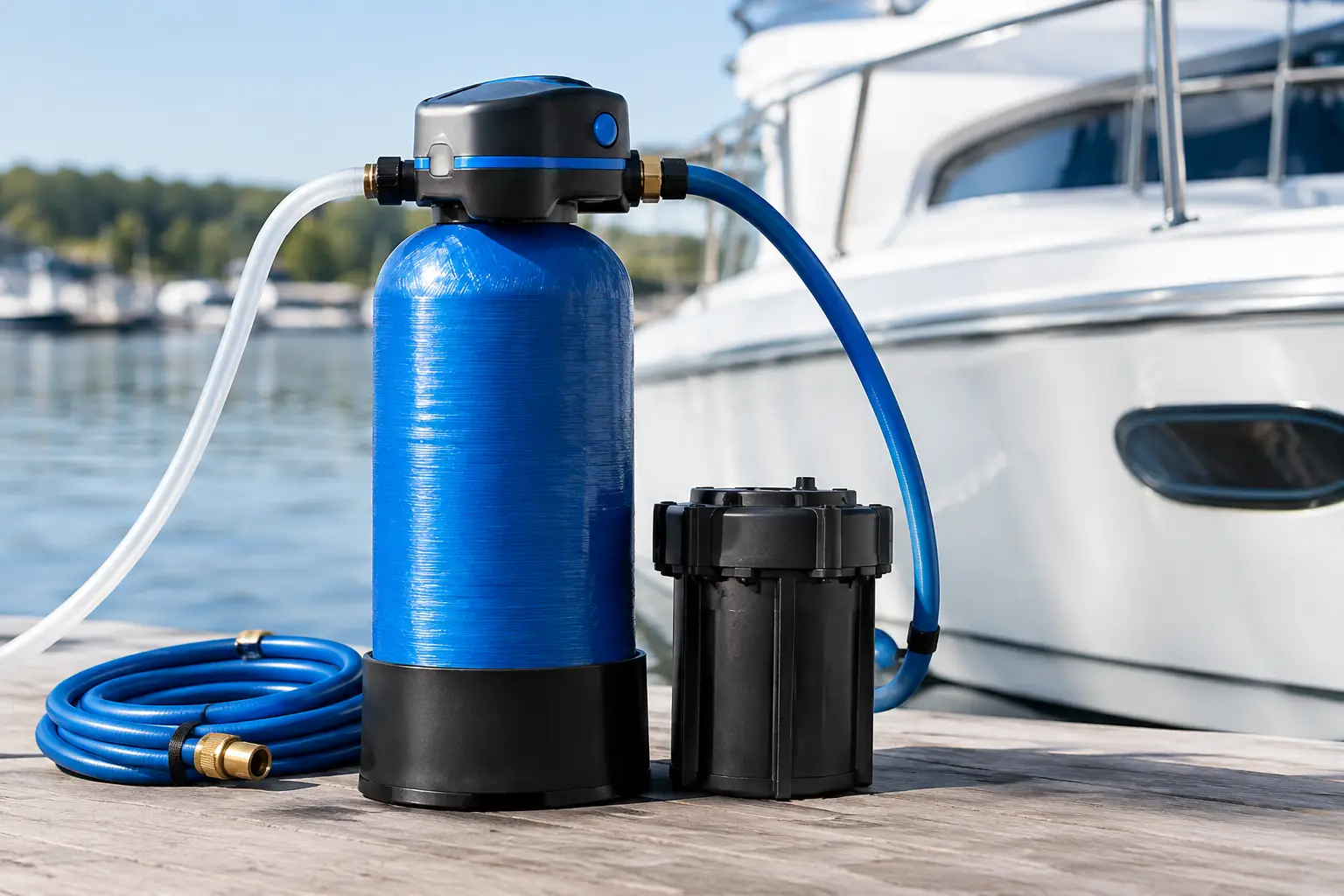
A clean boat can show hard-water damage again before the dock lines are secured. White spots on glass, dull gelcoat, crusted fittings, and scale inside onboard equipment all start with minerals left behind as water dries. The best marine mineral removal tools address both parts of the problem: removing existing deposits safely and preventing new calcium and magnesium buildup during every washdown.
For boat owners, the right choice is rarely one bottle or one brush. It is a practical system built around the type of mineral buildup, the surface being cleaned, the size of the vessel, and the water available at the marina. Start by preventing deposits whenever possible, then use targeted removal tools for buildup that is already there.
Start With Soft Water for Lasting Protection
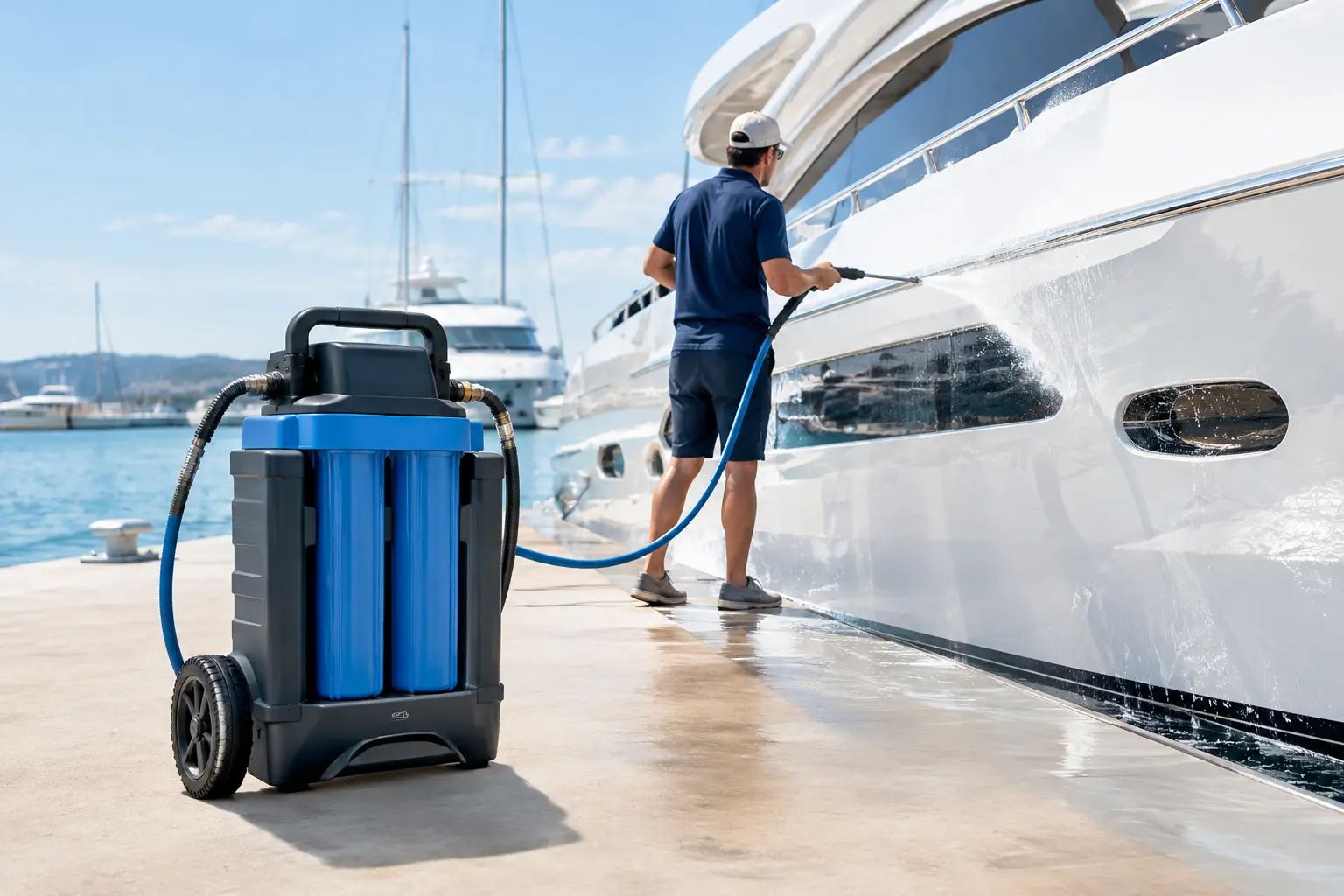
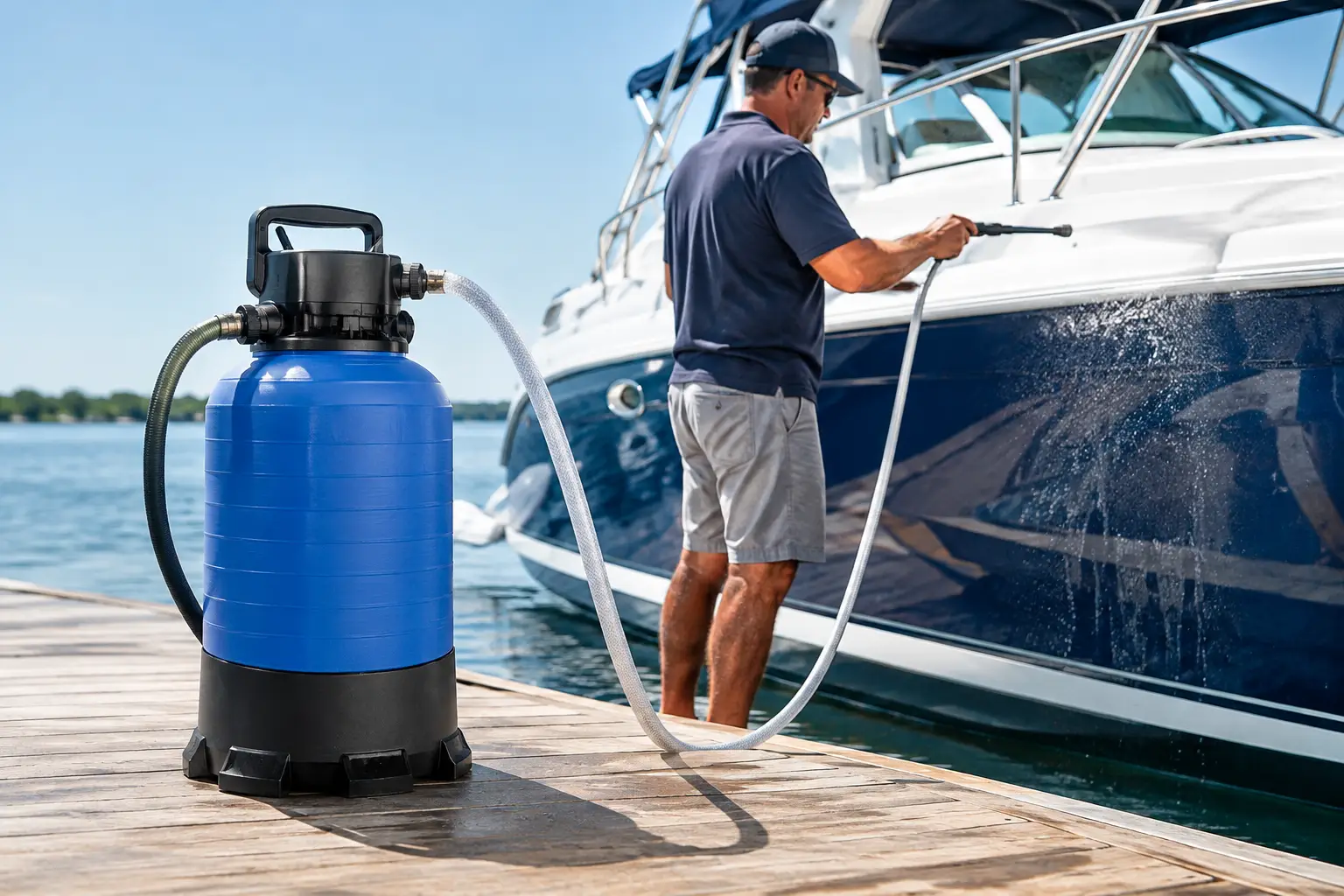
A portable water softener is the most effective tool for preventing hard-water spots and scale at the source. It removes the calcium and magnesium that create the chalky residue left on gelcoat, stainless steel, windows, plastic, and painted surfaces after a washdown.
This matters because wiping down hard water is only a partial solution. Even a careful chamois or microfiber routine can leave minerals behind, especially around rails, hatches, deck hardware, and window frames. Soft water improves soap performance, rinses cleaner, and significantly reduces the need to chase spots after the boat dries.
For boats that receive regular dockside washdowns, a portable soft water system is also a practical way to protect plumbing fixtures, water heaters, ice makers, shower heads, and other onboard equipment exposed to hard water. It requires no electrical hookup, does not sacrifice water pressure, and can be recharged manually when needed.
Wet Spot portable softeners are built for this job, with unit sizes matched to boats up to 70 feet, 70 to 100 feet, and vessels over 100 feet. Choosing capacity by vessel size helps ensure the system can support real washdown needs rather than becoming another piece of equipment that is too small for the work.
Best Marine Mineral Removal Tools by Job
Not every mineral deposit should be treated the same way. Fresh spotting on glass calls for a different approach than old scale around a faucet or heavy buildup on a raw-water fitting. The safest cleaning process starts with the least aggressive method that will work.
pH-Balanced Marine Detailer for Light Water Spots
For fresh, light spotting on gelcoat, paint, vinyl, smooth plastics, and exterior glass, use a marine-safe detailer designed for water spots or routine surface cleaning. Apply it according to the label, let it loosen residue briefly, and wipe with a clean microfiber towel.
The key is to avoid turning a simple spot-removal job into a polishing job. Aggressive cleaners may remove the visible mark but can strip wax, haze clear plastics, or leave surrounding areas uneven. If spots are recent, a gentle cleaner and soft water rinse are usually the right first move.
Mild Acid-Based Descaler for Mineral Scale
Hard, chalky scale around faucets, shower fixtures, washdown connections, and non-painted metal may require a purpose-made marine descaler. These products use acids to dissolve mineral deposits that soap and general cleaners cannot lift.
Use them carefully. Confirm that the product is safe for the specific surface, do not let it dry, and rinse thoroughly after cleaning. Acid-based products can damage polished metal, anodized aluminum, natural stone, decorative coatings, or sensitive plastics if used incorrectly. They are removal tools, not everyday wash products.
For tight areas, apply the cleaner to a towel or small applicator rather than spraying freely around electronics, upholstery, or unfinished surfaces. A controlled application keeps the cleaner where it belongs and makes rinsing easier.
Non-Scratch Pads and Soft Brushes for Texture
Mineral residue collects in non-skid decks, around textured hardware, inside seams, and along the edges of fittings. A soft detailing brush or non-scratch pad helps work cleaner into these areas without gouging gelcoat or dulling the finish.
Choose tools with soft synthetic bristles and use light pressure. Stiff household scrub brushes, abrasive scouring pads, and dirty rags can create fine scratches that hold even more dirt and minerals over time. Keep dedicated brushes for exterior cleaning so they do not pick up grease, sand, or metal particles from other jobs.
Microfiber Towels and a Drying Blade for Final Finish Work
Microfiber towels remain one of the most useful marine mineral removal tools because they remove loosened residue without dragging grit across the surface. Use separate towels for washing, chemical cleanup, glass, and final drying. Once a towel becomes saturated or dirty, swap it out rather than spreading residue across the boat.
A quality silicone drying blade can speed up large, smooth areas such as hull sides and windows, but only after loose grit has been rinsed away. It is a finishing tool, not a substitute for washing. Used over dirt or salt crystals, it can scratch the surface you are trying to protect.
Water Testing Strips for Smarter Maintenance
Water hardness test strips are inexpensive, but they can prevent a great deal of guesswork. Test the dock water before a major washdown, particularly when visiting a new marina or cruising in an unfamiliar area. Hardness can vary widely by location.
Knowing the water quality helps you decide whether softening is essential, how closely to monitor your softener’s recharge schedule, and why spotting may be worse at one dock than another. This is especially useful for operators responsible for multiple boats or frequent washdowns.
What to Avoid on Marine Surfaces
A tool that removes mineral deposits quickly is not automatically the best choice for a boat. Household abrasive powders, aggressive scrubbing pads, and strong acids can leave permanent damage behind. So can using a glass-focused spot remover on acrylic or eisenglass without checking compatibility.
Avoid cleaning in direct sun whenever possible. Heat dries cleaners too quickly, increases streaking, and gives acids more opportunity to affect the surface. Work in manageable sections, rinse completely, and dry the area before moving on.
Also avoid treating repeated mineral spots as a cleaning-product problem alone. If spots return after every wash, the issue is the water. Prevention with softened water will save more labor than continuously escalating to stronger chemicals.
Build a Practical Mineral Control Routine
The best results come from a simple routine that fits normal boat ownership. Wash with softened water when available, use a marine-safe soap, rinse thoroughly, and dry high-visibility surfaces before they air dry. Pay attention to glass, stainless, dark hull colors, painted surfaces, and clear enclosures, where spotting stands out first.
Inspect fixtures, washdown connections, and shower areas periodically for early signs of scale. Removing a thin film is faster and safer than attacking a hardened deposit months later. When stronger descaling is necessary, isolate the affected area, use the mildest effective product, and protect nearby finishes.
For larger vessels, build softener recharge checks into the maintenance schedule just as you would check cleaning supplies, hose condition, or dockside power connections. The goal is not more equipment. It is fewer water spots, less scale, and less time spent correcting preventable damage.
A boat is exposed to enough wear from sun, salt, movement, and weather. Hard water does not need to add another layer of maintenance. Use the right removal tools when deposits appear, but make soft water the foundation of the job and keep expensive finishes looking like they should.