
A dock hose can either protect your boat or create hours of extra work. The best dockside water upgrades address the water itself, then make washdowns, onboard use, and routine maintenance easier. For boat owners dealing with hard marina water, that difference shows up quickly: fewer white spots on glass and gelcoat, less scale around fixtures, and less time spent correcting what a rinse should not have caused.
Hard water is not only a cosmetic issue. Calcium and magnesium can leave deposits on metal, shower fixtures, canvas hardware, Eisenglass, pumps, water heaters, and other systems that are expensive to service or replace. A smarter dockside setup helps you keep your boat clean without adding another complicated onboard project.
What Makes a Dockside Upgrade Worth Adding?
The right upgrades should solve common problems at the slip without creating a permanent installation, reducing usable water pressure, or requiring electrical power. That matters whether you run a center console for weekends, maintain a cruising yacht, or care for a vessel that sees frequent washdowns.
Start with the way you use dock water. If water is mainly for rinsing salt after a day underway, hose handling and soft water will have the greatest immediate payoff. If you also fill tanks or use dock water for cleaning decks, heads, and galley equipment, filtration and connection protection deserve more attention. The goal is not to add equipment for its own sake. It is to prevent mineral buildup, protect finishes, and reduce the labor required to keep the boat looking right.
7 Best Dockside Water Upgrades
1. A portable water softener
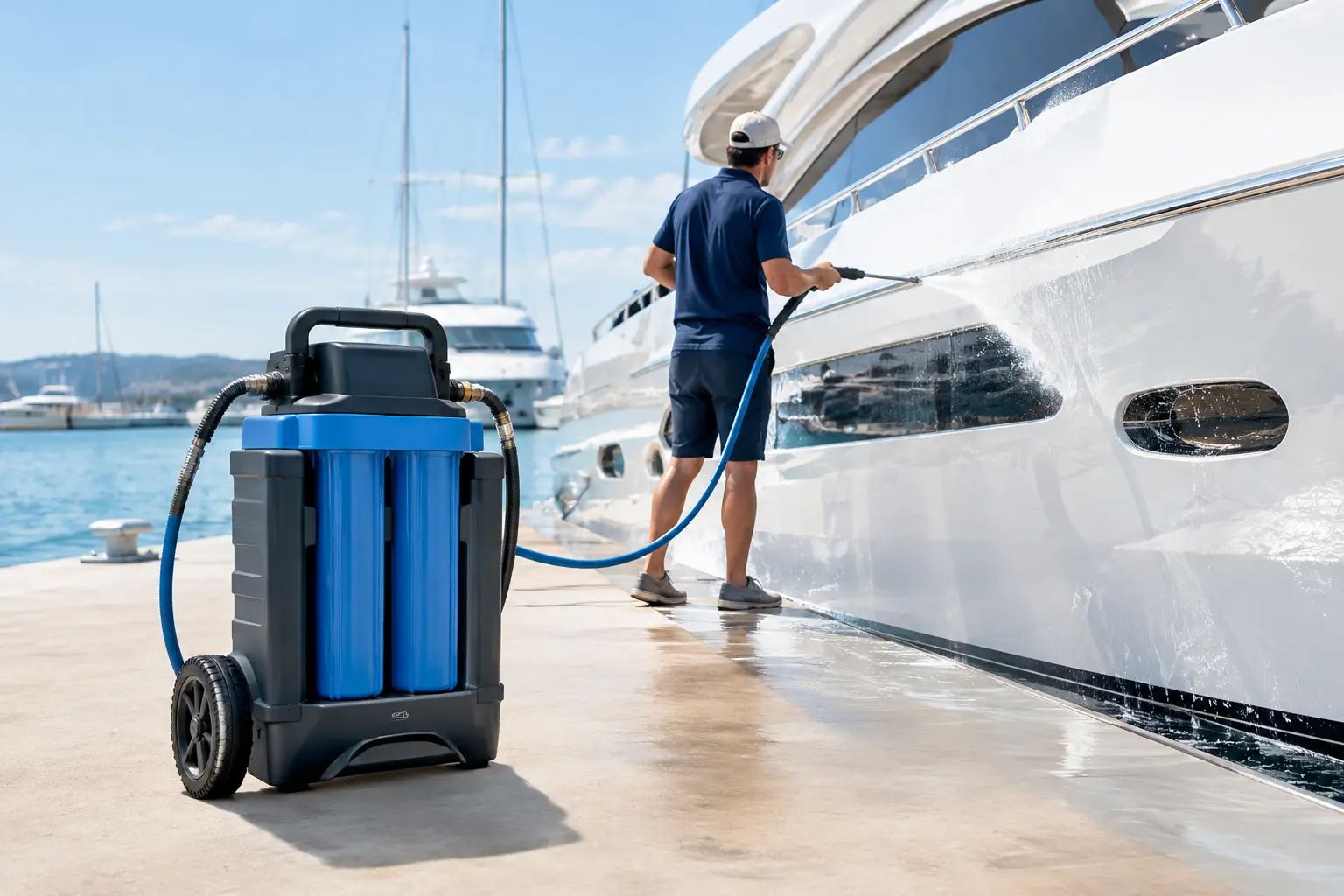
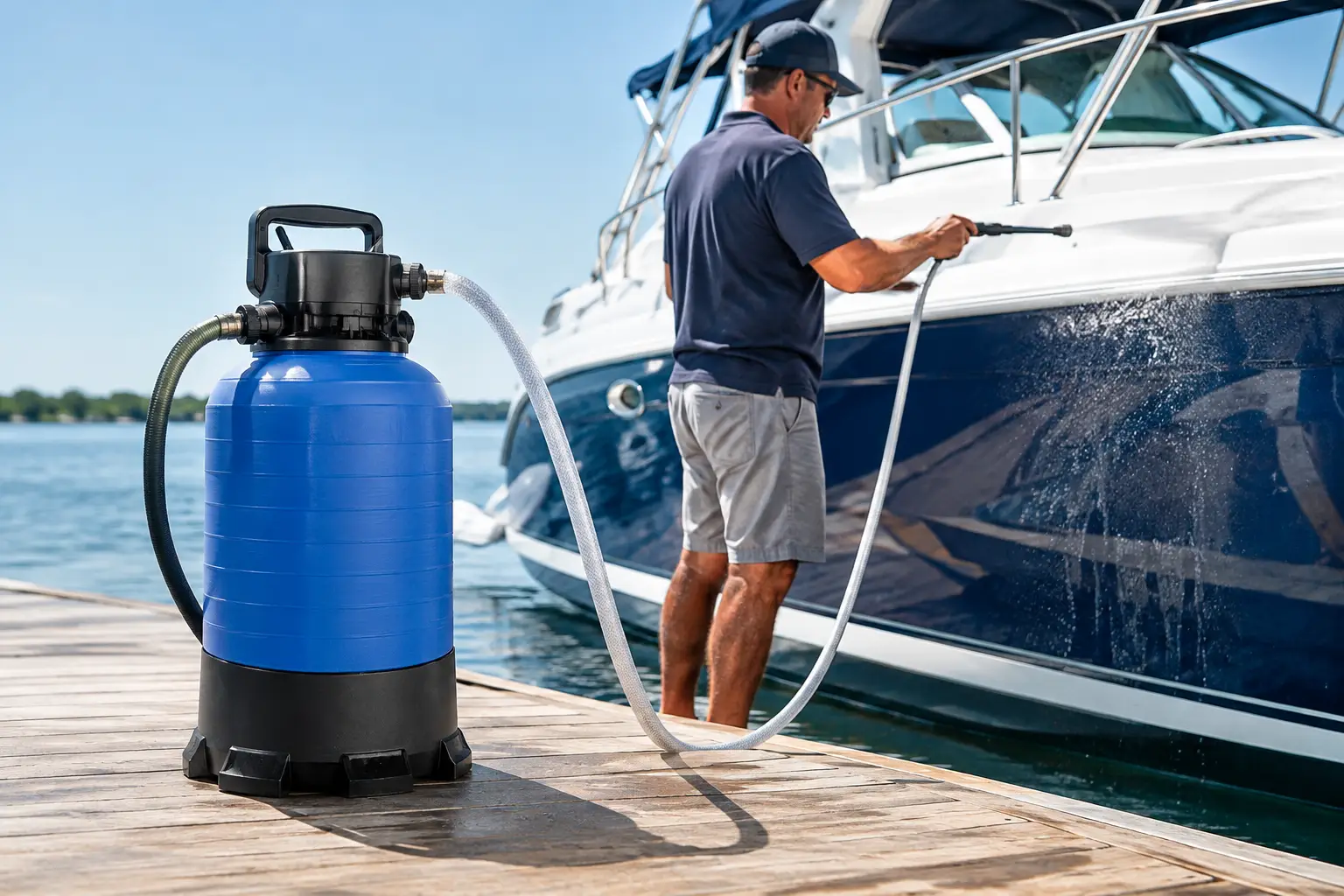
A portable water softener is one of the most practical upgrades for boats exposed to hard dock water. It removes the calcium and magnesium responsible for water spots and lime scale before that water reaches your wash mitt, rinse nozzle, plumbing fixtures, or onboard appliances.
Soft water changes the outcome of a washdown. Soap works more effectively, rinse water dries with fewer mineral deposits, and you spend less time chasing spots on dark hulls, glass, stainless, and polished hardware. It also helps limit scale in plumbing and equipment that regularly receives dock water.
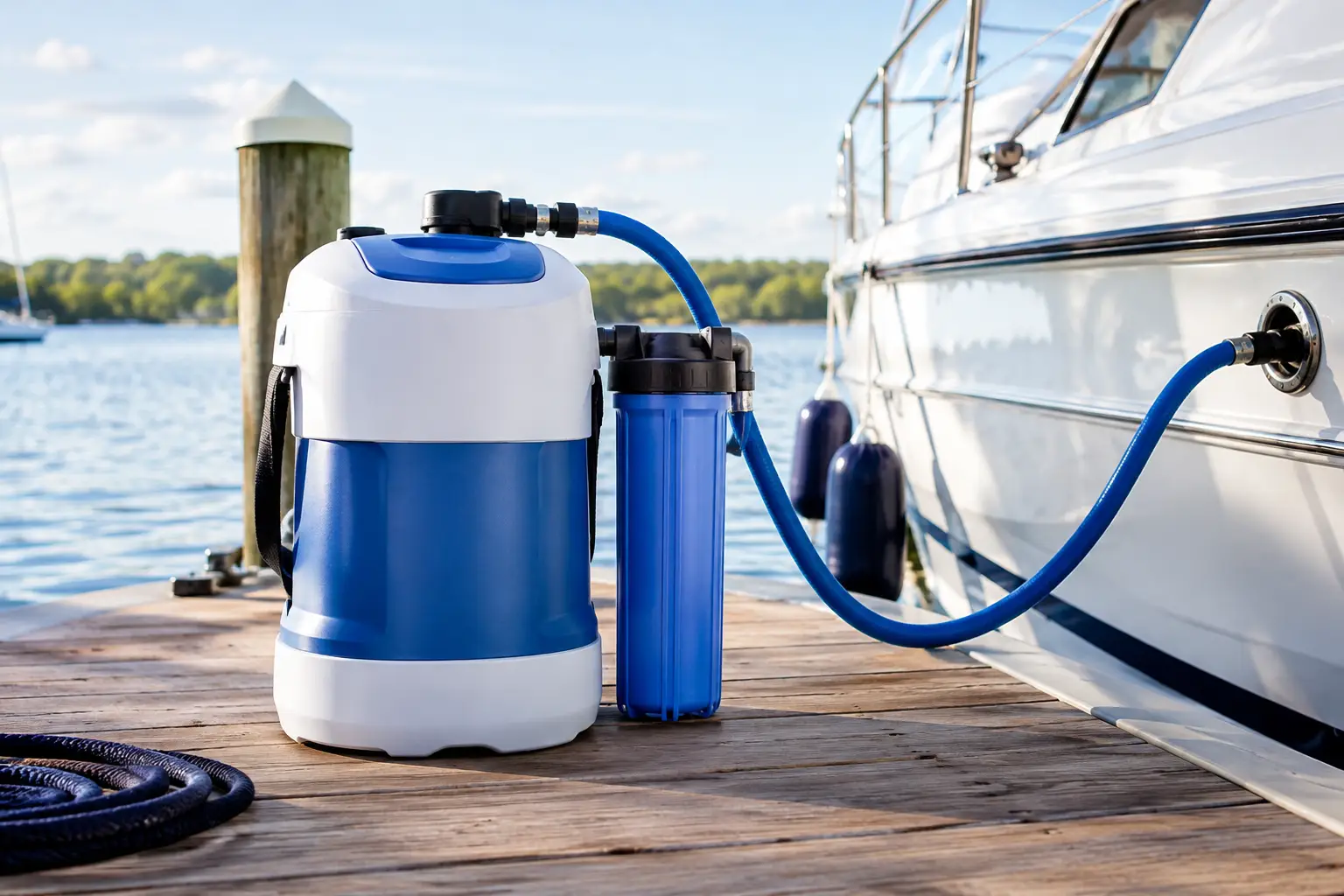
For a boat, portability is the point. A unit should be easy to transport, quick to connect, and able to work without power or a pressure-robbing setup. Wet Spot portable soft water systems are built for that job, with vessel-size options and marine-grade construction designed for dockside use. Choose capacity based on your vessel and how often you wash or use dock water. A larger boat with regular crew washdowns needs more capacity than a small boat rinsed after occasional outings.
2. A quality drinking-water filter at the fill point
Soft water and filtered drinking water serve different purposes. A softener handles hardness minerals. A drinking-water filter is intended to reduce unwanted sediment, taste, odor, and certain contaminants before water enters the freshwater tank or is used for potable applications.
This upgrade is most useful when you fill onboard tanks from different marinas. Water quality can vary by location, and a filter gives you a more consistent first line of treatment. It can also reduce sediment that may otherwise collect in tank bottoms, strain pumps, or shorten the life of smaller point-of-use filters onboard.
Do not assume every dockside filter is appropriate for drinking-water use. Select one made for that purpose, maintain it on schedule, and follow the manufacturer’s guidance for flow rate and cartridge replacement. If you are only rinsing the exterior, a potable-water filter may be unnecessary. If you fill tanks at the dock, it is a sensible safeguard.
3. A high-flow hose built for marine use
An old, kinked, sun-baked hose wastes water and patience. A good dockside hose should resist kinking, tolerate UV exposure, stay manageable in changing temperatures, and provide sufficient flow for rinsing decks and hulls.
Hose diameter matters. A larger inside diameter can support stronger flow, especially on longer runs from a dock pedestal to a boat. But larger hoses are heavier and take up more storage space. For many owners, a flexible hose that is easy to coil and deploy is the better everyday choice, provided it delivers enough flow for the task.
Keep a hose dedicated to freshwater use if possible. Dragging the same hose through fuel docks, bilges, and dirty work areas is not ideal when it also supplies wash water or fills the freshwater system. A clean hose reel or storage bag keeps it off the dock, reduces trip hazards, and extends hose life.
4. A shutoff nozzle with adjustable spray patterns
A dependable nozzle is a small upgrade with a daily benefit. Look for a model that allows you to stop flow at the nozzle and select a pattern suited to the job, from a gentle rinse for windows and sensitive finishes to a stronger stream for non-skidded deck areas.
Control matters more than brute force. High-pressure spray can drive dirt into seams, force water where it does not belong, or make washdowns harder on delicate canvas and clear vinyl. A controlled fan pattern often cleans more effectively while using less water.
Choose durable fittings and inspect them regularly. A leaking nozzle wastes dock water, creates slippery surfaces, and can leave a hose pressurized when no one is watching. Shut off water at the source when leaving the boat, not just at the nozzle.
5. Marine-grade quick-connect fittings
Quick-connect fittings make it easier to switch between a softener, filter, wash hose, and fill hose without wrestling threaded connections each time. They are especially useful if your dockside setup is packed away after each visit.
The trade-off is that more connections create more potential leak points. Use quality fittings, keep spare washers on hand, and check for salt exposure, corrosion, and worn seals. Avoid mixing incompatible materials where possible. A simple, standardized fitting setup is easier to manage than a collection of adapters gathered over time.
For boats that move between slips or marinas, quick connections also speed up setup. You can connect the softener and hose, rinse the boat, disconnect, drain, and stow the system without leaving valuable equipment exposed on the dock.
6. A pressure regulator and gauge
Dock water pressure is not always consistent. Excessive pressure can stress hoses, fittings, filters, and onboard plumbing, while very low pressure may make washdowns frustrating. A pressure regulator helps protect the system by keeping incoming water within a controlled range.
A gauge adds useful information. If water flow suddenly drops, you can see whether the issue is at the dock, in a clogged filter, through the softener, or in the hose. That can prevent unnecessary troubleshooting and help you spot a developing problem before it becomes a failed fitting or leak.
This upgrade is particularly valuable when filling freshwater tanks or connecting to onboard plumbing for extended periods. For a quick exterior rinse, it may be less essential. Still, owners who regularly hook up at marinas will appreciate the added control.
7. A dedicated dockside storage system
The equipment works best when it is protected and ready to use. A dedicated storage tote, locker arrangement, or hose reel keeps softening equipment, filters, fittings, and nozzles together. It also prevents damage from loose gear, sun exposure, and saltwater spray.
Store equipment drained when practical. Keep replacement washers, caps, and basic connection tools in the same location. This is not glamorous gear, but it prevents the familiar dockside problem of having the right system and missing one small fitting needed to use it.
A clean, organized setup also reduces the chance of cross-contaminating your freshwater hose with dirty deck gear. That is especially worthwhile for owners who use dock water for both washing and tank filling.
Build the System Around Your Actual Use
There is no single dockside setup that fits every boat. A trailerable boat that gets rinsed after each launch may need a portable softener, compact hose, and nozzle. A larger vessel that remains in a slip may benefit from softening, filtration for tank fills, pressure regulation, and organized storage for frequent use.
Start with the problem you see most often. If your primary frustration is white spotting and dull-looking hardware after a wash, soft water should come first. If sediment, unpleasant taste, or inconsistent marina water concerns you when filling tanks, add purpose-built filtration. If you are replacing hoses and fittings every season, focus on quality connections and pressure control.
The best dockside upgrades do not make boat ownership complicated. They make regular care more predictable. Set up the water properly, rinse with confidence, and leave the dock knowing your maintenance routine is protecting the investment tied up at the end of that hose.