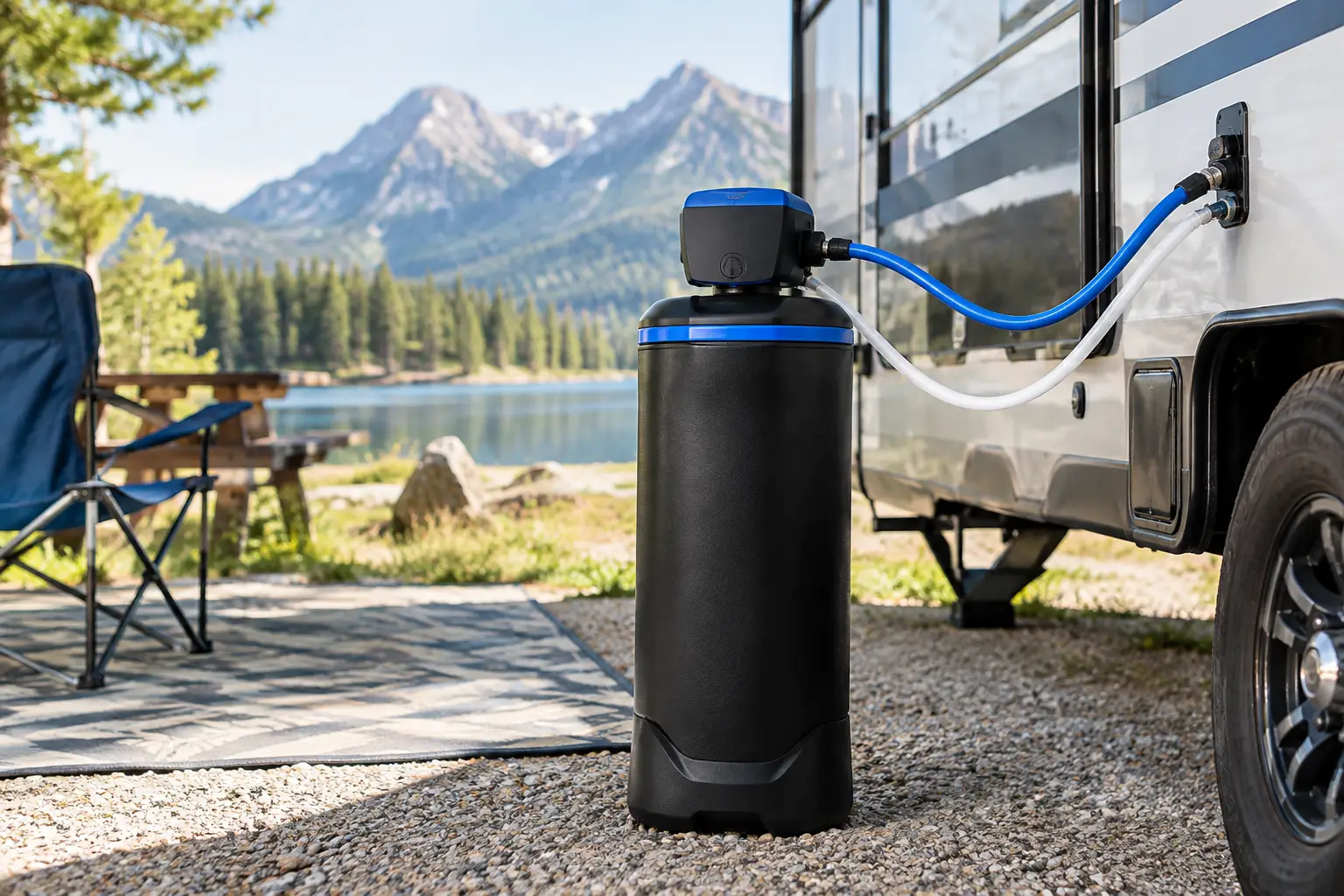
A campground faucet can look perfectly clean and still deliver water loaded with calcium and magnesium. After a few weeks on the road, the evidence shows up everywhere: white spots on the RV’s finish, crust around faucets, cloudy shower doors, stiff towels, and scale inside the water heater. The top RV hard water solutions address the source of that damage instead of asking you to keep scrubbing it away.
For most RV owners, a portable water softener is the strongest long-term answer. It treats incoming water before it reaches your plumbing, fixtures, water heater, and appliances. But it is not the only tool worth carrying. The right setup depends on how often you travel, how much water you use, and whether you are protecting a weekend camper or a high-value motorhome used year-round.
Why Hard Water Is a Real RV Maintenance Problem
Hard water contains dissolved minerals, primarily calcium and magnesium. Those minerals do not disappear when water dries. They remain on paint, glass, chrome, fiberglass, plastic, and rubber surfaces as spots or chalky residue. Inside the RV, heat makes the problem worse. Water heaters, coffee makers, ice makers, showerheads, and plumbing fittings can collect mineral scale over time.
That buildup is more than cosmetic. Scale can reduce water flow through small openings, make soap harder to rinse, and force appliances to work harder. A streaked exterior also turns a quick wash into a longer detailing job. If you have invested in a coach with polished fixtures, a clean full-body paint finish, or onboard appliances, untreated campground water can quietly add to the cost of ownership.
Water hardness varies widely from one stop to the next. A familiar campground may have manageable water one month and very hard water after a supply change or seasonal shift. That is why a reliable RV water plan needs to work at any hookup, not only at your home base.
The Best RV Hard Water Solution: Portable Water Softening
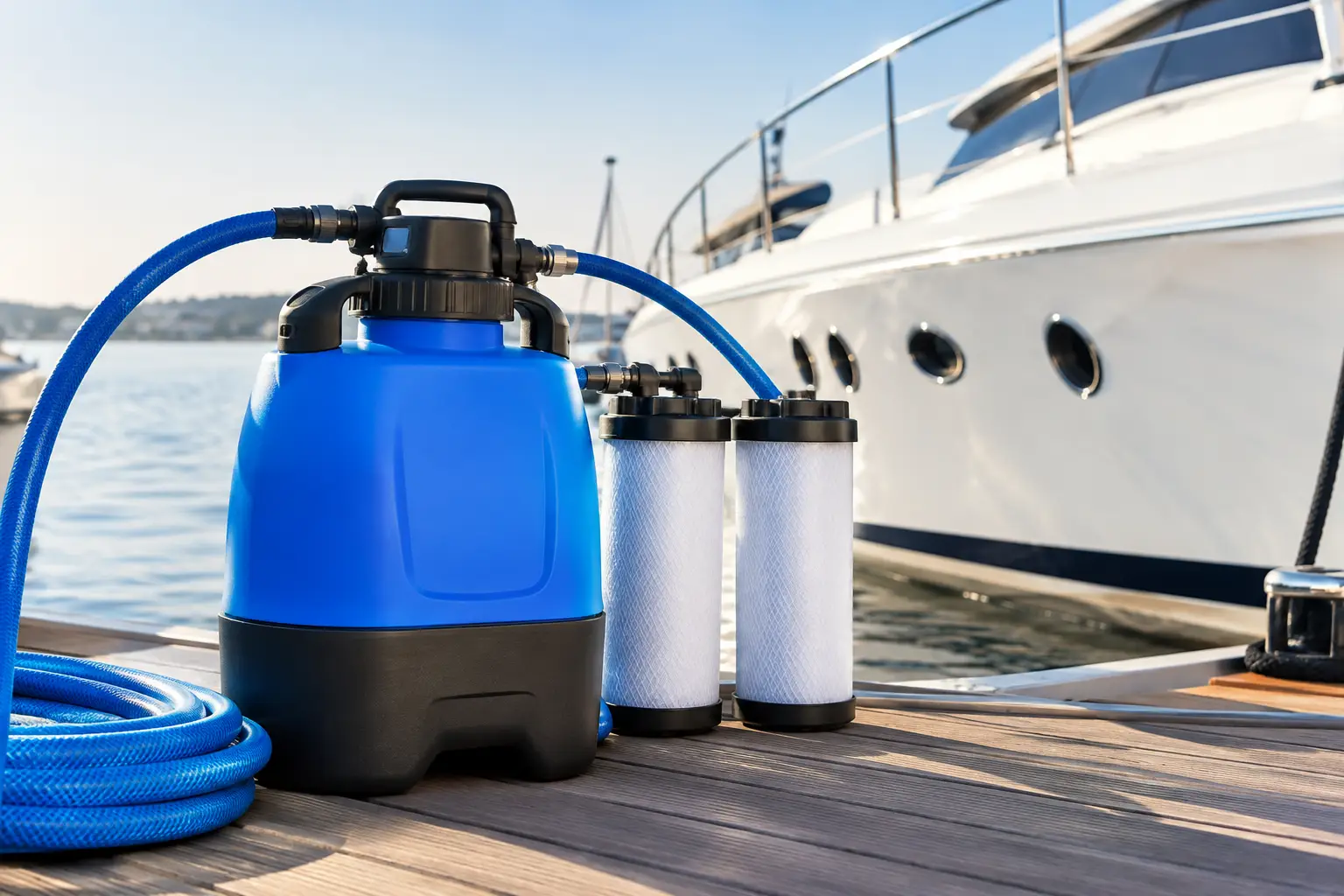
A portable softener uses ion-exchange media to remove hardness minerals from incoming water. Rather than trapping calcium and magnesium like a basic filter, the system exchanges them for sodium ions. The result is soft water that rinses cleaner, leaves fewer spots, and helps prevent scale from forming in the first place.
For RV use, portability matters as much as performance. A good unit should be easy to place between the campground spigot and your freshwater hose, require no electrical hookup, and be rugged enough to handle travel. It should also maintain practical water flow for showers, dishwashing, and routine use. Systems that require permanent plumbing changes may make sense in a stationary home, but they are usually a poor fit for an RV that moves frequently.
A portable softener does need periodic recharging. This process restores the media with common salt after it has treated its rated capacity of hard water. The harder the source water and the more water your household uses, the more often you will recharge. That is normal maintenance, not a drawback. The important point is choosing a unit sized for your travel pattern so recharge days do not become an unnecessary chore.
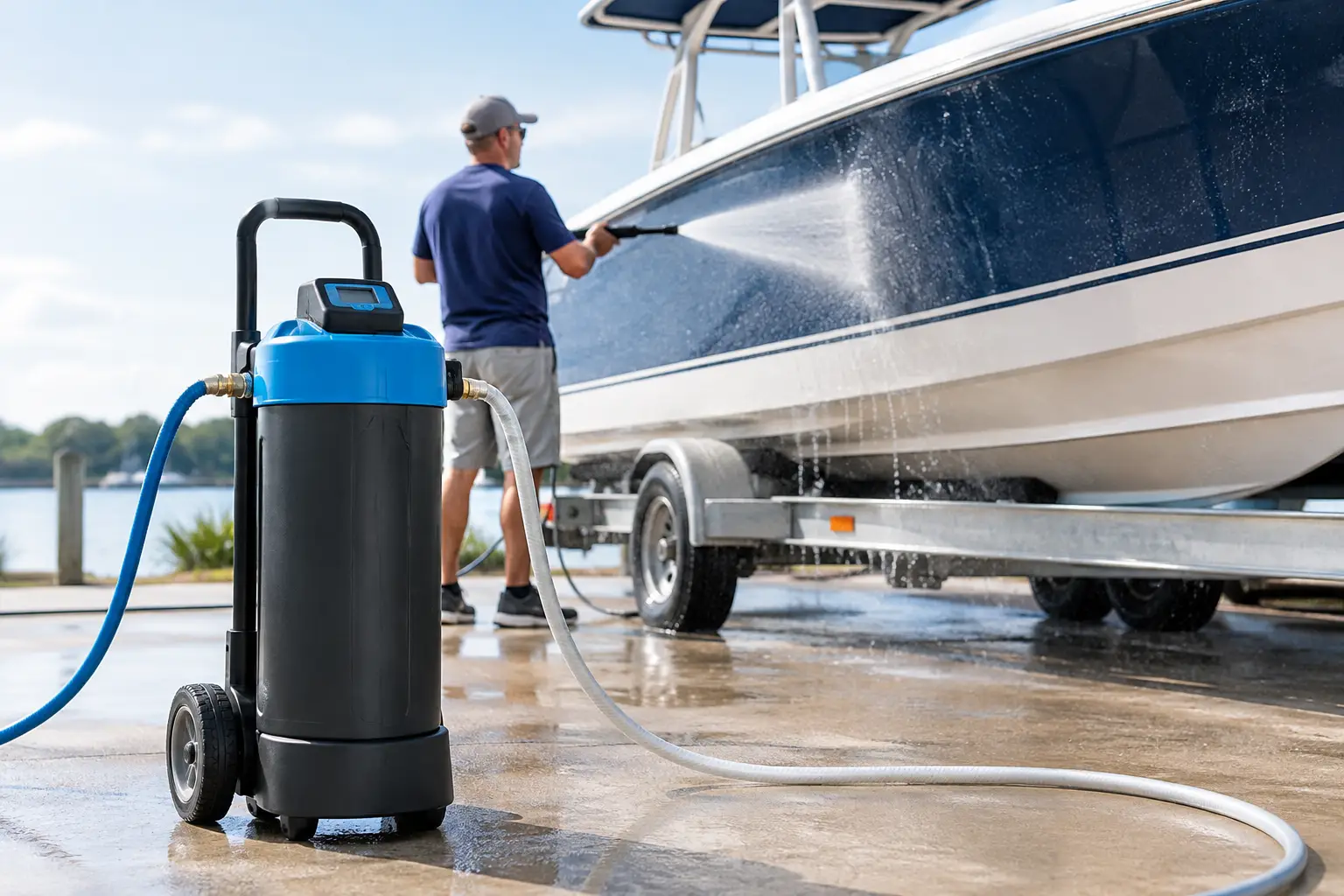
Wet Spot portable soft water systems are built for owners who want simple setup, manual recharge maintenance, and durable protection without power or complicated installation. The same practical design that protects high-value mobile assets also makes sense for RV owners who are tired of chasing water spots after every wash.
Choose Capacity Based on How You Travel
Smaller-capacity softeners work well for solo travelers, couples, and short stays where water use is limited. They are lighter to carry and simpler to store. Larger-capacity units are a better fit for families, extended stays, frequent showers, onboard laundry, or motorhomes with more fixtures and appliances.
There is no benefit to buying the smallest system if you routinely exhaust its capacity in a few days. On the other hand, an oversized tank can take up valuable storage space when a compact unit would meet your needs. Consider your usual water use, not just your occasional high-demand trip.
Filtration and Softening Do Different Jobs
An RV water filter is still worth having, but it should not be confused with a water softener. Most common inline filters are designed to reduce sediment, chlorine taste, odor, and certain contaminants. They can make campground water more pleasant for drinking and cooking, and a sediment filter can protect your softener from debris. But a standard filter generally does not remove enough calcium and magnesium to solve a hard-water problem.
The strongest arrangement is often a sediment or drinking-water filter used alongside a portable softener. Put the filter first when the campground supply is visibly dirty or known for sediment, then send cleaner water through the softener. This helps protect the softening media and supports more consistent performance.
Be mindful of restriction. Every device added to a hose run can affect flow, especially if cartridges are old, hoses are narrow, or the campground pressure is already weak. Use quality hoses and fittings, replace clogged filters on schedule, and avoid piling on equipment that does not solve a specific problem.
Other RV Hard Water Solutions and Their Limits
Several alternatives can help in narrow situations, but they do not provide the same whole-RV protection as softening incoming water.
Spot-free rinse products
Spot-free rinse products can reduce visible residue after washing the exterior. They are useful for a quick final rinse, particularly when you cannot connect a softener. However, they do not protect your plumbing, shower, water heater, or appliances from mineral buildup. They are a finishing tool, not a water-treatment system.
Cleaning chemicals and vinegar
Vinegar-based cleaners and purpose-made descalers can remove existing mineral deposits from faucets, showerheads, and glass. Keep them in your maintenance kit. Their limitation is obvious: they work after scale has already formed. Repeated use can also be time-consuming, and not every finish should be treated with acidic cleaners. Always follow the RV manufacturer’s care guidance.
Reverse osmosis systems
Reverse osmosis can produce highly purified drinking water, but it is rarely the practical answer for treating all water entering an RV. These systems can be slow, need more installation space, and create wastewater. They are best reserved for a dedicated drinking-water application when needed, not as a replacement for a portable softener.
Bottled water
Bottled water may handle drinking and coffee, but it does nothing for showers, dishes, laundry, washing the coach, or protecting onboard equipment. It also adds cost, storage demands, and plastic waste. It is a convenience option, not a hard-water strategy.
Set Up Your RV Water System Correctly
Start with a water-pressure regulator at the campground spigot. This protects RV plumbing from unpredictable campground pressure. Next, connect a sediment or drinking-water filter if you use one, followed by the portable softener. Then connect your potable-water hose to the RV. Keep all connections clean and use caps when equipment is in storage.
Before each trip, inspect hoses, washers, fittings, and the softener housing for wear. A small leak can waste water and create a mess in a storage bay. If you are setting up in freezing conditions, drain and protect the equipment as required. Portable treatment gear is durable, but it still needs the same basic care as the rest of your water system.
If you dry camp and fill your fresh tank instead of staying connected to a spigot, soften the water while filling whenever possible. Once hard water is in the tank, it will still leave scale throughout the system. For some travel plans, that may mean filling more slowly or planning water stops with treatment in mind. That trade-off is usually easier than cleaning heavy mineral residue later.
Know When It Is Time to Recharge
The most practical indicator is a return of hard-water symptoms. If soap stops lathering well, glass dries with white spots, or fixtures begin showing residue, your softener may be exhausted. A hardness test strip can provide a clearer answer, especially when moving between regions with different water supplies.
Recharge according to the unit’s instructions and use the recommended salt amount. Rinse thoroughly before putting the unit back into service. Keeping a small supply of recharge salt in the RV prevents an avoidable problem when you arrive at a hard-water campground far from stores.
Soft water will not eliminate every maintenance task, but it changes the workload. Exterior washing becomes easier, fixtures stay cleaner longer, and appliances are exposed to fewer scale-forming minerals. For an RV owner, that means less time correcting campground water and more time using the coach the way it was intended.