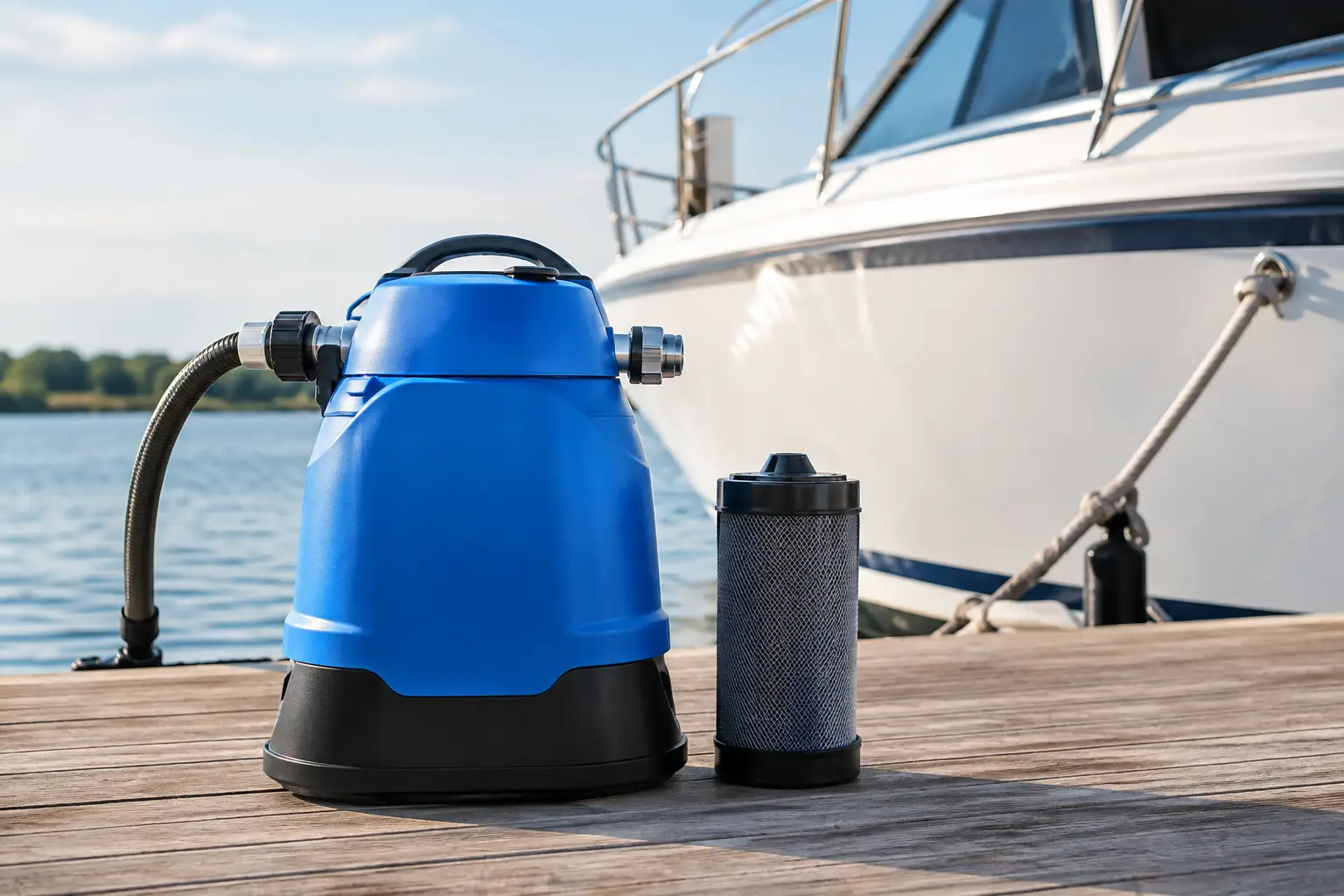
A boat can leave the dock looking clean and still dry with a white, chalky film across the gelcoat, rails, glass, and windshield. That is hard water at work. This dock water softener review focuses on what a portable system actually changes during washdowns, what it does not replace, and how to decide whether it makes sense for your boat.
For owners who spend real time maintaining a vessel, soft water is not a cosmetic extra. It helps prevent mineral spotting and scale before they become another detailing job, another clogged fixture, or another problem on equipment that should last for years.
What a Dock Water Softener Does
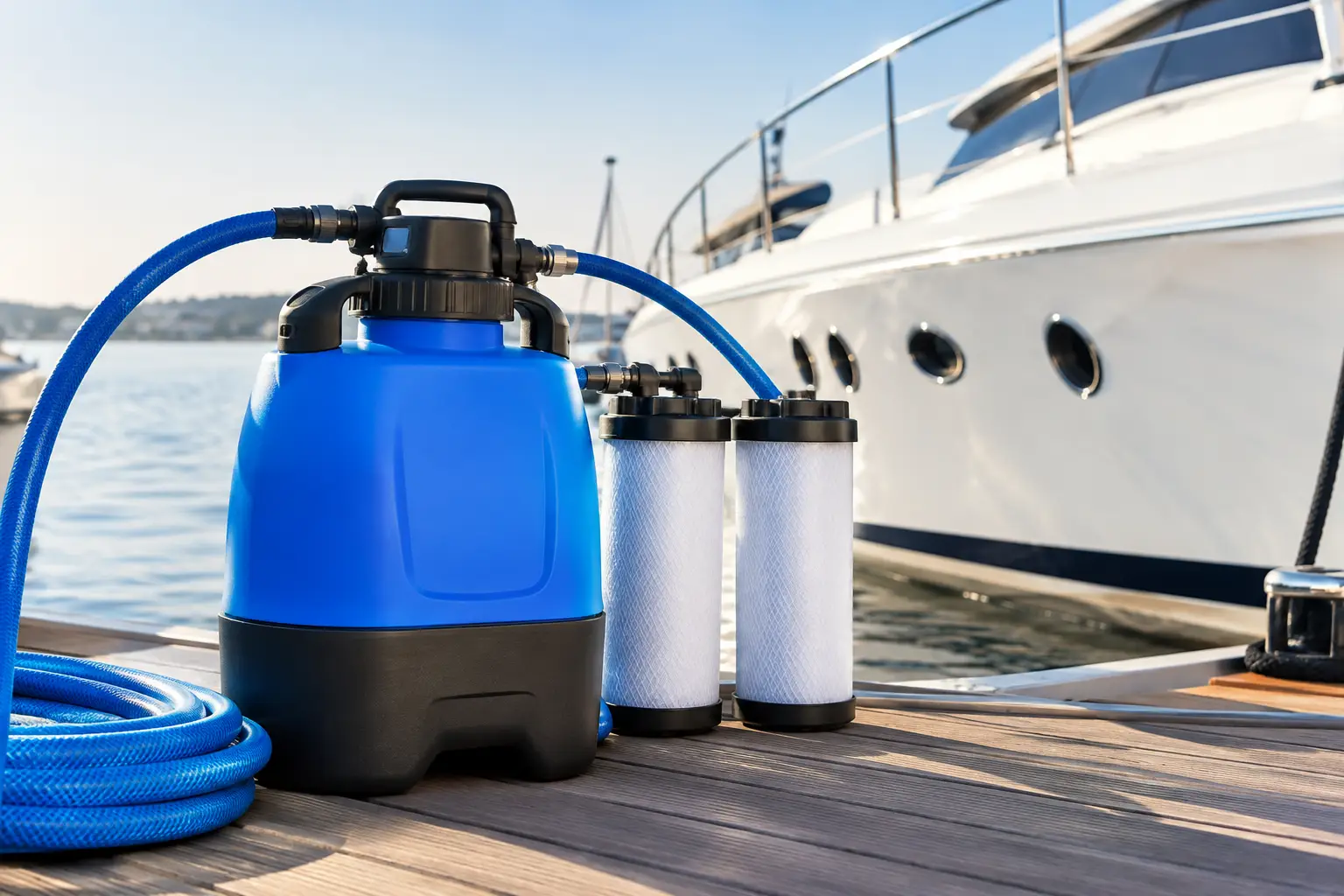
A portable dock water softener treats incoming dock water before it reaches your hose, washdown setup, or onboard water system. Inside the unit, a softening media exchanges the calcium and magnesium in hard water for sodium. Calcium and magnesium are the minerals behind most spots, crusty deposits, and lime scale.
The practical result is water that rinses cleaner. Soap works better, surfaces are less likely to dry with mineral residue, and routine washing becomes less labor-intensive. On a boat, that matters because water reaches nearly every exposed material: gelcoat, painted surfaces, stainless hardware, acrylic, glass, plastic trim, canvas windows, shower fixtures, faucets, and appliances.
A softener is different from a sediment filter. A sediment filter can catch dirt, rust, or particles, but it does not remove the dissolved minerals that create hard-water spots. It is also different from a reverse-osmosis system, which is designed for a different level of water treatment and typically requires a more involved setup. A portable softener is built for a straightforward job: reduce hard-water minerals wherever you need better wash and rinse water.
Dock Water Softener Review: What Matters on a Boat
The right review is not just about whether water feels softer in your hand. The useful questions are whether the unit is easy to carry to the dock, whether it maintains practical water flow for washing, how often it needs recharging, and whether it is sized for the amount of water your boat uses.
Cleaner washdowns with less spot removal
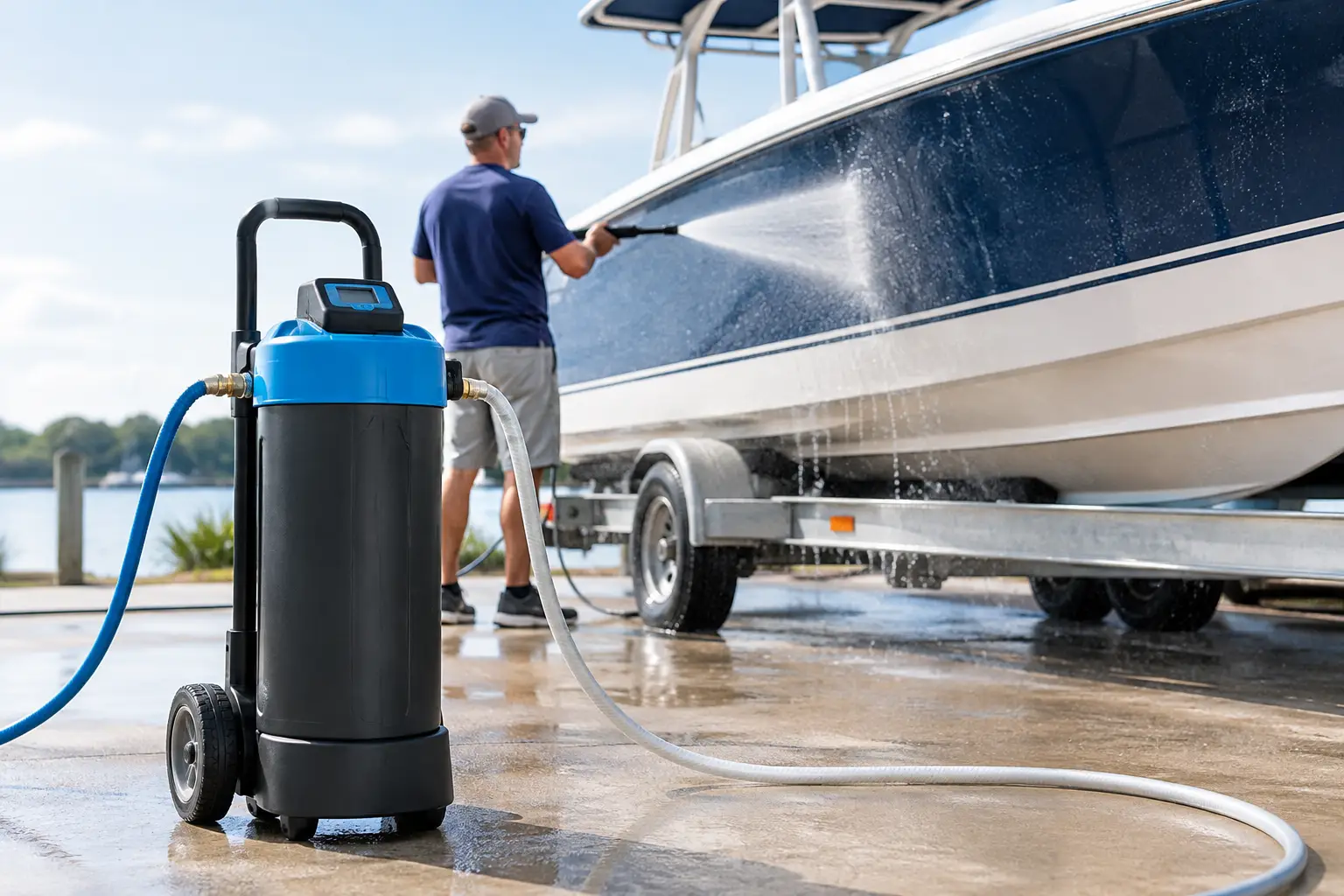
Hard water turns a rinse into a race against drying. If water dries on dark gelcoat, polished metal, glass, or clear vinyl, minerals remain behind. You may need to towel dry quickly, use more detail spray, or rewash areas that looked clean minutes earlier.
Soft water reduces that mineral residue. It does not mean every surface can be ignored after washing, especially in direct sun or around salt spray. But it gives you a cleaner rinse and less mineral spotting to correct. For a center console, sportfish, cruiser, or yacht with a lot of exposed hardware and glass, that can remove a meaningful amount of repetitive work from each washdown.
Better protection for onboard plumbing and appliances
The outside of the boat gets the attention, but hard water also creates trouble inside. Mineral scale can collect in shower heads, faucets, water heaters, ice makers, coffee equipment, and plumbing components. Over time, that buildup can restrict flow and make cleaning or service more frequent.
Using softened water for onboard supply helps reduce that scale burden. The benefit is most noticeable for boats that regularly fill tanks from hard-water dock sources or use dock water during extended stays. A softener will not repair existing scale or replace normal maintenance, but it can help prevent new deposits from accumulating as quickly.
No electrical hookup at the dock
A portable water softener does not need an electrical connection to do its job. That is a major advantage at a marina, where access to a standard water spigot is often all you have. Connect the unit between the dock water source and your hose or fill line, run water through it, and use the softened water where it counts.
This simple setup also makes the system useful beyond one slip. Owners can move it between the marina, home, storage yard, RV, tow vehicle, or other equipment. The equipment should work around your schedule, not require a permanent installation before it becomes useful.
Choosing the Right Capacity
Capacity is where buyers should be honest about how they use the boat. A small softener may be a practical fit for a smaller vessel and occasional washdowns. A larger boat with multiple heads, frequent rinsing, larger exterior surfaces, or regular tank fills needs greater capacity and a more substantial unit.
Water hardness matters just as much as vessel size. In a location with very hard water, any softener will use its available capacity sooner than it would in an area with moderately hard water. A boat that receives a quick rinse after weekend use consumes water differently than a vessel that gets full washdowns, interior cleaning, and regular freshwater fills.
Wet Spot portable systems are sized by vessel range, including boats up to 70 feet, boats from 70 to 100 feet, and vessels above 100 feet. That approach is useful because it starts with the real-world demand on the system rather than treating every boat as if it has the same water needs.
Do not automatically buy the largest system just because it sounds better. Larger capacity can mean more weight and a bigger footprint. The better choice is the unit that gives you enough softened water between recharges without becoming inconvenient to transport, store, or use at the dock.
Recharge Maintenance Is Part of Ownership
Portable softeners need manual recharging. That is not a defect. It is how the system restores its ability to exchange hard-water minerals after the media has done its job. The recharge process uses salt and water to renew the softening media for the next cycle.
The key is choosing a system with a clear, manageable recharge process. If maintenance is overly complicated, owners tend to postpone it. Then the unit may still pass water but no longer provide the soft-water benefit they expected.
A sensible dock routine is simple: pay attention to water use, recharge on schedule, and keep the unit stored securely when it is not in service. If you notice the return of spotting or reduced soft-water performance, it may be time to recharge sooner. The exact interval depends on local hardness and how many gallons you run through the system.
Where a Portable Softener Has Limits
A water softener is a strong preventive tool, but it is not a complete boat-care program. It will not remove salt from a saltwater rinse, eliminate the need for proper marine soap, repair etched glass, or reverse years of scale inside neglected equipment. It also does not make contaminated water safe to drink.
For the best result, start with a freshwater rinse, use quality cleaning products appropriate for the surface, and avoid allowing water to bake dry in intense sun when possible. Soft water makes these steps easier and more effective because it leaves less mineral residue behind.
There is also a difference between occasional dock use and supplying all onboard freshwater needs. If you only soften water for exterior washdowns, a smaller portable system may be enough. If you want softened water for the boat’s tank, showers, galley, and appliances, capacity and recharge planning deserve more attention.
Is a Dock Water Softener Worth It?
For boat owners dealing with visible water spots, stubborn scale, or frequent detailing, the value is easy to see. The system addresses the source of the mineral problem instead of asking you to remove deposits after every wash. That can help preserve finishes, reduce cleanup time, and limit scale exposure in plumbing and appliances.
It is especially worthwhile when the boat has expensive gelcoat, polished metal, clear enclosures, multiple freshwater fixtures, or a regular dockside washdown routine. The more surface area and equipment you are protecting, the more practical a portable softener becomes.
The best dock water softener is not the one with the most complicated feature list. It is the one sized for your boat, built to handle marine use, easy to move and recharge, and dependable enough to become part of normal maintenance. Start with the hardness of your dock water and the way you actually use your boat, then choose a system that keeps hard-water cleanup from becoming the cost of every day on the water.