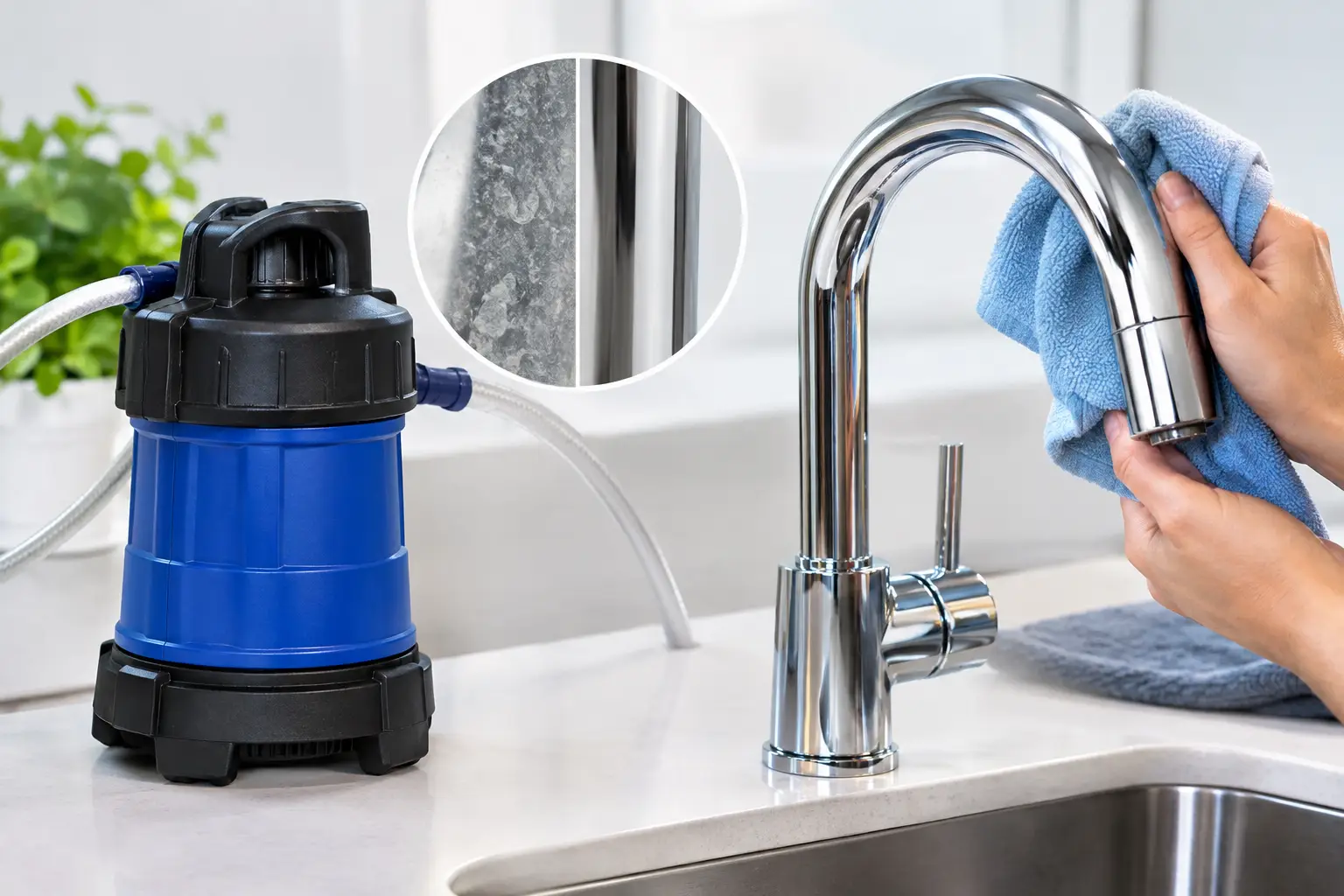
Chrome should look clean and reflective, not cloudy, speckled, or ringed with white residue after a washdown. Learning how to remove mineral stains from chrome protects the appearance of rails, faucets, shower fixtures, hardware, trim, and vehicle accessories without turning a simple cleaning job into a replacement project.
Hard-water minerals are usually the problem. When water evaporates, calcium and magnesium stay behind. On polished chrome, that residue is easy to see. Left in place, it can harden into scale, trap dirt, and eventually contribute to dullness or corrosion beneath damaged plating.
Start by Identifying the Stain
Most mineral stains look chalky white, light gray, or slightly yellow. Fresh spots often wipe away with a damp microfiber towel. Older deposits can feel rough or crusty and may form around faucet bases, fittings, drain areas, and the lower sections of rails where water collects.
Do not assume every mark is mineral buildup. Brown or orange discoloration may indicate rust from nearby hardware or contaminated water. Dark specks, flaking, bubbling, or small pits may mean the chrome plating has already been compromised. A cleaner can remove surface scale, but it cannot restore chrome that has pitted or lifted from the base metal.
That distinction matters on boats and RVs. Salt spray, standing water, and hard-water rinse water can create several problems at once. Remove the mineral deposits first, then inspect the finish in good light before deciding whether a metal polish or replacement part is necessary.
How to Remove Mineral Stains From Chrome Safely
Chrome is durable, but its bright finish can scratch. The safest approach is to begin with the mildest method that can dissolve the deposit, rather than scrubbing harder.
Wash Away Loose Dirt First
Rinse the area with clean water and wash it with a mild, non-abrasive soap. Use a soft microfiber cloth, not a scouring pad, stiff brush, or gritty sponge. This step removes salt, dust, and surface grime that could scratch the chrome while you work on the mineral stain.
Dry the area enough to see where the deposits remain. If the spots disappear after washing, they were likely fresh residue. If they stay visible or feel rough, move on to a mild acidic cleaner.
Use White Vinegar for Light to Moderate Scale
White vinegar can loosen calcium-based mineral deposits effectively. Mix equal parts white vinegar and water, then dampen a microfiber cloth with the solution. Lay the cloth over the stained area for several minutes so the cleaner stays in contact with the scale.
Do not pour vinegar into seams, allow it to sit for long periods, or leave it to dry on the surface. Chrome-plated hardware often has nearby rubber seals, painted surfaces, natural stone, aluminum, or exposed fasteners that may not respond well to prolonged acid contact.
After a short dwell time, wipe gently with the same cloth. Rinse thoroughly with clean water and dry immediately. Repeat once or twice if needed. A few controlled applications are safer than one aggressive treatment.
Try a Citric Acid Solution for Stubborn Deposits
For heavier white buildup, a mild citric acid solution can be useful. Dissolve a small amount of citric acid powder in warm water according to the product directions, apply it with a microfiber cloth, and work in small sections. Keep the solution off surrounding materials unless you know they are compatible.
Citric acid is effective because it helps break down mineral scale, but stronger is not always better. Test an inconspicuous spot first, use brief contact time, rinse completely, and dry the chrome after cleaning. If the stain does not improve, it may be etched into the finish rather than sitting on top of it.
Use a Non-Abrasive Chrome Cleaner When Needed
A cleaner labeled for chrome can be a good choice when mineral stains are mixed with oxidation, waterline grime, or fingerprints. Follow the label directions closely and use only soft applicators. The goal is to dissolve buildup and restore clarity, not to grind away the surface.
Avoid powdered cleansers, abrasive cream cleaners, steel wool, razor blades, and aggressive buffing pads. Even very fine abrasives can leave hairline scratches that make chrome look hazy in direct sun. On marine hardware, those scratches also give minerals and salt more places to cling.
Rinse and Dry Like the Finish Matters
Cleaning does not end when the white residue is gone. Any cleaner left behind can leave its own film, especially in heat or direct sunlight. Rinse the chrome with clean water, then dry it with a fresh microfiber towel before the rinse water evaporates.
This is where many otherwise careful washdowns fall short. A faucet or rail can be perfectly clean at first, then develop new spots within minutes because hard rinse water dries on the surface. Drying is the immediate fix. Soft water is the longer-term answer.
When Mineral Stains Will Not Come Off
If chrome remains cloudy after the deposits are removed, examine it from different angles. Mineral-rich water can leave etching, particularly when droplets bake in the sun. Etching changes the surface itself, so vinegar, citric acid, and ordinary cleaners may not bring back a uniform shine.
Pitting is another concern. It often appears as tiny dark dots or rough pinholes, commonly on exterior rails, fittings, and hardware exposed to salt air. Once plating is damaged, moisture can reach the material underneath. Cleaning can slow further deterioration by removing trapped deposits, but it cannot rebuild missing chrome.
For valuable or highly visible hardware, it may be worth having severe pitting assessed by a marine metal specialist. Replacement is sometimes the more practical option, especially when the part affects safety, sealing, or operation.
Prevent Mineral Spots After Every Washdown
The best way to spend less time cleaning chrome is to prevent hard-water residue from drying on it. After washing, dry chrome fixtures, rails, and trim promptly. Pay close attention to joints, bases, underside edges, and areas where water pools.
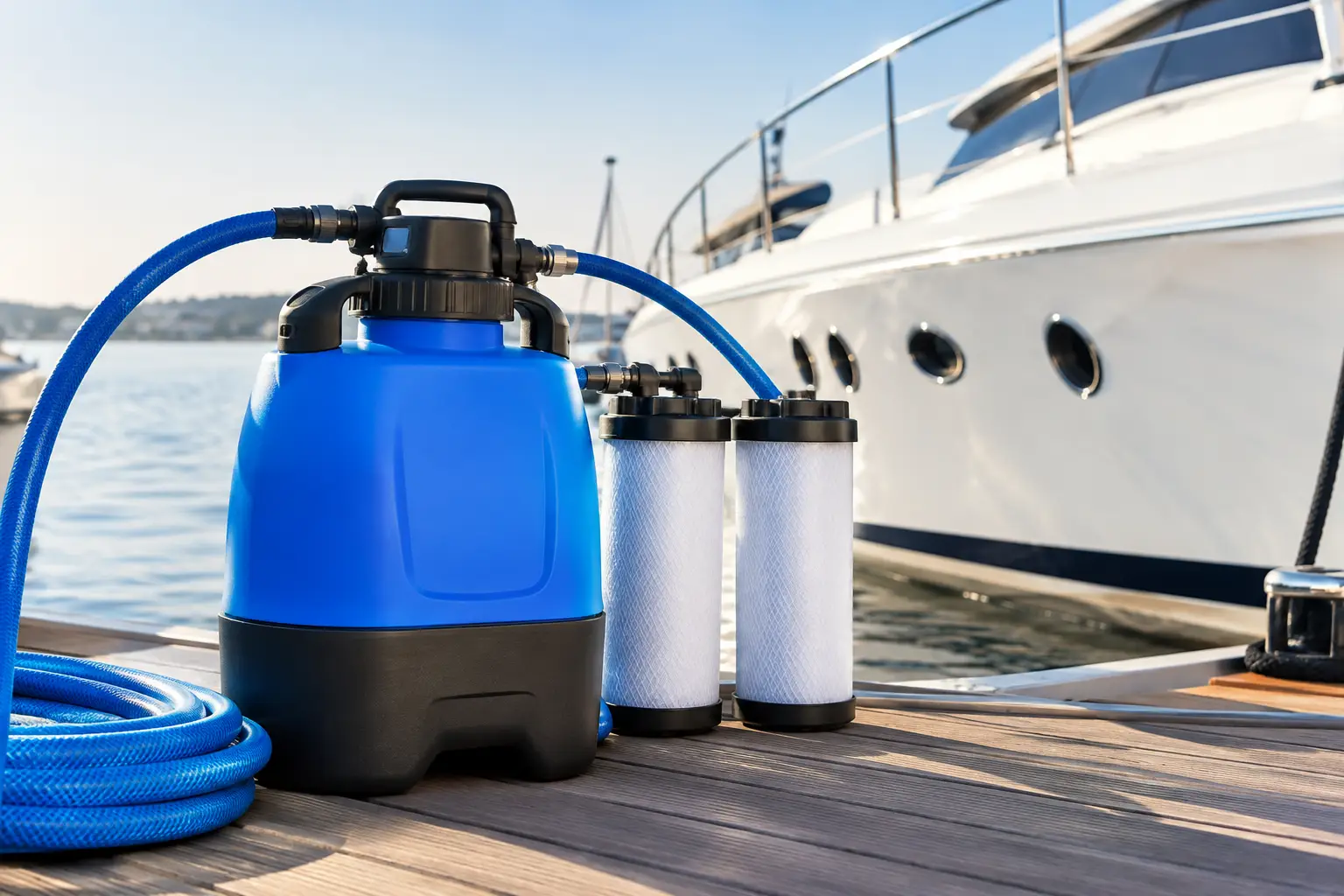
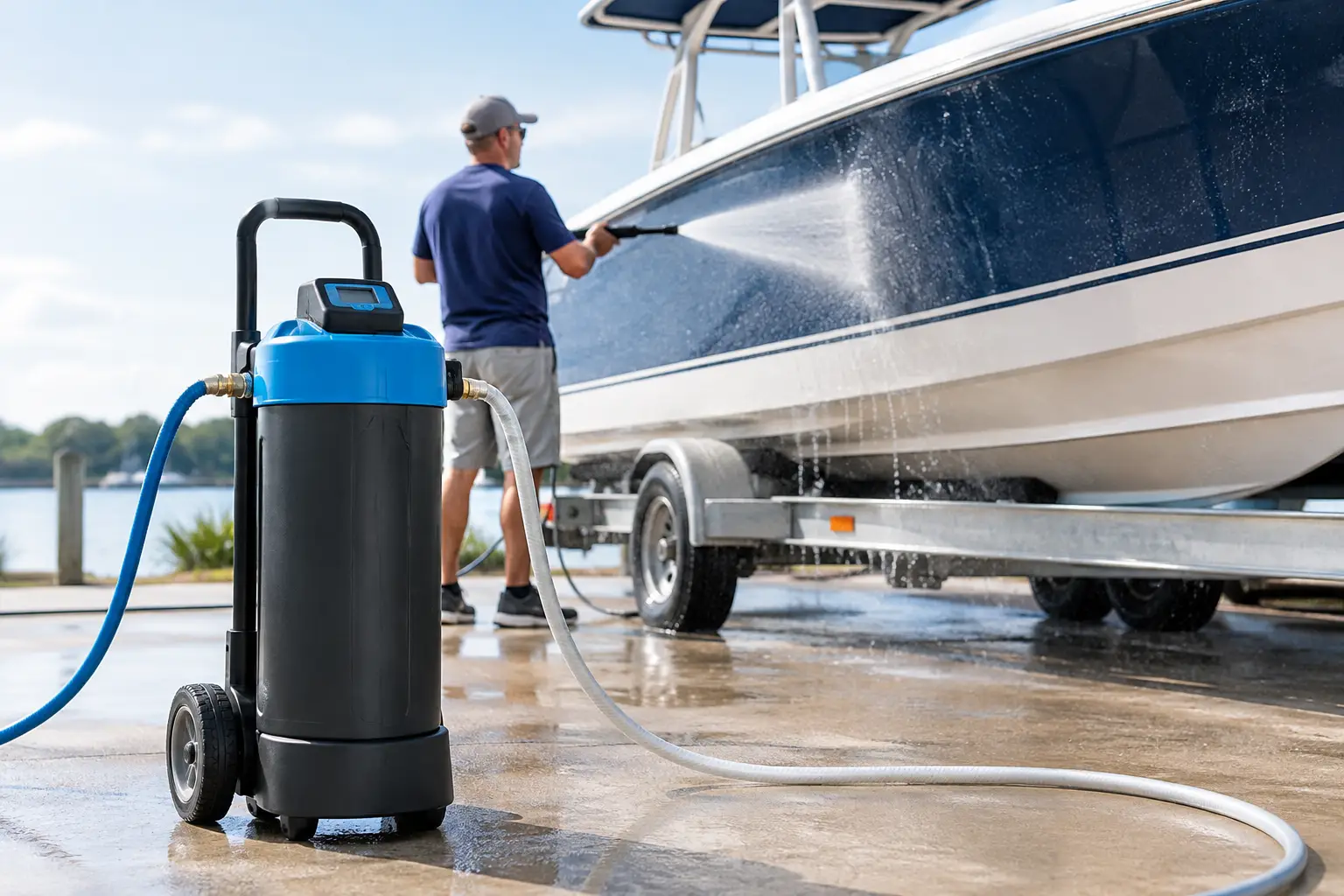
A portable water softener changes the result before spots have a chance to form. By removing the calcium and magnesium that create hard-water deposits, soft water leaves far less residue on chrome, glass, gelcoat, painted surfaces, and washdown equipment. It also helps soap rinse more cleanly, which reduces the film that can make polished metal look dull.
For boat owners, that can mean a cleaner finish after dockside washdowns and less repeated polishing of expensive hardware. For RV, automotive, and aviation use, the same principle applies: use softened water for the final rinse, then dry high-visibility chrome and metal trim before remaining moisture can collect dust.
Wet Spot portable soft water systems are built for that practical job. They operate without electrical hookup or water-pressure loss, making it easier to bring soft water to the asset rather than redesigning a wash area around a fixed system.
A Simple Maintenance Routine for Chrome
Chrome stays easier to maintain when deposits never get the chance to harden. Wash off salt, dirt, and environmental residue regularly. Use a soft cloth and a mild cleaner for routine care, reserve acidic cleaners for visible mineral scale, and rinse and dry every treated area afterward.
Frequency depends on how the asset is used. A boat in a marina with frequent washdowns may need attention every week. An RV stored in a hard-water area may show spots after each wash. In either case, waiting until the stain feels crusty usually means more work and a greater chance of damaging the finish during removal.
Keep the process controlled: clean gently, dissolve scale instead of scraping it, and stop the next round of deposits before they dry. Chrome reflects every shortcut, but it also responds well to consistent care and a soft-water final rinse.