The white rings on stainless railings, cloudy film on glass, and chalky residue around washdown fittings are not just cosmetic annoyances. They are hard-water minerals left behind after the water evaporates. A marine softener removes the calcium and magnesium that cause those deposits, giving boat owners a practical way to protect finishes, reduce cleaning time, and limit scale inside onboard water systems.
For a boat that is regularly washed at a marina, rinsed after a trip, or connected to dockside water, soft water is a form of routine asset protection. It helps keep the details that make a vessel look cared for from becoming a constant detailing project.
What a Marine Softener Does
Hard water contains dissolved calcium and magnesium. Those minerals are harmless to drink, but they create problems wherever water dries or is heated. On the exterior, they leave water spots and mineral film on gelcoat, painted surfaces, chrome, glass, plastic, and eisenglass. Inside the boat, they can accumulate in plumbing, water heaters, ice makers, faucets, shower fixtures, and other appliances.
A portable softening system uses resin media to exchange hardness minerals for sodium ions. The water remains suitable for normal washdown and onboard use, but it no longer carries the same mineral load that produces scale and spotting.
The practical difference is visible quickly. Soap lathers better, rinsing is easier, and surfaces dry with far less residue. Instead of repeatedly polishing mineral spots off expensive finishes, owners can spend less time correcting damage caused by the water itself.
Why Soft Water Matters at the Dock
A boat lives in a demanding environment. Salt, sun, humidity, and regular washdowns already put pressure on exterior materials. Adding hard water to that routine means calcium deposits can bake onto surfaces between cleanings, particularly in warm climates and direct sun.
Gelcoat is a common trouble area. Mineral spots can dull a freshly detailed finish and make a clean hull look neglected within hours. Glass and clear vinyl are equally vulnerable because deposits are highly visible and can require careful cleaning to avoid scratching. Stainless steel may develop a hazy, spotted appearance that takes more than a quick wipe to restore.
The hidden issue is scale. Hard water leaves deposits inside narrow plumbing passages and on heating elements. Over time, that buildup can reduce water flow, affect appliance efficiency, and create unnecessary maintenance work. A marine softener cannot repair existing scale, but it can help prevent new deposits from building up each time dock water enters the system.
This is especially useful for vessels that stay in one slip for extended periods. A boat may use the same local water source every week, and hardness levels can vary considerably from one marina to another. If the dock water leaves spots on your car windshield or faucet at home, it is likely leaving minerals on and inside the boat as well.
A Portable System Fits How Boats Are Used
A permanently installed treatment system may make sense for some large vessels with dedicated utility space and complex water-management needs. For many boat owners, however, portability is the better answer. The system can be connected when needed, stored when not in use, and moved between the dock, home, RV, or another vehicle.
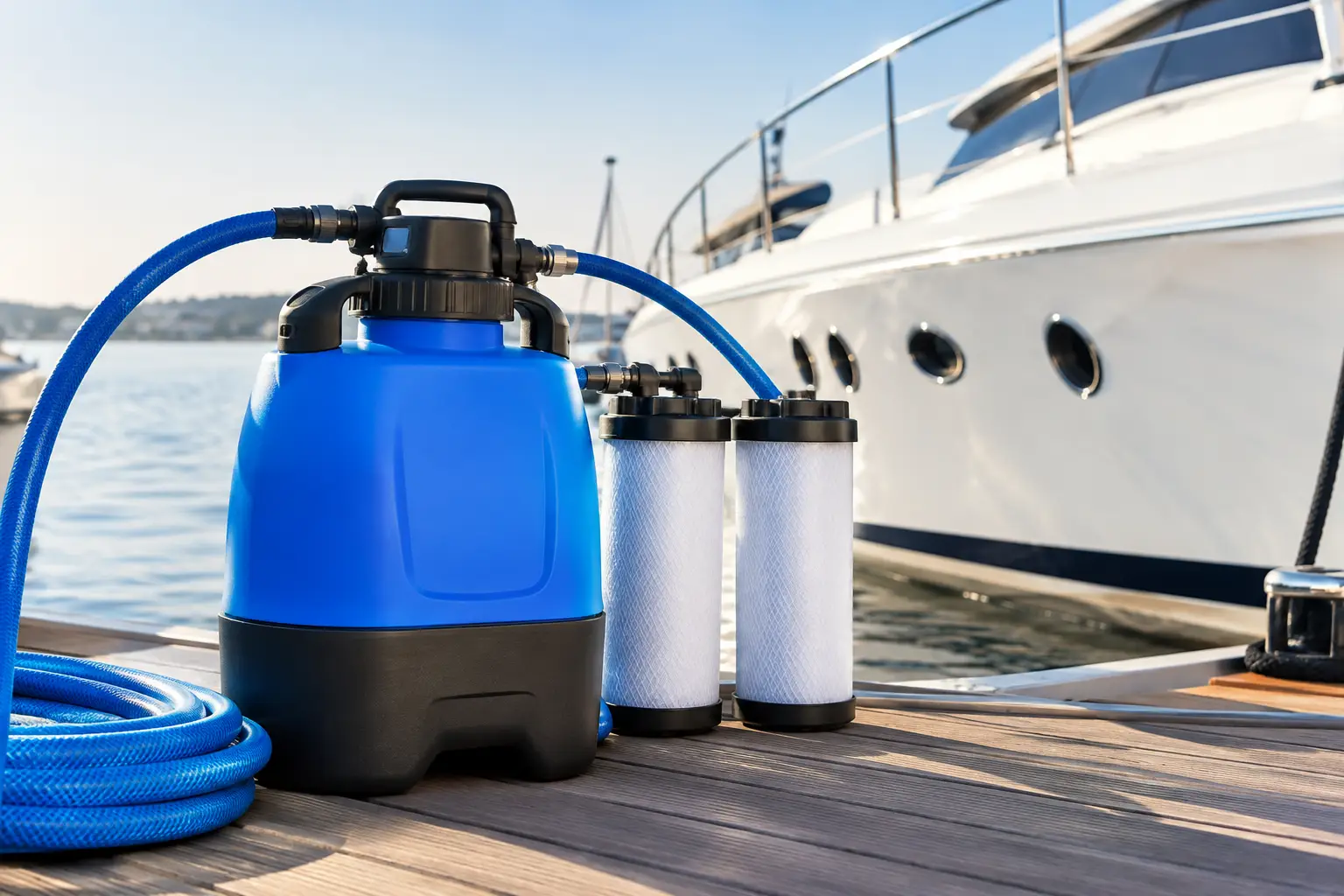
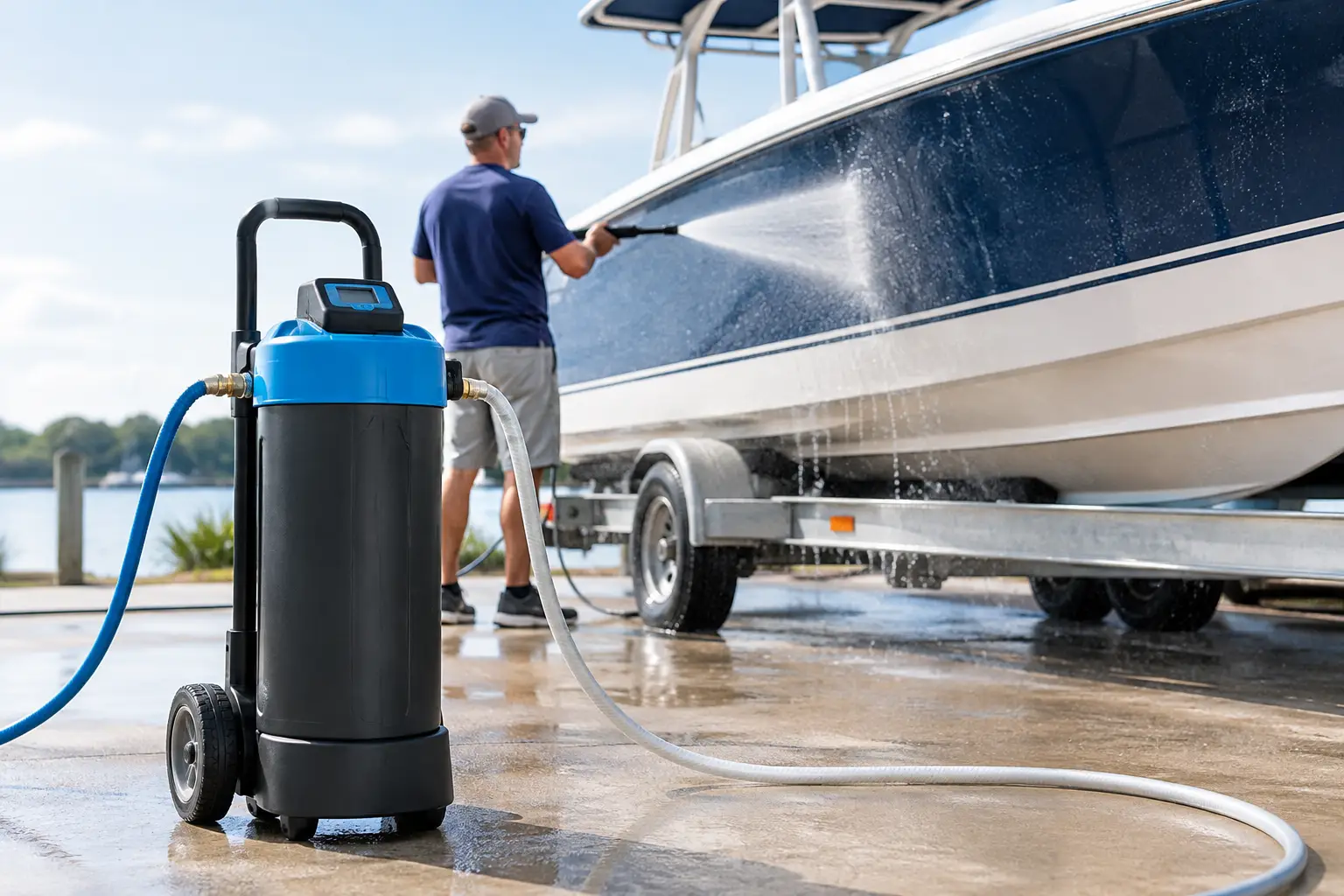
A portable softener is designed for straightforward use. Connect it between the dock water source and your hose, run the water, and use softened water for washdowns, rinsing, or filling the boat’s freshwater system. There is no electrical hookup required, no complicated installation, and no need to sacrifice water pressure for everyday cleaning tasks.
That simplicity matters on a boat. Equipment that requires special tools, permanent plumbing changes, or constant adjustment often goes unused. A purpose-built portable unit is easier to make part of the normal washdown routine.
Choosing the Right Marine Softener Size
Capacity should match the vessel and how the water is used. A smaller center console used for occasional rinsing has different needs than a yacht with multiple heads, a galley, deck wash systems, and frequent guest use.
For boats up to 70 feet, a compact portable system is often a practical fit for routine washdowns and freshwater fills. Vessels in the 70 to 100 foot range typically benefit from more capacity, especially when the boat is used frequently or carries more onboard fixtures. Boats over 100 feet may require a larger-capacity solution to support their higher water demand without frequent recharging.
The right choice also depends on water hardness. Very hard dock water uses up resin capacity faster than moderately hard water. Heavy washdown schedules, filling large freshwater tanks, and frequent onboard showers will do the same. Selecting more capacity than the bare minimum can mean fewer interruptions during a busy boating season.
Recharge Is Simple, but It Matters
Portable water softeners need periodic recharging. This restores the resin’s ability to remove calcium and magnesium after it has reached capacity. Manual recharge is not a drawback when it is done on schedule. It is a straightforward maintenance step that keeps the system working as intended without relying on replacement cartridges or electrical controls.
How often you recharge depends on three factors: local water hardness, the amount of water used, and the size of the softener. An owner who only rinses down a boat after weekend use will have a different schedule than an operator managing daily washdowns and regular tank fills.
Watch for the signs that soft water performance is declining. Water spots may return, soap may not rinse as cleanly, or familiar mineral film may begin showing up around fixtures. Those are good reminders to recharge before hard-water deposits become part of the cleaning job again.
Protect More Than the Exterior
The obvious benefit of soft water is a cleaner-looking boat, but the value extends beyond shine. Softened water helps reduce mineral buildup in components that are expensive or inconvenient to service. That includes freshwater plumbing, water heaters, shower heads, galley fixtures, ice makers, and other appliances exposed to dock water.
It can also make routine cleaning more efficient. When water is not leaving calcium deposits behind, there is less need for aggressive spot removers, repeated wiping, and polishing after every rinse. Cleaning products perform better in soft water, so crews and owners can often use less product while getting a cleaner result.
For owners who take pride in maintaining a vessel themselves, that means less time chasing residue and more time enjoying the boat. For captains and caretakers, it helps create a consistent maintenance standard from one washdown to the next.
What to Look for in a Portable Unit
Marine equipment needs to tolerate real conditions, not just look good in a storage compartment. Look for a softener built with durable, marine-grade materials and fittings that can handle regular setup, transport, and dockside use. A long warranty is also meaningful because a quality softener should be a long-term piece of maintenance equipment, not a disposable accessory.
Ease of handling matters too. The unit should be simple to connect, simple to recharge, and compact enough to store without taking over valuable onboard space. A design that preserves water pressure is particularly important for washdowns, where weak flow makes every cleaning job take longer.
Wet Spot portable systems are built around these practical requirements, with capacity options matched to vessel size and a 12-year warranty that supports long-term ownership.
Make Soft Water Part of Your Dock Routine
The best time to prevent hard-water damage is before the first rinse dries in the sun. Connect the softener at the dock, use it consistently for washdowns and freshwater fills, and recharge it according to your water use. That routine protects the surfaces everyone sees and the water systems they do not.
A clean boat should not depend on spending extra hours removing the residue left by the water used to wash it. With the right portable softener in place, every rinse can do more to preserve the finish, fixtures, and systems you paid to own.