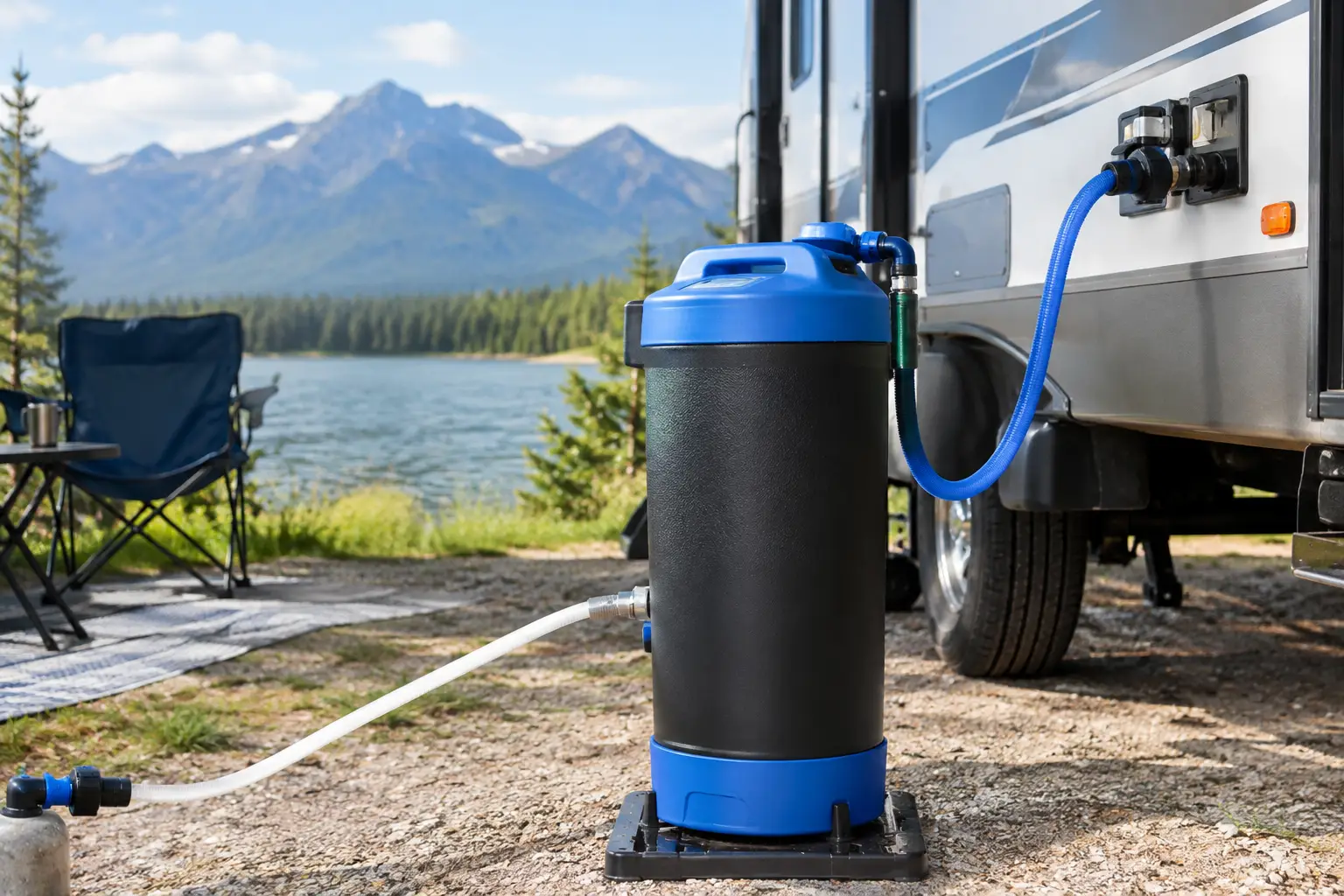
A campground faucet can look perfectly clean and still leave a chalky ring on your sink, clog a showerhead, or make every washdown harder than it should be. To treat RV water properly, separate the jobs involved: filtration protects against sediment and unwanted taste, disinfection addresses microbes, and softening controls the hard-water minerals that create spots and scale.
That distinction matters because no single device handles every water issue. The right setup depends on where you are filling, whether the water will be used for drinking, and how much protection you want for your RV’s plumbing, water heater, fixtures, and exterior finish.
Start With the Water Source
The best time to protect your RV water system is before water enters the coach. At a developed campground with a maintained potable-water connection, your primary concern may be sediment, chlorine taste, or hard minerals. At a private property, fairground, remote campground, or any source with uncertain maintenance, you need to be more cautious.
Use only a faucet designated for potable water when filling your fresh tank or connecting city water. Keep a dedicated drinking-water-safe hose, cap both ends during storage, and avoid laying the hose end in dirt, standing water, or a sewer area. A clean hose and a sanitary connection prevent problems that no filter can fix after the fact.
If a water source has an unusual odor, discoloration, oily sheen, or unknown history, do not assume a basic inline filter makes it safe. Find another source or treat the water with a method intended for disinfection. Filters can improve water quality, but many are not designed to remove all bacteria, viruses, or chemical contaminants.
City Water and Fresh-Tank Water Need Different Attention
City water runs continuously through your hose, pressure regulator, filter, and RV plumbing. A filter at the connection is useful because it catches sediment before it reaches delicate fixtures and improves water quality as you use it.
Fresh-tank water adds another consideration: storage. Even good water can develop an off taste or become a sanitation concern if it sits for long periods in a warm tank. If you regularly travel with water in the tank, sanitize the system on a routine schedule and drain old water when the RV will be parked for an extended period.
Filter First to Protect Your RV
A quality RV water filter is a practical first line of defense. It can reduce dirt, rust particles, and sediment that can foul faucet screens, showerheads, valves, and water-pump components. Carbon filtration can also improve taste and reduce chlorine odor, which makes a noticeable difference when you are cooking, making coffee, or showering onboard.
The filter you choose should match how you travel. A compact inline filter may be adequate for occasional weekend trips with known campground water. Owners who travel often, stay for longer periods, or fill from varied sources may prefer a larger external canister setup with higher capacity and replaceable cartridges.
Do not leave a filter in service indefinitely. A cartridge that is past its useful life can restrict flow and stop doing the job you expect. Replace it according to its rated capacity, your water conditions, and the manufacturer’s instructions. If flow drops sharply, inspect the filter before assuming the campground has poor pressure.
A pressure regulator belongs at the connection as well. It does not treat water, but it protects plumbing from excessive campground pressure. That is a simple, low-cost safeguard for an expensive RV.
How to Treat RV Water for Hardness
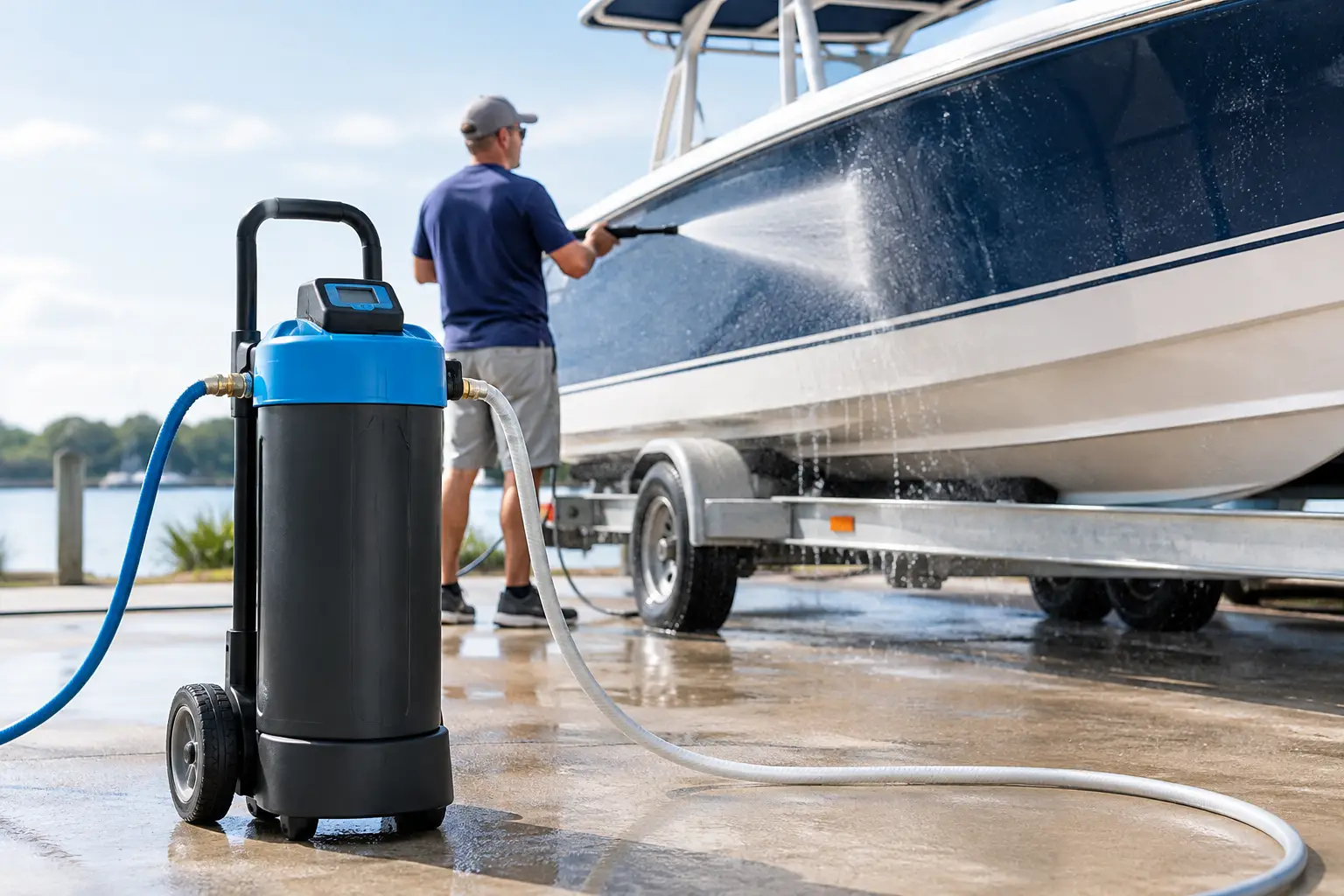
Hard water is different from dirty water. It may be clear, odorless, and approved for drinking, yet still contain calcium and magnesium that cause white spots, soap scum, lime scale, and stubborn buildup. If you have washed an RV and watched clean water dry into a film across the paint, glass, trim, and mirrors, you have seen the problem firsthand.
Inside the coach, hard water leaves deposits in faucets, showerheads, toilet valves, and water heaters. Over time, scale can reduce efficiency and contribute to premature wear in appliances and plumbing components. It also makes soap less effective, so you may use more product and spend more time scrubbing surfaces that should clean easily.
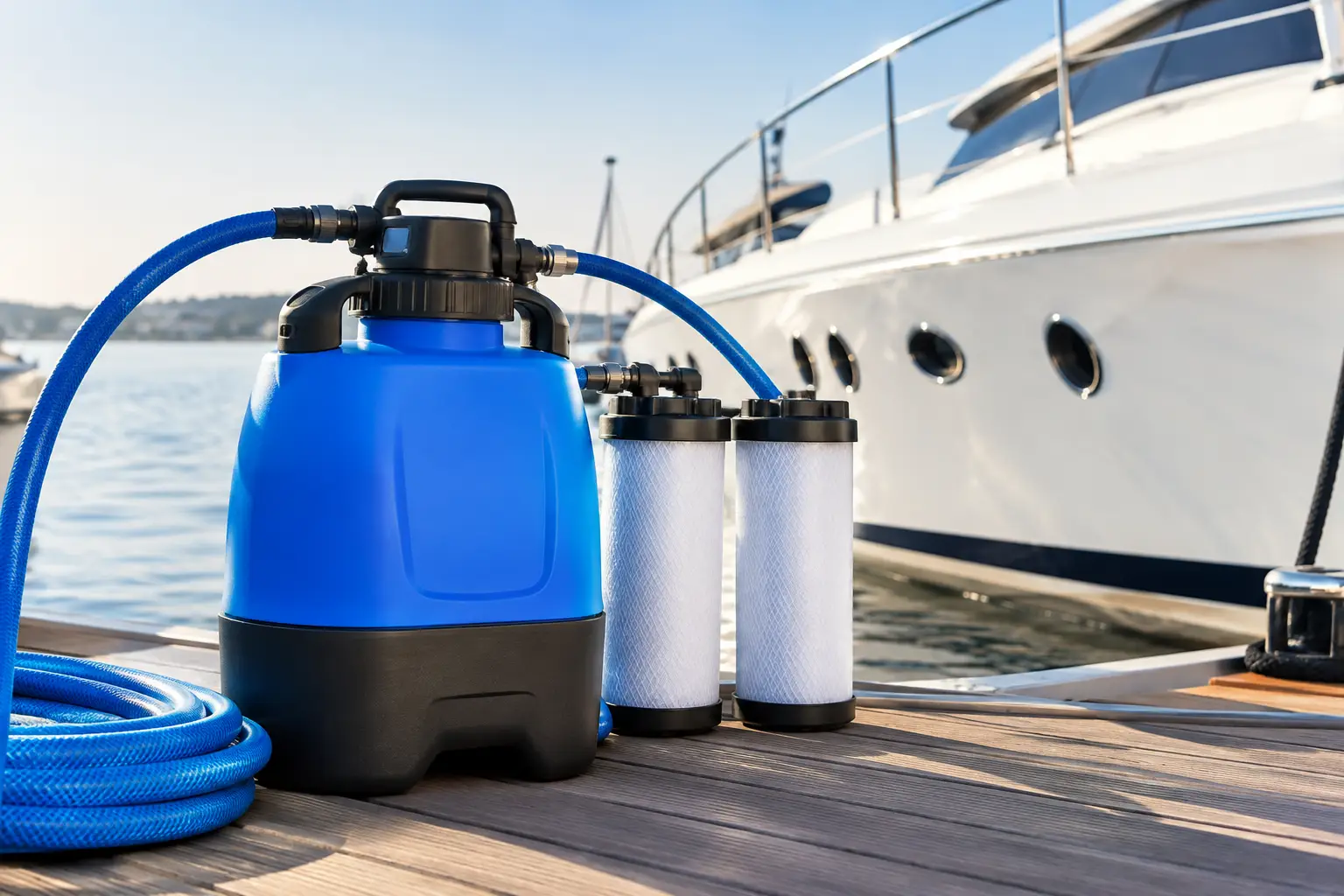
A portable water softener removes the calcium and magnesium responsible for hardness before the water enters the RV. This is especially valuable when you stay at parks with consistently hard water, wash the exterior often, or want to protect onboard fixtures over the long term. Soft water rinses more cleanly, helps reduce spotting, and limits mineral deposits before they become a maintenance project.
Unlike an RV filter, a softener is not a disinfectant and should not be treated as one. It is part of a complete approach: use a potable source, filter for sediment and taste concerns, sanitize your tank when needed, and soften water when hard-water protection is the goal.
Portable Softening Makes Sense for Frequent Travelers
A portable softener is designed for owners who need real hard-water control without permanent plumbing modifications or electrical power. It connects externally, travels with the RV, and can be recharged manually when its capacity is used. That makes it practical for seasonal travelers, full-timers, and anyone who sees different water conditions from one stop to the next.
Wet Spot portable soft water systems are built for this kind of mobile use: rugged equipment that helps protect high-value finishes, fixtures, and onboard appliances without adding a complicated installation. The value is not just a cleaner rinse after wash day. It is less scale to remove, fewer mineral spots to chase, and less wear from repeated exposure to hard water.
Softening is not necessary at every stop for every owner. If you are passing through for one night, using minimal water, and the source is not particularly hard, filtration and good sanitation practices may be enough. If you spend weeks connected to hard water, the payoff becomes much more obvious.
Sanitize the Fresh Water System on Schedule
Even filtered and softened water can pick up contamination inside an RV system if the tank, hoses, or plumbing are neglected. Sanitizing the fresh water system is a separate maintenance task, generally performed with an RV-safe sanitizing process and followed by a thorough flush.
The right interval depends on how the RV is used. Sanitize before the season, after a long storage period, after questionable water enters the tank, or whenever the water develops an odor, taste, or visible residue. Owners who use their fresh tank frequently may choose a more regular schedule.
Follow your RV manufacturer’s guidance for the proper sanitizing agent, concentration, contact time, and flushing procedure. Do not guess at chemical amounts. Too little may not sanitize effectively, while too much can leave strong odors and damage components. Once the system is flushed, refill with potable water and run each fixture until the water is clear and free of sanitizer smell.
Your water heater deserves attention, too. Draining and flushing it as part of routine maintenance helps remove sediment that can collect at the bottom of the tank. In hard-water areas, that simple step can help preserve heating performance and reduce buildup.
Build a Simple Connection Routine
The most dependable RV water treatment plan is the one you will use at every stop. Before connecting, inspect the faucet and hose. Use a pressure regulator, then your chosen filtration and softening equipment in the order recommended by each manufacturer. Check for leaks, run water briefly to clear air and loose sediment, and monitor flow during the first few minutes.
When breaking camp, disconnect carefully, drain the hose, and cap the ends before storing it. Do not use your drinking-water hose for tank flushing, rinsing tires, or any task that exposes it to contaminants. Keeping water equipment dedicated and clean prevents avoidable problems.
Test strips can be useful when you want to understand the hardness of a new water source or confirm when a softener needs recharging. They are not a substitute for a full laboratory water test where safety is in question, but they provide practical information for everyday travel decisions.
Know What Water Treatment Cannot Do
Water treatment is about reducing specific risks, not making every unknown source acceptable. A sediment filter will not remove dissolved hardness minerals. A softener will not reliably remove pathogens. Sanitizing an RV tank will not correct contaminated water that was unsafe when it went in.
That is why a layered approach works best. Start with a potable source. Protect the connection. Filter for sediment and taste. Soften hard water when scale and spotting are a concern. Sanitize the fresh water system as part of regular RV maintenance. Each step has a clear job, and together they help keep water systems cleaner and easier to maintain.
A few minutes spent setting up water correctly can save hours of descaling, detailing, and troubleshooting later. Treat the water before it reaches your RV, and your fixtures, appliances, and finish will show the difference mile after mile.