A failed water heater, ice maker, or galley faucet rarely starts with a dramatic problem. More often, it starts with a thin mineral film that goes unnoticed until flow drops, heating slows, fittings leak, or an appliance stops working when you need it. This guide to onboard appliance care focuses on the practical habits that protect the equipment behind your boat’s daily comfort.
Hard water is tough on every system it touches. Calcium and magnesium can leave spots on visible surfaces, but the more expensive damage happens inside water lines, heating elements, valves, filters, pumps, and appliance connections. Consistent water quality and basic inspection do more to protect onboard equipment than waiting for a problem to appear.
Why onboard appliances need a different care routine
A home appliance works in a stable environment with fixed plumbing, predictable water pressure, and regular use. A boat deals with movement, moisture, changing dockside water sources, intermittent occupancy, and limited access for repairs. That changes how wear develops and how quickly a small issue can become an inconvenient repair.
Water heaters, galley faucets, showers, toilets, ice makers, dishwashers, washing machines, and water-fed coffee equipment all rely on clean, reliable water flow. Where hard water is present, mineral deposits can narrow internal passages and coat surfaces that transfer heat. On a boat, those deposits may build while the vessel sits between trips, then break loose or cause reduced performance when the system is put back into service.
The goal is not to over-maintain every component. It is to establish a routine that catches leaks, scale, and poor water quality before they affect a weekend aboard or a longer passage.
Start with the water going into the boat
The condition of dockside water affects nearly every appliance downstream. If the water leaves spots on glass and stainless steel, it is also carrying minerals into the boat’s plumbing. A standard sediment filter can catch debris, but it does not remove the dissolved calcium and magnesium responsible for lime scale.
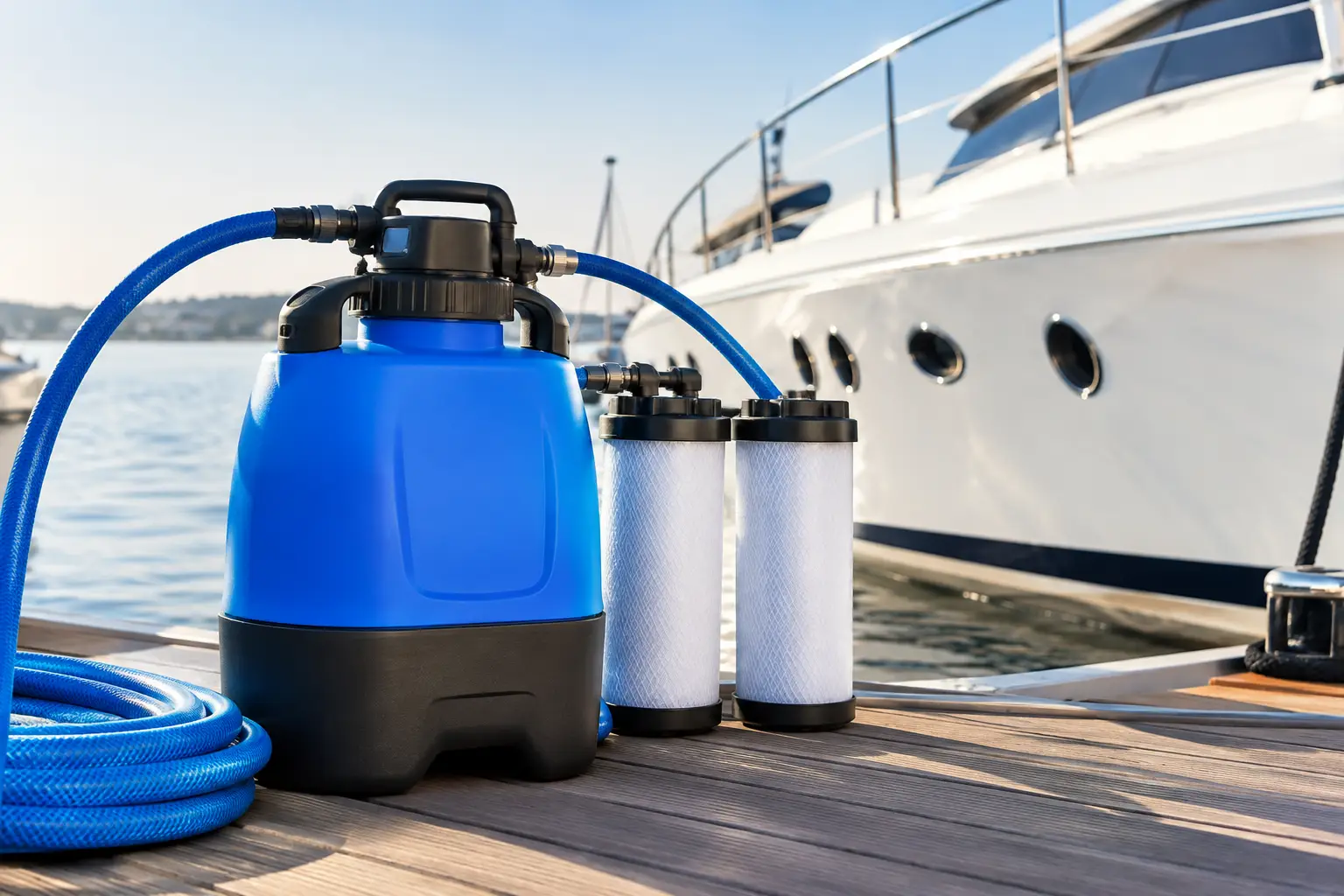
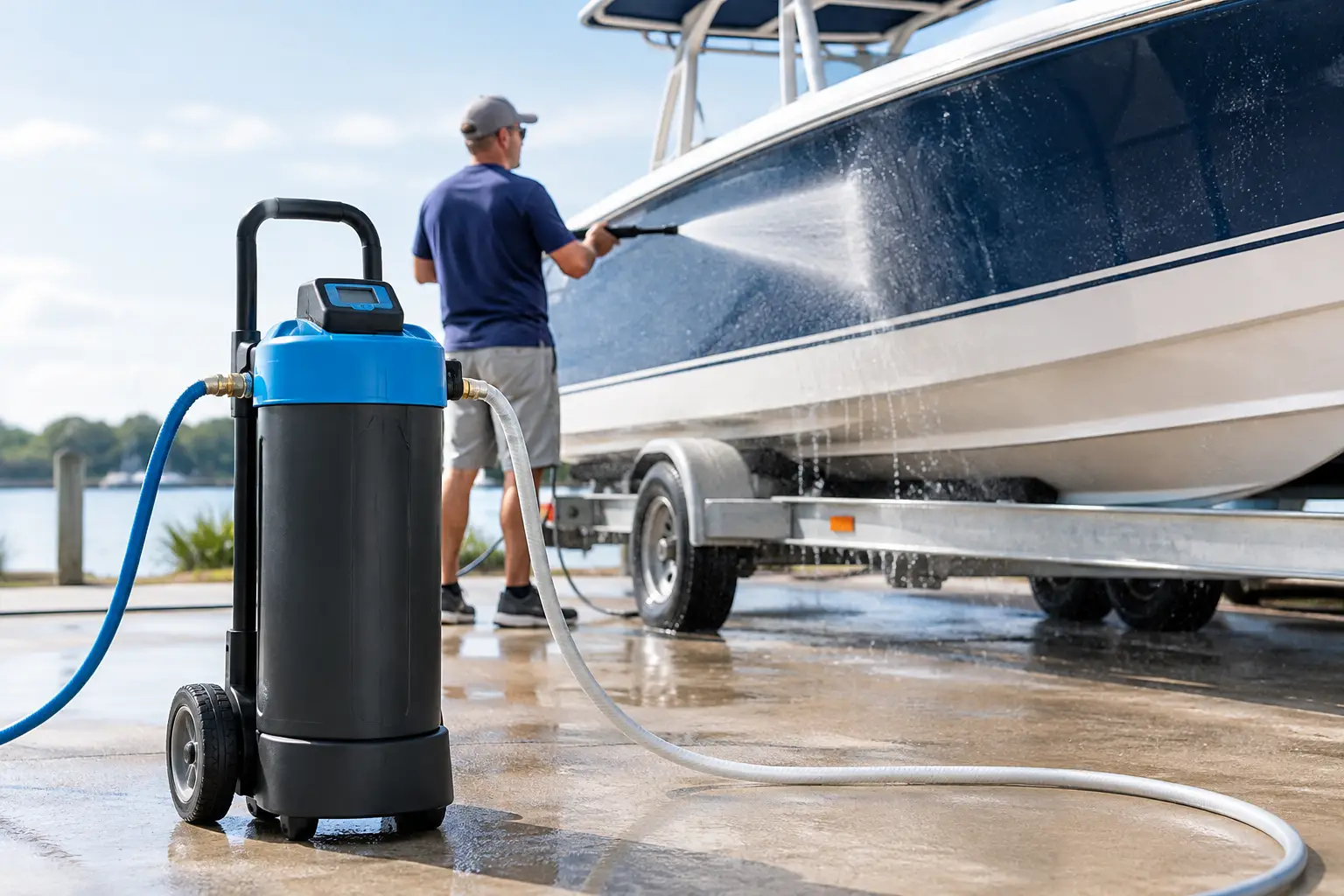
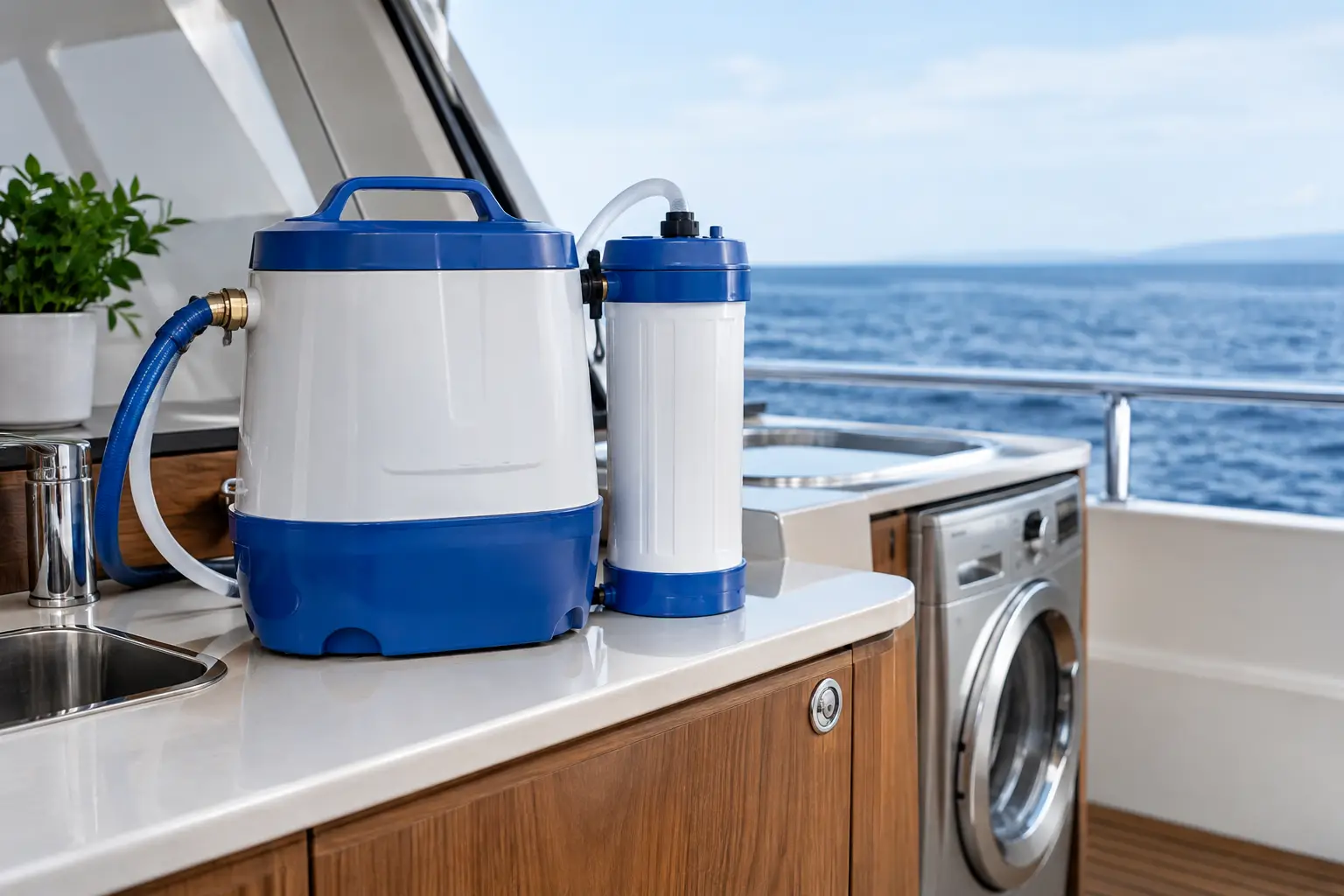
Using softened water for filling tanks, washdowns, and appliance supply reduces the minerals that create buildup. This is especially useful for boats that spend time in marinas with consistently hard water or move between regions with different water conditions. A portable soft water system gives owners a practical way to improve water quality without electrical power, pressure loss, or a permanent installation.
Wet Spot portable softeners are built for this kind of use: protecting valuable onboard finishes and equipment while keeping setup straightforward at the dock. The right vessel size depends on boat length, water use, and how frequently the system will be recharged. Larger vessels and higher-demand crews generally benefit from greater softening capacity.
Soft water does not replace filtration or proper tank sanitation. Those are separate jobs. Filtration addresses sediment and certain contaminants, while sanitation controls biological growth in stored water. Softening addresses the minerals that cause scale, spotting, and reduced cleaning performance.
A practical guide to onboard appliance care
A useful care routine follows the water path. Check the source water, inspect the connections, watch appliance performance, and address small changes early. You do not need to disassemble functioning equipment every week, but you should know what normal operation looks and sounds like.
Inspect hoses, fittings, and valves before they become leaks
At least once a month during the boating season, inspect accessible plumbing connections around appliances. Look for moisture under the galley sink, around the water heater, behind the ice maker, and near any appliance connected to pressurized water. Run a dry paper towel around fittings if a slow leak is suspected. Small drips often leave mineral residue before they leave an obvious puddle.
Pay attention to hose condition as well. Stiff, cracked, discolored, or swollen hoses should be replaced before they fail. Make sure fittings are secure, but do not overtighten plastic connections. Excess force can crack a fitting or distort a seal, creating the very leak you are trying to prevent.
Watch for the early signs of scale
Scale does not always look like a white crust. It can show up as reduced hot-water output, slower water flow at one fixture, a noisy water heater, weak ice production, or a dishwasher that leaves residue despite using the correct detergent. These are signs to investigate, not reasons to assume an appliance has reached the end of its service life.
If one fixture has reduced flow, first check the aerator or showerhead for debris and mineral buildup. If several fixtures are affected, inspect the broader plumbing system, pump strainer, water filter, and supply valves. Hard water can contribute to restriction, but sediment, worn pump components, and partially closed valves can produce similar symptoms.
For appliances with manufacturer-approved descaling procedures, follow the specified product and concentration. Avoid using aggressive cleaners simply because they work quickly. Harsh acids can damage seals, metal finishes, or internal components when used incorrectly. If an appliance manual calls for professional service, that is usually the sensible choice.
Give water-heating equipment extra attention
Water heaters work harder when mineral deposits coat heating surfaces. Scale acts as insulation, so the unit may need more time and energy to heat water. In severe cases, buildup can contribute to overheating, noise, reduced capacity, or premature component failure.
Inspect the water heater exterior for leaks, corrosion at connections, damaged wiring, or signs of heat stress. Check that the pressure-relief valve discharge path is clear and that the valve is serviced according to the heater manufacturer’s instructions. Do not cap or obstruct it.
The best long-term defense is reducing mineral exposure before water enters the system. When soft water is used consistently, there is less scale available to settle in the heater and connected plumbing. That means less cleaning, more reliable hot water, and fewer surprises in a compartment where repairs can be awkward.
Keep ice makers, dishwashers, and laundry equipment clean
These appliances combine water, heat, and periods of inactivity, which makes regular care worthwhile. Empty and wipe the ice bin, inspect the water line for kinks or leaks, and replace filters according to the appliance schedule. If the boat will sit unused, follow the manufacturer’s instructions for shutting down, draining, or winterizing the unit.
For dishwashers and compact laundry machines, use the recommended detergent amount. Soft water improves soap performance, so too much detergent can leave its own residue. Run an occasional cleaning cycle if the manufacturer recommends one, and leave doors slightly open after use when practical to help interior surfaces dry.
There is a trade-off here. Softened water reduces mineral scale, but it can make soap work more efficiently. Owners who continue using the same heavy detergent dose they used with hard water may see excess suds or film. Start with less and adjust based on results.
Protect appliances when the boat is idle
A boat that sits for weeks needs a different routine than one used every weekend. Stagnant water can affect taste, odor, and cleanliness, while temperature changes can stress plumbing connections. Before leaving the boat for an extended period, decide whether the water system should remain active, be isolated, or be fully drained based on season, climate, and the vessel’s operating plan.
Turn off water supply valves to appliances where appropriate, especially if no one will be aboard to notice a leak. Check bilge and compartment areas after shutting down the system. If freezing temperatures are possible, winterize every water-fed appliance according to its manual. Missing one small supply line can lead to a costly freeze repair.
When returning to the boat, inspect first and power up second. Look for leaks, confirm the freshwater tank and supply are in good condition, then run water through fixtures before relying on the galley or shower. Take note of unusual pump cycling, which can indicate a pressure leak somewhere in the system.
Build a schedule that fits how you use the boat
There is no single maintenance interval that fits every vessel. A liveaboard yacht with regular galley use needs more frequent attention than a weekend boat that spends most of its time covered at the marina. Water hardness, climate, appliance age, and the number of people aboard also matter.
For most owners, a quick visual check before each outing, a more careful monthly inspection during the season, and a thorough layup or winterization review provide a solid baseline. Keep a simple record of filter changes, softener recharges, descaling service, and any repairs. That record makes it easier to spot repeat issues and plan maintenance before peak season.
The most valuable habit is simple: treat a water spot or a slight change in appliance performance as useful information. Clean water and early attention keep onboard appliances working the way they should, so your time on the boat is spent using it rather than repairing it.