A boat can leave the dock looking freshly detailed and return with dull spots already drying across the gelcoat, glass, rails, and windshield. That is how hard water damage boat finish problems start: not with one dramatic event, but with repeated washdowns, spray, and rinse water that leave minerals behind every time they dry.
Those white spots are more than a cosmetic nuisance. Calcium and magnesium deposits can bond to the surface, reduce shine, make routine cleaning harder, and eventually contribute to etching and staining. On a high-value boat, preventing mineral buildup is far easier and less expensive than correcting it after it has set in.
What Hard Water Does to a Boat Finish
Hard water contains dissolved minerals, primarily calcium and magnesium. While the water is moving, those minerals are out of sight. Once water evaporates on a hot deck, dark hull, windshield, or polished fitting, the minerals remain on the surface.
At first, the result may look like ordinary water spotting. On gelcoat, paint, and clear plastic, spots can become increasingly visible as more minerals collect in the same areas. On stainless steel, chrome, and anodized aluminum, deposits take away the clean, reflective finish owners work hard to maintain. Glass and isinglass can develop haze that affects both appearance and visibility.
The trouble is not limited to the exterior. Hard water also creates scale inside plumbing, water heaters, ice makers, fixtures, and other onboard equipment. Scale narrows water passages, reduces efficiency, and can make appliances work harder than they should. A rinse water problem can become a maintenance problem throughout the vessel.
Why sun and salt make the problem worse
A warm marina and direct sunlight speed up evaporation. The faster water dries, the less time minerals have to run off the surface. Instead, they dry in place and create concentrated deposits. Dark hull colors and black canvas often show the marks first, but light-colored gelcoat is not immune.
Saltwater exposure adds another layer of cleanup. After a day on the water, owners often rinse the boat to remove salt. If that final rinse is hard water, it can replace one source of residue with another. The boat may be free of salt but still left with mineral spots across the finish.
The Difference Between Spots and Etching
Fresh hard water spots are usually easier to remove. A proper wash and a soft, clean rinse may lift deposits before they have time to bond tightly to the surface. Waiting too long changes the job.
As mineral deposits sit through heat cycles and repeated exposure, they can become difficult to remove without acidic cleaners, polishing, or compounding. Those methods have a place when needed, but they are corrective measures. Used too aggressively or too often, they can remove protective waxes, sealants, or small amounts of surface material.
Etching occurs when deposits and contaminants affect the surface itself rather than simply sitting on top of it. At that point, washing alone may not restore the original clarity or gloss. Depending on the finish, correction may require professional detailing, polishing, or refinishing. The cost rises quickly when large areas of gelcoat, glass, or clear plastic are involved.
Where Hard Water Damage Shows Up First
Every boat has surfaces that reveal hard water quickly. The most vulnerable areas are generally those exposed to rinse water and direct sun: topsides, decks, windshields, cockpit glass, stainless rails, towers, polished hardware, and outboard cowls.
Clear surfaces deserve special attention. Glass can develop stubborn spotting, while isinglass and other clear vinyl materials can haze or scratch easily during cleaning. Trying to scrub away mineral deposits with a rough towel or abrasive cleaner can create a second problem. The right water source reduces the need for aggressive cleaning in the first place.
Hard water also affects areas that are easy to overlook. Shower doors, faucets, sinks, heads, galley fixtures, and dockside washdown equipment can all develop scale. If your boat has an onboard freshwater system, hard water can leave deposits inside components long before they are visible outside.
Prevent Hard Water Damage to Boat Finish Surfaces
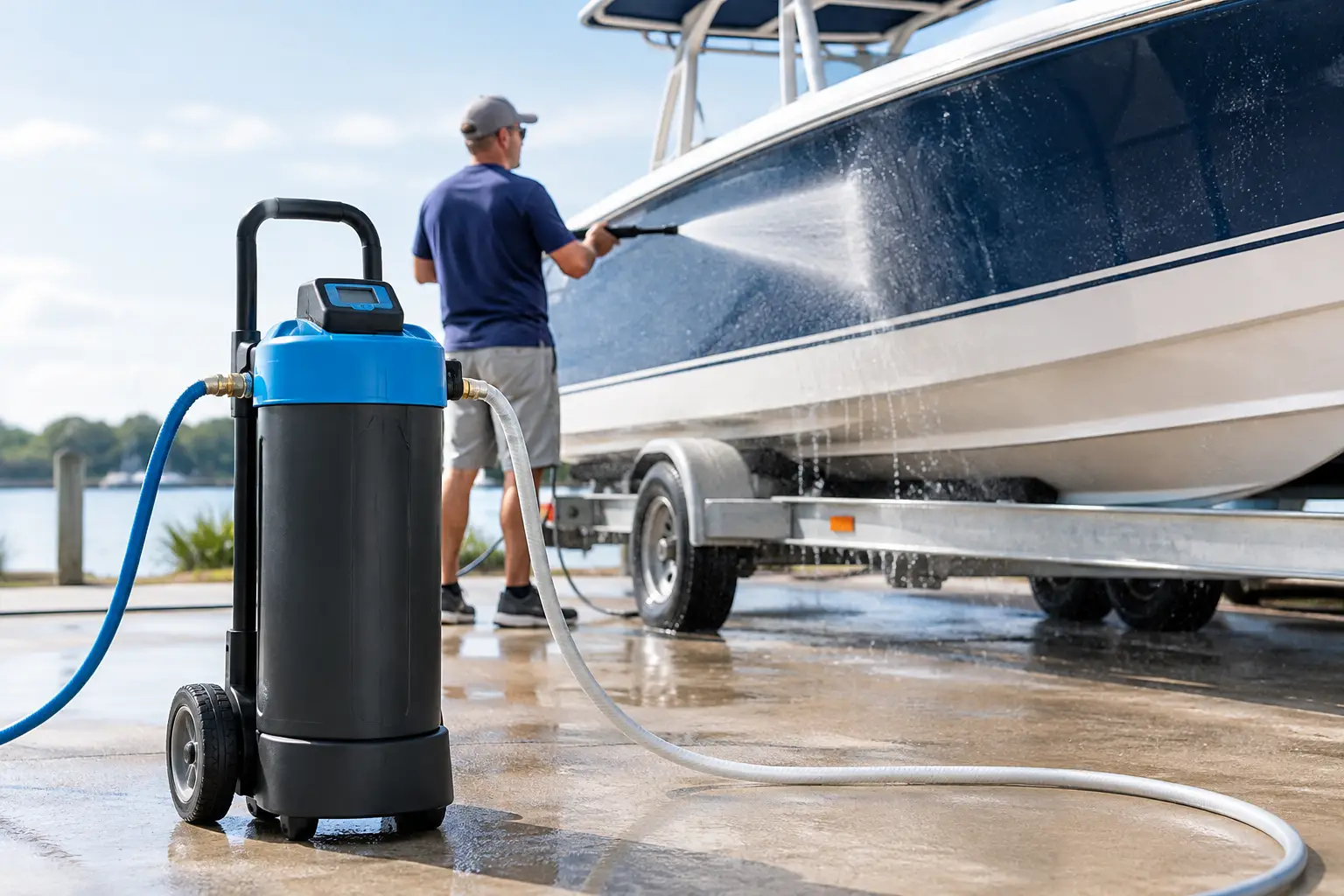
The most effective approach is prevention at the source. Use soft water for washdowns and final rinses whenever practical. Soft water removes calcium and magnesium before the water reaches the boat, so it does not leave the mineral residue that creates spots and scale.
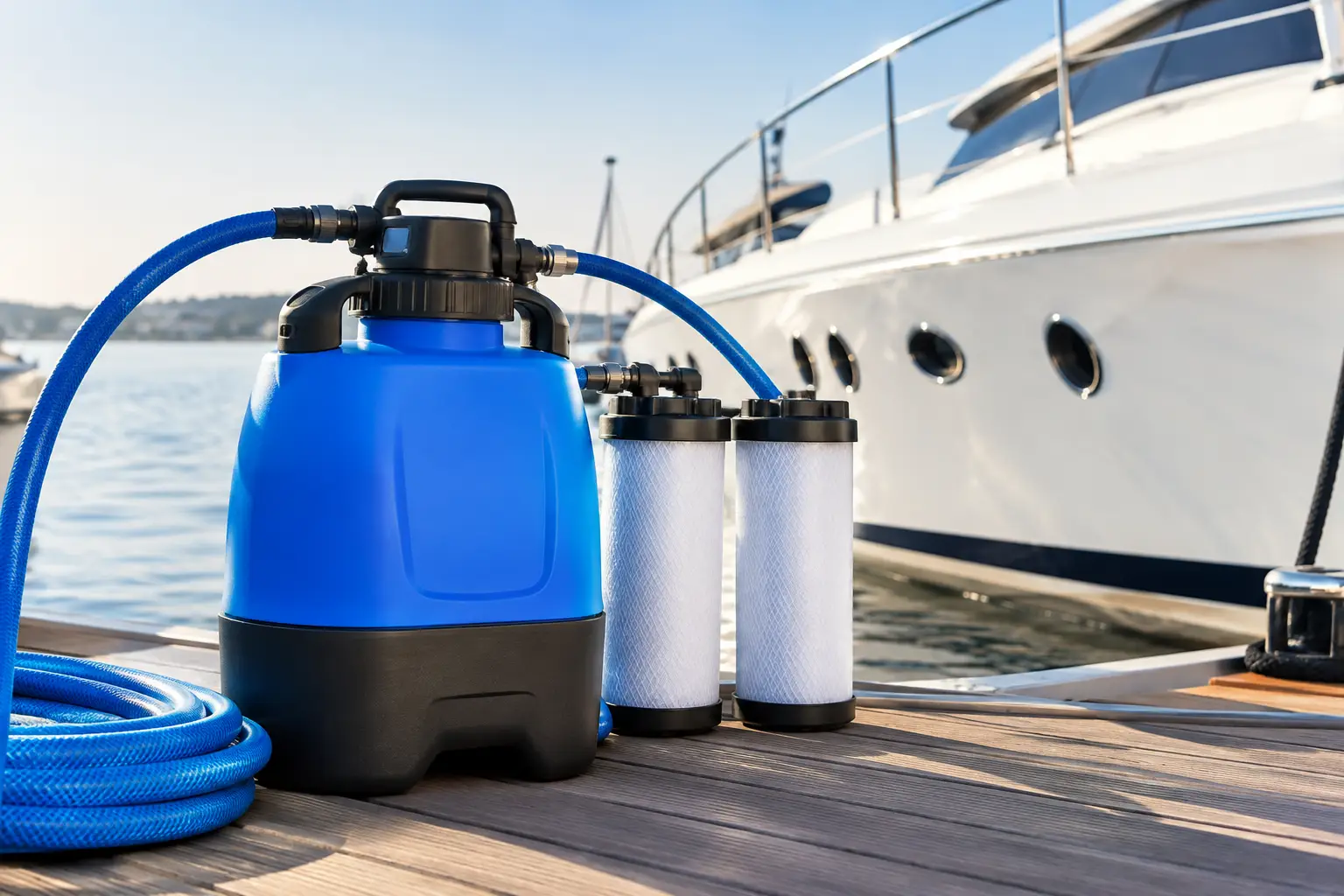
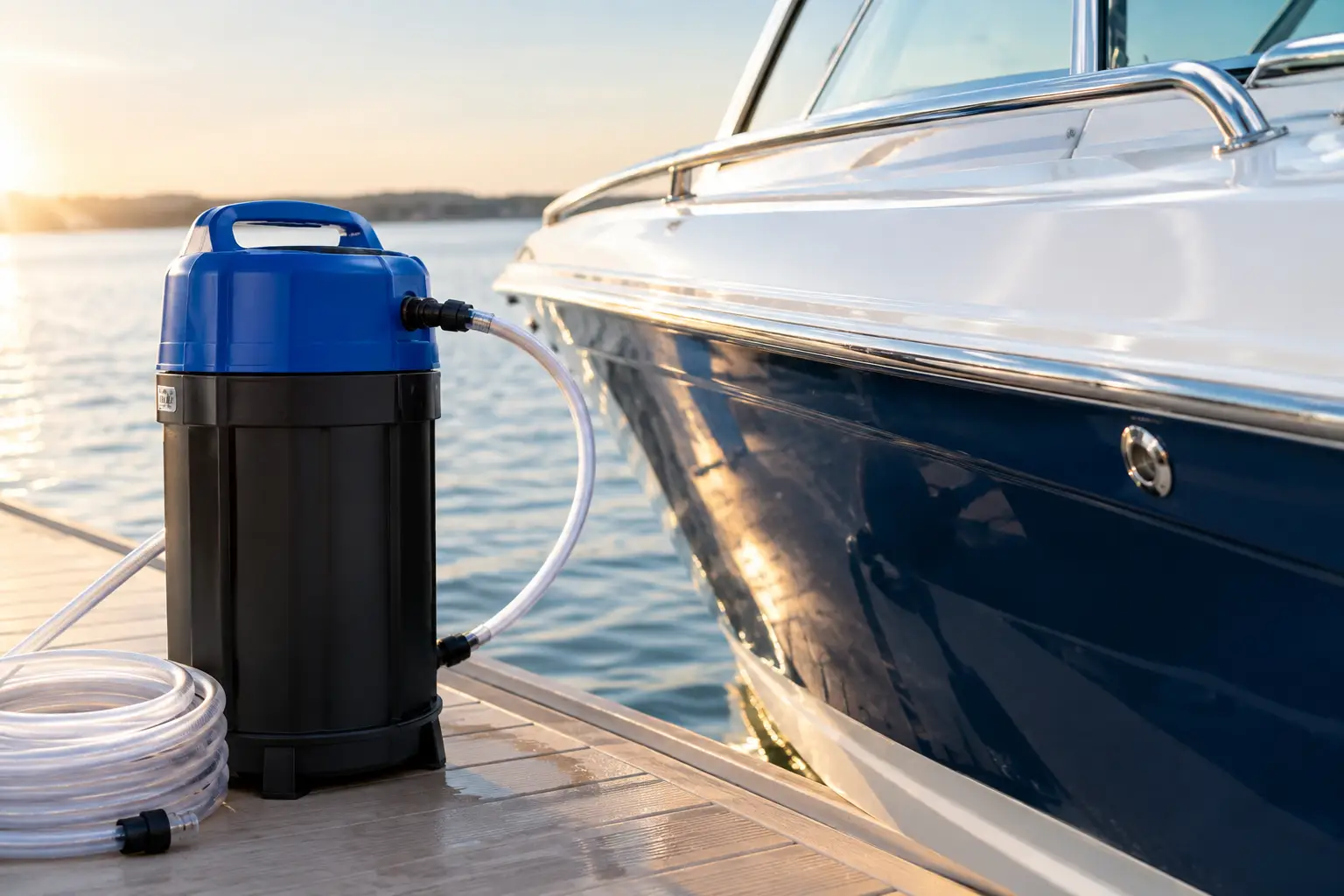
A portable water softening system is particularly useful at marinas, storage yards, and docks where water quality varies. It lets you treat the water used for cleaning without permanent installation, electrical power, or a change in water pressure. For boat owners, that means a more consistent washdown whether the vessel is at its home slip or away from it.
Wet Spot portable soft water systems are built for this kind of work: straightforward setup, marine-grade construction, manual recharge maintenance, and sizing based on vessel length. The goal is simple – provide soft water where you need it and protect the surfaces you have invested in.
Make the final rinse count
If you cannot wash the entire boat with softened water, prioritize the final rinse. Soap and cleaning products may loosen dirt, salt, and grime, but the final rinse determines what is left behind as the boat dries. A soft-water rinse helps the surface dry cleaner, with less residue and fewer visible spots.
This is especially useful after washing dark-colored gelcoat, polished metal, windows, and clear enclosures. Those surfaces show mineral spotting quickly and often require the most detailing effort to restore. Soft water will not eliminate the need for drying in every condition, but it reduces the residue that makes drying so labor-intensive.
Dry smart, not aggressively
Even with soft water, drying remains a good habit. Use clean microfiber towels, chamois designed for marine use, or an air blower that will not drag contaminants across the finish. Work from higher surfaces down and change towels before they become saturated or dirty.
Avoid letting wash water bake onto the boat during the hottest part of the day. If a full wash is not practical, rinse small sections and dry them before moving on. The point is not to turn every washdown into a detail job. It is to avoid creating deposits that require one later.
Why Cleaning Products Alone Are Not the Answer
Spot removers, vinegar-based products, and acidic cleaners can help address existing mineral deposits. But they are not a replacement for soft water. Repeated use of strong cleaners can be hard on wax, sealants, metals, clear plastics, and sensitive finishes when used incorrectly.
The right product depends on the surface and the severity of the deposit. A mild spot on glass may need a different method than scale on stainless steel or etching on gelcoat. Always follow the finish manufacturer’s care guidance and test any cleaner in an inconspicuous area.
Prevention reduces how often you need those products. It also reduces the temptation to scrub harder, use stronger chemicals, or polish a surface more frequently than necessary. That preserves protective coatings and saves time at the dock.
Choose a Soft Water System for Your Vessel
A portable softener should match the way you use your boat. Smaller vessels need a unit that is easy to carry, connect, and store. Larger boats and yachts need enough capacity to support longer washdowns and more extensive onboard water use.
Capacity matters, but so does usability. A system that requires electrical hookup, complicated plumbing changes, or excessive maintenance is less likely to be used consistently. Look for a durable unit with simple hose connections, no loss of water pressure, and a clear recharge process. The best system is the one that becomes part of your regular dockside routine.
For boats up to 70 feet, 70 to 100 feet, and vessels over 100 feet, sizing the system correctly helps ensure dependable soft water without interrupting your maintenance schedule. It is a practical investment in the surfaces, hardware, and onboard equipment that define your boat’s condition and value.
A clean boat should not require hours of spot removal after every wash. Start with better water, protect the finish before deposits form, and spend your time enjoying the vessel instead of correcting avoidable damage.