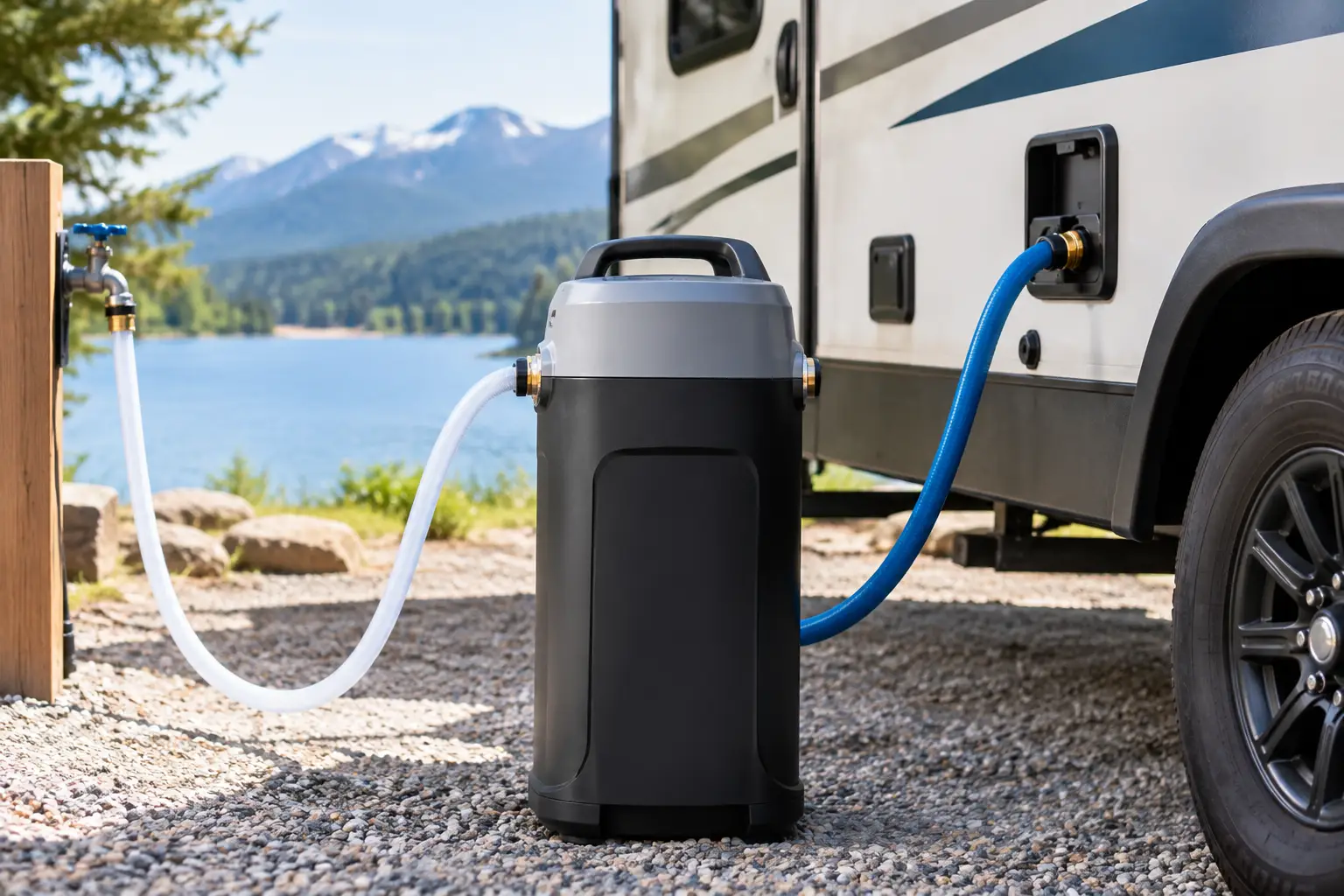
A campground hookup can look clean and still carry enough dissolved minerals to leave white spots on your RV, coat faucets with scale, and shorten the useful life of water-using equipment. A water softener for RV hookups gives you control over that variable. Instead of accepting whatever hard water is coming through the pedestal, you can supply softened water for washing, rinsing, and everyday onboard use.
For RV owners who take pride in their coach, this is not just a cosmetic upgrade. Hard water minerals build up gradually in plumbing, showerheads, fixtures, water heaters, and appliances. They also make washing more difficult. Soap does not rinse as cleanly, towels feel stiffer, and a fresh wash can dry into a field of mineral spots before you finish packing up.
Why RV Hookup Water Creates So Much Work
Hard water contains dissolved calcium and magnesium. Those minerals are harmless in small amounts for many uses, but they become a maintenance problem when water dries on paint, glass, chrome, plastic, and rubber seals. Every dry rinse cycle can leave behind a visible residue.
The issue is often worse for RV travelers because water conditions change from stop to stop. One campground may have relatively soft municipal water; the next may draw from a mineral-heavy source. You may not know the hardness level until the shower door looks cloudy, the faucet aerator slows down, or the coach is covered in spots after a wash.
Inside the RV, mineral deposits can accumulate where water is heated or restricted. Water heaters, ice makers, coffee makers, showerheads, and small plumbing passages are all vulnerable over time. A softener does not replace sensible maintenance, but it reduces the mineral load that creates stubborn buildup in the first place.
How a Water Softener for RV Hookups Works
A portable softener uses resin media that exchanges hardness minerals for sodium ions. Water enters the unit from the campground supply, passes through the resin, and exits with calcium and magnesium removed. The result is water that rinses more cleanly and leaves far less scale behind.
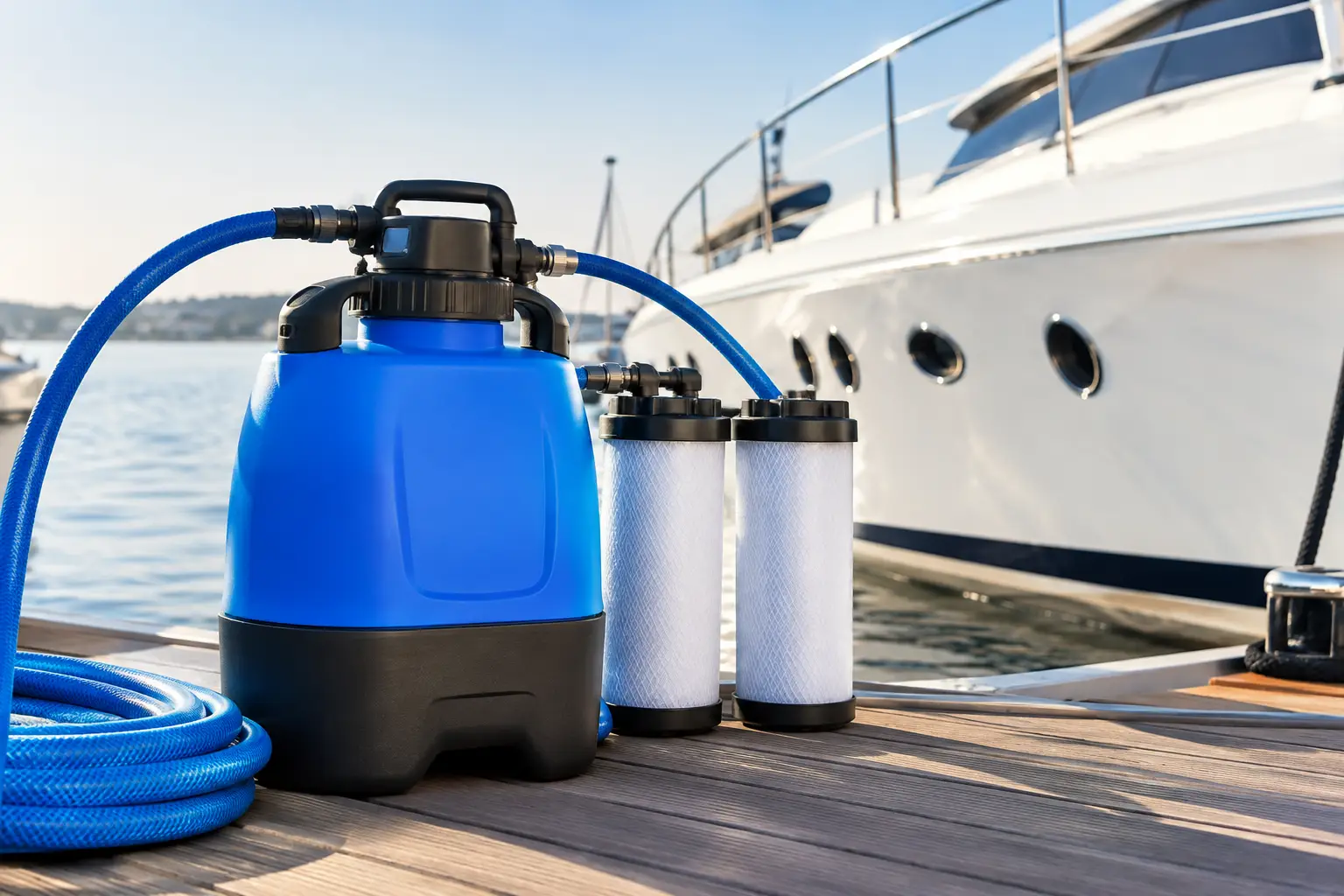
For an RV setup, the softener is installed inline between the campground spigot and your potable-water hose. In practical terms, it becomes part of your arrival routine: connect the unit, connect the hose, turn on the water, and check for leaks. No electrical hookup is required, and a properly sized portable unit should not create a noticeable loss of water pressure.
Eventually, the resin becomes exhausted and needs to be recharged. Manual recharge is a straightforward maintenance task using water softener salt. Capacity depends on the unit size, incoming water hardness, and how much water you use. A weekend camper using water mainly for dishes and showers will have different needs than a full-time RVer washing a large coach regularly.
The Benefits You Notice First
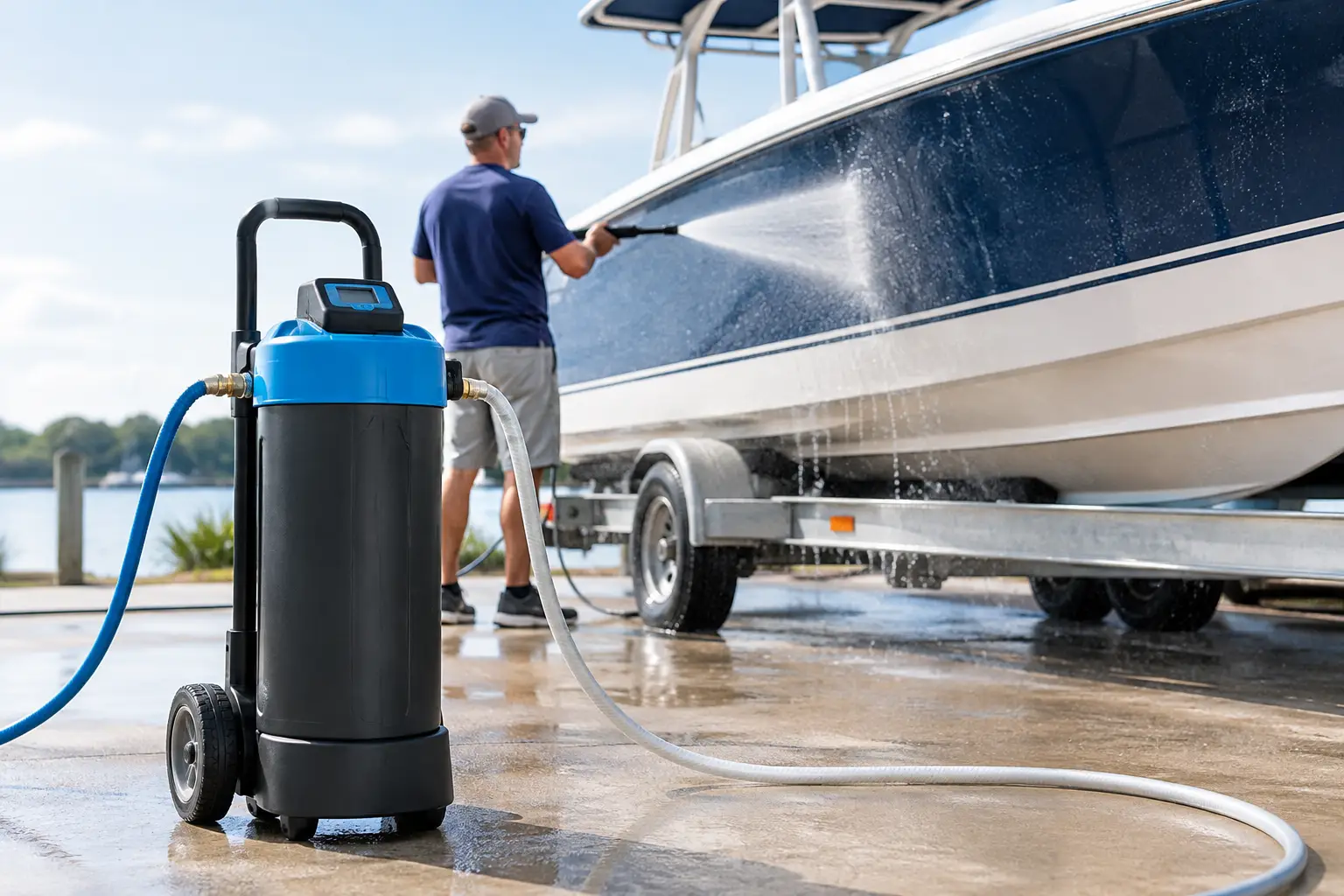
The most immediate benefit is usually the finish. Softened water reduces the chalky spotting that appears after washing the RV, rinsing the awning, or cleaning windows. That means less time chasing water spots with detail spray, fewer repeat rinses, and a cleaner-looking coach between washes.
Soap performance also improves. Body wash, dish soap, and cleaning products lather more effectively in soft water and rinse away with less residue. Shower doors, sinks, and fixtures are easier to keep clean because minerals are not continually drying onto the surface.
The longer-term benefit is protection. Scale can make fixtures look tired, restrict water flow, and add unnecessary wear to equipment that handles hot water. Reducing mineral buildup helps protect the systems that make RV travel comfortable, especially when your coach has premium fixtures and appliances worth preserving.
Choosing the Right Portable Unit
The right size depends on water use, not just RV length. A smaller portable softener may be a practical fit for a couple taking weekend trips, particularly if they use campground facilities and only need modest onboard water. A larger vessel makes more sense for full-time travel, family use, longer stays, frequent laundry, or regular exterior washing.
Consider how you actually use your hookup. If you connect for a few days at a time and mostly shower, cook, and wash dishes, recharge intervals may be comfortably long. If you wash the RV, rinse bikes or gear, fill a large fresh tank, or spend weeks connected at one site, higher capacity saves maintenance time.
Construction matters as much as capacity. RV equipment gets loaded, unloaded, exposed to heat, and stored in compartments. Look for a unit built for travel, with durable fittings, a manageable carry design, and a housing that can handle repeated use. Marine-grade construction is especially valuable because it is designed around the same realities: mobile equipment, changing water supplies, and expensive surfaces that need protection.
A long warranty is also worth weighing. A portable softener is a piece of working equipment, not a disposable filter. The best value is not the lowest initial price. It is a dependable unit that can be recharged, used season after season, and supported when you need help.
Setup That Protects Your RV Water System
Start at the campground spigot with a pressure regulator, then connect the softener according to its operating instructions. A sediment filter can be useful when the source water is visibly dirty or likely to contain debris, but it serves a different purpose than softening. Sediment filtration catches particles. A softener addresses dissolved hardness minerals.
Use drinking-water-safe hoses and fittings, and avoid leaving connections under strain. Before turning on full pressure, inspect the connection points for drips. If temperatures may fall below freezing, disconnect and protect the softener. Water left inside any portable plumbing equipment can freeze and cause damage.
If you fill your fresh tank from a softened hookup, remember that softened water carries a small sodium exchange. For most RV maintenance and general use, that is not a concern. However, travelers on medically restricted sodium diets may prefer to discuss their drinking-water needs with a healthcare professional or use a separate drinking-water source. The practical choice depends on your health needs and how you use your RV water.
When Soft Water Makes the Biggest Difference
A portable softener earns its place quickly when you travel through hard-water regions, stay at parks for extended periods, or wash the RV often. It is especially useful for coaches with large exterior surfaces, glass, dark paint, polished metal, or fixtures that show every spot.
It also helps owners who want to reduce cleaning labor without changing their routine. You still need to wash and maintain your RV, but soft water makes each wash more productive. Less mineral residue means less rubbing, fewer harsh cleaners, and a better chance of finishing with a clean surface instead of a spotted one.
Wet Spot portable soft water systems are built for this kind of real-world use: no electricity, simple transport, manual recharge, and durable construction intended to protect valuable mobile equipment. That straightforward approach matters when you are setting up at a site after a long drive. Equipment should solve a problem, not add another chore.
Common Mistakes to Avoid
Do not confuse a basic inline filter with a true water softener. Many filters improve taste, reduce sediment, or address chlorine, but they do not necessarily remove calcium and magnesium. If scale and water spots are the problem, you need equipment designed specifically for hardness.
Do not wait for visible buildup before recharging the unit. Keep track of your water use and follow the capacity guidance for your softener. Incoming hardness varies, so a unit may need recharge sooner at one campground than another.
Finally, do not treat softened water as an excuse to skip proper RV care. Drying exterior surfaces, cleaning seals, flushing systems as recommended by the manufacturer, and winterizing correctly are still part of responsible ownership. Soft water makes those jobs easier and helps your maintenance efforts last longer.
A good hookup setup lets you arrive, connect, and spend more time enjoying the destination than removing evidence of the water you used there. When hard water is common on your route, portable softening is one of the simplest ways to protect the RV you worked hard to own.