A spotless hull can look neglected after one hard-water washdown. Mineral spots dry on glass, chrome, gelcoat, and eisenglass. Scale begins collecting in fixtures and onboard appliances. For boat owners, the portable softener vs built in system question is not just about water treatment. It is about choosing a practical way to protect an expensive asset wherever it is serviced.
A built-in system can be the right answer for a home or a permanently docked vessel with dependable utility connections. But boats, RVs, vehicles, and aircraft move. They encounter different water sources, changing dock conditions, and limited room for equipment. That is where a portable softening system has a clear advantage.
Portable Softener vs Built-In System: The Real Difference
Both systems soften water by removing the calcium and magnesium that cause hard-water spots and scale. The difference is not the goal. The difference is how the equipment fits into your operation.
A built-in water softener is installed in one location and connected directly to a water supply. It is designed to treat water continuously at that location. This can make sense in a residence, a fixed facility, or a large vessel with a dedicated water-treatment area, reliable hookups, and a crew or owner willing to manage installation and plumbing changes.
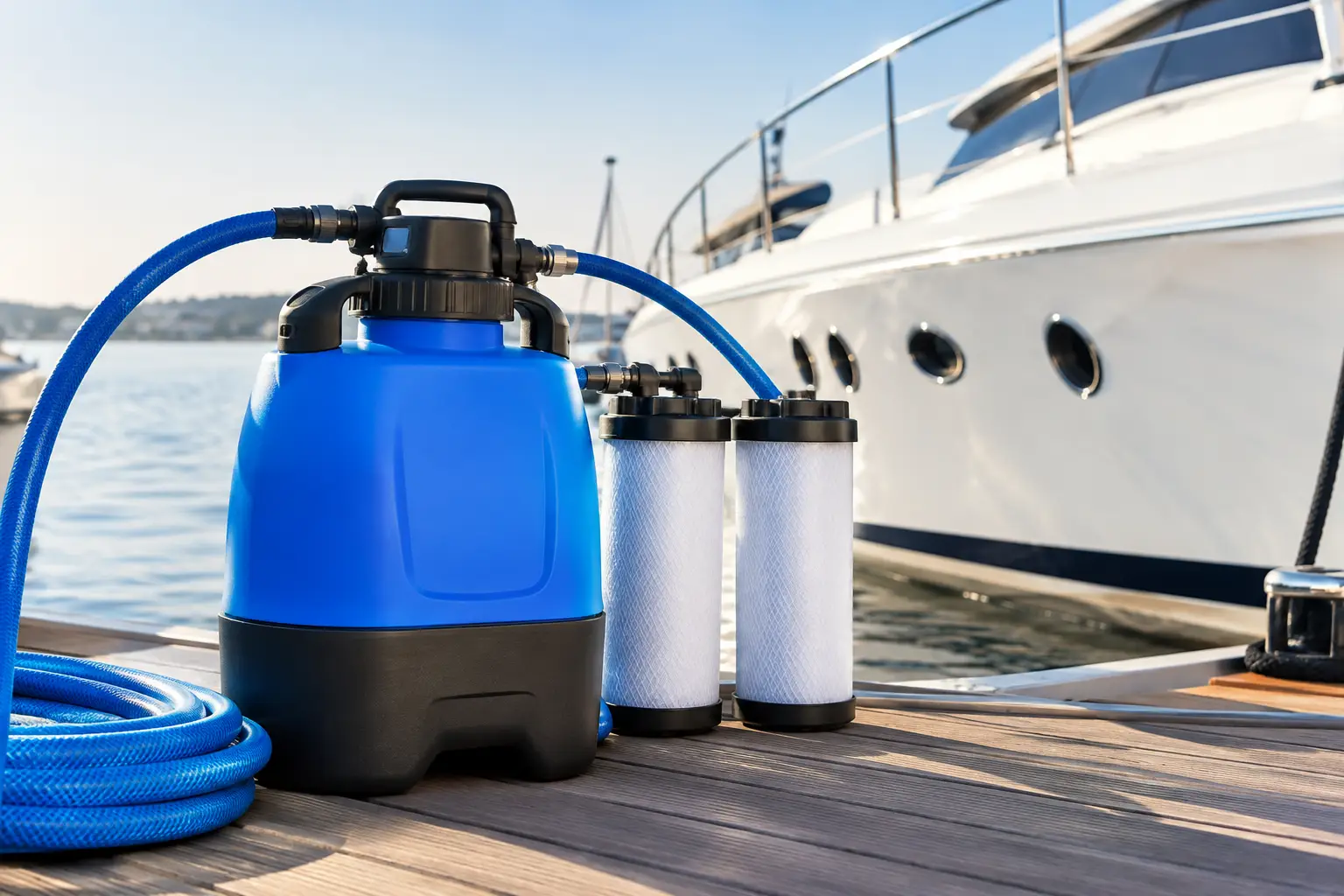
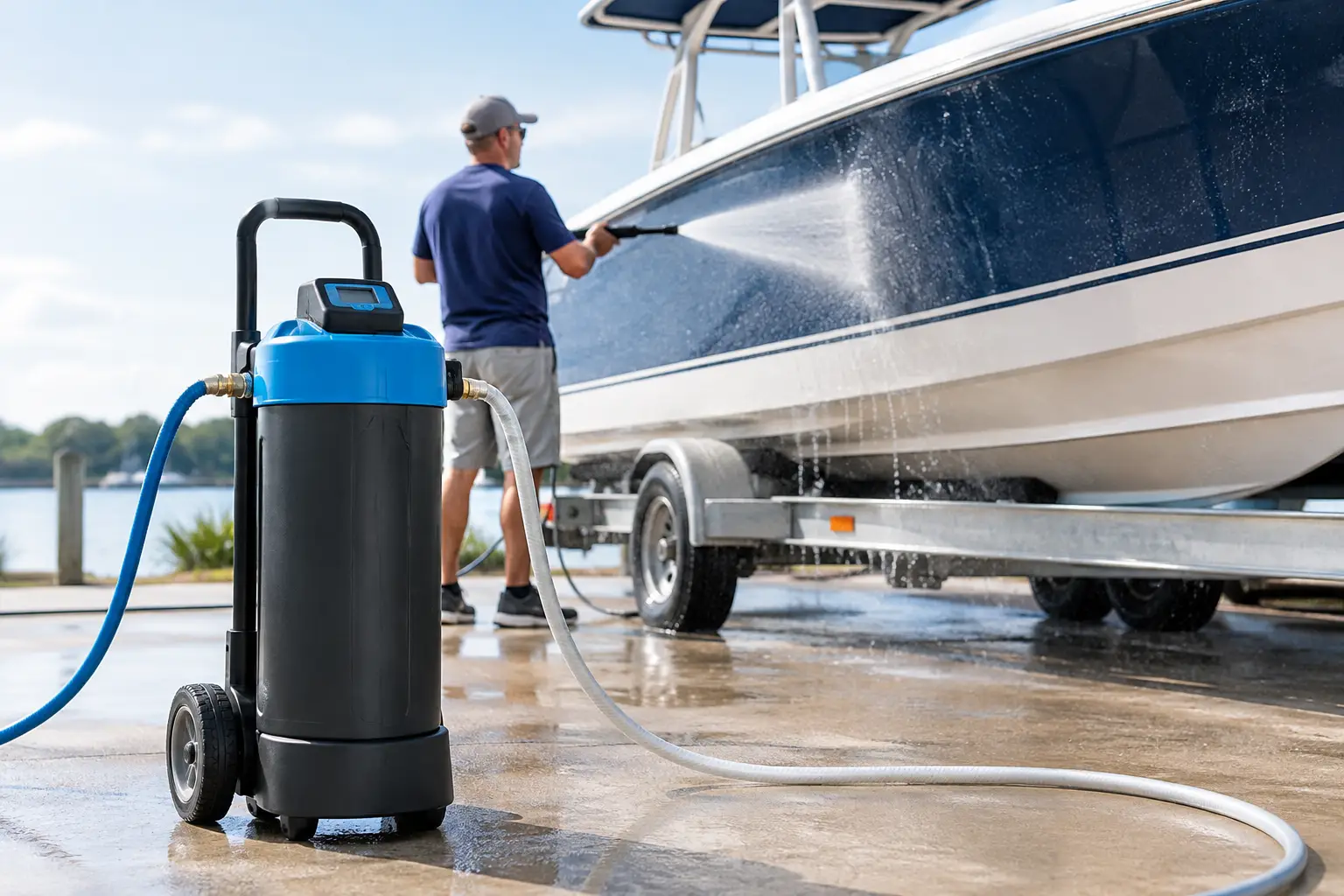
A portable water softener is made to travel to the water source. It connects between the dock spigot and hose, or between the source and the equipment being washed. When the job is done, it disconnects, stores, and goes with the vessel, RV, vehicle, or maintenance crew.
That portability changes the ownership experience. Instead of hoping every marina, campground, airport, or wash area has soft water, you bring the protection with you.
When a Built-In System Makes Sense
A built-in system is not automatically the wrong choice. For a stationary property with a steady municipal or well-water supply, it can provide whole-building soft water without being moved or connected before use. It may be useful when water demand is high and the system has a permanent, protected place to operate.
On a large yacht, a built-in setup may also be considered during a major refit, especially if the vessel already has room for dedicated treatment equipment and its plumbing is being redesigned. In that case, the owner should account for more than the initial equipment purchase. Installation can involve space planning, plumbing work, drainage considerations, electrical requirements on some systems, and future service access.
The limitation is flexibility. A built-in unit stays where it was installed. If the boat receives water from another dock, gets hauled out for service, or is washed at a different location, the system does not automatically follow. The same applies to an RV that changes campgrounds every week or a vehicle that is detailed away from its home base.
A built-in system also becomes part of the equipment you must maintain permanently. That is reasonable when it serves a permanent water source every day. It can be harder to justify when the real need is clean, spot-free wash water at changing locations.
Why Portability Matters for Mobile Assets
Marine owners know that water quality is rarely consistent. One marina may have relatively moderate water, while the next has water hard enough to leave a white film before you finish coiling the hose. The water source may change, but the need to protect gelcoat, painted surfaces, metal, glass, plastic, and onboard plumbing does not.
A portable system gives you control at the point of use. Connect it to the available water supply, run your washdown or fill operation, and disconnect it when finished. There is no permanent installation to plan around and no need to alter the vessel’s plumbing just to get soft water for regular maintenance.
This is especially valuable for owners who travel between marinas, store their boats seasonally, or maintain more than one asset. One portable unit can support washdowns at the dock, cleaning during storage, RV travel, vehicle detailing, and other jobs where hard water creates spots and buildup.
Wet Spot portable water softeners are built for this kind of ownership. They require no electrical hookup, are designed to maintain water pressure, and use a straightforward manual recharge process. The result is soft water where you need it without turning a washdown routine into an installation project.
Installation, Space, and Practical Ownership
Space is always a real consideration aboard a boat. Every permanent component competes with storage, service access, and equipment already onboard. A built-in water softener needs a planned location, secure mounting, water-line connections, and enough clearance for maintenance. Depending on the design, it may also require a drain connection or additional components.
A portable softener avoids most of that. It is not another fixed system occupying valuable onboard space year-round. Use it at the dock, then stow it where it makes sense. For many boat owners, that is the better use of limited room.
Setup also matters. A permanent system may require professional installation, particularly when modifying pressurized plumbing or fitting equipment into a tight machinery area. A portable unit is intended for simple hose connections. That makes it useful for owner-operators who prefer reliable equipment without added onboard complexity.
There is a trade-off. A portable unit must be taken out, connected, and stored after use. For most owners, that small step is far easier than managing a permanent installation. But if your vessel stays in one location, uses substantial water daily, and already has dedicated utility space, a built-in solution may deserve consideration.
Maintenance: Different Work, Not No Work
Neither approach eliminates maintenance. Any true water-softening system needs attention because the resin media that captures hardness minerals must be regenerated. The question is whether the maintenance fits your routine.
A built-in system may use an automatic regeneration cycle, which can be convenient at a fixed location. It also adds components and settings that need monitoring. If the system is installed in a hard-to-reach compartment, even routine service can become inconvenient.
Portable systems typically use manual recharge. When the softening capacity is used, you recharge the unit with salt according to its instructions, rinse it, and return it to service. It is a hands-on process, but it is simple, predictable, and does not depend on shore power or onboard electrical systems.
For mobile owners, manual recharge has a practical benefit: you decide when the unit is serviced and know it is ready before a major washdown. There is no automatic cycle running at an inconvenient time and no need to leave a system permanently connected just to maintain it.
Protecting More Than Appearance
Water spots are usually the first frustration owners notice, but hard water causes more than cosmetic problems. Calcium and magnesium can leave deposits in shower fixtures, faucets, water heaters, hoses, and appliances. Soap and cleaners work less effectively, which means more product, more scrubbing, and more time spent correcting what hard water leaves behind.
On a boat, that extra work adds up quickly. Salt exposure already demands attention. Adding hard-water spotting and mineral film to every rinse makes routine care harder than it needs to be. Soft water improves rinsing, helps reduce spotting, and limits the mineral residue that can dull finishes and collect around fixtures.
For RV owners, it can mean cleaner exterior panels, windows, and plumbing fixtures while traveling. For vehicle and aircraft caretakers, it helps support a cleaner final rinse and reduces the hard-water marks that can spoil detailed surfaces. The value is not only a better appearance on wash day. It is less buildup to remove later.
Choosing the Right System for Your Use
Choose based on where the water is used, how often the location changes, and how much permanent infrastructure you want to manage.
A portable softener is usually the stronger fit when you use different docks or water sources, need soft water for washdowns rather than an entire fixed property, want to avoid plumbing modifications, or need equipment that can serve a boat, RV, vehicle, or other mobile asset. It is also a practical choice when electrical independence and straightforward setup matter.
A built-in system may be worth the investment when water use is high at one permanent location, installation space is available, and continuous whole-system treatment is the priority. It is a location-based solution for a location-based need.
For most boat owners, the answer comes down to control. Hard water should not dictate how your boat looks after a washdown or how much time you spend removing mineral residue. Choose the system that lets you protect the asset where it is actually used, then make soft water part of the routine before spots and scale become another maintenance job.