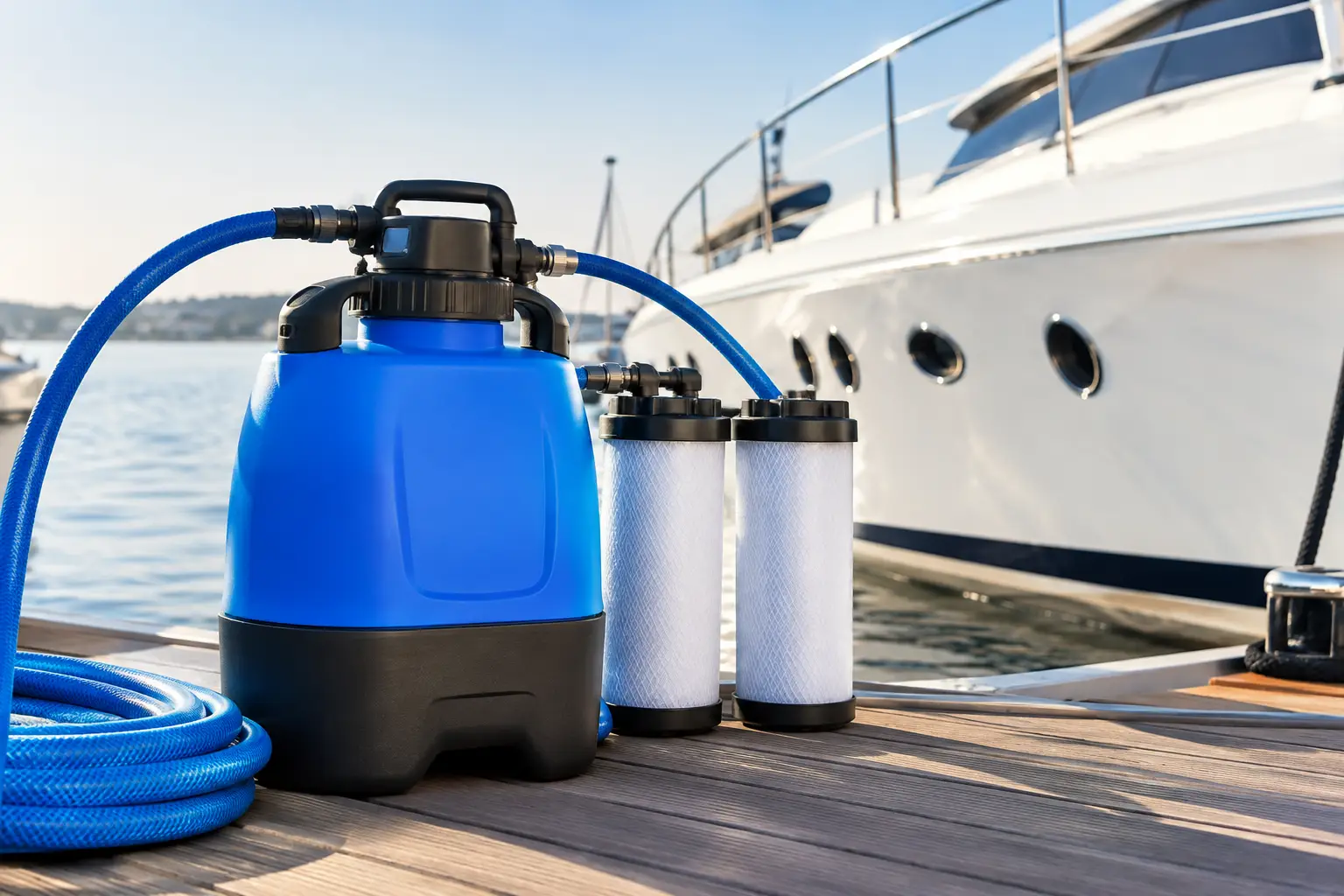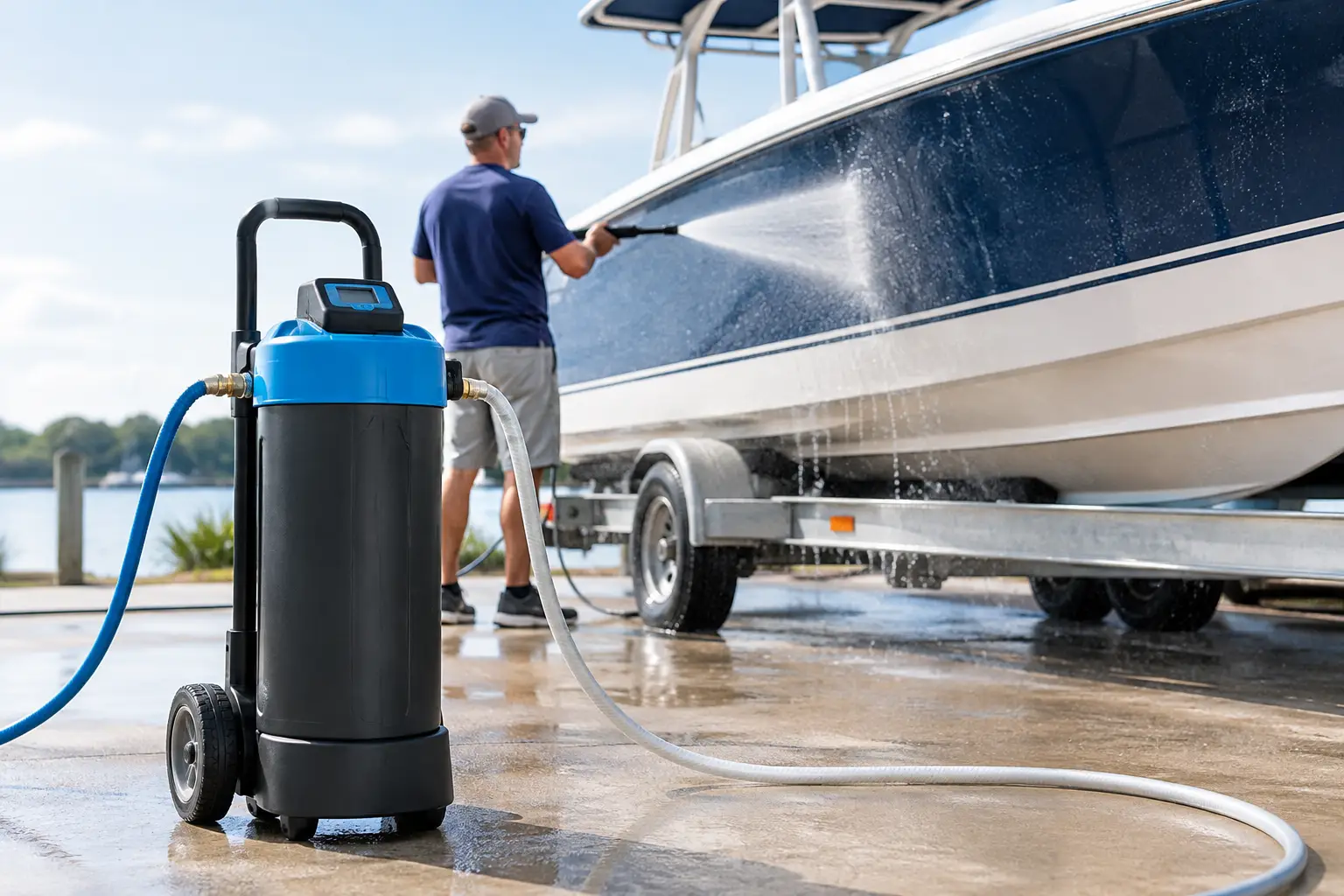
A clean washdown should dry clean. If you are seeing white spots on glass, stainless, gelcoat, paint, or fixtures after using your softener, the question is no longer theoretical: when should you recharge a portable softener? Usually, it is time when the resin has treated the amount of hard water it can handle, not simply because a certain number of days has passed.
For boat owners, RV travelers, vehicle detailers, and aircraft caretakers, recharging at the right time keeps soft water doing the work it is supposed to do. It helps prevent mineral spots and lime scale, improves soap performance, and reduces the repeated wiping and polishing that hard water creates.
When Should You Recharge a Portable Softener?
Recharge a portable softener after it has reached its capacity for the hardness level of the water you are using. Capacity is affected by two things: how hard the incoming water is and how many gallons you have run through the unit.
Hard water contains calcium and magnesium. Your portable softener captures those minerals in its resin bed. Over time, the resin becomes loaded with minerals and can no longer produce properly softened water. A salt-brine recharge flushes those minerals out and restores the resin for continued use.
That means there is no single calendar schedule that fits every owner. A boat taking on water at a marina with very hard water may need recharging much sooner than the same boat using a softer municipal source elsewhere. An RV parked for a week with daily showers, dishes, and washdowns will use more capacity than one used only for occasional exterior rinsing.
The practical rule is simple: recharge based on water use and water hardness, then use the return of spotting as a confirmation that it is time.
The Most Reliable Signs It Is Time
The first sign is usually familiar: mineral spots return after water dries. You may notice them on windshield glass, hull sides, chrome, stainless rails, shower doors, or painted surfaces. If your normal wash routine suddenly leaves white residue behind, the softener may be nearing the end of its capacity.
Soap behavior can also tell you something. Soft water allows soap and shampoo to lather and rinse more effectively. When the water begins to feel less slippery during washing or you need more soap to get the same result, hard minerals may be getting through again. This sign is useful, but it is less precise than monitoring gallons and hardness.
On a boat or RV, watch for scale around faucets, shower heads, and appliances that use water. One instance of buildup does not always mean the softener is exhausted, especially if the surface was exposed to untreated dockside water. But fresh mineral residue after using water from the unit is a clear reason to check your recharge timing.
A hardness test is the best way to remove guesswork. Test the incoming water before the softener and test the water leaving it. If the outlet water no longer tests soft, recharge the unit before the next washdown, fill-up, or extended stay.
Why Water Hardness Changes Your Recharge Schedule
Water hardness can vary dramatically from one marina, campground, home, or service location to another. Two areas only a few miles apart may use different water sources and have very different mineral content. Seasonal water-source changes can also affect hardness.
This matters because harder water uses up softening capacity faster. Think of the resin as a working surface with a limited amount of room for calcium and magnesium. The higher the mineral level in each gallon, the faster that room fills.
A portable softener might last through several light washdowns in a low-hardness area but require attention after fewer uses where the water is extremely hard. The size of your vessel or vehicle matters as well. Larger boats, yachts, and RVs naturally use more water for rinsing, showers, galley or kitchen use, and routine cleaning.
For this reason, establish your own operating pattern rather than relying on someone else’s schedule. Start with the hardness of the water where you commonly use your unit. Track the approximate gallons used between recharges. After a few cycles, you will know what to expect at your regular locations.
Track Use Before You See Water Spots
Waiting for water spots is workable, but it is not the best approach when you are protecting a high-value asset. A better practice is to recharge shortly before the expected capacity is reached. This helps ensure the final rinse on your boat, RV, vehicle, or aircraft is still truly soft water.
You do not need a complicated log. Record the date, source location, hardness result if known, and the type of water use. For example, note whether the unit supported a full boat washdown, a weekend of onboard water use, or several vehicle washes. Over time, these notes create a useful recharge baseline.
If you have a water meter, use it. Gallon tracking is the most direct way to manage a portable softener because it connects your actual use to the unit’s capacity. If you do not have a meter, estimate by activity. A complete rinse of a large yacht will use substantially more water than cleaning cockpit glass or rinsing a single vehicle.
It is also smart to recharge before a trip, before a major detailing day, or before welcoming guests onboard if the unit is already close to its expected limit. A manual recharge is straightforward maintenance. Running out of soft water halfway through a washdown creates more work and can leave mineral spotting on surfaces you just cleaned.
Do Not Recharge Too Early Without a Reason
Recharging early will not harm a properly maintained portable softener, and there are times when it makes good sense. If you are leaving for a long trip, changing locations, or preparing for a major exterior cleaning, starting with fully regenerated resin gives you confidence that soft water will be available when you need it.
Still, recharging after every small use is usually unnecessary. It uses salt, water, and time without providing additional protection if the resin still has plenty of capacity left. The goal is not to recharge on a rigid schedule. The goal is to maintain dependable soft water with sensible, predictable maintenance.
There is a trade-off when conditions are uncertain. If you do not know the water hardness and cannot test it, a conservative recharge schedule is often the better choice for expensive finishes and onboard equipment. The cost and effort of recharging are small compared with removing scale from fixtures, polishing water spots from metal, or correcting mineral etching on glass.
Recharge Before Storage and After Long Idle Periods
If the unit will sit unused for an extended period, follow the storage and maintenance directions for your specific model. In many cases, owners prefer to recharge before storage so the resin is left in a ready condition rather than saturated with the minerals it removed.
Before putting the unit back into regular service, inspect fittings, hoses, and connections. Flush and prepare the system according to its instructions, particularly if it has been stored through freezing conditions. A portable softener is durable equipment, but good storage practices protect its performance and help avoid preventable service issues.
For seasonal boat owners, this is a useful part of layup and launch preparation. For RV owners, it can be part of winterization or pre-trip checks. A few minutes of maintenance is easier than discovering the unit needs attention after you have started washing or filling your freshwater system.
Use the Correct Recharge Process
A portable softener only performs as well as its recharge. Use the correct amount and type of salt specified for your unit, follow the required soaking or flow process, and thoroughly rinse the system before returning it to service. Skipping steps may leave the resin only partially regenerated or allow excess brine into the outlet water.
Avoid treating recharge as a quick guess. The resin is the working heart of the system, and proper regeneration is what restores its ability to remove hardness minerals. Wet Spot portable softeners are designed for straightforward manual recharge, with no electrical hookup and no complicated installation, but the process still deserves attention.
If outlet water remains hard immediately after a proper recharge, check the setup before assuming the unit has failed. Confirm that water is flowing through the correct inlet and outlet, inspect hoses for bypass connections, and make sure the unit received a complete brine recharge and rinse. Persistent issues should be addressed with the manufacturer’s support team rather than ignored.
A Simple Operating Habit That Protects Your Assets
The best recharge schedule is one built around your real water use. Test or learn the hardness at your regular locations, keep a rough record of gallons or activities, and recharge before capacity is likely to run out. Then use clean, spot-free drying and good soap performance as confirmation that the unit is still delivering soft water.
Treat your portable softener like the practical protection equipment it is. A timely recharge keeps washdowns easier, helps preserve gelcoat, paint, glass, metal, plumbing, and appliances, and lets you spend less time chasing the mineral damage hard water leaves behind.