A yacht can look freshly washed at the dock and still show white spots by the time the water dries. Those marks are not just a detailing nuisance. They are a visible sign that calcium and magnesium are being left behind on gelcoat, glass, stainless, acrylic, and every other surface touched by hard water. This guide to yacht water hardness explains what causes those deposits, where they do the most damage, and how to control them without complicating your washdown routine.
What Yacht Water Hardness Means
Water hardness is the amount of dissolved calcium and magnesium in a water supply. The higher the mineral content, the more likely the water is to leave spots, form lime scale, reduce soap performance, and build deposits inside plumbing and equipment.
Hardness is commonly measured in grains per gallon or parts per million. In practical yacht ownership terms, the number matters less than the results: cloudy glass after rinsing, rough-feeling fixtures, stubborn white residue around spray nozzles, and scale accumulating in appliances or plumbing components.
Dock water can vary significantly from one marina to the next. A yacht that has no spotting issues at its home berth may develop them quickly at a destination marina. Municipal water, well water, and water from shore-side systems can all carry different mineral levels. That inconsistency is one reason portable soft water is useful onboard: it gives owners more control over the water used to protect expensive finishes.
Hard Water Is Not the Same as Dirty Water
Hard water may look clear and clean. It can be perfectly suitable for many everyday uses, yet still create problems when it dries on a yacht or moves through onboard systems. Minerals remain after the water evaporates. On dark gelcoat, polished metal, and glass, the evidence is immediate.
Total dissolved solids and water hardness are also not identical. A water test may show dissolved material from several sources, while hardness specifically concerns the calcium and magnesium that cause scale and spotting. If your main concern is white deposits and lime scale, hardness is the number to focus on.
Where Hard Water Causes Trouble on a Yacht
Hard water affects more than a yacht’s appearance. It creates a maintenance cycle: wash the boat, chase spots, use more chemicals, and spend more time polishing surfaces that should have stayed clean after rinsing.
On exterior surfaces, mineral deposits can dry into water spots on gelcoat, painted finishes, windows, stainless rails, aluminum components, acrylic, and isinglass. If they are left in place, those deposits can become harder to remove and may require more aggressive cleaning. Repeated scrubbing is not the kind of maintenance any owner wants for sensitive clear materials or premium finishes.
Inside the yacht, hard water can leave scale on faucets, shower fixtures, sink surfaces, and toilet components. It also affects water heaters, ice makers, dishwashers, washing machines, and other appliances that heat or repeatedly use water. Heat speeds up scale formation. A small mineral issue at the dock can become a larger maintenance issue inside a system that runs hot.
Scale does not usually announce itself all at once. It builds gradually in narrow passages, spray heads, valves, and heating elements. Flow may decline, equipment may work harder, and cleaning becomes more frequent. Preventing deposits before they enter those systems is easier than breaking down hardened scale later.
How to Check Your Yacht’s Water Hardness
The simplest starting point is a hardness test strip or a basic water test kit. Test the water at the dock before filling tanks, washing down, or connecting to shore water. If you cruise regularly, test at different marinas rather than assuming the water will be the same everywhere.
As a general reference, water below about 3.5 grains per gallon is often considered soft. Water from 3.5 to 7 grains is moderately hard, while readings above 7 grains can create increasingly noticeable spotting and scale. Once readings reach the high-hardness range, protecting exterior finishes and onboard equipment should become a routine part of water management.
Testing is also useful after you notice changes in cleaning results. If soap no longer rinses cleanly, water spots appear faster than usual, or fixtures begin collecting white residue, test the incoming supply. The issue may be the dock water rather than your wash products or detailing process.
A Practical Guide to Yacht Water Hardness Control
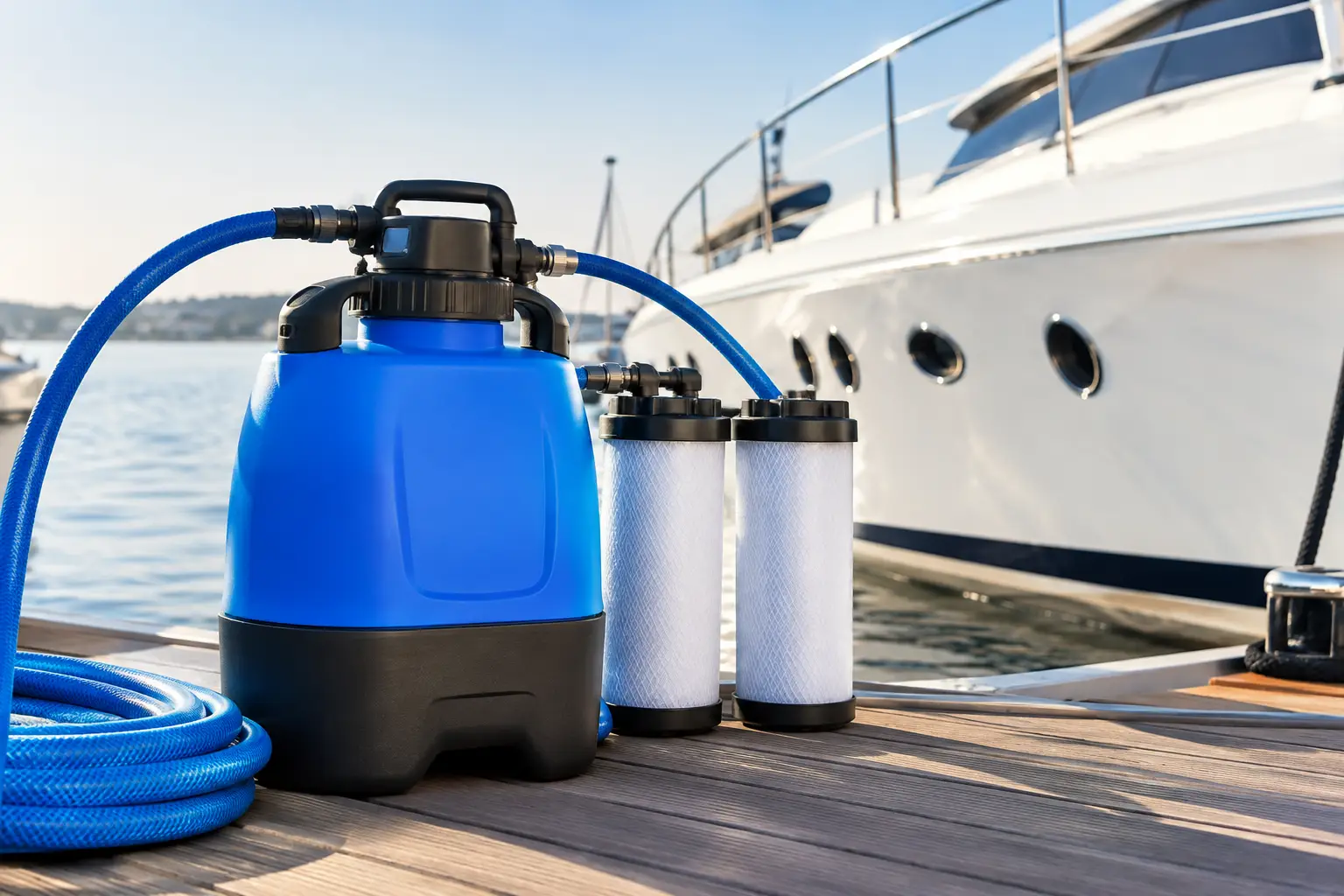
For yacht owners, the most direct solution is to soften water before it reaches the surfaces and systems that need protection. A portable water softener uses ion exchange media to remove the calcium and magnesium responsible for hard-water deposits. The result is soft water that rinses more cleanly and leaves far less mineral residue behind.
This is different from a filter designed mainly to address sediment, taste, or odor. Those functions can be useful, but they do not necessarily remove the minerals that create scale. If water spots and lime buildup are the problem, water softening addresses the cause.
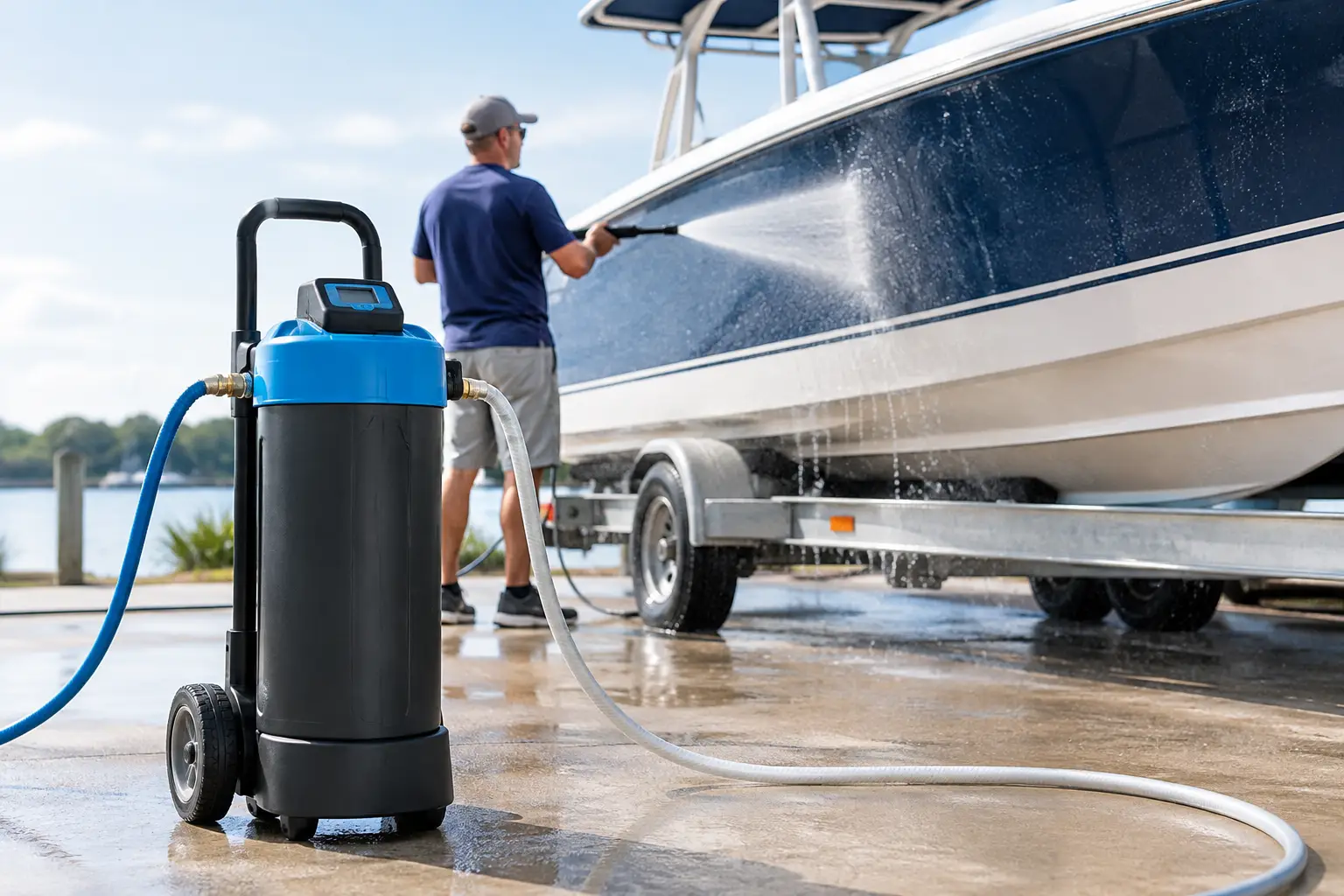
A portable unit fits the way most owners actually use dock water. Connect it between the water source and the hose, then use softened water for washdowns, rinsing, tank fills, and other appropriate onboard needs. There is no electrical hookup required, no permanent installation, and no need to sacrifice water pressure for a more effective final rinse.
Wet Spot portable soft water systems are built for this job, with vessel-specific options for boats up to 70 feet, yachts from 70 to 100 feet, and vessels 100 feet and above. Selecting the right capacity matters because larger boats, larger crews, and more frequent washdowns use more water. A system that is sized for your real water demand provides more useful service between recharges.
Use Soft Water Where It Delivers the Most Value
If you are managing water use carefully, prioritize softened water for final rinses and exposed surfaces. A soft-water rinse after washing helps prevent mineral spotting as the yacht dries. It reduces the need to hand-dry every panel, rail, window, and fitting immediately after a washdown.
Soft water is also valuable for filling onboard systems that are vulnerable to scale. The exact approach depends on your vessel, water storage practices, and manufacturer requirements for individual appliances. The goal is straightforward: reduce the mineral load entering equipment where deposits can restrict flow, affect efficiency, or lead to unnecessary service.
For regular washdowns, soft water improves soap performance as well. Cleaner water allows soaps to lather and rinse more effectively, so less product may be needed. That does not mean every cleaning product performs the same way, but owners commonly find that wash water behaves better when it is not loaded with hardness minerals.
Recharge Is Part of the Job
Portable softeners require periodic manual recharge. This is a normal part of owning a system that actively removes hardness minerals. During use, the ion exchange media collects calcium and magnesium. Recharging restores its ability to soften water for the next service cycle.
Recharge frequency depends on two variables: how hard the source water is and how much water you use. A yacht receiving moderately hard water for occasional rinses may go longer between recharges than a larger vessel using very hard dock water for frequent washdowns and tank fills. There is no single calendar schedule that fits every marina.
The practical approach is to monitor performance, keep recharge supplies available, and recharge according to the system’s operating guidance. If spotting begins to return after a period of good results, do not assume the problem is your soap or technique. The softener may simply be ready for recharge.
Habits That Keep Mineral Damage Under Control
Water softening works best as part of a disciplined maintenance routine. Test unfamiliar dock water, use softened water before mineral deposits have a chance to form, and avoid letting hard-water rinse water dry on sensitive surfaces. When hard water has already dried, remove the residue promptly with products approved for the material involved rather than escalating to harsh abrasives.
Pay particular attention to glass, isinglass, polished metal, dark hull colors, shower doors, faucet aerators, and appliances that heat water. These areas reveal hard-water problems early. They are also the places where neglected mineral buildup can turn a simple washdown issue into added labor or repair expense.
A clean yacht should not require a second round of detailing just because the rinse water dried. Control the minerals at the hose, keep the softener maintained, and make each washdown do more to protect the investment you already have on the water.