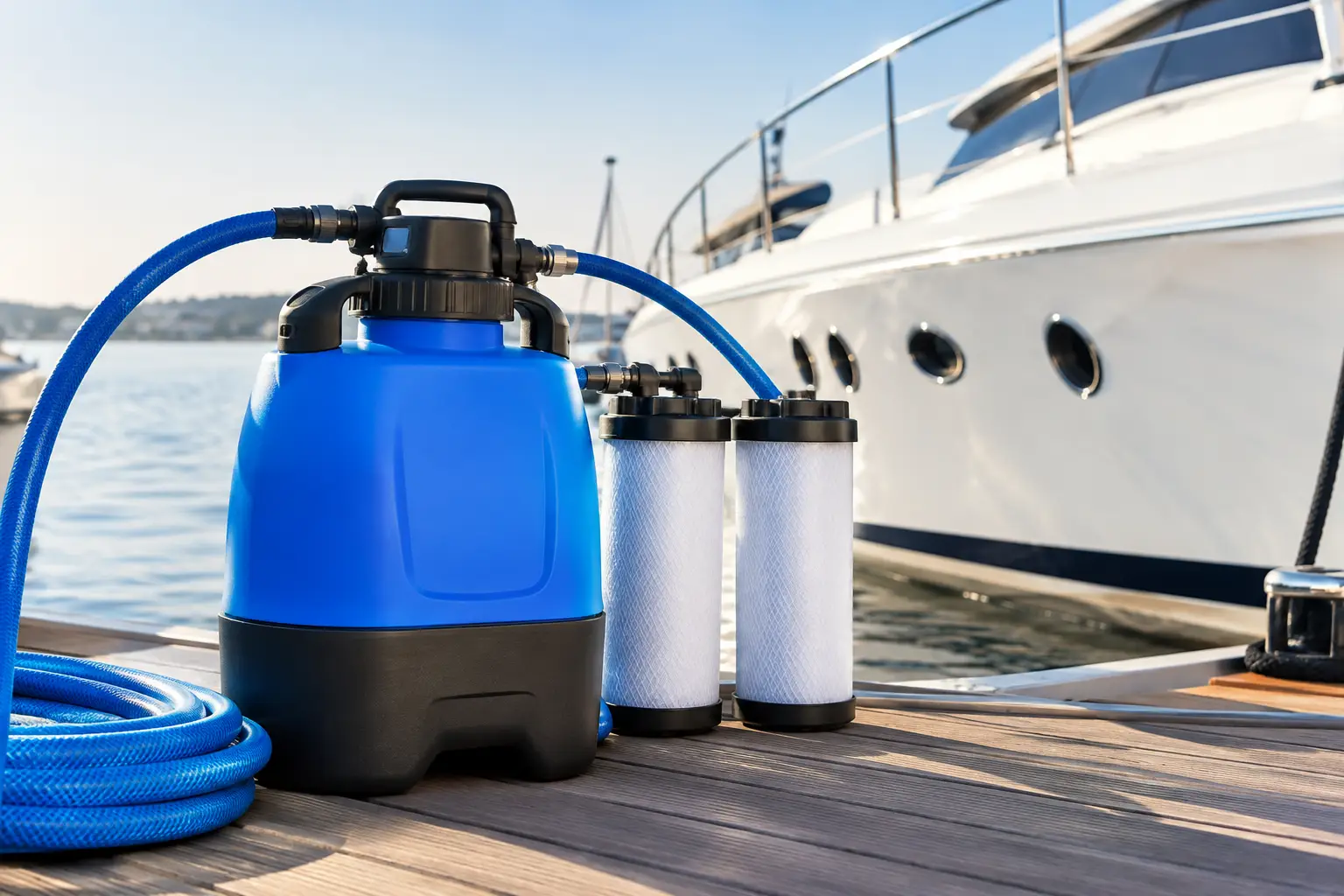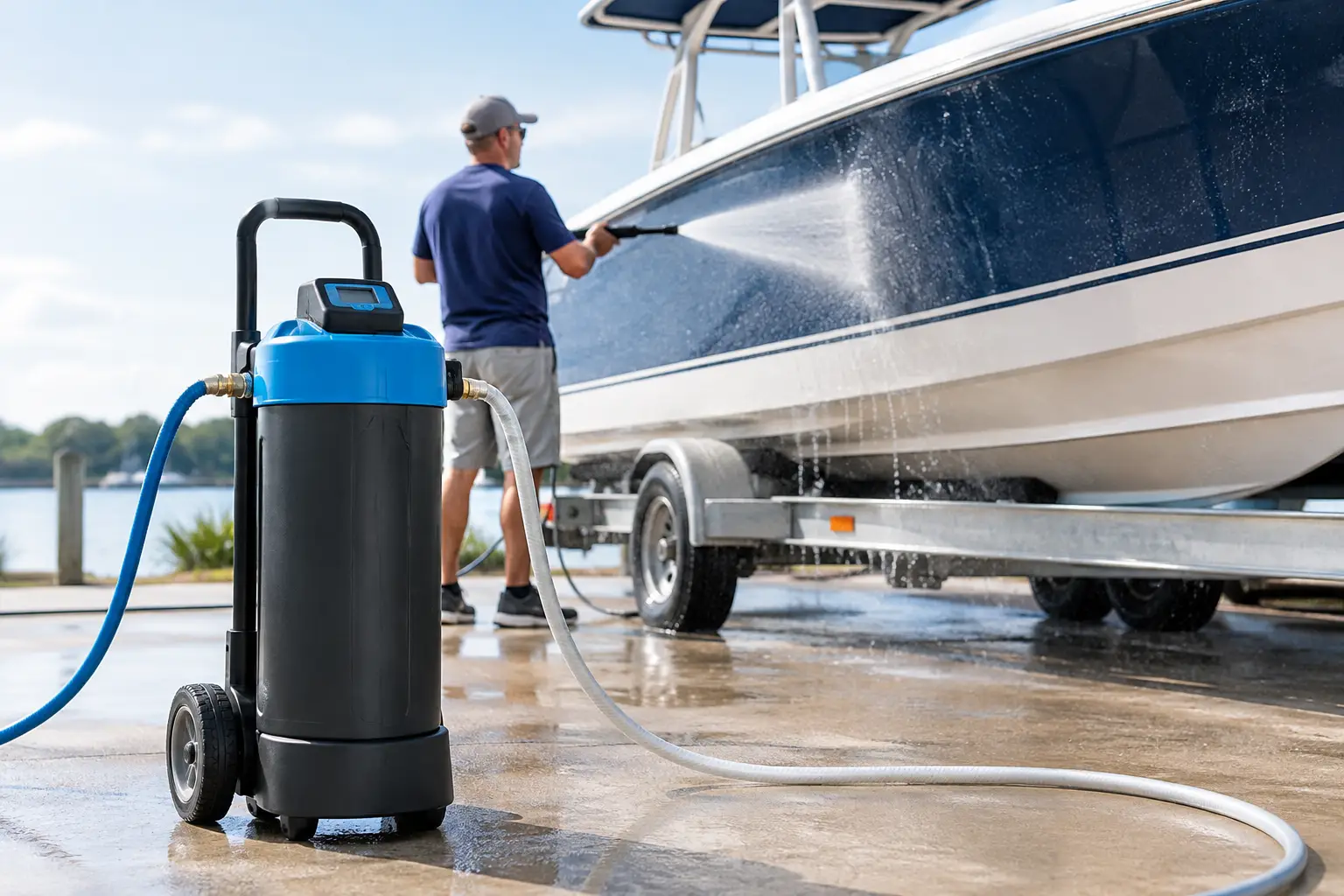
A clean boat should not look tired again the moment its wash water dries. Yet at many docks, hard water leaves white spots on glass, dull film on gelcoat, and mineral residue around metal fittings after every washdown. A marine grade water softener removes the calcium and magnesium behind those problems, giving boat owners a practical way to protect the surfaces and systems they have invested in.
For a runabout, cruiser, or yacht, soft water is not just about a better-looking finish. It reduces cleanup time, helps soap work properly, and limits scale that can build up in onboard plumbing and appliances. The right portable unit delivers those benefits without requiring electrical power, permanent installation, or a complicated water-treatment setup.
What Makes a Water Softener Marine Grade?
Marine equipment lives a harder life than equipment kept in a garage. It is carried, stored in tight spaces, exposed to spray and sun, and used around expensive finishes that cannot be casually replaced. A marine grade water softener should be built for that environment, with durable components, secure fittings, and a portable design that makes sense at the dock or in a marina slip.
The job itself is straightforward. Hard water contains dissolved minerals, primarily calcium and magnesium. As the water evaporates from gelcoat, windows, stainless steel, plastic, and canvas enclosures, those minerals remain behind. The result is spotting, chalky residue, and scale. A water softener uses resin media to exchange those hardness minerals for sodium ions, so water dries with far less residue.
That difference becomes obvious during regular washdowns. Soft water rinses cleaner, produces better soap performance, and leaves fewer spots to chase with a towel or detail spray. On larger vessels, where a complete wash can involve a lot of surface area, less rework can save meaningful time.
Why Hard Water Is a Boat Maintenance Problem
Hard-water spotting is often dismissed as cosmetic, but repeated mineral exposure creates more than a bad first impression. Deposits can collect in seams, around fittings, and on glass or clear vinyl. If they are allowed to sit, they may require stronger cleaners and more aggressive polishing to remove. That adds labor and can create unnecessary wear on delicate surfaces.
Metal hardware is another concern. Stainless steel is durable, but it still benefits from regular fresh-water rinsing and careful maintenance. Mineral residue around rails, cleats, fixtures, and fasteners makes a clean boat look neglected and can complicate routine detailing. Soft water helps leave those surfaces cleaner after rinsing, rather than coating them in a fresh layer of minerals.
Below deck, hard water can form scale inside fixtures, shower heads, water heaters, ice makers, and other onboard equipment. The severity depends on the local water supply and how often the vessel uses dockside water. A boat that spends time in several marinas may encounter very different hardness levels throughout the season. That is why a portable solution has a practical advantage: it can travel with the boat.
Where a Marine Grade Water Softener Helps Most
A portable softener is most valuable wherever hard water meets a surface you care about. It can be used for final-rinse washdowns, cleaning glass and clear enclosures, rinsing decks and cockpit areas, and supporting fresh-water use onboard when conditions and system capacity make sense.
For many owners, the most immediate benefit is the final rinse. Wash the boat as usual, then rinse with softened water. Instead of working section by section to prevent spots, you have more time before drying marks become a problem. You may still choose to towel dry high-visibility glass, polished metal, or dark hull colors, but the cleanup is easier and the finish looks better.
Soft water also improves the behavior of soaps and cleaning products. Hard water can interfere with lather and leave a film after rinsing. With softened water, cleaners rinse more completely, so less product may be needed for the same job. That does not mean every stain disappears without effort. Salt, exhaust soot, algae, and embedded grime still require the right cleaning process. It means hard-water minerals are no longer adding another layer of work.
Choosing the Right Capacity for Your Boat
Capacity matters because a softener has a finite amount of resin available to remove hardness minerals before it needs to be recharged. A unit that is too small for the boat or the wash routine will require frequent recharging. One that is appropriately sized provides more usable soft water between service intervals.
Start with vessel length, but do not stop there. Consider the amount of exterior surface you wash, how often you wash it, the hardness of the marina water, and whether the unit will also support onboard freshwater needs. A 35-foot center console used for periodic washdowns has a different demand than an 85-foot yacht with extensive glass, multiple decks, and regular crew maintenance.
Wet Spot offers portable water softening systems sized for boats up to 70 feet, boats from 70 to 100 feet, and vessels 100 feet and above. Selecting by vessel range gives owners a practical starting point, while actual water use and local hardness determine how often the system will need attention.
Portable Setup Without Added Complexity
A marine grade water softener should simplify maintenance, not become another project before departure. Portable systems connect to a dockside water source and supply softened water through a hose. There is no electrical hookup to manage and no permanent plumbing installation required. That is useful for seasonal boaters, marina users, and owners who want equipment they can take from vessel to vessel if needed.
Placement still matters. Set the unit on a stable surface where hoses will not create a trip hazard, avoid dragging fittings across decks, and protect it from avoidable impacts. Use clean hoses and verify connections before turning on the water. These basic habits help preserve water pressure and keep washdowns moving without interruption.
Portability also makes storage more practical. When the boat is hauled out, moved, or laid up for the season, the softener can be stored properly rather than left permanently exposed on a dock. For owners who split time between a boat, RV, and other mobile equipment, a portable system can serve more than one high-value asset.
Recharge Is Part of Reliable Performance
Every ion-exchange water softener eventually needs a recharge. This is not a defect or an unexpected chore. It is the regular maintenance that restores the resin’s ability to remove hardness minerals. The recharge process uses salt to regenerate the resin so the unit can continue producing soft water.
The right interval depends on water hardness and volume used. Very hard water exhausts resin faster than moderately hard water. A long washday, frequent rinsing, or supporting a larger vessel also increases demand. Rather than waiting for spotting to return, establish a recharge routine based on your water use and adjust it as you learn the conditions at your marina.
Manual recharge is a sensible trade-off for portable marine equipment. It avoids dependence on power, electronics, and fixed installations. In exchange, the owner or crew needs to follow a straightforward service process at appropriate intervals. For most boaters, that small task is far easier than repeatedly removing mineral spots or dealing with scale after it has built up.
Protect the Boat Between Washdowns
Softened water works best as part of a consistent maintenance routine. Rinse after saltwater use when possible, especially around hardware, glass, and areas where spray collects. Use cleaning products appropriate for marine surfaces, and avoid harsh tools that can damage clear vinyl, coatings, or polished metal. When water spots do appear, address them early rather than allowing deposits to harden.
It also helps to separate two issues that can look similar. Salt residue comes from seawater and should be rinsed away promptly with fresh water. Hard-water spotting comes from dissolved minerals in the fresh water used for rinsing. A softener addresses the latter, while regular washdowns remain essential for the former. Together, they support a cleaner, better-protected vessel.
A boat is easier to enjoy when routine care does not consume the weekend. Using softened water at the dock is a simple, proven step that protects the details owners notice most – clear glass, clean gelcoat, bright hardware, and plumbing that stays ready for the next trip.