A boat can look perfectly clean while it is still wet, then dry into a map of white rings across the gelcoat, glass, rails, and canvas. Knowing how to wash boats without spots starts with understanding that those marks are not usually a soap problem. They are minerals left behind when hard water evaporates.
For boat owners, water spots are more than an appearance issue. Calcium and magnesium can build up on metal fittings, dull clear surfaces, stain gelcoat, and create extra work after every washdown. The right water, timing, and rinse method make a noticeable difference from the first wash.
Why Boats Get Water Spots After Washing
Municipal water and many marina water supplies contain dissolved minerals. As rinse water dries, the water disappears but the minerals stay on the boat. Those deposits show up as white spots, chalky haze, or stubborn rings, especially on dark hull colors, windshield glass, polished stainless, black trim, and clear vinyl.
Heat makes the problem worse. A hull washed in direct afternoon sun can dry section by section before there is time to rinse it completely. Wind speeds up evaporation as well. Even a careful wash can leave spots if the final rinse is hard water and it is allowed to dry on the surface.
Soap can help loosen salt, grime, and dock dirt, but it cannot remove the minerals that are already dissolved in your rinse water. That is why changing the final rinse water is more effective than simply using more soap or spending extra time towel drying.
Start With Soft Water, Not Hard Water
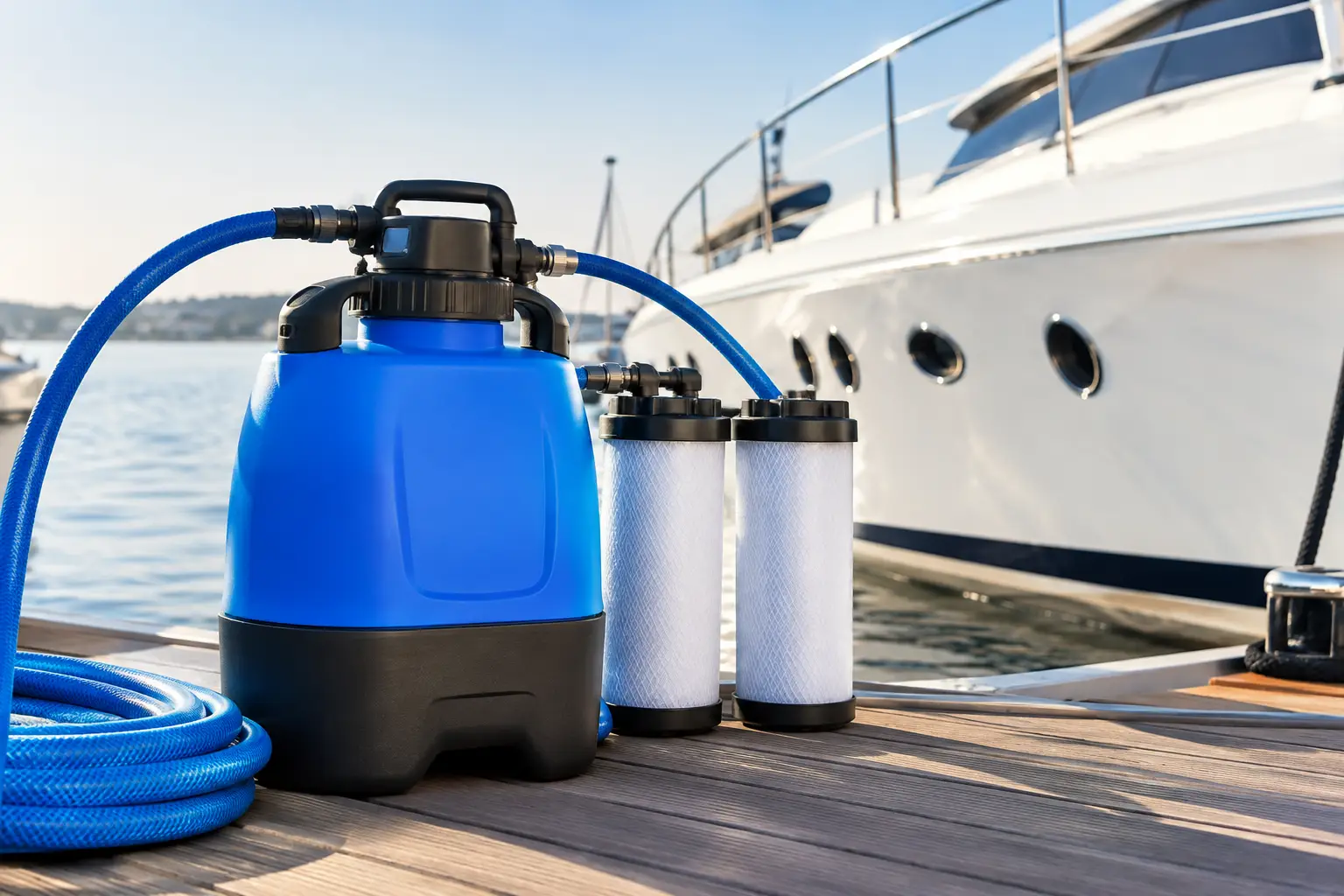
The most reliable way to prevent spotting is to wash and rinse with softened water. A portable water softening system removes the calcium and magnesium responsible for hard-water spotting and scale. Water still cleans normally, but it dries without leaving the mineral residue behind.
For boats that receive frequent washdowns, this changes the whole maintenance routine. Soap rinses more cleanly, surfaces stay clearer, and there is less need to chase drying water with towels or detail sprays. It also helps protect the places owners often overlook, including onboard plumbing, shower fixtures, washdown hoses, and appliances.
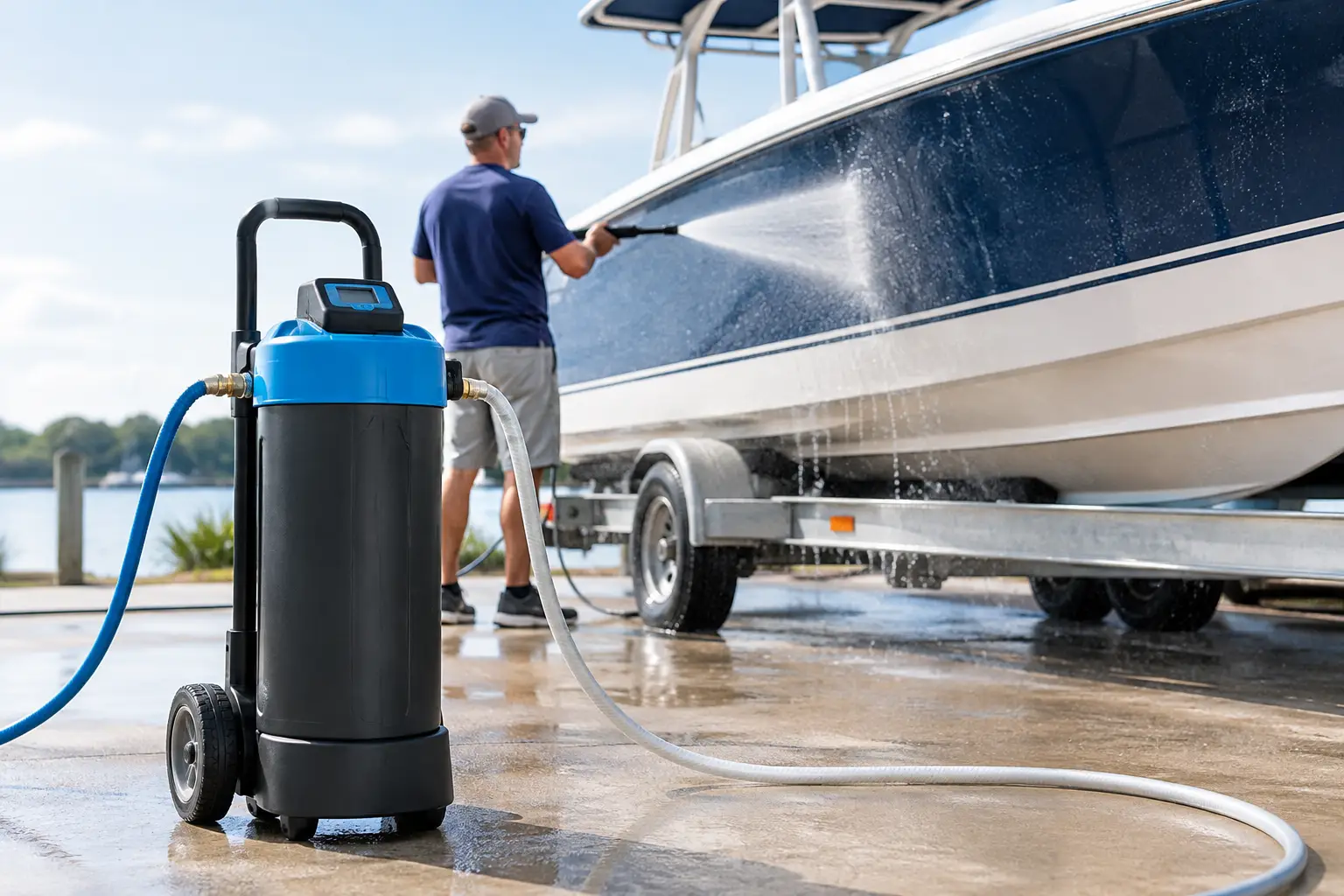
A portable unit is especially practical at marinas because it does not require an electrical hookup or permanent installation. Connect it between the water source and hose, then wash as usual. Choose a system sized for the vessel and expected water use. A small center console has different needs than a larger yacht with multiple wash areas and onboard water demands.
Wet Spot portable soft water systems are built for this kind of real-world use: straightforward setup, no loss of water pressure, and marine-grade construction designed to travel where the boat does.
How to Wash Boats Without Spots: A Better Washdown Method
A spot-free wash is not complicated, but the order matters. Work from top to bottom so dirty water does not run onto cleaned sections. Keep the boat wet while you work, and use softened water for both washing and the final rinse whenever possible.
Wash in the right conditions
Early morning, late afternoon, or an overcast day is easier on both you and the boat. Avoid washing when the gelcoat is hot to the touch. Direct sun causes water and soap to dry quickly, which can leave residue even when the rinse water is soft.
If midday washing is the only option, work in small, manageable sections. Clean one area, rinse it thoroughly, and move on. Do not soap an entire side of a large boat before beginning the rinse.
Rinse away salt and loose grit first
Begin with a generous, low-pressure rinse. This removes salt crystals, dust, bird droppings, and loose sand that can scratch surfaces when wiped. Pay close attention to the hard-to-reach areas where salt collects: under rails, around cleats, behind trim, in non-skid texture, and around windshield frames.
A strong pressure stream has its place for stubborn dirt, but high pressure can force water into seals, fittings, electronics, and canvas seams. For routine washdowns, steady hose pressure and thorough coverage are the safer choice.
Use a marine-safe soap and clean tools
Mix soap according to its directions. Using extra soap does not produce a better wash, and excessive product can leave its own film behind. Use a clean, soft wash mitt or brush suited to the surface. Keep separate tools for hull sides, decks, non-skid, and especially dirty areas such as the waterline.
Clean from the highest surfaces down. Start with the hardtop, rails, windshield, and upper decks, then move to cockpit areas and hull sides. This prevents runoff from carrying grime down over sections you have already finished.
Rinse each section completely
This is where most spot-free results are won or lost. Rinse until no soap remains in seams, around hardware, beneath rub rails, or in textured surfaces. Leftover soap traps dirt and can create streaks as it dries.
Use a smooth, controlled flow of softened water for the final rinse. Let the water sheet over glass, gelcoat, and metal rather than blasting every surface at close range. Sheeting helps carry residue away and leaves fewer individual droplets behind.
Do You Still Need to Dry the Boat?
Soft water greatly reduces the need to hand dry, but whether you should dry depends on the boat, weather, and your finish standards. On a white fiberglass boat washed in mild conditions, a proper soft-water rinse can often air dry cleanly. On a dark-colored hull, highly polished metal, or large glass enclosure, a quick final pass with clean microfiber towels may still be worthwhile.
The goal is not to turn every washdown into a detailing project. It is to use dry towels only where they add value. Wipe glass, glossy black surfaces, chrome, and stainless first. Replace towels as soon as they become wet or dirty. A dirty towel can leave streaks and drag grit across the finish.
Clear vinyl and eisenglass deserve special care. Never use abrasive towels, household glass cleaners, or harsh brushes. Rinse them thoroughly, use products intended for clear vinyl when needed, and dry with a clean, soft cloth using light pressure. Mineral spots can make clear panels look aged long before their time.
Common Reasons Spotting Keeps Coming Back
If spots still appear after improving your wash process, look closely at the final rinse. Many owners wash with decent water but use untreated dock water for the last step. That final hard-water rinse can undo the rest of the work.
Another common issue is an exhausted softener. Portable soft water units require periodic manual recharge to keep removing hardness minerals. Recharge frequency depends on water hardness and the amount of water used. If the system is overdue for service, it will eventually allow minerals through again.
Also check your hose and equipment. A hose that has sat on a hot dock may discharge warm water first, speeding evaporation. Spray nozzles that create a fine mist can leave more droplets across broad surfaces than a controlled rinse pattern. And if a boat is washed near landscaping, construction dust, or a busy travel lift, airborne debris can settle on wet surfaces before they dry.
Protect More Than the Hull
Spot-free washing protects the visible finish, but the long-term benefit extends throughout the boat. Hard-water minerals can collect on shower doors, faucets, sinks, water heaters, ice makers, and other onboard equipment. Scale buildup reduces the clean appearance of fixtures and can make maintenance more frequent.
Soft water supports a cleaner boat from the exterior washdown hose to the onboard systems that use fresh water. That matters when the vessel is an investment, a working asset, or simply something you want ready to enjoy instead of constantly detail.
A clean rinse should not create tomorrow’s cleanup job. Use softened water, wash out of direct heat when you can, rinse thoroughly, and give the most visible surfaces a final check before walking away. The boat will dry cleaner, and you will spend less time removing what the water left behind.