A showerhead that sprays sideways, a water heater that takes longer to recover, and white crust around faucets are not minor boat-maintenance annoyances. They are signs that mineral-rich dock water is building scale where you cannot easily see it. Knowing how to stop scale in marine plumbing starts with controlling the water that enters the boat, not simply cleaning the evidence it leaves behind.
Hard water carries dissolved calcium and magnesium. When that water is heated, allowed to evaporate, or sits inside plumbing, those minerals can settle onto pipe walls, valves, fixtures, pumps, and appliance components. On a boat, the result is more than an unattractive faucet. Scale can restrict water flow, reduce the efficiency of onboard water heaters, shorten the life of fixtures, and turn routine cleaning into a recurring job.
Understand Where Marine Plumbing Scale Starts
Most scale in domestic marine plumbing comes from shore water, not the boat itself. Marina water supplies vary widely. One dock may have relatively soft water, while another may deliver water with enough dissolved minerals to leave spots on glass after a single washdown. If you cruise between regions, the problem can change from stop to stop.
The freshwater side of the boat is where hard-water scale is most relevant: potable-water tanks, freshwater lines, sinks, showers, heads, water heaters, ice makers, and other appliances supplied by fresh water. It is different from mineral or biological buildup in raw-water cooling systems. Those systems require their own maintenance approach, and a portable water softener is intended for the fresh water used to fill tanks, wash the boat, and supply onboard domestic plumbing.
Heat accelerates the issue. A water heater is often one of the first places scale becomes expensive because heated water encourages minerals to precipitate and cling to internal surfaces. Narrow passages in showerheads, faucet aerators, solenoid valves, and appliance inlets can also collect deposits quickly.
How to Stop Scale in Marine Plumbing at the Source
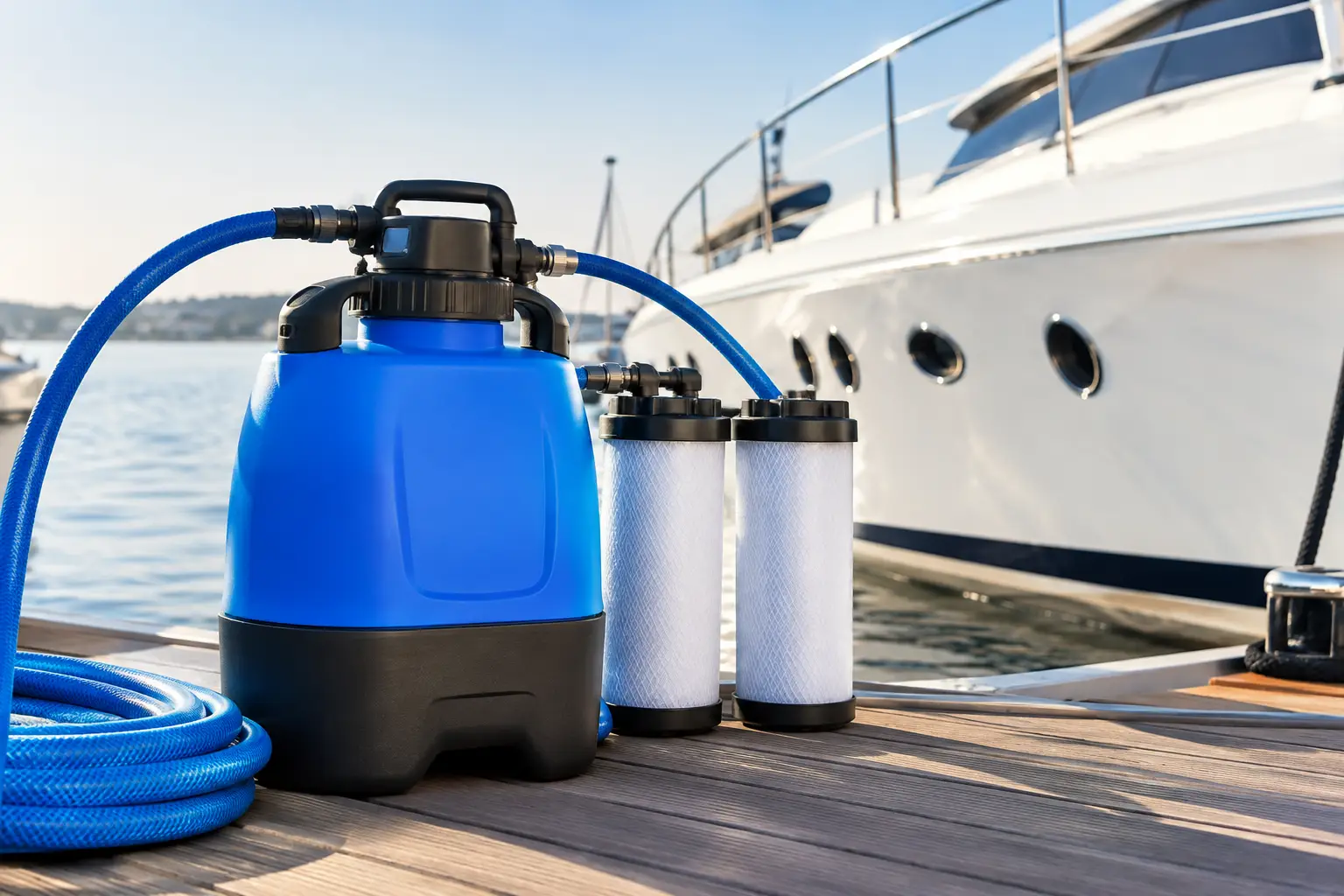
The most effective approach is to soften hard water before it enters your freshwater system. A portable water softener uses ion exchange media to remove the calcium and magnesium responsible for hard-water deposits. Instead of allowing those minerals into the tank and plumbing, you reduce the source of the problem at the dock connection.
This matters because cleaning existing scale is reactive. It may restore a clogged aerator or improve a shower spray pattern, but it does not prevent the next fill-up from depositing more minerals inside the system. Treating water before it enters the boat protects places you cannot scrub, including tank surfaces, plumbing runs behind cabinetry, water-heater components, and appliance internals.
A portable system is especially practical for vessels that do not have room for a permanently installed treatment unit or do not want another electrical connection to manage. Connect the softener between the dock water source and your fill hose or washdown hose, then use soft water where it delivers the greatest benefit. A properly sized unit should preserve normal water pressure while keeping setup straightforward.
Wet Spot portable soft water systems are built for this kind of use, with vessel-size options that make it easier to match treatment capacity to the demands of the boat. The right capacity depends on more than boat length. Consider the number of people onboard, tank size, frequency of dockside fills, washdown habits, and how often the vessel moves between hard-water locations.
Fill With Soft Water Whenever Practical
If the marina water is hard, make softened water your standard for filling freshwater tanks. This is the strongest long-term defense against scale in sinks, showers, heads, and appliances because the water stored onboard has already been treated.
For some operators, using softened water for every gallon may not be necessary. A boat used mostly for short trips may benefit most from treating water used for washdowns and occasional tank fills. A vessel with regular guests, a larger domestic water system, or high hot-water demand has more to gain from consistently filling through a softener. The goal is simple: reduce the mineral load before it reaches the plumbing.
Use Soft Water for Washdowns Too
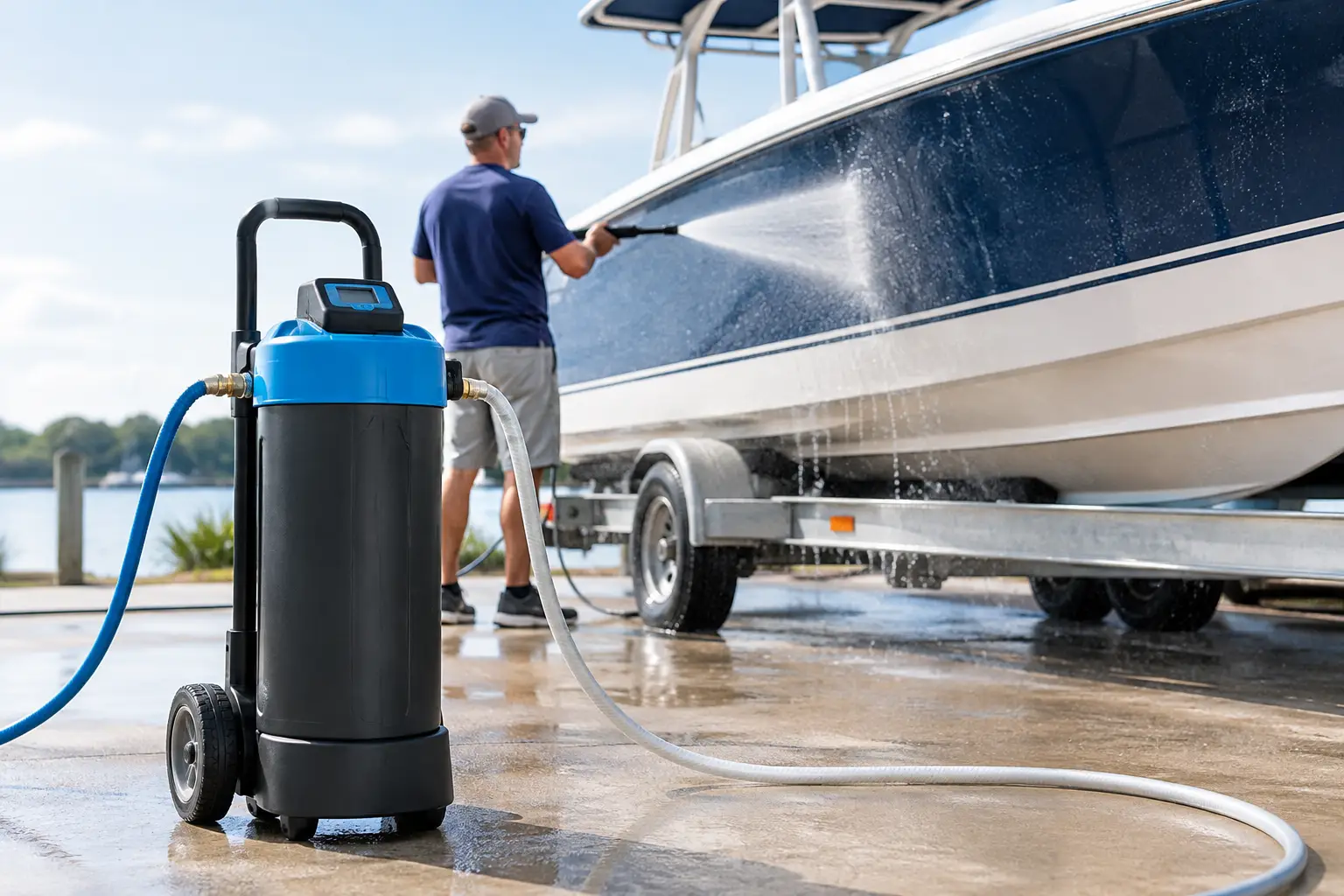
Scale is not limited to the inside of the boat. Hard water leaves spots and crust on gelcoat, metal, glass, plastic, and eisenglass. Those deposits make a clean boat look neglected and can require repeated detailing to remove.
Soft water improves soap performance and rinses more cleanly, so washdowns are easier and surfaces are less likely to dry with mineral spots. It also means the same equipment protecting the freshwater system can help protect the boat’s exterior finishes. That is a practical return on equipment already being carried to the dock.
Keep the Freshwater System From Holding Deposits
Softening incoming water is the main solution, but a few operating habits help prevent the remaining mineral content from becoming a bigger problem. Start by avoiding long periods of stagnant water when possible. If the boat has been sitting unused, run the freshwater system at the next opportunity so old water does not remain in fixtures and branch lines longer than necessary.
Check faucet aerators and showerheads periodically. These small components are often the first visible restriction point. If flow begins to weaken or spray becomes uneven, remove the aerator or showerhead and inspect it before assuming a pump or pressure problem. Cleaning a small deposit early is faster than troubleshooting a larger restriction later.
Pay particular attention to the water heater. Follow the manufacturer’s maintenance instructions for flushing and inspection. If the boat has previously been filled with hard water, a planned service interval can help remove loose sediment before it affects recovery time or component life. Do not use aggressive chemicals or procedures that conflict with the heater manufacturer’s guidance.
Freshwater tanks also deserve regular attention. Tank sanitizing is not the same as descaling, but keeping the tank clean and properly maintained supports better water quality throughout the system. If you are switching to softened water after years of hard-water use, do not expect existing internal deposits to disappear immediately. Soft water helps stop new scale from accumulating, while old buildup may need targeted cleaning or professional service depending on its severity.
Recharge the Softener Before It Is Spent
Portable softeners need periodic manual recharging. This is not complicated, but it is essential. The resin inside the unit captures hardness minerals until its available capacity is used. Recharging restores that capacity so the unit can continue softening water effectively.
The recharge schedule depends on water hardness and water volume. Extremely hard marina water will use capacity faster than moderately hard water. Large tank fills and frequent washdowns will do the same. Rather than waiting for visible spotting to return, establish a recharge routine based on your actual usage.
Keep a simple record of fills, washdowns, and recharges during the first few trips or marina stays. You will quickly see a pattern. That record is more useful than guessing, especially for captains, caretakers, and owners who share responsibility for the vessel.
A few signs can indicate it is time to recharge: water spots reappearing after a washdown, soap not rinsing as cleanly, or an increase in mineral residue around fixtures. These signs are useful, but a planned maintenance schedule is better than allowing hard water back into the system.
Avoid Shortcuts That Create Bigger Problems
Pouring descaling chemicals into tanks without confirming material compatibility can damage components, seals, or finishes. So can using household products without understanding what they will contact downstream. Marine plumbing often combines different metals, plastics, fittings, pumps, and appliance components, so one-size-fits-all chemical advice is rarely a good idea.
Likewise, relying only on inline sediment filters will not solve a hard-water problem. Sediment filters catch particles. Calcium and magnesium are dissolved minerals, which means they pass through ordinary particulate filters. A filter may be useful for protecting against debris from a questionable water source, but it does not replace water softening when scale is the concern.
If water flow is already severely restricted, if a water heater shows signs of failure, or if deposits are affecting a critical onboard appliance, bring in a qualified marine technician. Prevention saves money, but existing damage should be handled correctly rather than pushed further down the system.
Make Soft Water Part of Your Dock Routine
The best scale-control system is the one that gets used every time the boat connects to hard water. Store the softener where it is easy to reach, inspect hoses and fittings before filling, and make treatment part of the same routine as connecting shore power and checking lines.
That small habit protects more than brightwork and shower fixtures. It helps keep freshwater plumbing, onboard appliances, and the expensive details of your boat working the way they should. Treat the water before it enters the vessel, and scale has far fewer places to start.