A fresh washdown should leave your boat looking clean, not covered in white spots that return as the water dries. Hard water leaves calcium and magnesium behind on gelcoat, glass, brightwork, fixtures, and canvas. Over time, those minerals become scale, dull finishes, and create more detailing work. The best portable water softener system prevents that cycle at the source by treating the water before it reaches your hose.
For boat owners, the right unit is not simply the smallest tank that fits on the dock. It needs to match the size of the vessel, handle regular washdowns, preserve usable water pressure, and stand up to a marine environment. The same practical standards apply to RVs, vehicles, and aircraft: soft water should make cleaning easier without adding another complicated piece of equipment to maintain.
What a Portable Water Softener Actually Does
A portable water softener uses ion-exchange resin to remove the hardness minerals in incoming water. Calcium and magnesium are exchanged for sodium ions, producing soft water that rinses cleanly and helps soap work as intended.
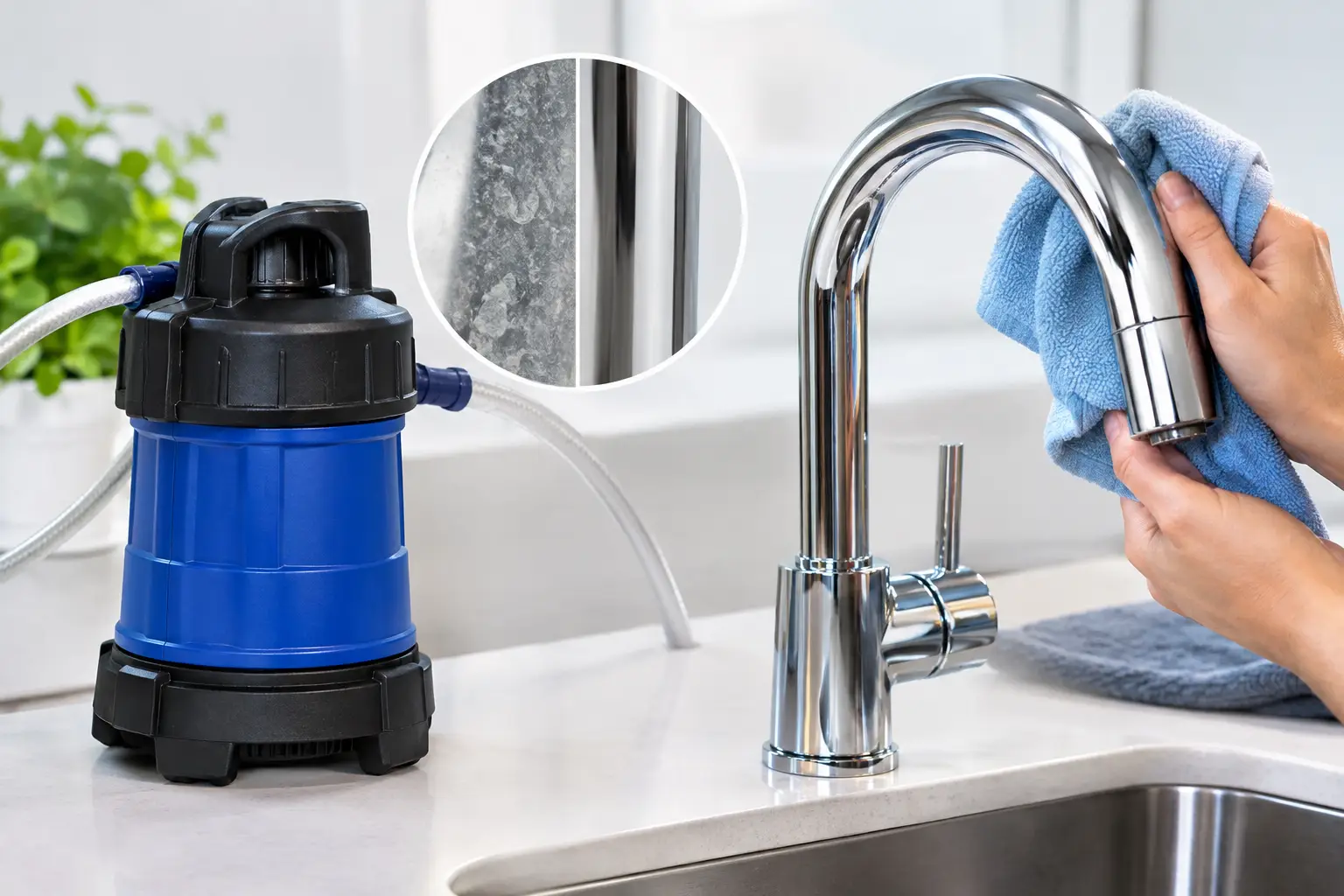
That matters most after the rinse. With hard water, evaporation leaves mineral deposits behind. On a dark hull, windshield, stainless rail, shower door, or painted surface, those deposits are hard to miss. Soft water greatly reduces spotting and helps prevent the crusty scale that can build up in plumbing fixtures, water heaters, ice makers, and other onboard appliances.
A portable system is installed in the water path between the dock connection and your hose or vessel inlet. There is no electrical hookup, permanent plumbing modification, or complicated control panel required. You connect it, run water through it, and recharge the resin manually when its capacity has been used.
Best Portable Water Softener System: What to Look For
The best choice depends on how much water you use and what you are protecting. A small runabout that gets occasional washdowns does not have the same demand as a yacht with regular exterior cleaning, multiple heads, and onboard appliances. Buying too small can mean frequent recharging. Buying the correct capacity means more time using soft water and less time servicing the unit.
Size the system to your vessel and water use
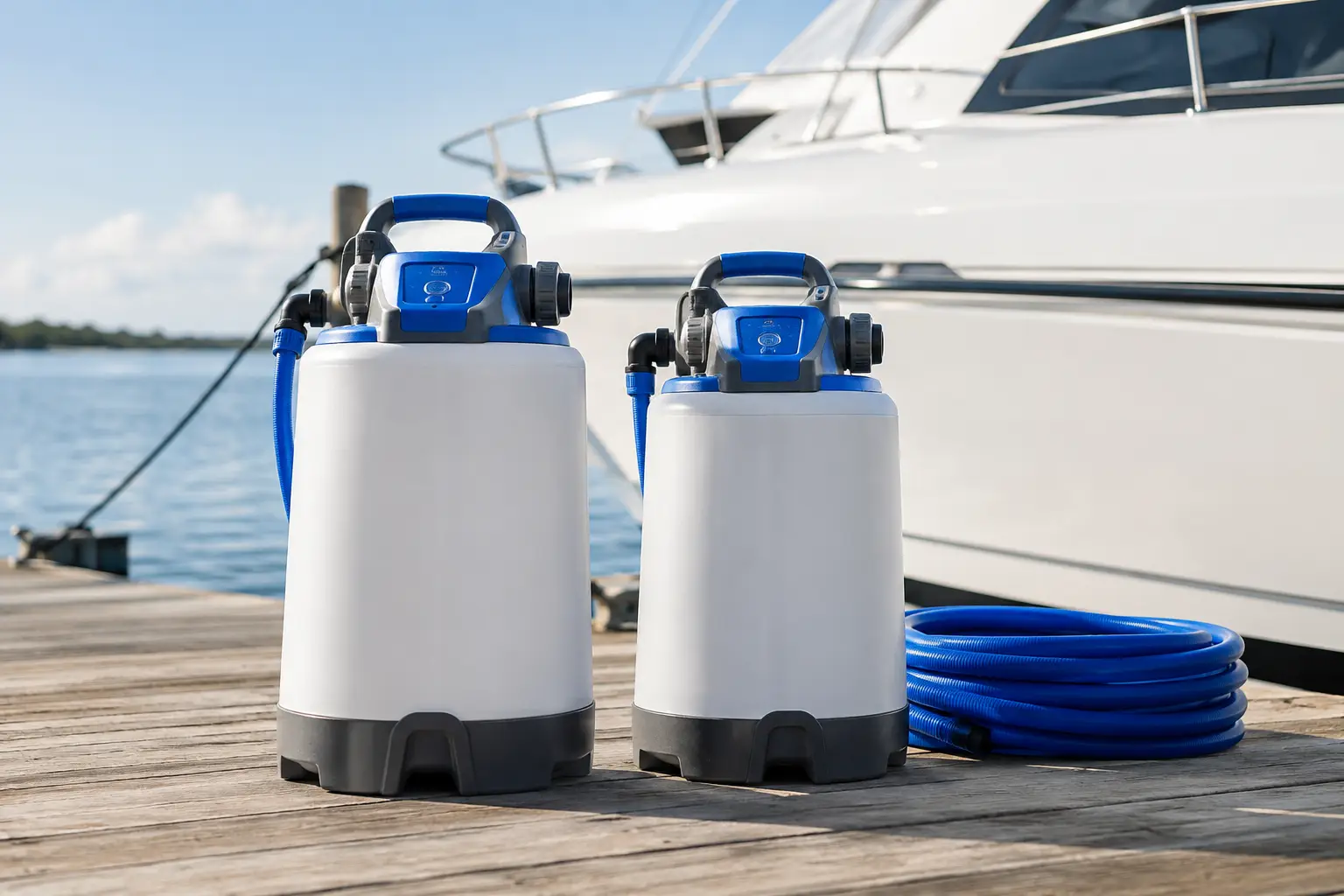
Start with vessel length, then consider actual usage. A system sized for boats up to 70 feet is often a practical fit for recreational boat owners who primarily use soft water for washdowns and light onboard use. Vessels in the 70-100 foot range generally need more resin capacity to support larger exterior surfaces and higher water demand. Boats over 100 feet require a system built for substantial usage and longer intervals between recharges.
Length is a helpful starting point, not the only factor. A boat kept in an area with very hard dock water will use softening capacity faster than one supplied by moderately hard water. Frequent washing, crew use, and appliance protection all increase demand. When in doubt, choose capacity that supports your real routine rather than the minimum possible size.
Protect water pressure
A portable softener should not turn a strong dock supply into a weak trickle. Washdowns require enough flow to rinse salt, soap, and loosened dirt away quickly. Onboard water use also needs consistent pressure for normal operation.
Look for a purpose-built design with properly sized connections and flow paths. A good system treats hard water without sacrificing the practical performance you expect at the hose, sink, or shower. If a unit only works well at low flow, it may create frustration during the very jobs it is supposed to simplify.
Choose construction suited to life near the water
Marine equipment is exposed to wet docks, sun, salt air, bumps, storage lockers, and constant handling. A portable water softener needs rugged components, secure fittings, and a design that can be moved without feeling fragile.
Marine-grade construction matters because this is not equipment that stays protected in a utility room. It will be carried aboard, placed on a dock, stored between trips, and used around expensive finishes. A durable cabinet and dependable internal components protect the investment and help keep the system ready when you need it.
Keep recharge maintenance simple
Portable softeners are designed to be recharged, not discarded after one use. When the resin becomes exhausted, a salt solution restores its ability to remove hardness minerals. Manual recharge is straightforward, but the process should be easy to understand and practical to perform at the dock, marina, or home.
Recharge frequency varies with water hardness and the number of gallons treated. That is a normal trade-off with any ion-exchange softening system. The advantage of a properly sized unit is that it gives you a useful service interval rather than demanding attention after every washdown.
Why Soft Water Pays Off on a Boat
Hard-water spotting is often treated as a cosmetic nuisance. In reality, it can lead to more labor, more chemical use, and greater wear on surfaces. Owners may repeatedly scrub glass, polish metal, or use harsh spot removers to restore finishes after hard-water rinsing. That work adds up over a season.
Soft water changes the washdown process. Soap lathers better, rinsing is cleaner, and surfaces dry with far fewer mineral deposits. That means less time chasing spots around windows and gelcoat after a wash. It can also reduce the need for aggressive cleaners that may be tough on wax, sealants, trim, and delicate materials.
Inside the boat, soft water helps limit scale in faucets, shower fixtures, plumbing, water heaters, and appliances. It is not a substitute for regular maintenance, but it reduces one of the causes of buildup before minerals have a chance to settle and harden.
For high-value vessels, this is asset protection as much as cleaning convenience. Preserving gelcoat gloss, clear glass, polished metal, plumbing performance, and appliance life can help avoid preventable maintenance costs later.
Portable Soft Water Beyond the Marina
The same hard-water problems follow owners beyond the dock. RVs pick up spotting on paint, windows, and exterior trim at campgrounds. Vehicle owners see mineral residue on glass, chrome, wheels, and paint after washing at home or while traveling. Aircraft owners must be especially careful with exterior finishes and windows, where mineral spotting can make cleaning more time-consuming.
Portability is the key advantage in each case. Instead of relying on the water quality at a particular marina, campground, hangar, or driveway, you bring the softening system with you. No electricity is required, and no permanent installation is needed. Connect the unit to the available water supply, then use softened water where it provides the most value.
Avoid These Buying Mistakes
Do not choose solely by initial price. A lower-cost unit that is undersized, poorly built, or difficult to recharge can create more work and cost more over its useful life. A portable softener should be durable equipment, not a disposable accessory.
Also avoid confusing filtered water with softened water. A basic filter may remove sediment or improve taste, but it does not necessarily remove the calcium and magnesium responsible for water spots and scale. If your goal is a cleaner rinse and less mineral buildup, you need a true water softening system.
Finally, do not overlook warranty and support. This is equipment intended for repeated use around valuable assets. A long warranty reflects confidence in the construction, while knowledgeable support helps owners size, operate, and maintain the system correctly. Wet Spot, the original portable water softening system, backs its rugged units with a 12-year warranty designed for long-term ownership.
A clean rinse should not become another detailing project. Match your portable softener to your water use, keep it recharged, and let soft water do the work before hard-water minerals get the chance to stay behind.