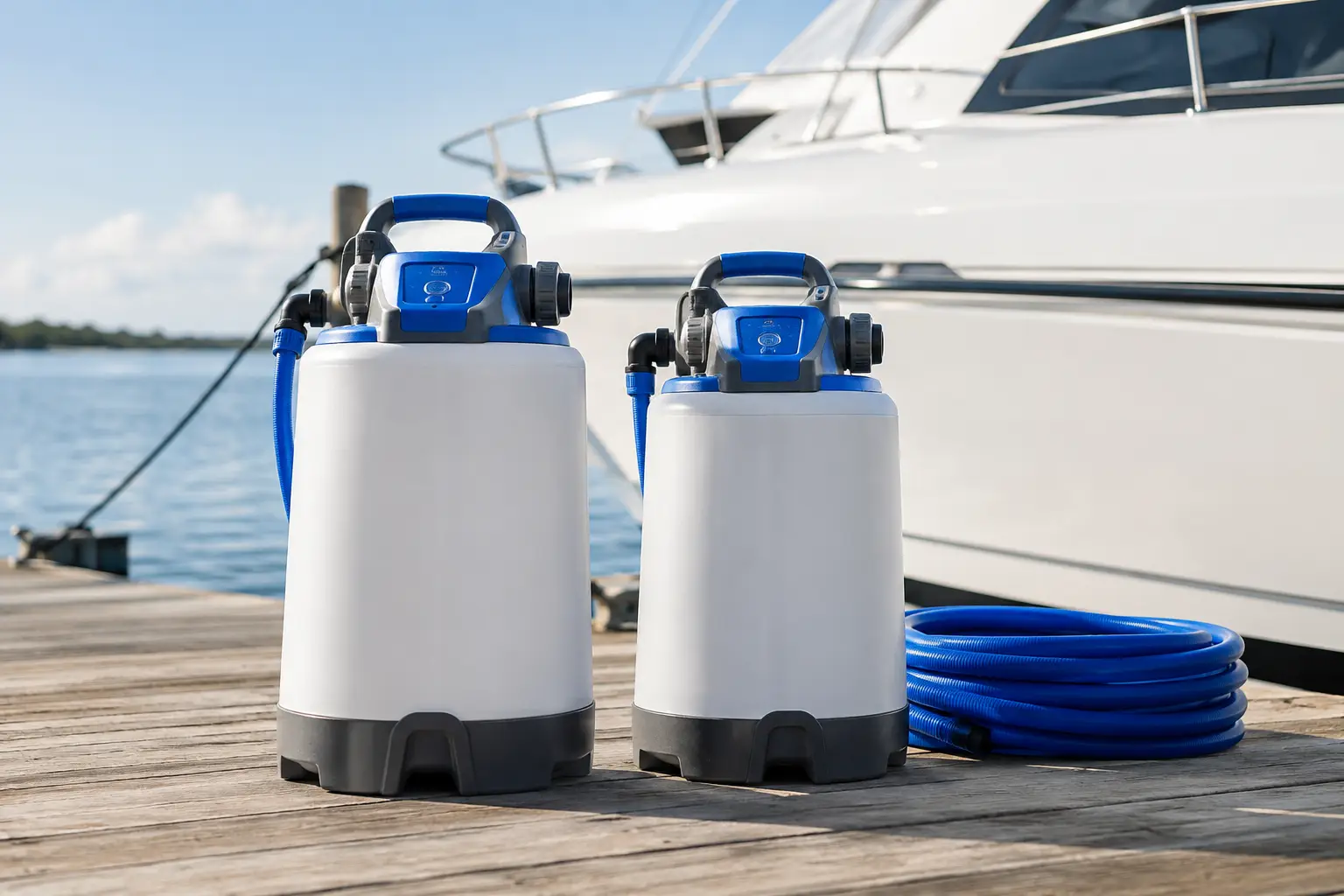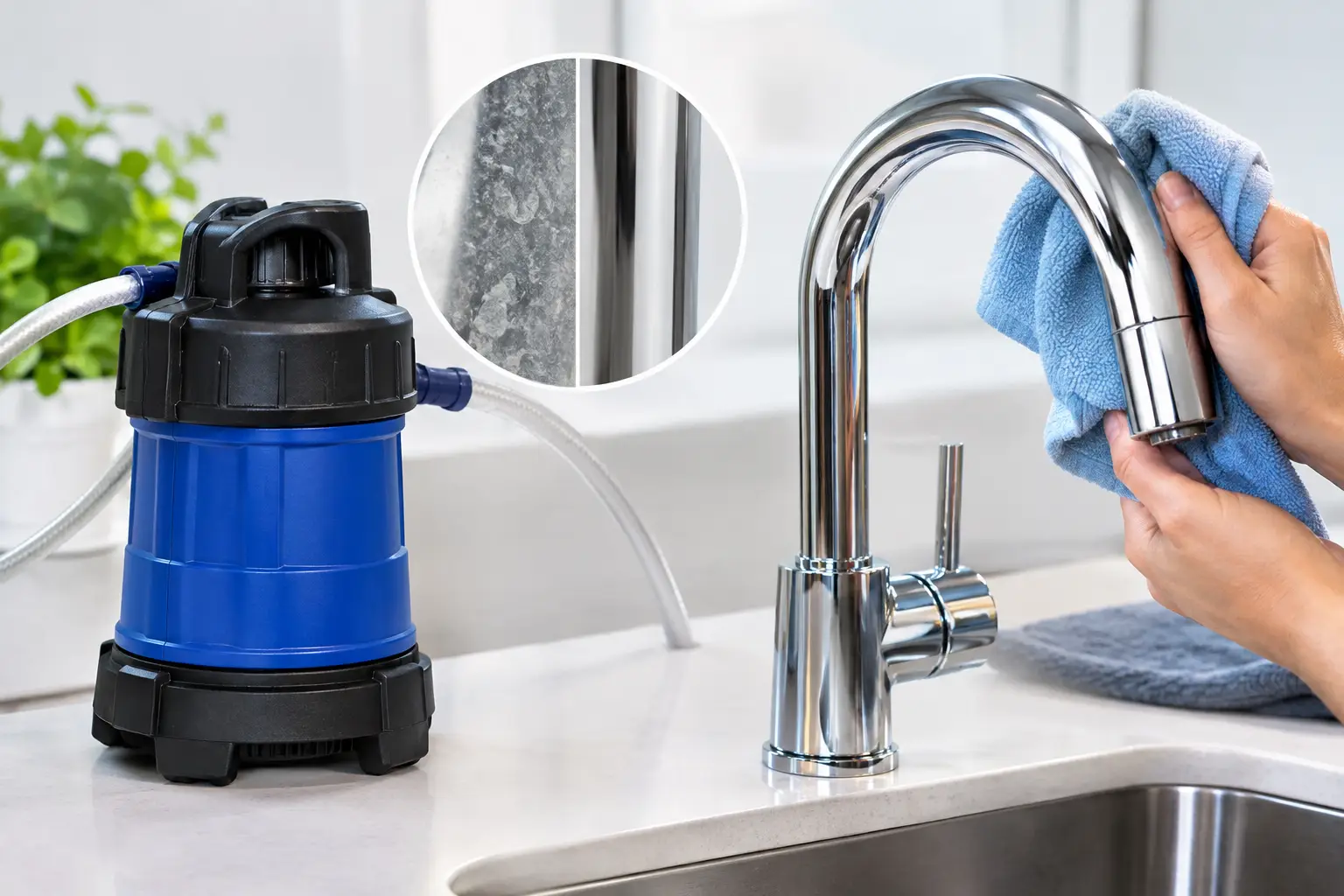
A clean boat can look excellent at the dock, then dry into a map of white spots before the afternoon is over. Those marks are not just a detailing annoyance. They are the mineral residue left behind by hard water. A boat washdown water softener removes the calcium and magnesium that cause those deposits, giving owners a more effective way to protect gelcoat, glass, metal, plastic, and onboard water systems.
For boats that are washed regularly at marinas, storage yards, or home docks, soft water is practical protection. It helps water sheet off more cleanly, improves soap performance, and reduces the repeated scrubbing needed to remove dried mineral residue. That means less time chasing spots and less wear from aggressive cleaning.
What Hard Water Does to a Boat
Hard water contains dissolved minerals, primarily calcium and magnesium. The water may look clear coming from the hose, but when it evaporates, those minerals stay behind. On a dark hull, black canvas hardware, stainless railings, and glass, the result can be especially noticeable.
Fresh water rinse-downs are often treated as the final step in boat care. But if that rinse water is hard, it can leave deposits across the very surfaces you are trying to preserve. Over time, the effects go beyond cosmetic spotting. Mineral buildup can dull finishes, cloud glass, collect around fittings, and create scale in plumbing, water heaters, ice makers, and other onboard appliances that use dockside water.
Saltwater requires its own thorough rinse, of course. Soft water does not replace the need to remove salt after a day on the water. It makes the freshwater washdown and final rinse more effective by leaving fewer minerals behind after the water dries.
How a Boat Washdown Water Softener Works
A portable softener uses ion-exchange resin to remove hardness minerals from the incoming water supply. As water passes through the unit, calcium and magnesium are exchanged for sodium ions. The result is softened water that is easier on finished surfaces and less likely to leave hard-water deposits.
The process does not require electricity, a permanent installation, or a reduction in useful washdown pressure when the unit is properly sized and connected. Attach the softener between the water source and your hose, then wash as usual. That simple setup matters at a marina, on a dock, or anywhere a permanent water treatment system is not practical.
Soft water also changes how soap behaves. Wash soap can lather more effectively with less product, then rinse away more completely. Instead of fighting a film created by minerals and leftover soap residue, you get a cleaner surface with less effort.
A portable system eventually needs to be recharged because the resin has a finite capacity. Recharging with common water-softener salt restores the resin so the unit can continue removing hardness minerals. Capacity depends on the hardness of the incoming water and the volume used, which is why regular recharge maintenance is part of owning any true water softener.
Why Portable Soft Water Fits Boat Ownership
Most boat owners do not need another permanently mounted system taking up valuable space or requiring shore power. They need equipment that can be carried to the dock, connected quickly, and put away when the work is done.
That is where a portable water softener makes sense. It can be used for routine rinses, full washdowns, canvas and enclosure cleaning, engine-room wipe-downs, and filling onboard systems with softer water. The same unit can move between a boat, RV, tow vehicle, or other hard-water cleaning jobs when needed.
The value is not limited to a spot-free finish. Soft water helps protect the expensive details that make a boat look cared for: polished metal, clear vinyl, windshield glass, painted surfaces, non-skid, shower fixtures, and brightwork. It can also reduce scale in systems that are costly and inconvenient to service.
For an owner who pays for regular detailing, this can reduce the labor spent on spot removal and mineral cleanup. For a hands-on owner, it makes a washday more productive. Either way, the goal is straightforward: spend more time maintaining the boat properly and less time correcting what hard water leaves behind.
Choose the Right Capacity for Your Boat
Softener size should match the boat, the way it is used, and the local water conditions. A smaller vessel that receives quick freshwater rinses has different needs than a yacht with multiple decks, frequent washdowns, onboard appliances, and a larger crew.
Wet Spot offers portable soft water units sized for boats up to 70 feet, vessels from 70 to 100 feet, and boats over 100 feet. Sizing up can be a sensible choice for owners who wash often, use high volumes of dock water, or operate in an area with very hard water. More capacity means fewer recharge cycles between uses.
Water hardness matters as much as vessel length. A unit will process more gallons in moderately hard water than it will in extremely hard water. If your marina water produces heavy spotting on cars, fixtures, or dock equipment, expect to recharge more often than an owner in a lower-hardness area.
There is a trade-off. A larger softener offers more capacity, but it also takes up more storage space and requires more salt during recharge. Choose the size that supports your normal wash routine rather than buying based only on the biggest possible job.
Signs You May Need More Capacity
If you are recharging before every major washdown, routinely washing multiple boats, or filling onboard water systems from hard dock water, a higher-capacity unit may save time. The same is true for vessels with large surface areas of glass, stainless, and dark gelcoat where water spots are immediately visible.
On the other hand, a compact unit can be the right answer for a center console, fishing boat, runabout, or smaller cruiser that receives regular but modest rinses. Portable water treatment should make maintenance easier, not become another oversized piece of dock equipment.
Using Soft Water the Right Way
Start by connecting the portable softener to a reliable water source, then connect your wash hose to the outlet. Flush briefly according to the unit instructions before beginning the wash. Work from top to bottom so dirty water does not run over cleaned surfaces.
Use a quality marine soap for the wash stage, then give the boat a complete soft-water rinse. Pay attention to areas where water collects: around cleats, rail bases, windshield frames, hatches, trim, rub rails, and transom hardware. Those are common places for mineral residue to build up.
Soft water reduces spotting, but drying technique still matters. In direct sun or high heat, water can dry quickly even without hardness minerals. Use microfiber drying towels or a blower on high-visibility surfaces when you want the best finish. Soft water gives you a much cleaner starting point and reduces the residue that makes drying difficult.
Do not confuse a water softener with a filter designed only to remove sediment, odor, or chlorine. Those filters may improve water quality for certain uses, but they do not necessarily remove the calcium and magnesium responsible for hard-water spotting and scale. A true softener is built specifically for hardness control.
Protect More Than the Finish
The outside of the boat is the most visible benefit, but onboard systems deserve the same attention. Hard water can leave scale inside plumbing components and appliances over time. When filling freshwater tanks or supplying equipment that uses dock water, softened water can help reduce that mineral load.
This is especially useful for boats with water heaters, ice makers, dishwashers, showers, and freshwater washdown systems. It does not eliminate routine maintenance, and it will not repair existing scale. It helps prevent additional buildup before it becomes a service problem.
Rugged construction also matters in a marine environment. A portable softener should be easy to transport, simple to recharge, and built to handle repeated use around docks, hoses, wet decks, and storage compartments. A durable system with no electrical hookup is one less complicated component to manage.
A boat is too significant an investment to wash with water that leaves damaging minerals behind. Set up soft water before the next washdown, keep the resin recharged, and let each rinse help preserve the finish you worked hard to maintain.