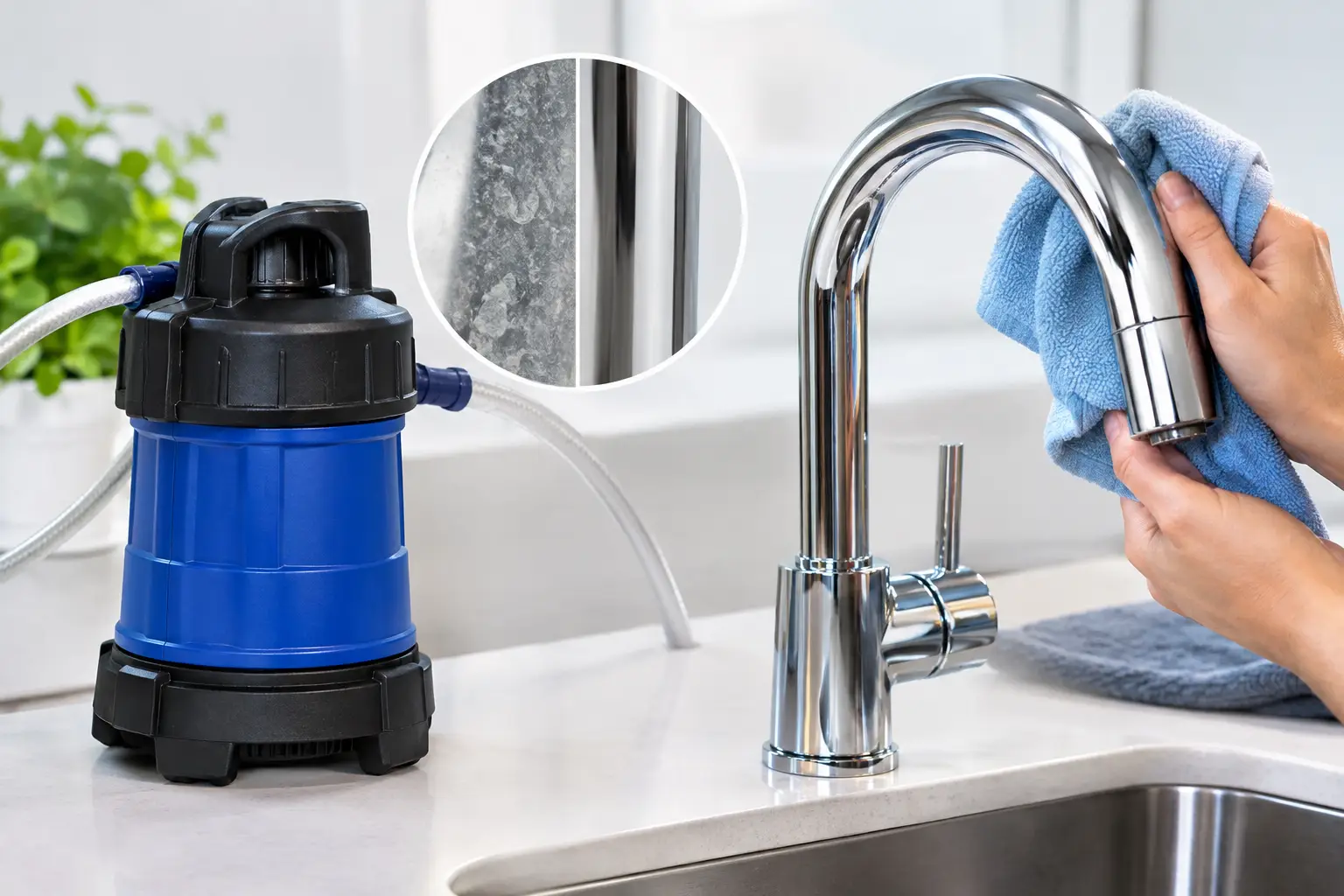
A washdown can leave a boat looking clean for an hour, then covered in white spots as the water dries. Those spots are not just a detailing nuisance. They are evidence of hard-water minerals left behind on gelcoat, glass, metal, plastic, and fixtures. What does a soft water system do? It removes the calcium and magnesium responsible for those deposits before the water reaches your hose, helping protect the surfaces and systems you work hard to maintain.
For boat owners, RV travelers, vehicle detailers, and aircraft caretakers, soft water is a practical tool. It makes washing easier, reduces mineral buildup, improves soap performance, and helps keep expensive assets looking like they should.
What Does a Soft Water System Do?
A soft water system exchanges hardness minerals, mainly calcium and magnesium, for sodium ions. Hard water flows through a tank of specialized resin beads. The resin attracts and holds the calcium and magnesium, while releasing sodium into the water. The resulting water is soft water.
That exchange matters because calcium and magnesium do not disappear when water evaporates. They stay behind as spots, chalky residue, and scale. On a boat, those deposits can collect around railings, deck hardware, shower fixtures, windows, engine-room plumbing, water heaters, and other onboard equipment. The same problem affects RV exterior panels, vehicle paint and glass, and aircraft finishes.
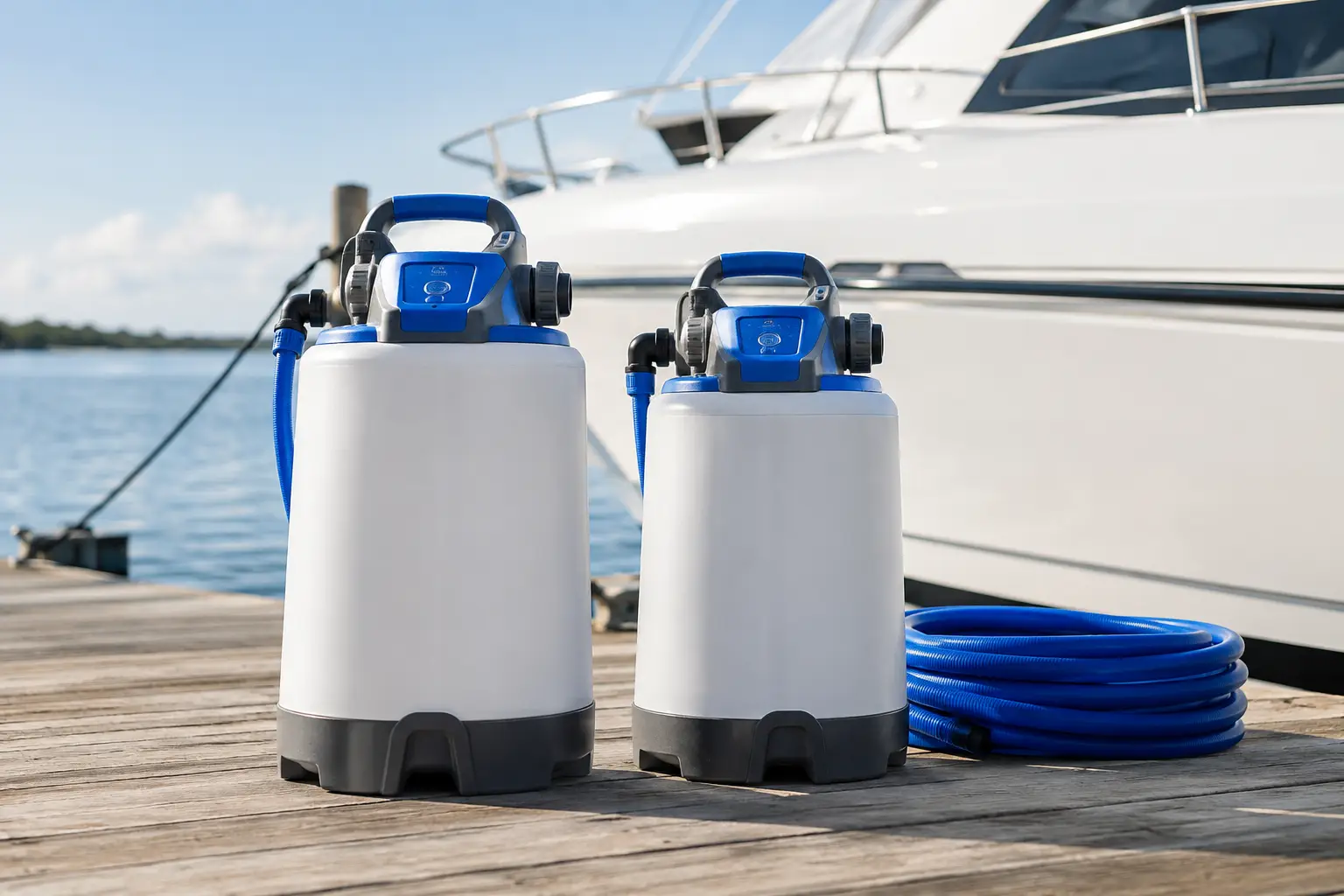
A portable soft water system gives you a way to treat the water at the point of use. Connect it between the water source and your hose, then use softened water for washdowns, rinsing, or filling appropriate onboard systems. No electrical hookup is required, and a properly sized unit maintains usable water pressure for normal cleaning tasks.
The Hard Water Problems It Helps Prevent
Hard water does more than create visible spots. Repeated exposure can make routine maintenance more difficult and contribute to long-term wear. A single hard-water rinse may be easy to wipe down. Years of mineral deposits around fittings, glass, and plumbing are another matter.
Soft water helps reduce several common problems:
- Water spots on gelcoat, paint, glass, chrome, stainless steel, and plastic
- Lime scale around faucets, shower heads, drains, and water fixtures
- Mineral buildup in plumbing lines, water heaters, and appliances
- Soap film that makes washdowns and interior cleaning take longer
- Dull-looking surfaces caused by residue that regular rinsing does not remove
For marine owners, the benefit is especially clear after a washdown. Soft water dries with far less mineral residue, so there is less spotting to chase after the boat is clean. That can mean less time with towels, detailing sprays, and spot removers, particularly in areas with very hard dockside water.
Soft water does not make a boat maintenance-free. Salt spray, dirt, fuel residue, algae, and environmental fallout still need proper cleaning. But it removes one recurring cause of spots and scale from the process.
Better Cleaning With Less Soap Residue
Soap works differently in soft water. Calcium and magnesium can react with soaps and detergents, creating a film that clings to surfaces. This is why hard-water cleaning often requires more product, more scrubbing, and more rinsing to get a clean finish.
With softened water, soap and cleaning products can lather and rinse more effectively. You may find that normal washdowns require less detergent and leave behind less film on decks, cabin surfaces, windshields, and shower areas. The goal is not to use excessive soap. It is to get better results from the product you already use.
This is useful beyond the exterior of a boat. Soft water can make onboard showers, sinks, and fixtures easier to clean because it reduces the mineral residue that builds up around them. On an RV, it helps keep bathroom fixtures and exterior panels in better condition. For vehicles and aircraft, it supports a cleaner final rinse with fewer mineral spots left on finished surfaces.
Protection for Plumbing and Onboard Equipment
The visual benefit of soft water gets the most attention, but scale inside equipment can be more costly than spots on the outside. When hard water is heated or repeatedly flows through tight passages, minerals can form deposits on internal surfaces. Over time, this can reduce efficiency and make maintenance more frequent.
Water heaters, shower fixtures, coffee makers, ice makers, and plumbing components can all be affected when they are supplied with hard water. The severity depends on local water hardness, how often the equipment is used, water temperature, and the design of the system. Still, reducing hardness before water enters these components is a sensible way to limit mineral accumulation.
A portable softener is particularly valuable when your water source changes. Marina water, campground water, and municipal hookups can vary widely from one location to the next. You may have soft water at one stop and very hard water at the next. A portable unit gives you more consistent control without permanently modifying the vessel or vehicle.
What a Portable Soft Water System Does Not Do
A water softener is designed to remove hardness minerals. It is not automatically a drinking-water purifier, sediment filter, or disinfecting system. It does not necessarily remove bacteria, viruses, chlorine, fuel contamination, heavy metals, or every dissolved substance that may be present in a water supply.
That distinction matters when filling potable-water tanks. If you need water treated for safety or taste, use the appropriate filtration or purification equipment in addition to water softening. Softening addresses calcium and magnesium. Other water concerns require other treatment methods.
It is also worth knowing that softening adds a small amount of sodium to the treated water through the ion-exchange process. For washdowns and general cleaning, that is generally the point: the hardness minerals have been removed. For drinking or dietary needs, consider your specific water source and requirements.
How a Portable System Fits Into Boat Maintenance
The value of a portable softener comes from straightforward use. You connect the unit to the available water source, connect your hose, and treat water where you need it. There is no permanent installation, electrical wiring, or complicated control panel to manage.
Once the resin has collected its capacity of hardness minerals, it needs to be recharged. Recharging restores the resin with salt so it can continue softening water. The interval between recharges depends on the hardness of the source water and the number of gallons used. Very hard water will use capacity faster than moderately hard water, and a large yacht washdown will require more capacity than rinsing a smaller boat or vehicle.
Sizing matters for that reason. A unit should match the size of the vessel and the expected water use. Smaller systems are practical for boats, RVs, and vehicles with modest washdown needs. Larger vessels and higher-use applications benefit from greater softening capacity, so you can spend more time using water and less time recharging the system.
Wet Spot portable systems are built around that real-world need: durable, marine-grade softening that travels with the boat and works without power. The right unit is not about adding another complicated system onboard. It is about preventing hard-water problems before they start.
When Soft Water Makes the Biggest Difference
You will notice the strongest benefit where water dries on visible surfaces and where mineral deposits have a chance to accumulate. Hard-water regions, frequent dockside washdowns, long stays at marinas or campgrounds, and high-value finishes are all good reasons to use softened water.
It can also be worthwhile for owners who are tired of repeating the same detailing cycle: wash the boat, watch spots appear, apply a spot remover, and wipe everything down again. Soft water cannot replace good cleaning habits, but it can remove a major source of unnecessary rework.
Protecting a boat, RV, vehicle, or aircraft is often about small, consistent decisions. Treating hard water before it leaves a mark is one of the simplest ones.