A hose can look perfectly clean from the outside while hard-water minerals are building up where you cannot see them. What causes scale inside hoses is usually not a hose defect. It is the repeated use of untreated hard water, followed by conditions that let dissolved minerals settle, dry, and harden on the hose wall.
For boat owners, RV owners, and anyone washing valuable equipment, that buildup can turn a simple water supply hose into a maintenance problem. Scale can restrict flow, shed particles into tanks or fixtures, make cleaning less effective, and contribute to buildup in the equipment connected downstream. The good news is that the cause is straightforward, and so is prevention when you control the water going into the hose.
What Causes Scale Inside Hoses?
Scale is a hard mineral deposit, most often made of calcium and magnesium compounds. Those minerals are naturally present in hard water. While the water is moving through a hose, the minerals are dissolved and may not be visible. Once conditions change, they can come out of solution and attach to the inside surface.
The most common trigger is water left sitting in a hose after use. As water warms up or slowly evaporates, its mineral content becomes more concentrated. The water eventually leaves, but the calcium and magnesium remain. One washdown may leave very little behind. Do it repeatedly at a marina, campground, storage facility, or home with hard water, and the deposits begin to layer up.
Scale is especially common in hoses that are used frequently but drained poorly. A washdown hose coiled on a dock, an RV drinking-water hose stored with water trapped inside, or a hose feeding a boat’s onboard system can all hold enough residual water to create deposits over time.
Hard water is the starting point
Hard water is measured by the amount of dissolved calcium and magnesium it contains. Some regions have moderately hard water, while others have water hard enough to leave white spots after a single wash. If you see chalky residue on glass, metal, gelcoat, painted surfaces, or fixtures after the water dries, the same minerals can be collecting inside the hose.
The harder the source water, the faster scale can form. That is why two identical hoses can age very differently in different locations. A hose used with naturally soft water and drained after each use may stay clear for years. The same hose used with hard water at a marina or campground may show buildup much sooner.
Heat and sun speed up mineral deposits
Hoses on boats and RVs often sit in direct sun. Heat does not create the minerals, but it encourages water to evaporate and concentrates what is left behind. It can also make mineral precipitation more likely, especially when a hose is repeatedly filled, heated, emptied, and refilled.
This is one reason a hose used for a hot-day washdown can develop more buildup than a hose used occasionally in cooler conditions. The issue is not just the outside temperature. It is the combination of hard water, retained water, and repeated drying cycles.
Low flow and standing water give scale time to form
Water moving through a hose does not automatically prevent scale, but long periods of standing water make the problem worse. Hose sections that sag, remain coiled, or sit below the outlet can hold water after the spigot is shut off. Small pockets of water can leave concentrated deposits in the same areas again and again.
Reduced flow can add to the problem. A partly restricted nozzle, clogged filter, kinked hose, or low-pressure supply can slow water enough for sediment and minerals to collect more easily. Scale itself can then restrict flow further, creating a cycle that becomes more noticeable over time.
Hose material and surface wear can affect buildup
Most quality water hoses can handle regular water use, but no hose is completely immune to mineral deposits. As a hose ages, its inner wall may become less smooth from normal wear, heat exposure, or damage. A rougher surface gives minerals more places to cling.
This does not mean a newer hose cannot scale. Hard water is still the primary cause. But an older, lower-quality, or damaged hose may be more difficult to keep clean and may hold onto deposits more readily than a clean, smooth hose.
Scale Is Not the Only Material Found Inside a Hose
White or off-white buildup is often scale, but it is worth separating mineral buildup from other hose problems. Rust-colored particles may come from an older spigot, dock supply pipe, fitting, or water heater. Black residue can be related to hose degradation, debris, or organic growth. Grit may be sand, sediment, or particles from the water supply.
A hose can also develop biofilm when water remains inside for extended periods, particularly in warm weather. Biofilm is not the same as scale, although mineral deposits can create uneven surfaces where debris and organic material collect more easily.
If the material has an unusual color, odor, or texture, do not assume it is only calcium. Inspect the hose ends, fittings, filters, and the water source. For potable-water applications, replace questionable hoses and sanitize the system according to the equipment manufacturer’s guidance rather than trying to force a cleaning solution through an unknown buildup.
Why Scale Inside Hoses Matters on Boats and RVs
A scaled hose may still deliver water, which is why the issue is easy to ignore at first. But it can affect everything downstream. Loose mineral flakes can reach spray nozzles, screens, shower heads, faucets, water pumps, tank fittings, and onboard appliances. On a boat, hard water can also continue to leave spots and film on gelcoat, glass, stainless steel, plastic, and eisenglass during every washdown.
For an RV, hard water can affect exterior washing as well as the fixtures and appliances connected to the freshwater system. For vehicle and aircraft washing, hard-water minerals can dry onto finishes before you have time to rinse them away, increasing detailing work and the risk of stubborn spotting.
Scale also works against soap. Hard water minerals react with many cleaning products, reducing lather and leaving residue behind. That means more product, more rinsing, and more time spent trying to achieve a clean finish.
How to Prevent Mineral Buildup in Hoses
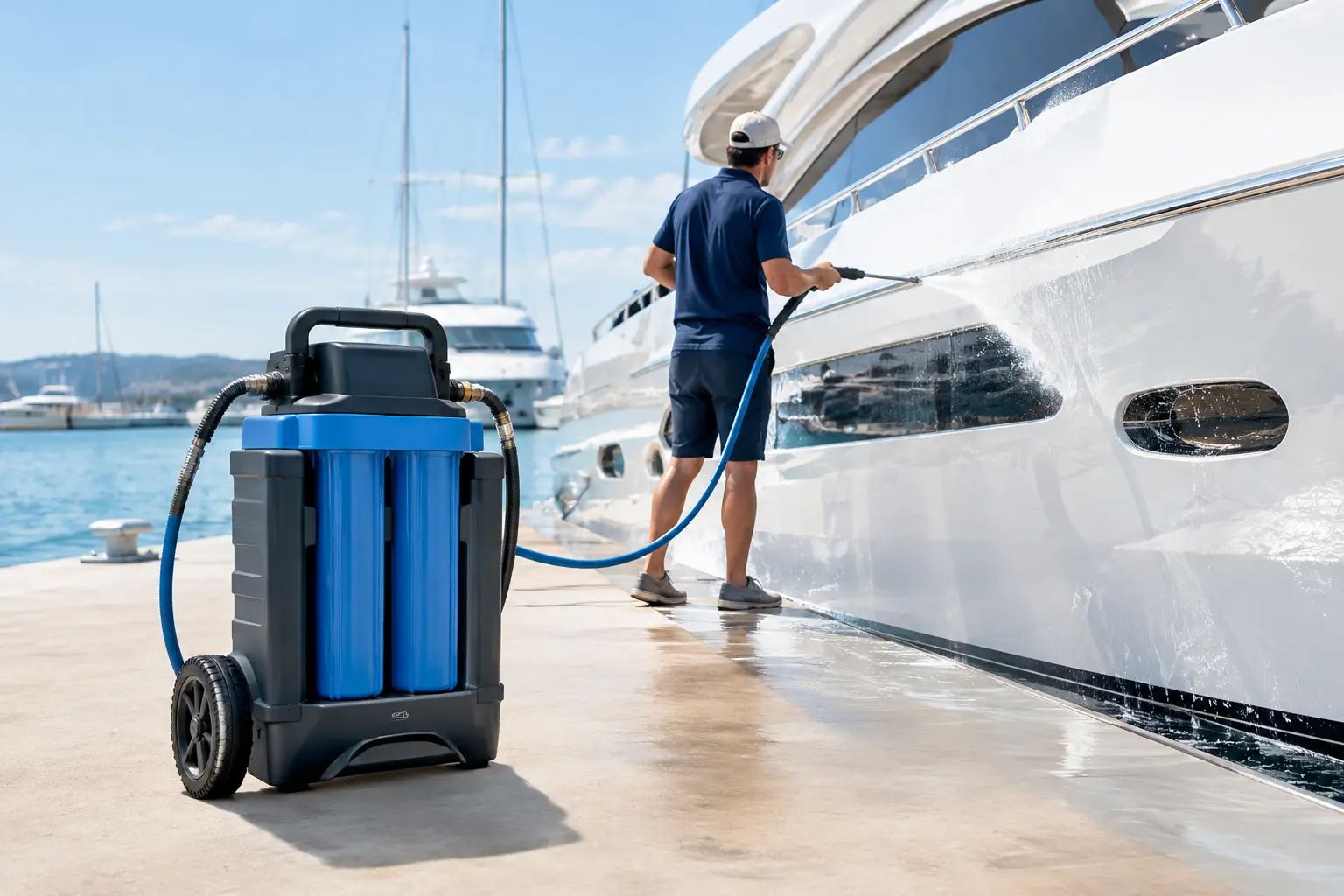
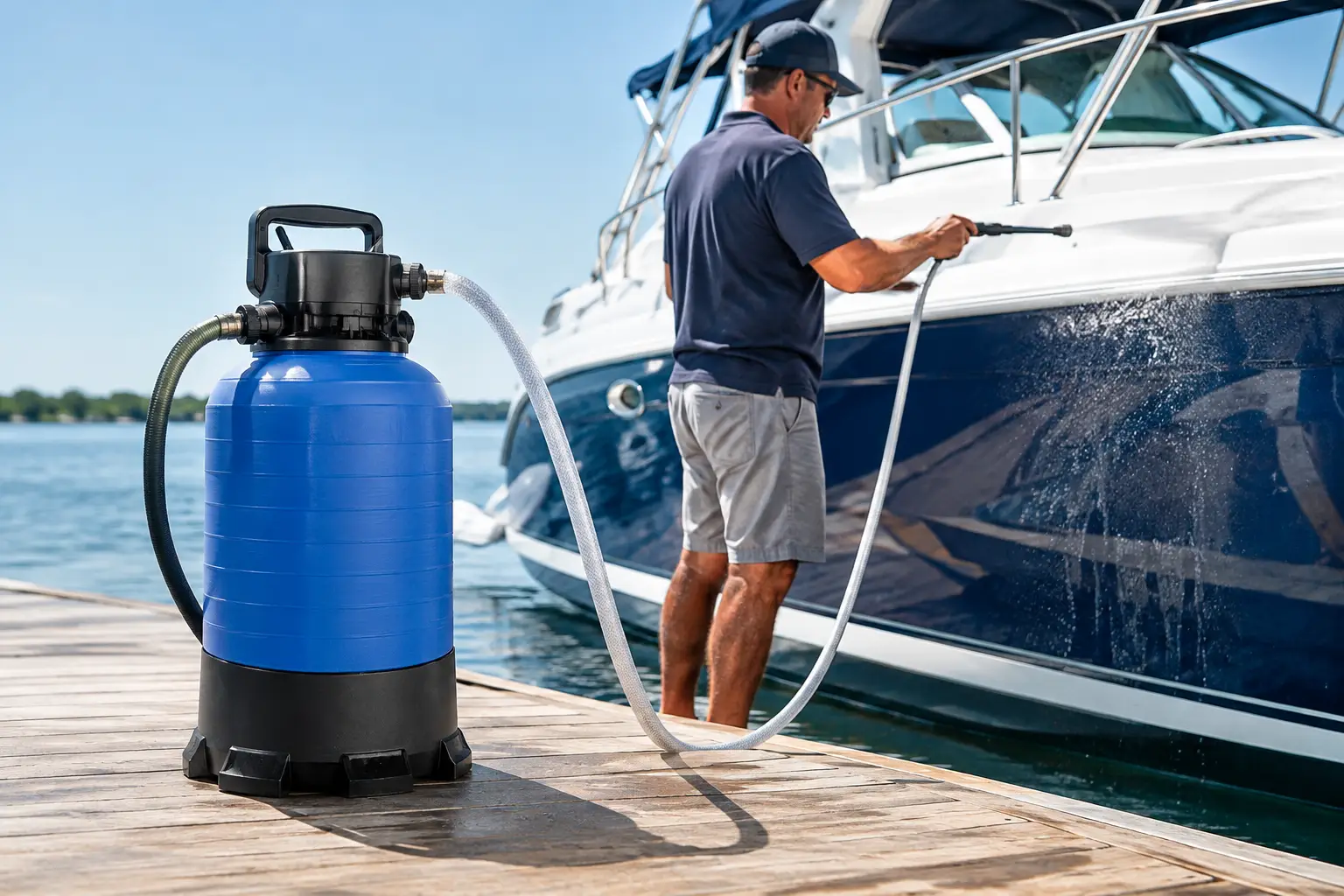
The most effective approach is to stop calcium and magnesium before they enter the hose. A portable water softening system exchanges the hardness minerals in source water for sodium ions. The water that comes through is soft water, so it will not leave the same lime-scale deposits behind as untreated hard water.
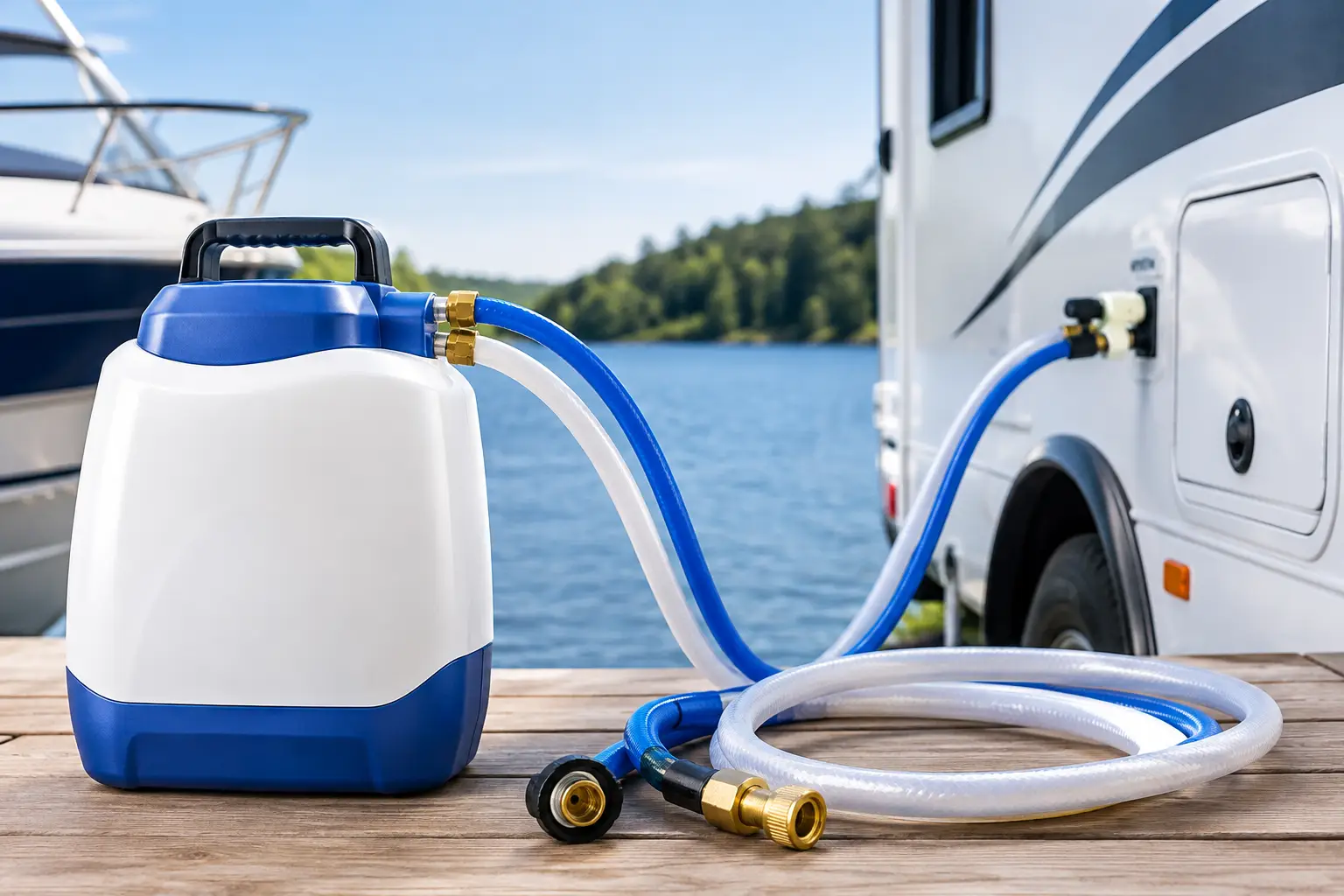
For mobile use, this is especially practical because water conditions change from one marina, campground, or wash location to another. Wet Spot portable soft water systems provide soft water without electrical power or a permanent installation, helping protect hoses, washdown equipment, fixtures, and the high-value assets being cleaned.
Good hose habits still matter. After use, shut off the source, relieve pressure, and drain as much water as possible before coiling the hose. Avoid leaving a hose full of water in direct sun for long periods. Keep hose ends capped or elevated off dirty dock surfaces when practical, and inspect washers, screens, nozzles, and quick-connect fittings for debris.
If your hose already has light scale, flushing it may remove loose particles, but flushing alone will not dissolve hardened deposits. Some hose materials and fittings can be damaged by aggressive cleaners, and cleaning chemicals may not be appropriate for drinking-water hoses. When buildup is heavy, replacement is often the more dependable choice, particularly if flow is restricted or the hose condition is uncertain.
Watch for These Early Signs
You may not see inside a hose, but the warning signs are usually visible at the outlet. Reduced water flow, inconsistent spray patterns, white flakes in a nozzle screen, chalky residue around fittings, and recurring hard-water spots all point to mineral-heavy water or developing buildup.
Do not overlook the source water just because a hose is new. A new hose connected to hard water can begin collecting minerals immediately. Treating the water from the first use is easier than trying to clean scale out later.
Your hose is part of the system that protects your boat, RV, vehicle, or aircraft. Keep it drained, keep it in good condition, and start with soft water whenever possible. That simple step keeps mineral deposits from turning routine washdowns into a bigger maintenance job.