A clean boat can leave the dock looking perfect and return with white spots on the glass, crust around deck fittings, and dull streaks across the gelcoat. That is not always a cleaning problem. This boat water quality guide helps owners separate the water issues that affect appearance from those that can damage plumbing, appliances, and onboard comfort over time.
Water quality is not one measurement. A marina supply may be safe for general use yet still be hard enough to leave minerals behind on every surface it touches. Another source may look clear but carry sediment, unusual odor, or bacteria concerns. Knowing what is in your water – and what a treatment system can and cannot do – makes routine boat care more effective.
Start With the Water Source
The water coming from a marina hose, dock pedestal, onboard tank, or shore-side connection can vary significantly from one location to the next. Municipal water is commonly treated for safety, but treatment does not remove all dissolved minerals. Well water can be especially variable, often carrying higher concentrations of calcium, magnesium, iron, or sediment.
For boat owners, the source matters because water is used in different ways. Washdown water lands on gelcoat, metal, glass, canvas hardware, non-skid, and clear vinyl. Tank water may run through pumps, water heaters, faucets, shower fixtures, ice makers, and other onboard equipment. The same water that creates spots after a rinse can also form scale inside a hose or appliance.
Before assuming the issue is your soap, waxing routine, or marina environment, look at the pattern. White chalky rings, stiff towels after washing, reduced soap lather, cloudy glass, and crust around faucets are common signs of mineral-heavy water. A sudden odor, discoloration, visible particles, or unusual taste is a different category of problem and should be investigated separately.
What Hard Water Does to a Boat
Hard water contains dissolved calcium and magnesium. These minerals are harmless in many everyday situations, but they become costly when water dries on expensive finishes or repeatedly moves through small passages in onboard systems.
On the exterior, mineral deposits show up as water spots and film. If they remain on the surface, they can require more aggressive cleaning than a normal washdown. That means more labor, more product, and more chances to mar clear plastic, polished metal, or sensitive coatings. Dark hulls and polished stainless make the issue especially obvious, but every finish pays the price over time.
Inside the boat, heat accelerates scale formation. Water heaters, coffee makers, ice machines, shower heads, galley faucets, and plumbing fittings are all vulnerable where hard water is used regularly. Scale can restrict flow, reduce efficiency, and shorten the working life of equipment. It does not usually arrive as a dramatic failure. It builds slowly until a fixture performs poorly or an appliance needs service sooner than expected.
Hard water also works against cleaning chemistry. Soap and detergents must fight the minerals before they can do their job, which can leave residue behind and increase the amount of product needed. Soft water rinses more cleanly, helps soap work better, and reduces the mineral deposits that turn a simple wash into a detailing project.
Boat Water Quality Guide: Know What to Test
A basic water-quality check does not need to become a laboratory project. Start with the conditions that affect your boat and the intended use of the water. For regular washdowns and onboard plumbing, hardness is one of the most useful measurements because it directly relates to spotting and scale.
Simple hardness test strips can provide a practical starting point. Test at the dock supply before connecting, then test water leaving your treatment setup if you use one. Keep a short record of the marina, date, and result. After a few trips, you will know which locations routinely deliver hard water and when you should plan for additional protection.
If the water is intended for drinking, cooking, or filling the fresh-water tank, consider a broader test when there is a concern. Bacteria, lead, nitrates, chlorine level, pH, total dissolved solids, and sediment are separate issues from hardness. A hardness test cannot tell you whether water is microbiologically safe, and a water softener is not a disinfection system.
Pay attention to four signs that call for action beyond normal softening:
- A sulfur, fuel, chemical, or persistent musty odor
- Brown, orange, black, or cloudy water
- Visible sediment that quickly clogs screens or filters
- A change in taste or appearance after water has sat in the onboard tank
Those conditions may call for tank sanitation, sediment filtration, a qualified water test, or a conversation with the marina. Do not treat a softener as a cure-all. Its job is specific: reducing hardness minerals that cause spots and scale.
Match Treatment to the Job
The best setup depends on how you use water aboard. For occasional dockside washing, the priority is often spot-free rinsing and protecting finish work. For larger vessels, frequent shore-water connections, or boats with multiple water-using appliances, protecting the plumbing system becomes equally important.
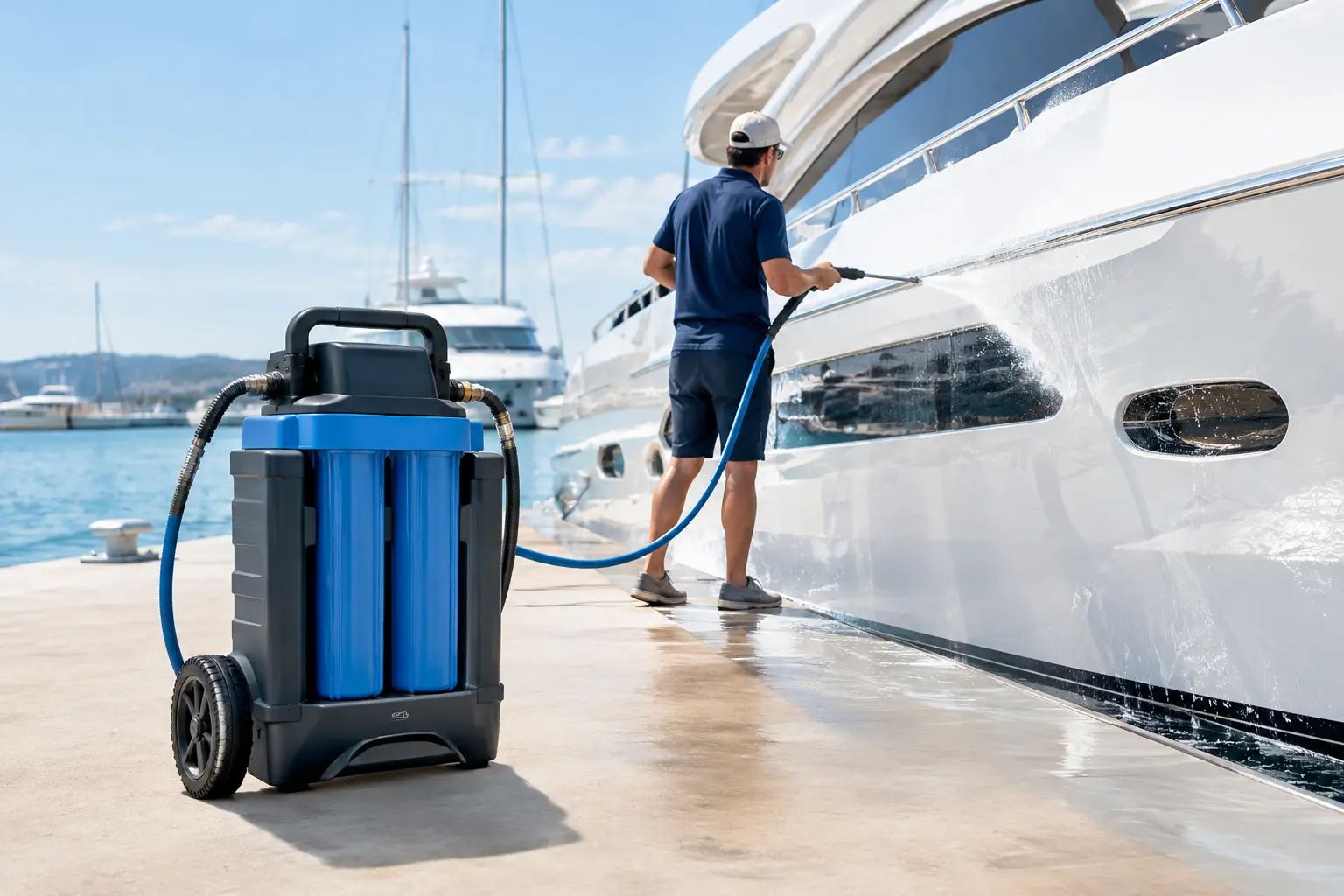
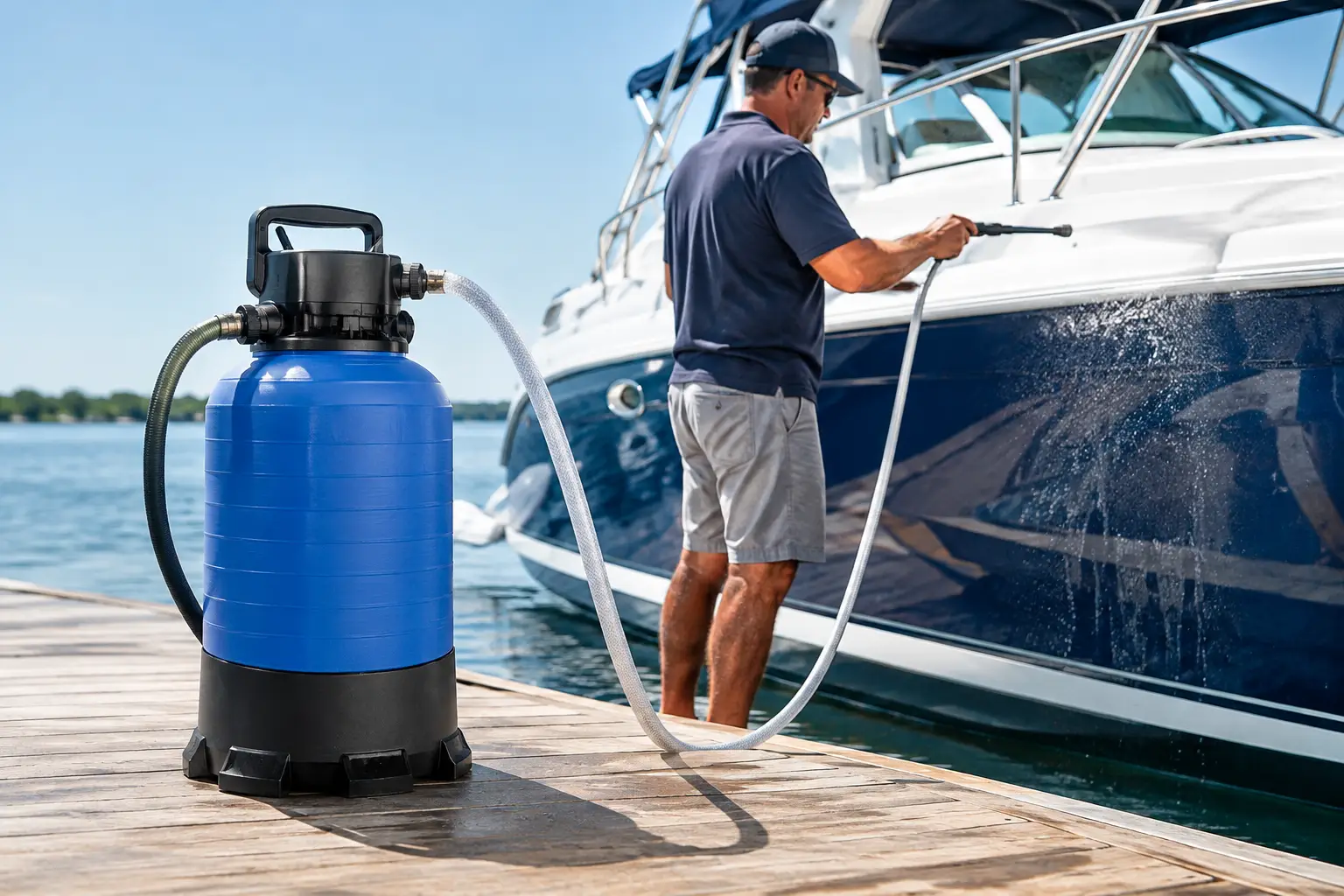
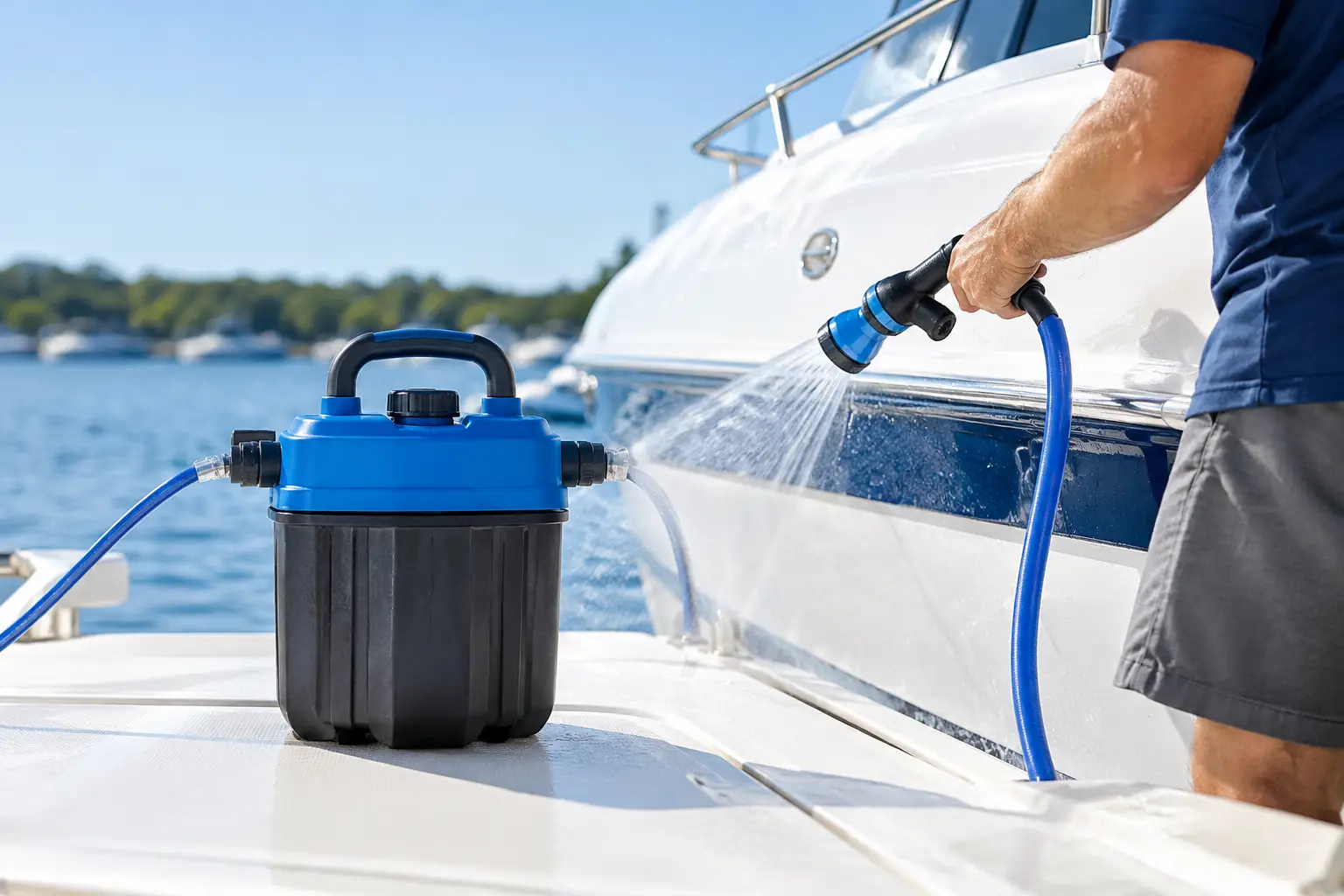
A portable water softener is a practical option because it treats the water before it reaches the boat without requiring electrical power or a permanent installation. It uses ion exchange to remove calcium and magnesium, replacing them with sodium ions during the softening process. When the resin reaches capacity, it is manually recharged with salt and returned to service.
Capacity matters. A small boat with occasional washdowns has different water demand than a yacht with regular cleaning, showers, laundry, and galley use. Choose a unit sized for the vessel and expected usage rather than buying based on price alone. A properly sized system reduces interruptions, protects more of the boat, and makes the maintenance routine predictable.
Wet Spot portable soft water systems are built around that practical need, with options matched to boats up to 70 feet, 70 to 100 feet, and 100 feet and above. The value is straightforward: soft water without an electrical hookup, pressure loss, or a complicated onboard installation.
Use Soft Water Where It Pays Off Most
If you are managing limited capacity or only connecting a softener for certain jobs, start with the water that touches high-value surfaces and equipment. A final rinse after washing is often the most visible use because it prevents minerals from drying onto gelcoat, glass, metal, and clear enclosures.
For boats that spend extended time at the dock, treating incoming water can also protect plumbing and appliances. The return is not only cosmetic. Fewer mineral deposits can mean less cleaning around fixtures, better flow through shower heads, and less scale in equipment that heats water.
There is a trade-off to consider with potable water. Softened water is suitable for many household uses, but owners should decide how they prefer to manage drinking water based on vessel use, personal preference, local water conditions, and any medical guidance related to sodium intake. Some owners reserve softened water for washdowns and onboard systems while using a separate drinking-water solution. The correct approach depends on the boat and the people aboard.
Build a Routine That Prevents Expensive Work
Water management is most effective when it becomes part of the dock routine, not a response to visible damage. Inspect the inlet screen, hose connections, and filter housings regularly. Replace or clean sediment filtration when flow falls off or debris is visible. If you use a portable softener, monitor hardness and recharge it before performance drops.
After washing, do not assume every surface can air-dry without attention. Soft water greatly reduces spotting, but salt spray, airborne dust, and grime can still settle on the boat. A controlled rinse followed by a quick check of glass, stainless, and dark painted surfaces catches problems while they are easy to remove.
Fresh-water tanks deserve their own maintenance plan. Drain or cycle stored water as appropriate for your use, sanitize the tank on a regular schedule, and avoid filling from a questionable source just because it is convenient. A clean tank, sound hose, and treated incoming water work together. One cannot compensate for neglect in the others.
The goal is not to overcomplicate water on board. It is to stop spending hours correcting damage that better water could have prevented. Test the source, treat hardness where it matters, maintain the equipment, and let every washdown protect the boat instead of leaving another job behind.