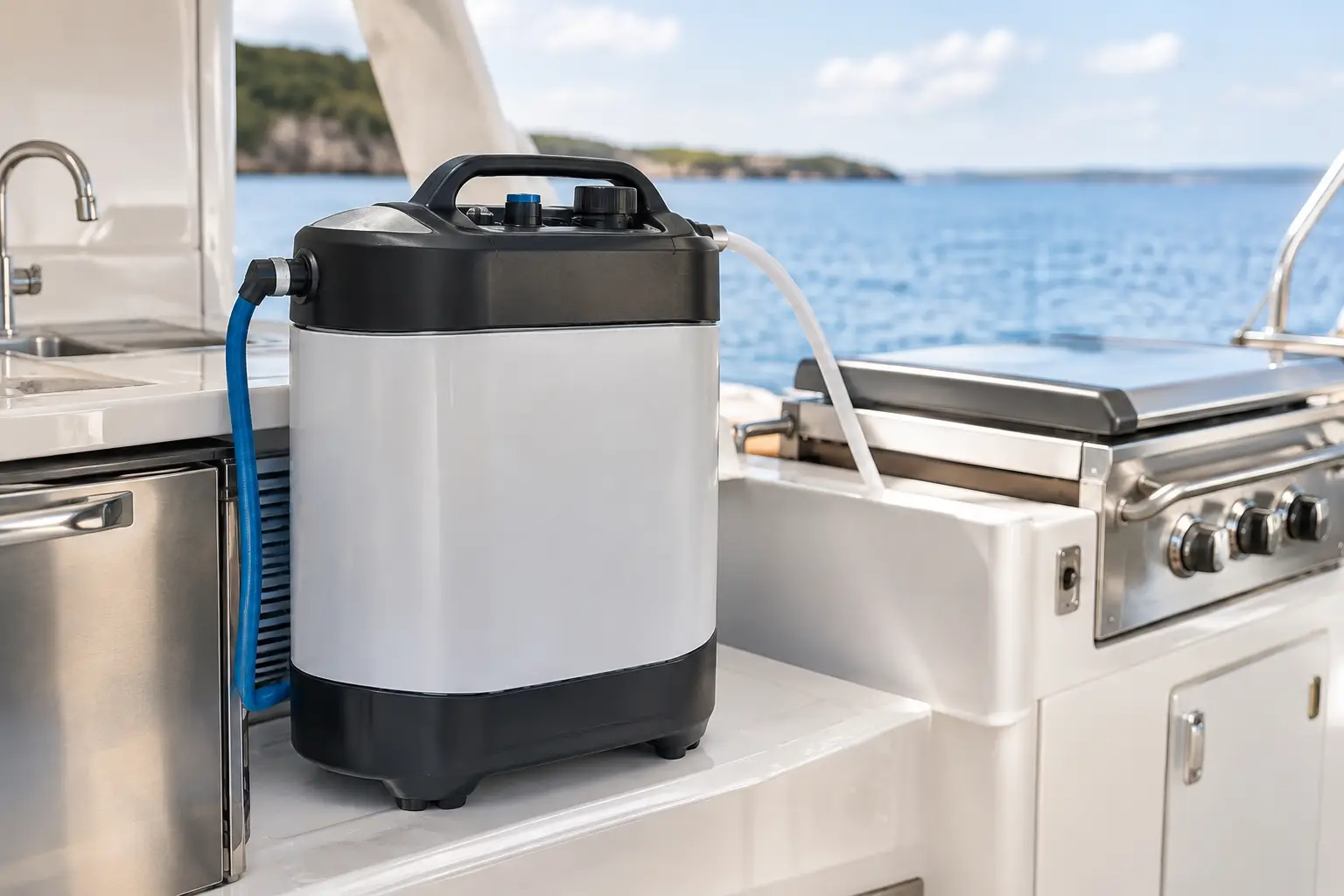
A water heater that takes longer to recover, an ice maker producing smaller cubes, a pump that seems to work harder than it should – these are often hard water problems before they become repair bills. To protect boat appliances from hard water, treat the water before it enters the systems you rely on every day. It is a straightforward step that helps preserve expensive equipment, reduce cleaning time, and keep your onboard water system performing as intended.
Why Hard Water Is Hard on Boat Appliances
Hard water contains dissolved calcium and magnesium. Those minerals are harmless in small amounts, but they do not disappear when water is heated, sprayed, or left to dry. They stay behind as a chalky deposit commonly called lime scale.
On a boat, mineral buildup has more opportunities to cause trouble. Water is often stored in tanks, heated in compact water heaters, pushed through narrow plumbing runs, and used in appliances that have small valves, screens, and heating elements. A system can work normally for a long time while scale is quietly building inside it.
Heat accelerates the problem. When hard water enters a water heater, coffee maker, or ice maker, minerals can collect on hot surfaces. That coating acts as insulation. The appliance must work longer to transfer heat, which can reduce efficiency and put unnecessary strain on components.
Hard water also leaves deposits in places you can see: galley faucets, showerheads, glass, stainless fixtures, and washdown equipment. Those spots are not just cosmetic. Left in place, mineral deposits can become difficult to remove and can dull finishes over time.
The Boat Systems Most at Risk
Any appliance or fixture that uses fresh water can be affected, but a few systems deserve special attention. Water heaters are a common trouble spot because they combine heat, standing water, and limited internal space. Scale on the heating element or tank surfaces can shorten service life and reduce hot-water performance.
Ice makers and coffee machines are also vulnerable. Their small internal water passages can collect mineral deposits, affecting flow, output, and taste. If your ice maker begins cycling more often, makes less ice, or develops inconsistent cube size, mineral buildup may be part of the issue.
Freshwater pumps, filters, showerheads, faucet aerators, and marine toilets can all suffer from reduced flow when scale collects in small openings. In many cases, the first sign is simple: a fixture that used to deliver strong, steady water pressure starts acting restricted.
The issue is not limited to plumbing. Hard-water spotting on glass, gelcoat, chrome, stainless steel, plastic, and eisenglass adds hours to routine washdowns. Preventing minerals from reaching the surface is easier than repeatedly polishing them off after the fact.
Start Protection at the Water Source
The most effective approach is to soften the water before it enters your boat’s freshwater tank or dockside supply connection. A portable water softening system removes the calcium and magnesium that create scale, reducing the mineral load throughout the boat.
This differs from a basic sediment filter. A filter can catch dirt, rust, or debris, but it does not necessarily remove dissolved hardness minerals. If your goal is to reduce lime scale in appliances and eliminate hard-water spots after washing, the water needs to be softened.
For boat owners, portability matters. Permanent systems can require electrical power, plumbing changes, and dedicated space that many vessels do not have. A portable soft water unit can connect at the dock when filling tanks or washing the boat, then be stored when the job is done. There is no need to redesign your onboard plumbing to gain the benefits of soft water.
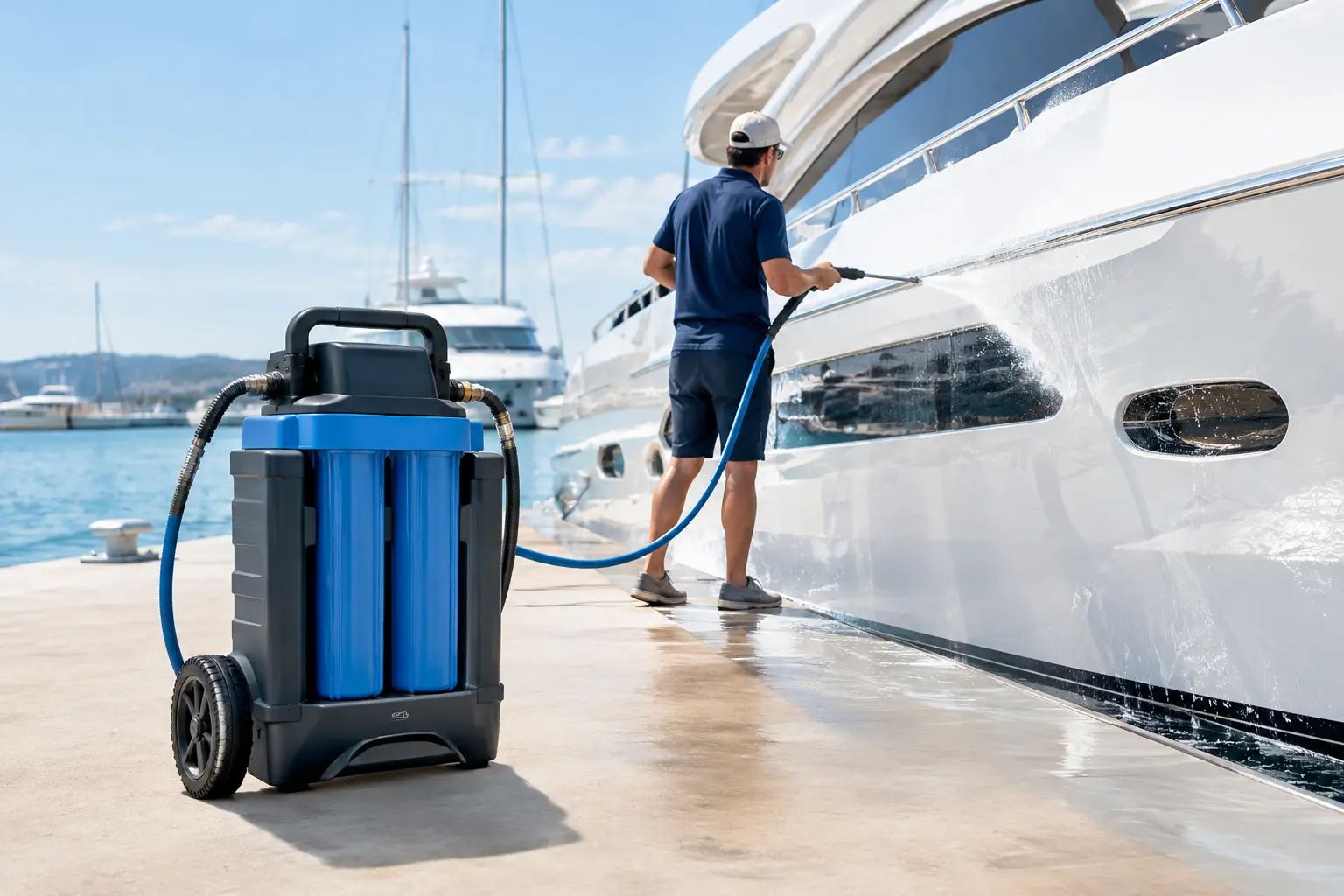
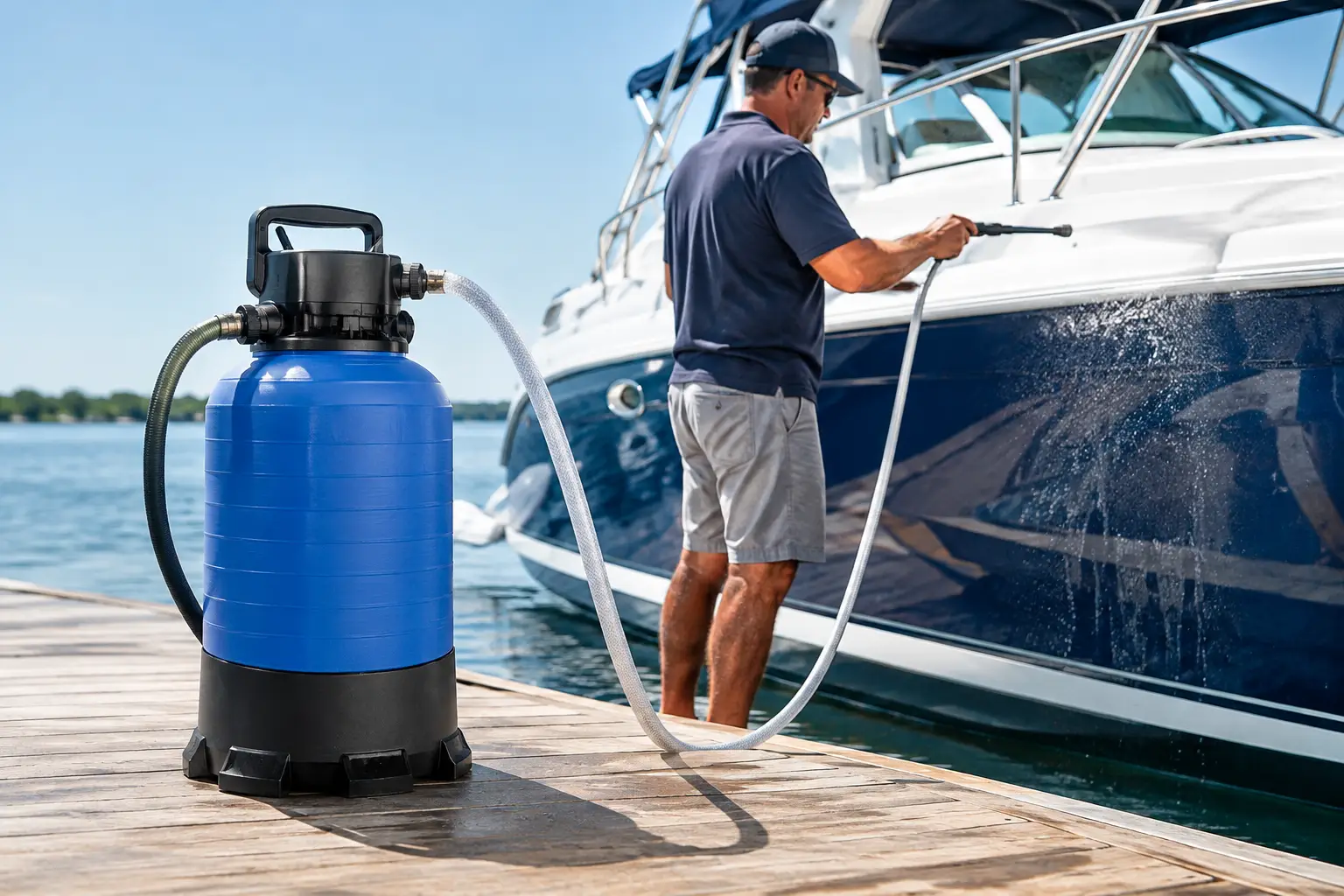
Wet Spot portable water softeners are built for this type of practical protection. They operate without an electrical hookup, maintain water pressure, and can be selected based on vessel size. That allows owners to protect everything from a smaller recreational boat to a larger yacht without adding complicated equipment to the vessel.
Use Soft Water for the Jobs That Matter Most
If you are not ready to use softened water for every gallon that enters the boat, focus on the areas where hard water does the most damage. Filling the freshwater tank with soft water provides broad protection for onboard appliances, galley use, showers, and heads. It is the best option for boats that spend significant time away from the dock and rely on tank water.
Using soft water for washdowns is another high-value application. It helps prevent spotting on gelcoat and windows, improves soap performance, and reduces the need for aggressive wiping after rinsing. With fewer minerals drying on the surface, detailing becomes less of a battle.
For boats that receive water from different marinas, test or observe the water conditions over time. Hardness varies by location. A marina water source that leaves white residue on dock hoses, faucets, or hulls is a clear warning that your appliances and finishes are receiving the same minerals.
Keep the Softener Ready to Work
A portable softener is simple, but it does need periodic recharge. As the softening media captures hardness minerals, its capacity is eventually used. Recharging restores its ability to soften water, allowing the unit to continue protecting the boat.
The recharge interval depends on water hardness and water use. A boat used mainly for occasional washdowns will have different needs than a vessel with frequent tank fills, multiple heads, a water heater, and a busy galley. The practical rule is to follow the unit’s capacity guidance and recharge before you notice hard-water spotting or scale returning.
Keep the process part of normal dockside maintenance. Just as you check lines, shore power, and fuel levels, check whether the softener is ready before a major washdown or freshwater fill. This small habit is easier than troubleshooting an appliance after minerals have built up inside it.
Do Not Rely on Cleaning Alone
Descaling products can remove existing mineral deposits, but they are corrective tools, not a long-term prevention plan. They may be necessary for an appliance that already has scale, especially when performance has changed. However, repeated chemical cleaning takes time and may not reach every part of a complex onboard system.
Cleaning exterior spots after every washdown has the same limitation. It deals with what has already dried onto the surface. Soft water reduces the deposits in the first place, which means less scrubbing, fewer harsh cleaners, and less risk of scratching sensitive finishes.
If an appliance has visible scale or reduced output, consult its manufacturer guidance before using a descaling solution. Some components and materials have specific cleaning requirements. Then address the water source so the same deposits do not return a few weeks later.
Build Hard Water Protection Into Routine Maintenance
Protecting onboard equipment works best when it is part of a consistent maintenance routine. Inspect faucet aerators and showerheads for white buildup. Watch for declining water-heater recovery, reduced flow, or changes in ice-maker output. These early signals are easier and less expensive to address than a failed heating element, clogged valve, or restricted water line.
Also pay attention after seasonal storage. Water left in systems can concentrate minerals as it evaporates or sits. Flushing and servicing the freshwater system according to your boat’s maintenance schedule is still necessary, even when you use softened water. Soft water reduces mineral scale, but it does not replace proper sanitation, winterization, or inspection.
The right setup depends on your vessel, how often you use onboard water, and the hardness of the water where you dock. For some owners, softening every tank fill makes the most sense. For others, protecting washdowns and high-use appliance water is a practical starting point. Either way, treating hard water before it enters the boat gives your appliances a cleaner supply and gives you one less maintenance problem waiting below deck.
Your boat’s appliances were built to serve you, not to become another weekend project. Keep mineral-heavy water out of the system, recharge your softener on schedule, and let routine maintenance stay routine.