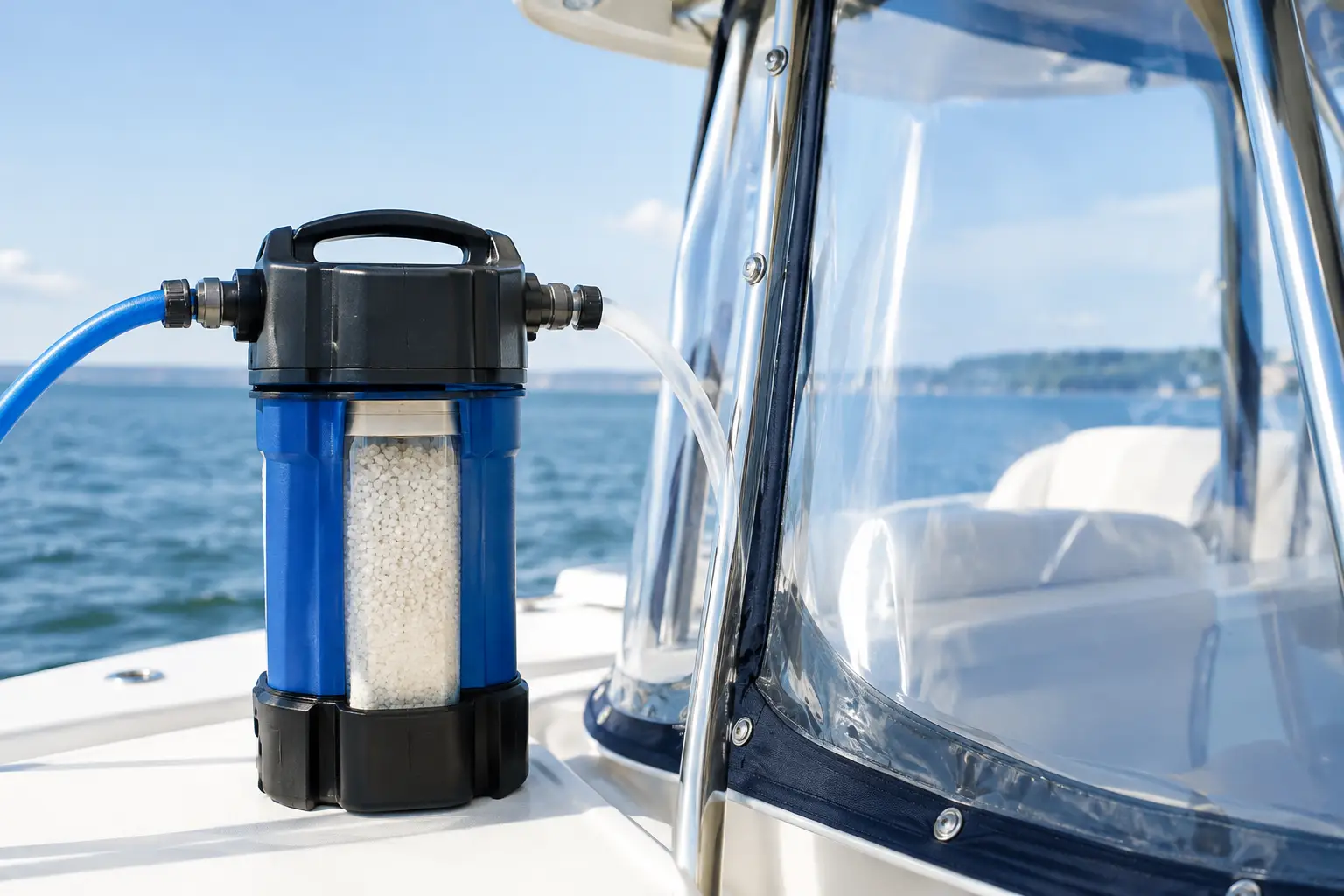
A clear eisenglass enclosure makes the helm more comfortable, improves visibility, and helps a boat look properly cared for. Mineral-heavy water can change that quickly. White spots, cloudy film, and dried spray may seem like minor cosmetic issues at first, but repeated hard-water exposure can leave clear vinyl looking dull and neglected. Knowing how to protect eisenglass from minerals starts before the wash mitt comes out: control the water going onto the enclosure.
Why hard water is tough on eisenglass
Hard water contains dissolved calcium and magnesium. When washdown water dries on eisenglass, those minerals remain behind as spots or a chalky residue. In direct sun, the water evaporates faster and the deposits become more concentrated. That means a quick rinse at the dock can create a bigger cleanup job by the time you return to the boat.
The problem is not just the spot itself. Owners often try to remove mineral deposits by rubbing harder, using household glass cleaners, or reaching for a stronger chemical. Clear vinyl is not ordinary glass. Abrasive pads, dry wiping, ammonia-based cleaners, and aggressive descaling products can scratch, haze, stiffen, or shorten the service life of the panels.
Eisenglass also has seams, zippers, snaps, and canvas edges that hold moisture and residue. Mineral buildup in those areas can make routine cleaning slower and make an otherwise clean enclosure look unfinished. Preventing deposits is far easier than correcting them after they have baked onto the surface.
How to protect eisenglass from minerals during washdowns
The best defense is to wash and rinse the enclosure with soft water. Soft water has the calcium and magnesium removed, so it does not leave the same hard-water spotting and scale as untreated dock water. It also allows soap to rinse more completely, which reduces the residue left on the clear vinyl.
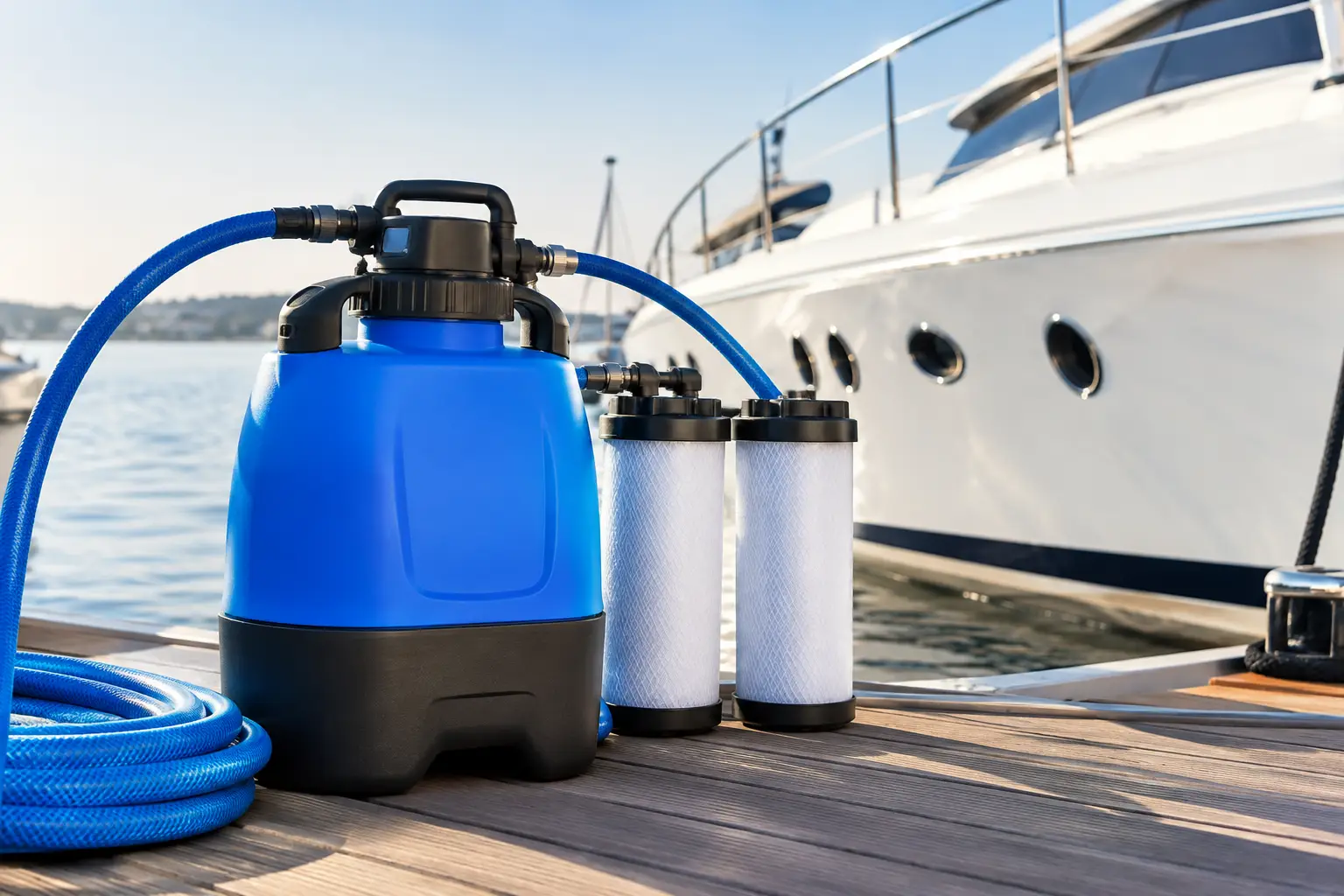
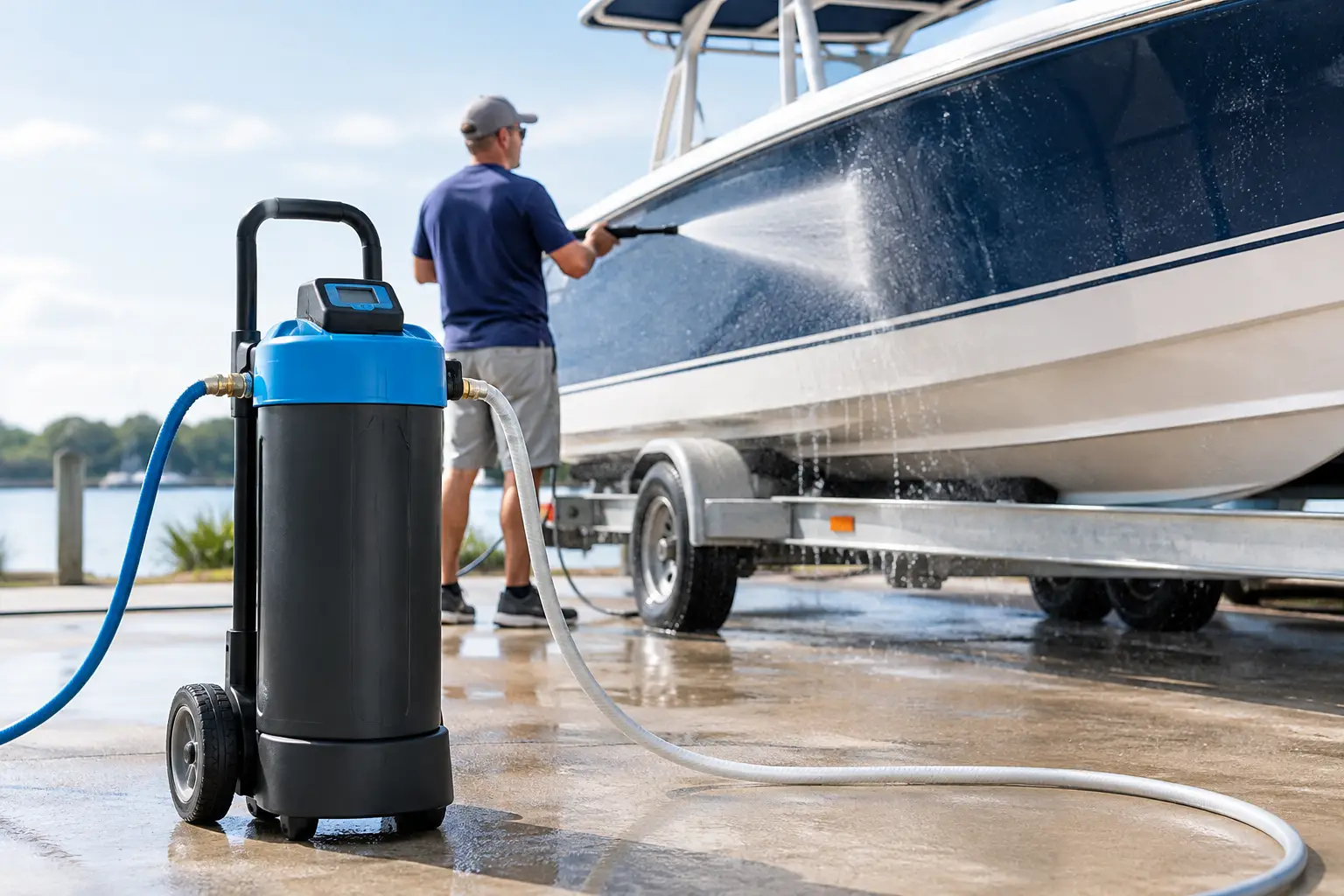
A portable water softener makes this practical at the slip, on a mooring with a water connection, or wherever dockside water is hard. Connect the unit between the water source and your hose, then use the softened water for the final rinse on eisenglass, windows, gelcoat, metal, and other finished surfaces. Wet Spot portable soft water systems are designed for this type of mobile use without electricity or a permanent installation.
For routine washdowns, start by rinsing loose salt, dust, and grit from the panels. Never wipe an un-rinsed enclosure dry. Even fine debris can drag across clear vinyl and leave scratches that cannot be polished away easily.
Use a cleaner made specifically for clear vinyl, following its dilution and application instructions. Wash with a clean, soft microfiber towel or other non-abrasive material, using light pressure. Work in small sections, especially on large panels, so cleaner does not dry in the sun. Then rinse thoroughly with soft water.
If the enclosure is very dirty, it is better to repeat a gentle wash than to increase pressure or use a harsher product. Clear vinyl rewards patience. A few extra minutes during a washdown can prevent permanent haze and avoid a premature panel replacement.
Drying habits that stop water spots
A soft-water rinse dramatically reduces mineral spotting, but drying still matters. Water can collect along stitching, around snaps, under roll-up straps, and at the lower edge of the enclosure. Leaving pooled water in those areas invites streaks, residue from airborne grime, and mildew concerns.
After rinsing, use a clean, dedicated microfiber towel to blot remaining water. Do not use the towel you just used on metal, non-skid, or the hull. A towel that has picked up grit, wax, or polish can transfer contaminants to eisenglass and leave fine scratches.
Avoid drying in broad, forceful strokes. Instead, support the panel with one hand when possible and gently blot or draw the towel across the surface with minimal pressure. This is especially useful on older panels that may be less flexible than new eisenglass.
Timing makes a difference, too. Wash early or late in the day when panels are cooler. Hot clear vinyl dries water rapidly, making spotting more likely and cleaning products harder to remove. If a midday washdown is unavoidable, complete one manageable section at a time and keep it wet until the final rinse.
Remove mineral spots without damaging clear vinyl
Fresh mineral spots are usually much easier to remove than deposits that have been sitting through several sunny days. Start with a generous rinse using soft water. Then use a clear-vinyl-safe cleaner and a clean microfiber towel. Let the cleaner do the work rather than scrubbing at the spot.
Do not assume a household water-spot remover is safe because it works on glass or chrome. Many mineral removers are acidic or abrasive enough to damage clear vinyl, coatings, stitching, and nearby canvas. Vinegar solutions, powdered cleaners, paper towels, rough sponges, and razor blades are also poor choices for eisenglass care.
If spots remain after gentle cleaning, check the product guidance for the specific type and age of your enclosure. Some panels have protective coatings or manufacturer-recommended cleaners. A marine canvas or enclosure professional can be the right next step for stubborn haze, deep staining, or a panel that has become brittle. Trying multiple strong products can turn a removable deposit into permanent damage.
Build a simple mineral-prevention routine
Eisenglass protection is most effective when it becomes part of regular boat care rather than an occasional detailing project. The right schedule depends on how often the boat is used, local water hardness, whether the vessel sits in full sun, and how much salt spray reaches the enclosure.
For many boat owners, a soft-water final rinse after each washdown is the most valuable habit. It prevents mineral residue from drying in place and keeps the panels easier to maintain between deeper cleanings. After rain, inspect the enclosure for runoff lines or debris trapped near canvas seams. Rainwater itself may be relatively low in minerals, but it can carry dirt, salt, and contaminants from the surrounding canvas and hardware.
At least once a month during active boating season, inspect the panels closely in angled light. Look for small spots, cloudy areas, fine scratches, and buildup around fasteners. Addressing early signs of residue with a gentle clean prevents the cycle of heavy scrubbing that damages clear vinyl.
When storing or rolling panels, make sure they are clean and completely dry. Mineral residue trapped in a rolled panel can transfer from one surface to another. Never store wet eisenglass tightly folded, and avoid allowing metal hardware or rough canvas edges to press against the viewing area for long periods.
Protect the entire enclosure, not just the clear panels
Hard water affects more than the eisenglass itself. Calcium and magnesium can leave scale around snaps, zipper tracks, stainless framing, windshield glass, and canvas hardware. If those surfaces spot after every wash, the enclosure never looks fully clean, no matter how carefully the panels are maintained.
Using softened water for the final washdown helps protect the complete cockpit area. It reduces spots on clear vinyl and glass, helps soap rinse away cleanly, and limits the mineral film that collects on polished metal and painted surfaces. That means less wiping, fewer harsh cleaning attempts, and more consistent results after every wash.
The trade-off is simple: a soft-water routine requires preparation and periodic manual recharge of the softener. For owners dealing with hard dock water, that small maintenance step is usually far less demanding than repeatedly removing spots, replacing damaged panels, or paying for extra detailing.
Clear eisenglass is an expensive part of a boat’s appearance and usability. Give it clean water, gentle tools, and prompt attention after every washdown, and it will stay clearer with far less effort over the seasons ahead.