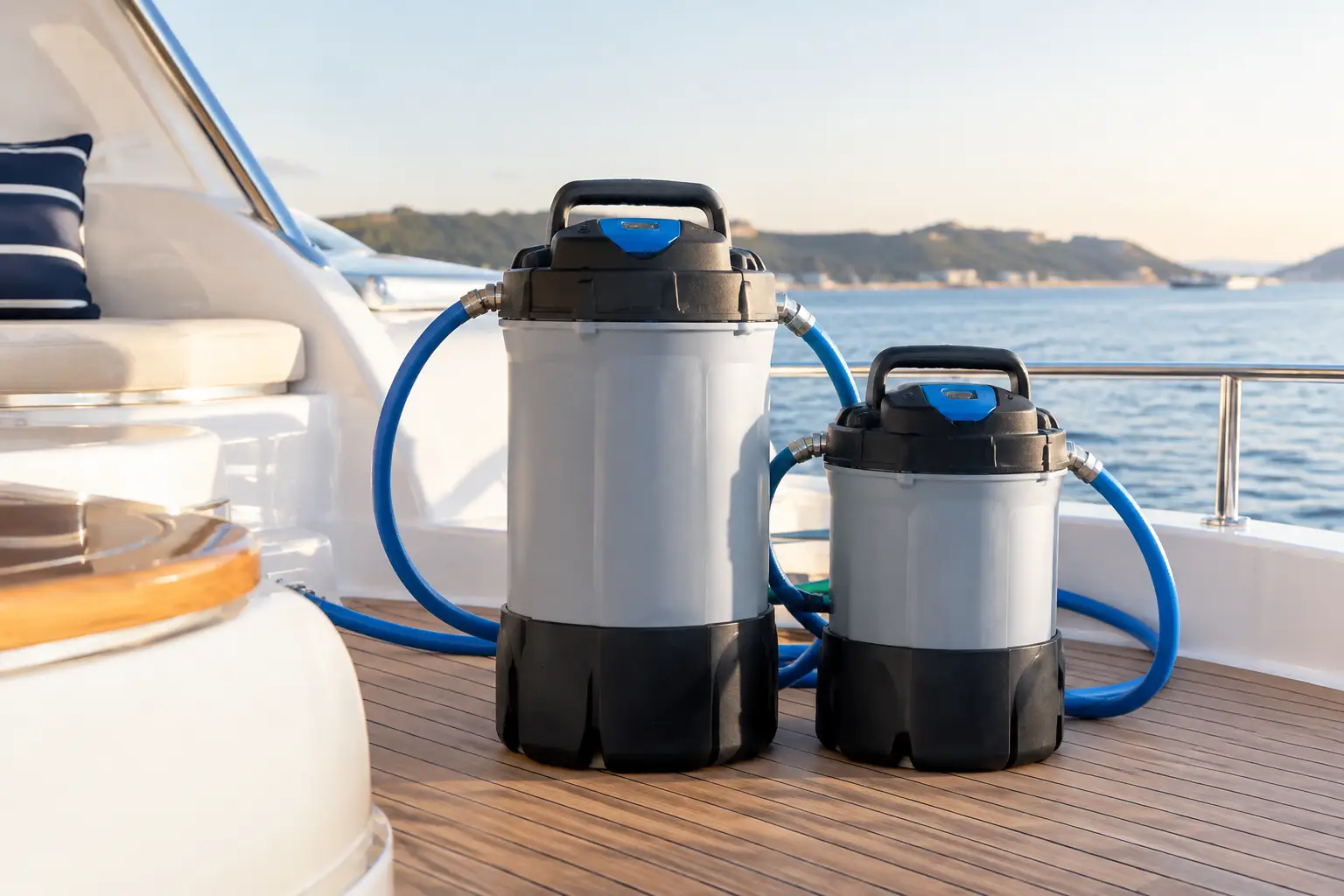
A spotless washdown can turn into a frustrating detail job the moment hard water dries on gelcoat, stainless, glass, or eisenglass. Proper yacht softener sizing gives you enough soft water to finish the work without rushing, while protecting the plumbing and onboard equipment that make your vessel more enjoyable to own.
The right unit is not simply the largest one you can carry. It should match your vessel’s length, how often you use dock water, the hardness at the marinas you visit, and the amount of water your crew uses between recharges. When those factors line up, soft water becomes a practical part of routine boat care rather than another piece of equipment to manage.
Why Yacht Softener Sizing Matters
Hard water contains calcium and magnesium. Those minerals leave white spots as water evaporates and form scale inside faucets, shower fixtures, water heaters, hoses, and appliances. On a yacht, the problem adds up quickly because there are many surfaces worth protecting and many systems exposed to shore water.
An undersized portable softener may still improve a quick rinse, but it will require more frequent recharging during larger washdowns or periods of heavy onboard use. That interrupts the job and can lead owners to bypass the softener when time is tight. A properly sized system gives you useful capacity for the way the vessel is actually operated.
Oversizing has a trade-off as well. A larger system provides more capacity, but it takes up more room and represents more equipment to transport, stow, and secure. The best choice is the smallest unit that reliably covers your normal demand, with enough margin for busy weekends, guests, or a full cleaning day.
Start With Vessel Length and Use Pattern
Vessel length is the most useful starting point because it usually reflects the amount of exterior surface, number of plumbing fixtures, and likely water demand. It is not the only sizing factor, but it creates a sensible baseline.
Boats up to 70 feet
For boats up to 70 feet, a portable softener sized for smaller vessels is generally a practical fit. These boats may still have extensive gelcoat, brightwork, glass, and deck hardware, but their washdowns and freshwater demands are usually more manageable than those of larger yachts.
This range is a strong match for owners who primarily want soft water for routine washdowns, rinsing after a day on the water, and protecting a modest number of onboard fixtures. If your boat is near the upper end of this range, is kept in especially hard-water areas, or sees frequent guest use, choose capacity with some room to spare rather than sizing only for the shortest rinse.
Yachts from 70 to 100 feet
A 70- to 100-foot yacht generally needs more capacity because the water demand increases on several fronts. There is more hull and deck area to wash, more stainless and glass to protect, and often more heads, showers, appliances, and crew activity onboard.
At this size, soft water is often used for more than making the exterior look better. It helps reduce scale in plumbing and supports cleaner showers, better soap performance, and less mineral residue on fixtures. A system sized for this vessel category can reduce the need to stop and recharge in the middle of a normal maintenance routine.
Owners should consider their operating schedule here. A yacht that is used occasionally with a light washdown schedule may need less capacity than a similarly sized vessel that is chartered, carries a full crew, or is washed after every outing. Length points you toward the right class of unit. Water use determines whether you should stay at the baseline or size up.
Yachts 100 feet and above
For yachts of 100 feet and above, capacity becomes a central part of the decision. These vessels have large exterior areas, more complex water systems, and a greater likelihood of multiple people using water during the same period. A portable softener needs to support meaningful use before it is time for maintenance.
Larger yachts also tend to have more valuable finishes and equipment exposed to hard water. Preventing mineral spotting on glass, polished metal, painted surfaces, and high-end fixtures can save significant detailing time. Limiting scale buildup in water-fed appliances and plumbing helps protect systems that are expensive to service.
For this category, do not size based only on a single hose-down. Think about a typical day at the dock: a washdown, cleanup after guests, showers, galley use, and water used by the crew. If those activities happen regularly, capacity should be selected for the full operating pattern.
Account for Water Hardness at Your Marina
Two yachts of the same length can need different softener capacity if they dock in areas with different water hardness. Harder water uses the softening media faster because it contains more minerals that must be removed. A unit that lasts comfortably between recharges at one marina may require more frequent attention at another.
If you travel between marinas, plan for the hardest water you commonly encounter, not the best-case water at your home slip. This is especially useful for owners who cruise seasonally or move between freshwater and coastal destinations. Sizing for real conditions makes soft-water protection more dependable wherever the boat is docked.
Water hardness does not mean a smaller softener is ineffective. It means recharge intervals may be shorter. The advantage of selecting adequate capacity is that you retain flexibility when dock water conditions change.
Match Capacity to the Jobs You Expect It to Do
The easiest way to make a sizing decision is to be honest about how the softener will be used. If it is dedicated to final rinses after washdowns, your needs may be modest. If it supplies water for exterior cleaning, showers, sinks, and appliances, the demand is much higher.
Consider these four common uses together:
- Exterior washdowns and spot-free final rinses
- Showers, heads, and freshwater fixtures
- Galley cleanup and onboard appliance protection
- Crew, guest, or family water use during a stay aboard
A softener used only for washdowns can be sized closer to vessel length. A softener that supports the vessel’s onboard freshwater experience should be selected with water consumption and guest activity in mind. Neither approach is wrong. The key is choosing equipment for the job you expect it to perform.
Do Not Ignore Recharge Practicality
Portable water softeners require periodic manual recharging. That is a straightforward part of ownership, but it should influence yacht softener sizing. A larger-capacity unit may reduce how often you recharge, while a smaller unit can be easier to handle and store.
For a weekend boat used lightly, frequent recharge may not be a concern. For a yacht with regular wash crews, charter turnover, or extended dockside stays, interruptions are more costly in time and labor. In those cases, additional capacity can be the practical choice even if the vessel technically falls near the lower end of a sizing range.
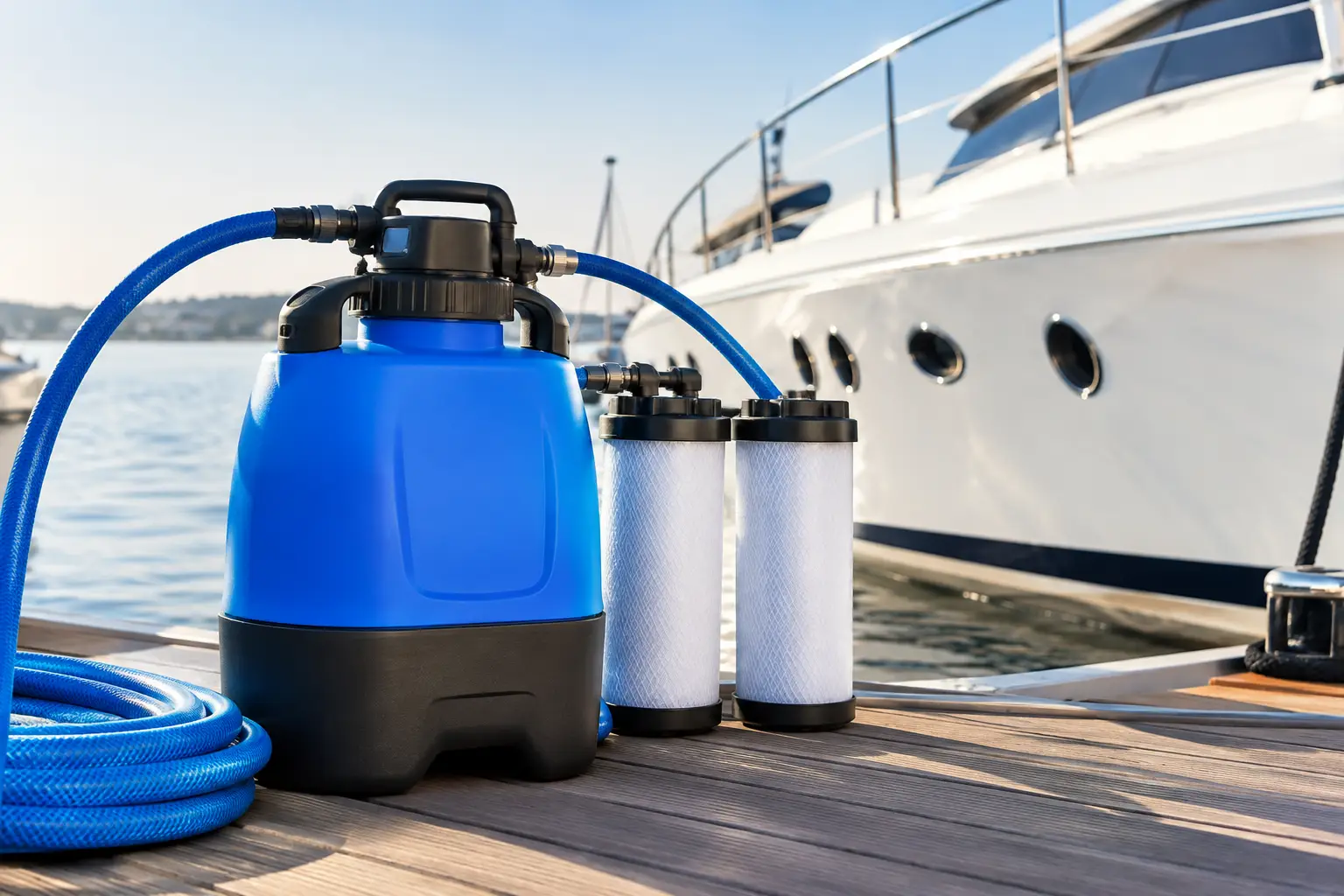
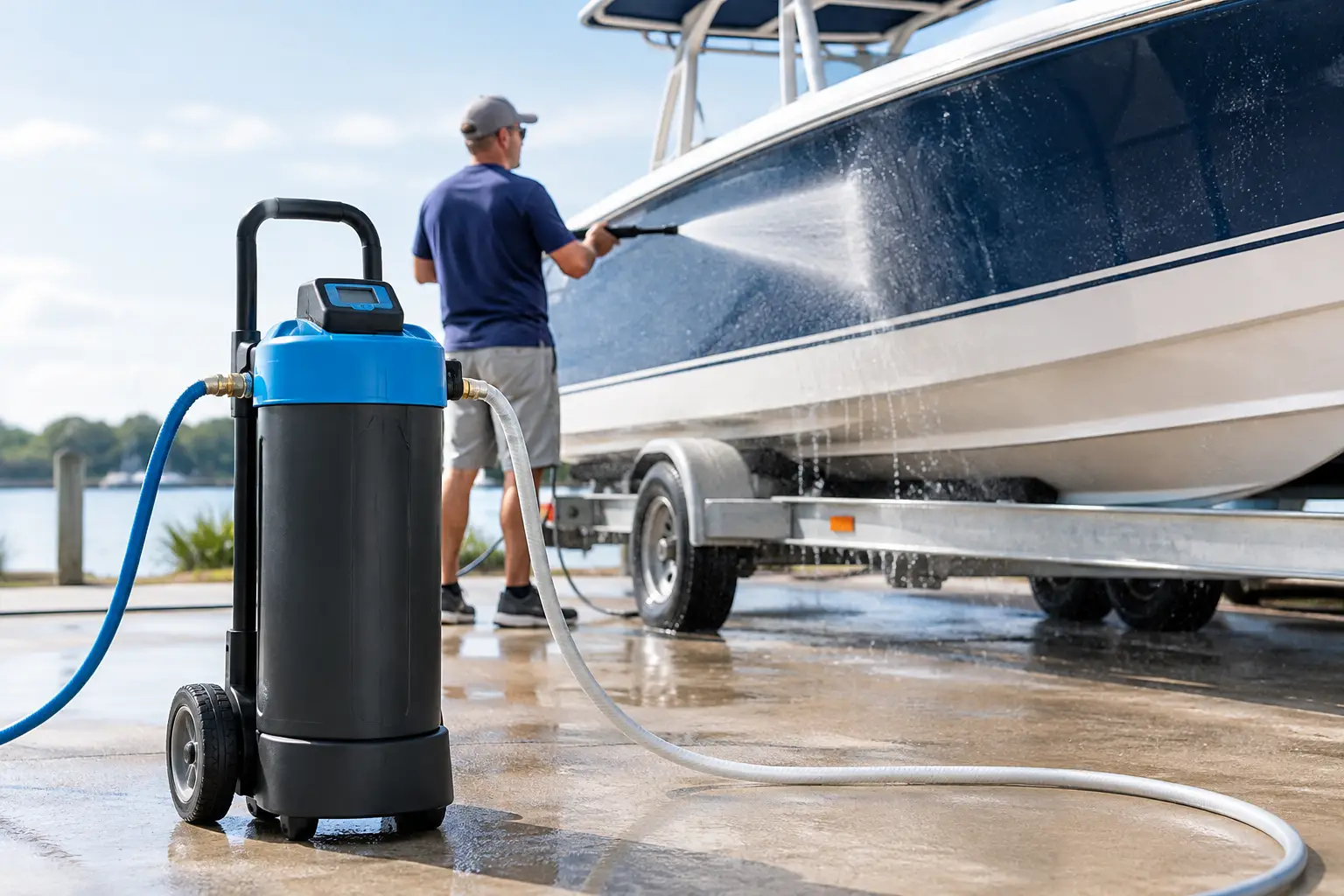
Choose a setup your crew will actually maintain. A portable unit should be simple to move, easy to connect, and built to stand up to dockside conditions. Wet Spot portable softeners are designed for that purpose, with no electrical hookup and no loss of water pressure during normal use.
Protect More Than the Finish
The visible benefit of soft water is obvious: fewer water spots and less time spent chasing mineral residue after a wash. The longer-term value is inside the vessel. Hard-water scale can restrict flow, affect fixtures, and accumulate in water heaters and appliances over time.
That is why softener sizing should be viewed as an asset-protection decision, not just a detailing decision. The right capacity encourages consistent use. Consistent use helps preserve the finish outside and reduces mineral exposure inside the systems that keep the yacht comfortable and operational.
Before choosing, look at your vessel length, your busiest water-use day, and the hardness of the dock water you encounter most often. Select enough capacity to make soft water the easy choice every time the hose comes out or the onboard water system goes to work.