A spotless washdown can look disappointing within minutes when hard water dries on the hull, glass, rails, and canvas. This guide to yacht water spot removal focuses on what is safe to remove, what needs a more careful approach, and how to stop mineral deposits from becoming a recurring maintenance job.
Water spots are not all the same. Some are fresh mineral residue sitting on the surface. Others have bonded to oxidized gelcoat, etched glass, or collected around fittings where water repeatedly dries. The right correction depends on the surface and how long the deposits have been there.
Why Yacht Water Spots Become a Bigger Problem
Hard water contains dissolved minerals, primarily calcium and magnesium. When wash water evaporates, those minerals remain behind. On dark gelcoat, polished stainless, windows, and clear enclosure panels, the white residue is easy to see. On lighter surfaces, it may be less obvious but can still build up over time.
The issue is more than appearance. Mineral deposits can make routine washdowns take longer, interfere with wax or sealant performance, dull polished metal, and leave rough areas that hold dirt and salt. Around deck hardware, plumbing connections, and onboard appliances, scale can become a functional maintenance concern.
Salt spray adds another variable. Salt residue, airborne grime, and hard-water minerals often dry together. A spot may look like a simple water mark, but aggressive rubbing or the wrong chemical can damage the finish before the deposit is gone.
Start With a Safe Spot Check
Before treating an entire side of the yacht, test a small, inconspicuous area. This matters most on acrylic, polycarbonate, eisenglass, painted surfaces, polished aluminum, and older gelcoat. A cleaner that works well on fiberglass may haze clear vinyl or stain unprotected metal.
Wash the affected section first with a marine-safe soap and clean water. This removes loose dirt and salt that could scratch the surface during spot removal. Work in the shade whenever possible, and keep the surface cool. Heat causes cleaning products to flash dry, which makes residue harder to manage.
Fresh spots may release with a soft microfiber towel and a thorough rinse. Do not reach for an abrasive pad just because the marks are visible. Mineral deposits are frustrating, but excessive abrasion creates a more permanent problem than the spot itself.
Guide to Yacht Water Spot Removal by Surface
Gelcoat and painted hull surfaces
For light mineral spotting on gelcoat, use a dedicated marine water-spot remover or a mild acidic cleaner approved for fiberglass. Apply it to a damp microfiber towel rather than flooding the surface, work a manageable section, then rinse thoroughly. Follow the product directions closely. More dwell time is not always better.
If the spots remain after cleaning, inspect the finish under good light. Old deposits may be sitting in oxidation or in a worn surface protectant. In that case, a light polish may be necessary after the mineral residue is removed. Polishing should correct the finish, not serve as the first response to every washdown.
After correction, protect clean gelcoat with a quality wax, sealant, or coating appropriate for the boat’s finish. Protection will not make hard water harmless, but it reduces how strongly deposits cling to the surface and makes future cleanup easier.
Glass, windshields, and mirrors
Glass can tolerate more cleaning options than many yacht surfaces, but it can still be etched by minerals if spots sit for long periods. Use a cleaner formulated for marine glass or a mild spot remover that is safe for the surrounding frames and seals. Wipe with a clean microfiber towel and rinse before the product dries.
Avoid using razor blades, aggressive scouring pads, or heavy polishing compounds unless the glass manufacturer and a qualified detailer recommend them. The risk is especially high near coated glass, window tint, rubber seals, and painted frames.
Stainless steel, chrome, and metal fittings
Water spots show quickly on rails, cleats, grab handles, and polished hardware. Clean the metal first, then use a product intended for the specific metal type. Wipe in the direction of the grain on brushed stainless steel. Rinse and dry immediately so cleaner residue does not create a new mark.
Never assume every shiny fitting is stainless steel. Some finishes are plated, anodized, or coated. Strong acids can discolor or damage them, particularly when allowed to sit around fasteners and seams.
Eisenglass, acrylic, and clear enclosure panels
Clear panels need the gentlest approach. Use only cleaners and towels made for plastic glazing or eisenglass. Avoid household glass cleaners with ammonia, abrasive compounds, stiff brushes, and dry wiping. These materials scratch easily, and scratches scatter light long after the mineral spots are gone.
For stubborn deposits, it is better to repeat a gentle cleaning process than to use a stronger chemical without confirming compatibility. If the panel has cloudiness, crazing, or heavy etching, professional evaluation may be the better choice.
When Spots Will Not Come Off
A water spot that feels rough is usually mineral buildup. A mark that remains smooth but looks dull may be etched into the surface. That distinction matters because a cleaner can remove deposits, while etching often requires polishing, restoration, or replacement.
Do not keep escalating chemical strength without a plan. Strong acidic products can be effective on mineral scale, but they carry more risk around metals, non-skid, decals, caulking, fabrics, and drainage areas. They also require careful rinsing and appropriate personal protection.
If spotting covers a large portion of the yacht, appears in seams and hardware crevices, or has affected clear panels, a professional marine detailer may save time and reduce the chance of costly finish damage. The goal is to restore the surface once, then eliminate the conditions that caused repeated spotting.
Prevent Water Spots During Every Washdown
The most reliable removal method is prevention. Drying the yacht promptly helps, but it does not solve the mineral issue when the rinse water itself is hard. A chamois or microfiber towel can spread mineral-laden water across a larger area if the surface is not rinsed properly first.
Use a simple wash sequence: rinse away salt and loose debris, wash from the upper surfaces downward, rinse completely, and dry before water can bake onto the finish. Replace towels when they become saturated or contaminated. Dirty towels can leave streaks and grind fine debris into gloss surfaces.
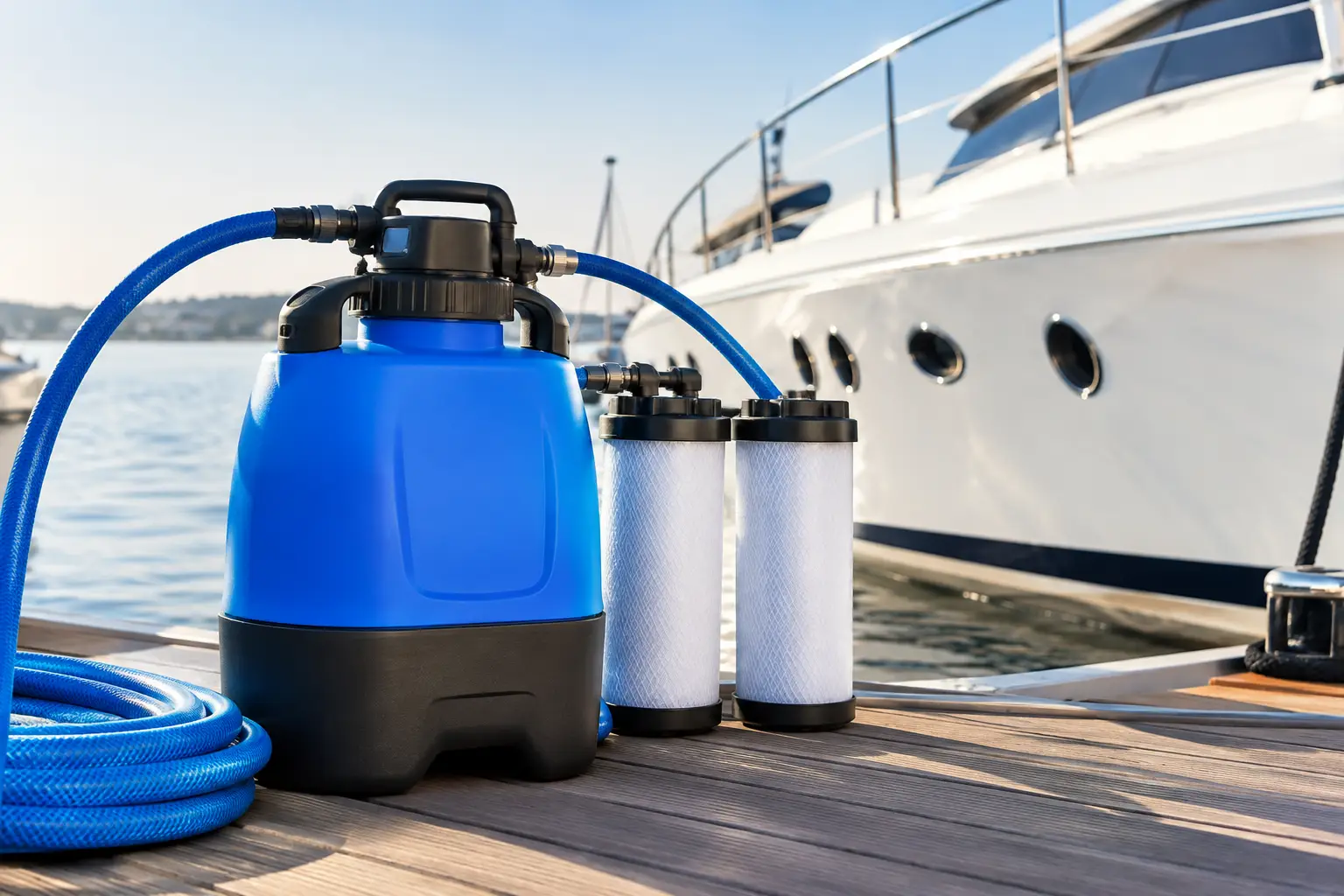
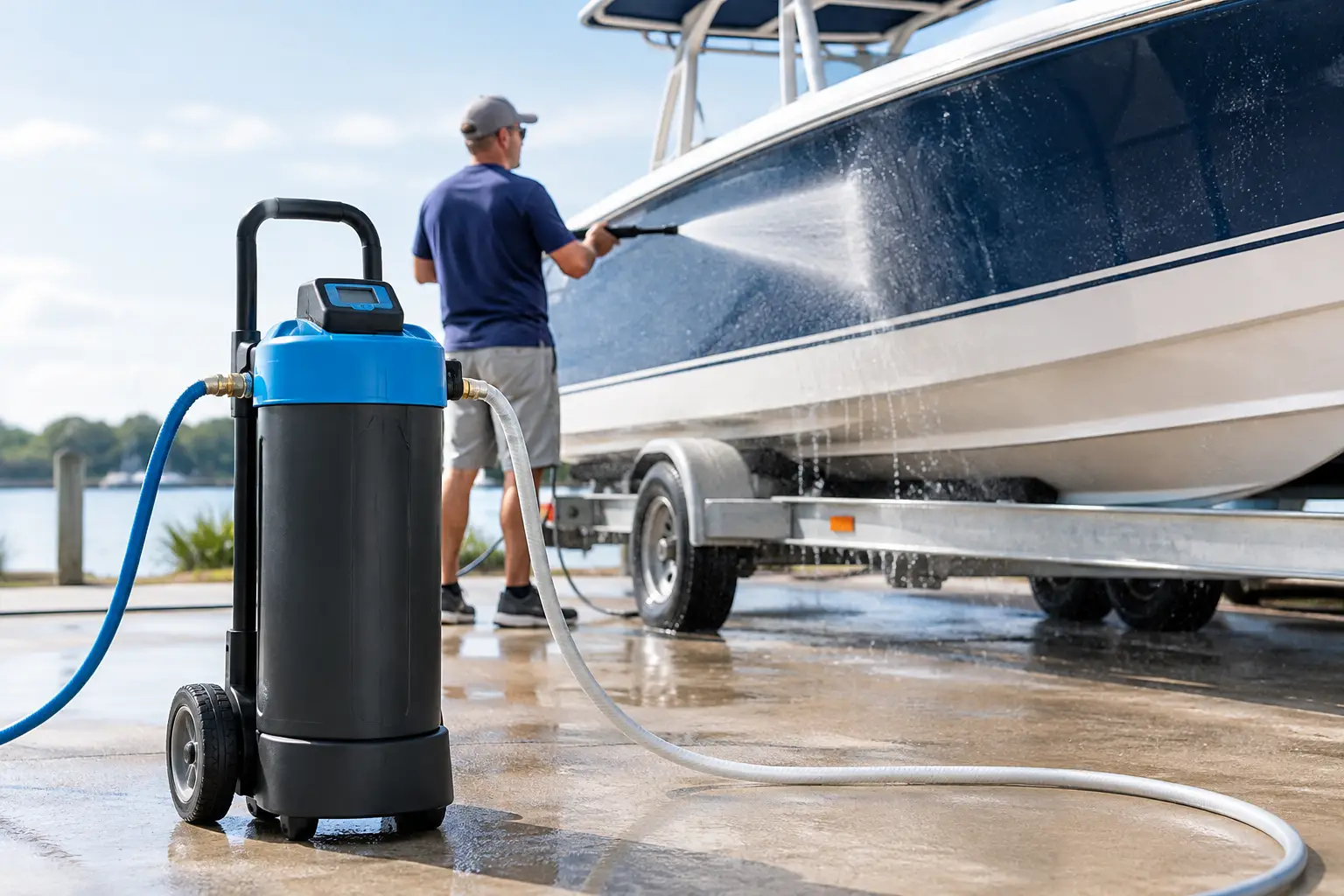
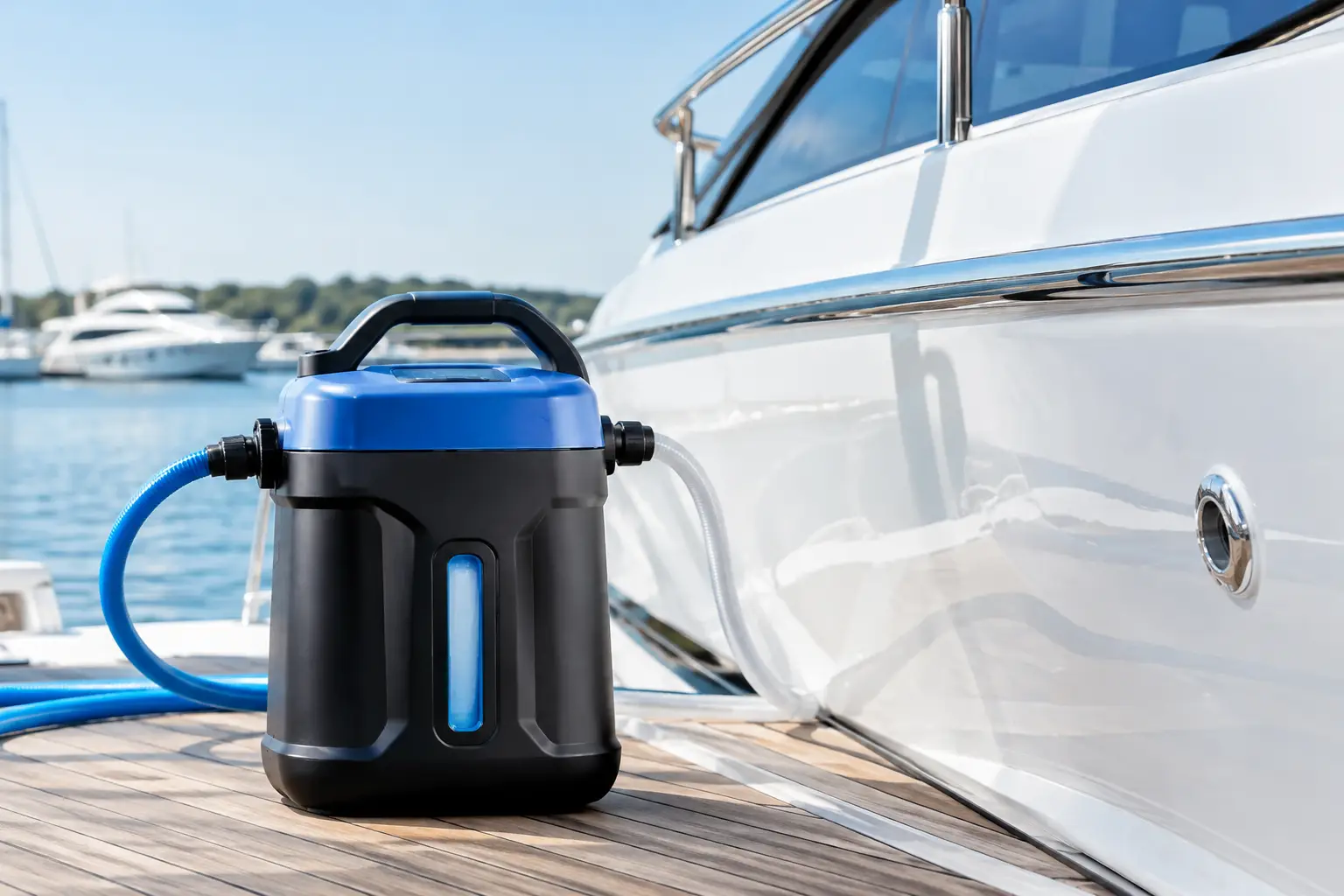
For yachts kept in hard-water areas, a portable water softening system changes the final rinse. By removing calcium and magnesium from the wash water, it helps prevent the white mineral residue that forms when water dries. Soft water also improves soap performance, so wash products rinse more cleanly and leave less film behind.
Wet Spot portable soft water systems are built for this type of mobile use, with no electrical hookup and no loss of water pressure. The practical benefit is straightforward: use softened water at the dock or marina to reduce spotting on valuable exterior finishes, clear panels, metal, plumbing fixtures, and onboard appliances.
Choose the Right Prevention Plan for Your Yacht
Your wash routine should match how and where the yacht is used. A boat washed weekly at a marina with very hard water benefits from softened water on every washdown and final rinse. A yacht that spends extended time in saltwater may need more frequent freshwater rinsing, even if its home dock has relatively soft water.
Vessel size matters as well. Larger yachts have more exterior surface area, more windows, more hardware, and more onboard systems exposed to mineral-heavy water. Make sure the water-softening capacity fits the yacht’s size and typical water use. A unit that is too small for the wash volume will require more frequent recharging and can interrupt the maintenance routine.
Manual recharge is part of ownership, so build it into the schedule rather than waiting for spot problems to return. A consistent maintenance routine protects the system and keeps the water quality working in your favor.
A Better Standard for Yacht Care
Water spots are easiest to manage when they are fresh, but the long-term answer is not stronger cleaners or more polishing. It is reducing the minerals that create the spots in the first place. Protect the finish during each washdown, use surface-appropriate cleaners when correction is needed, and make soft-water rinsing part of the normal dockside routine. Your yacht will stay cleaner between details, and the surfaces you invested in will need less correction over time.