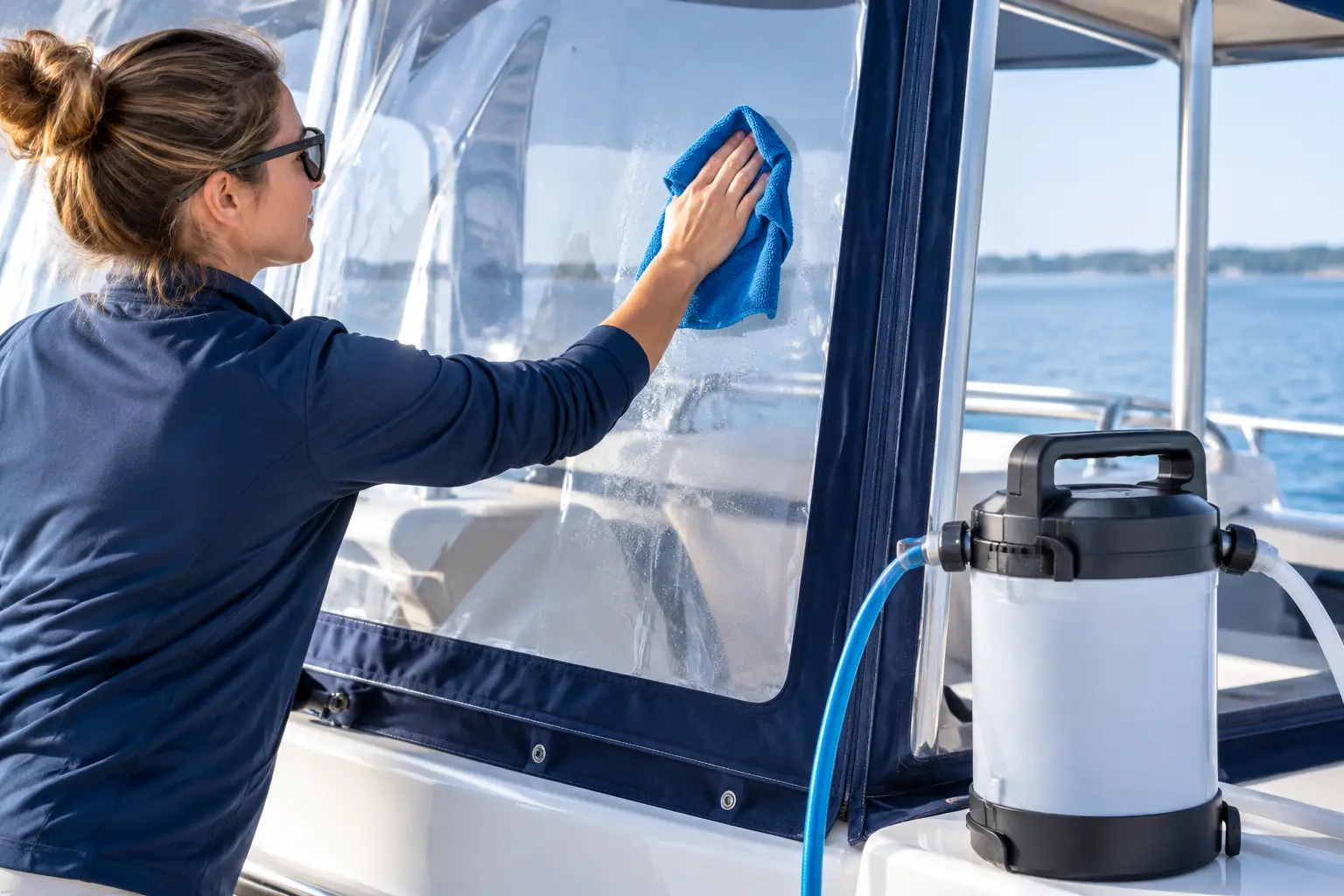
Salt spray, sunscreen, dock dust, and hard-water spotting can make a clear enclosure look tired fast. To clean boat eisenglass properly, start with enough water to lift contamination away before you touch the panel. Rubbing a dry or gritty surface is the quickest way to create fine scratches that scatter light and leave the vinyl looking cloudy.
Eisenglass is not glass. It is a flexible clear vinyl material, and it needs a different cleaning approach than windshields, windows, or gelcoat. The goal is simple: remove salt, dirt, oils, and mineral residue without abrading the surface or leaving behind products that cause haze.
Why boat eisenglass becomes cloudy
Most enclosure damage is gradual. Fine airborne grit settles on the panels between outings. Saltwater dries into crystals. Hard water leaves calcium and magnesium behind as spots, especially after washdowns in direct sun. Then a towel, brush, or unsuitable cleaner drags those contaminants across the vinyl.
Some cloudiness is surface residue and can be corrected with careful cleaning. Other haze comes from permanent scratching, chemical damage, or aging material. A good cleaning routine cannot reverse every problem, but it can prevent minor buildup from becoming permanent visibility loss.
The water used for washdowns matters more than many boat owners realize. Hard water can leave fresh mineral spots on a panel that was clean moments earlier. It can also make soap harder to rinse away, leaving a dull film that looks like haze. Soft water rinses cleaner and helps keep the enclosure clear after every wash.
What to use to clean boat eisenglass
Use products made specifically for clear vinyl whenever possible, and follow the manufacturer instructions for both the cleaner and the enclosure material. For routine care, the right equipment is uncomplicated:
- A low-pressure source of clean water for a thorough initial rinse
- A clean, soft microfiber cloth reserved only for clear vinyl
- A clear-vinyl-safe soap or cleaner
- A separate dry microfiber cloth for gentle drying and finishing
Keep these supplies away from general detailing towels. A microfiber cloth used on stainless, non-skid, or hull sides can hold grit even when it looks clean. That grit is enough to scratch a clear panel.
Avoid paper towels, shop rags, household glass cleaner, abrasive pads, powdered cleaners, and harsh solvents. Products containing ammonia, alcohol, or strong petroleum solvents may dry out, discolor, or weaken vinyl over time. A cleaner that performs well on a household window can be the wrong choice for an enclosure panel.
The right way to clean clear vinyl panels
Rinse before wiping
Start in the shade whenever practical. Heat causes water and cleaning products to dry too quickly, which raises the risk of spotting and streaking. Use a gentle, wide rinse to flush away loose salt, sand, and dust. Do not use a high-pressure nozzle close to panel seams, zippers, snaps, or edges.
This first rinse is not optional. If the panel feels gritty, continue rinsing until it does not. The less contamination left on the surface, the safer every step that follows.
Wash with light pressure
Apply an approved cleaner or a mild clear-vinyl-safe wash solution to one manageable section at a time. Use a freshly cleaned microfiber cloth and move with light, straight passes. There is no benefit to scrubbing hard. If residue does not release, apply more solution, let it dwell as directed, and rinse again rather than increasing pressure.
Work from the top down so dirty runoff does not travel across an area you have already cleaned. Turn or replace the cloth often. Once a cloth picks up visible dirt, it is no longer the right tool for a clear panel.
Rinse completely and dry carefully
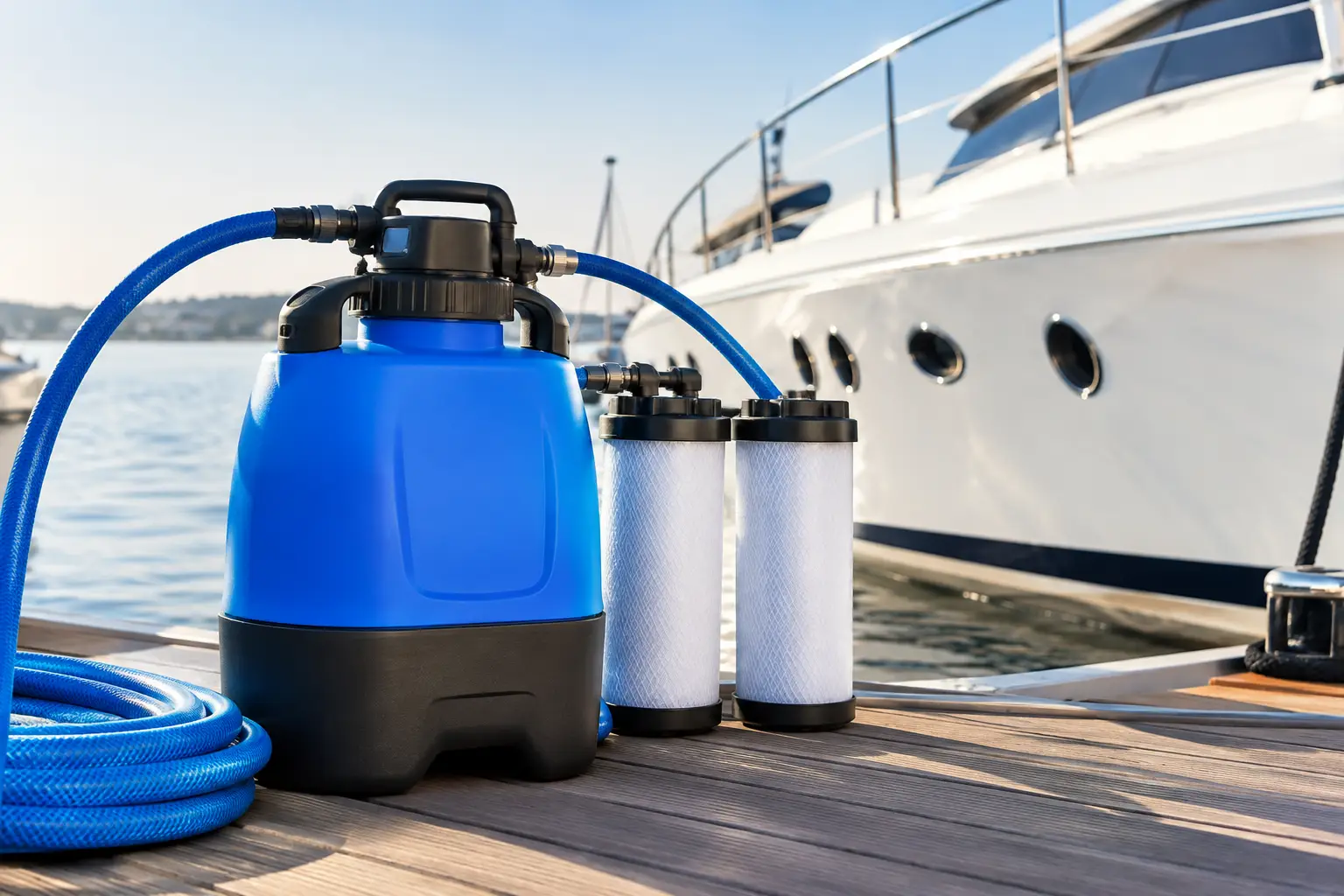
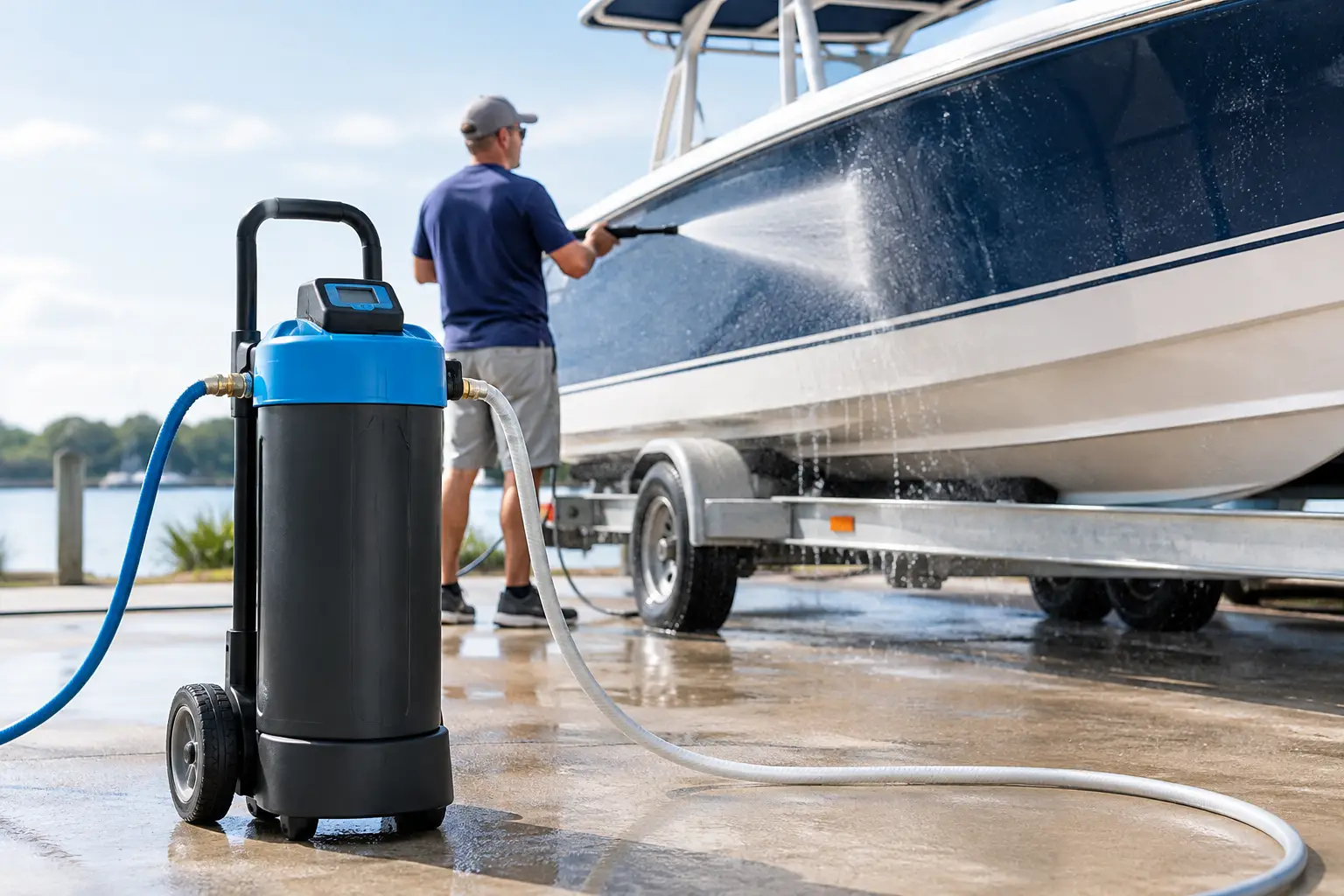
Rinse away all cleaner residue with clean water. This is where soft water provides a practical advantage. Water softened through a portable system such as Wet Spot contains far fewer of the minerals that create white spots and stubborn rinse marks on clear vinyl, gelcoat, metal, and glass.
After rinsing, blot or lightly wipe the panel dry with a separate microfiber cloth. Do not grind the cloth into the vinyl. If you see spots after drying, the issue may be mineral residue from the wash water rather than remaining dirt. Rewashing that section with softened water is often more effective than applying more cleaner.
Finish with a vinyl-safe protectant when needed
A clear-vinyl protectant can help reduce static, repel light soil, and make the next wash easier. Apply only a product intended for eisenglass or clear flexible vinyl. Use a thin, even coat, then buff gently with a clean cloth if the product instructions call for it.
Protectants are useful, but they are not a substitute for washing. Applying a protectant over salt, sunscreen, or mineral spotting can lock in the look of a dirty panel and make later cleaning more difficult.
Hard water spots need a different response
White circles, chalky marks, and a faint crust around dried droplets point to mineral buildup. These deposits are common at marinas and homes supplied by hard water. They affect more than the enclosure. The same minerals build up on hulls, railings, shower fixtures, deck hardware, and onboard appliances.
Do not attack hard-water spots with an aggressive polish or household descaler. Clear vinyl is softer than glass, and the wrong correction method can create a larger problem than the spot itself. First, rewet the affected area with clean, preferably softened water. Then use a clear-vinyl-safe cleaner according to its directions and wipe with minimal pressure.
If the spots have been baked on for months or seasons, they may require professional evaluation. Repeated aggressive cleaning is rarely the answer. Prevention is less expensive than trying to restore a visibly damaged enclosure.
Habits that keep eisenglass clear longer
Wash the enclosure after exposure to salt spray, especially before the boat sits for an extended period. Salt crystals attract moisture and can leave a stubborn film as they dry. A quick fresh-water rinse after a trip is easier on the panels than a deep cleaning after several weeks at the dock.
Never fold, roll, or stow panels while wet or dirty. Moisture trapped against clear vinyl can leave marks, and trapped grit can scratch the surface during storage. Let panels dry fully, use clean protective material between layers, and avoid sharp bends that can cause creasing.
Be careful with products used nearby. Overspray from cockpit cleaners, bug spray, fuel additives, waxes, and aerosol protectants can land on clear vinyl. Cover the panels or clean overspray promptly with the proper product. Sunscreen on hands is another common source of smears, so rinse hands before handling enclosure panels.
When cleaning is not enough
A panel that remains milky after careful washing may have fine scratching, UV damage, plasticizer loss, or chemical staining. Deep creases, brittle edges, yellowing, and cracks are also signs that the material may be nearing the end of its service life. At that point, stronger cleaning products will not restore clarity and may make the damage worse.
The practical approach is to maintain what can be maintained and replace what cannot. Clear panels are a safety item as well as a cosmetic one. Reduced visibility at dusk, in rain, or around a busy marina is not something to ignore.
Treat eisenglass like the precision marine surface it is. Use clean cloths, low-pressure water, vinyl-safe products, and softened rinse water whenever possible. A few careful minutes after each outing can preserve clear sightlines and help your enclosure look like it belongs on a well-kept boat.