A clean boat can look freshly detailed at the dock, then dry into a mess of white rings across the glass, gelcoat, rails, and enclosure panels. Those water spots are not just a cosmetic annoyance. They are the visible residue left behind when hard water evaporates, and repeated exposure can make routine washdowns harder while putting expensive finishes at risk.
For boat owners, RV travelers, vehicle detailers, and aircraft caretakers, the goal is not simply to wash more often. It is to stop mineral-heavy water from drying on the surfaces that matter. Soft water changes the result at the source.
What Causes Water Spots?
Most water spots come from dissolved minerals, primarily calcium and magnesium. As hard water dries, the water itself evaporates while those minerals remain on the surface. What is left can appear as white dots, chalky streaks, cloudy film, or crusty deposits around fittings and fixtures.
A quick rinse may remove fresh spots, but mineral residue becomes more difficult to remove after it has baked in the sun or collected through repeated washdowns. On a boat, that can mean spots on dark gelcoat, stainless hardware, glass, vinyl, plastic, and isinglass. On an RV or vehicle, it can mean dull paint, hazy windows, and buildup around trim.
Saltwater exposure creates its own cleanup problems, but hard water is often what leaves the stubborn residue after the final freshwater rinse. That is why a boat may look clean while wet, then look spotted as soon as it dries.
Why Hard Water Is More Than a Detailing Problem
A single water spot is usually easy to address. The problem is repetition. Every washdown, dockside rinse, or fill-up with hard water can leave another layer of minerals behind. Over time, that buildup affects appearance, cleaning time, and potentially the condition of the equipment using that water.
On exterior surfaces, mineral deposits can make gelcoat and paint look faded or neglected. Glass and enclosure panels may develop a cloudy appearance that reduces visibility and requires more aggressive cleaning. Stainless steel and polished metal lose the clean finish owners work to maintain.
Inside the boat or RV, hard water can form lime scale in plumbing, shower fixtures, water heaters, ice makers, and other onboard appliances. Scale restricts flow, reduces efficiency, and creates maintenance work that is avoidable in the first place. Soap also performs poorly in hard water, leaving film instead of rinsing clean.
The real cost of hard water is often labor. Owners spend more time wiping down surfaces, applying spot removers, polishing hardware, and trying to restore a finish that should not have been exposed to mineral residue repeatedly.
Why Drying Method Helps, but Does Not Solve the Cause
Drying a boat immediately after washing can reduce visible spotting. Using clean microfiber towels, washing outside the hottest part of the day, and avoiding direct sun all help. These are sound detailing habits, especially when working with sensitive glass, clear vinyl, or dark finishes.
But drying every inch of a large boat before water flashes off is not always practical. It is even less realistic after a full washdown, when rails, tower components, canvas hardware, and hard-to-reach areas all hold water. The same applies to RV roofs, large vehicles, and aircraft surfaces.
Spot-free rinse agents can improve the finish, but they do not remove the calcium and magnesium already present in the source water. Strong chemical spot removers may deal with existing deposits, but frequent use can add expense and may not be appropriate for every material. Prevention is the better maintenance plan.
Soft Water Prevents Water Spots at the Source
A portable water softener removes the hardness minerals that create water spots and lime scale. Instead of trying to erase mineral residue after it dries, you wash and rinse with water that is far less likely to leave deposits behind.
This makes a noticeable difference during routine boat care. Soft water improves soap performance, helps rinse away grime more cleanly, and reduces the amount of towel work needed after a wash. Gelcoat, glass, metal, and plastic dry cleaner because there are fewer minerals left behind.
For owners who wash frequently, that benefit compounds. Less spotting means less polishing and less reliance on acidic cleaners or abrasive correction methods. It also helps protect plumbing and onboard appliances from the gradual scale buildup associated with hard water.
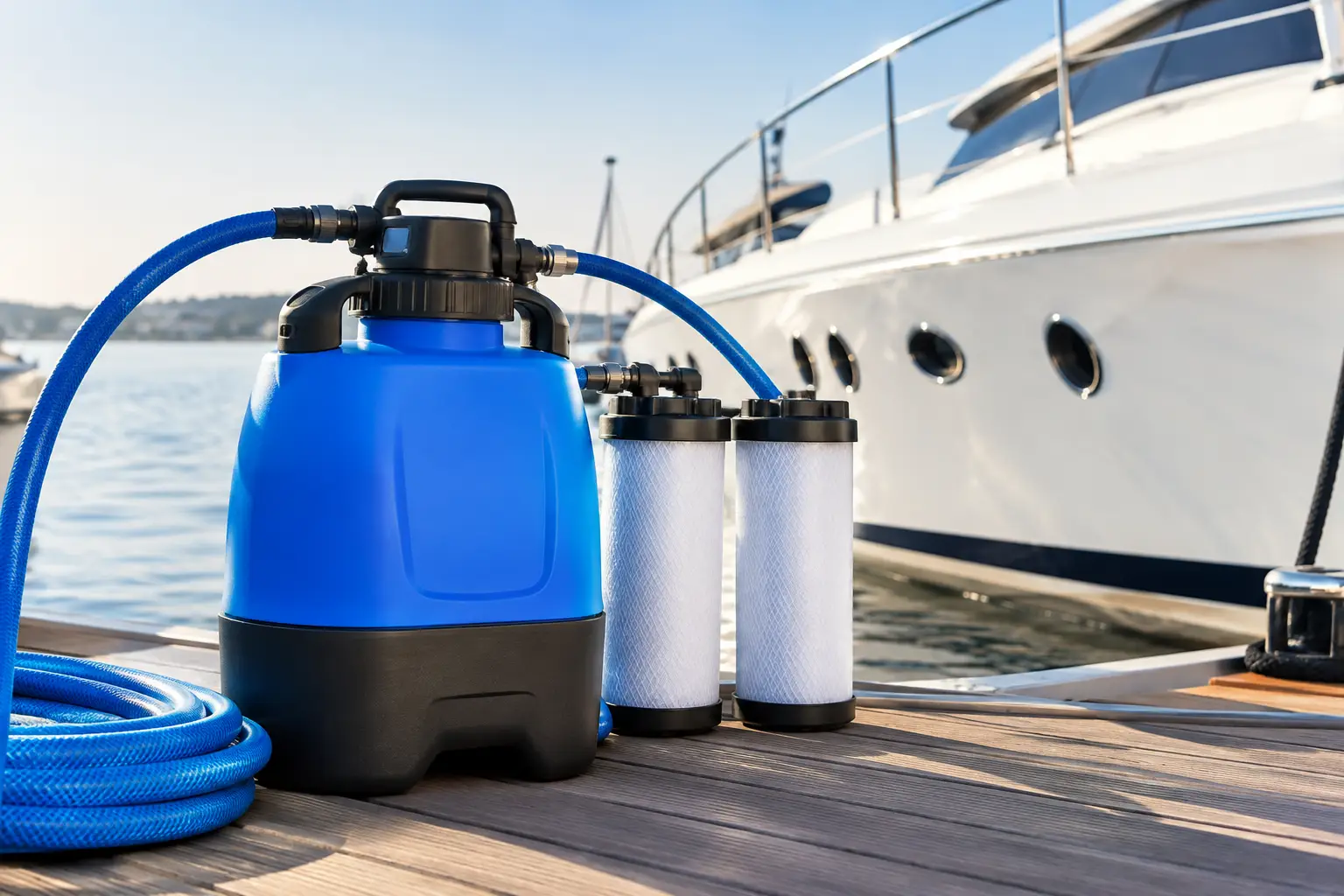
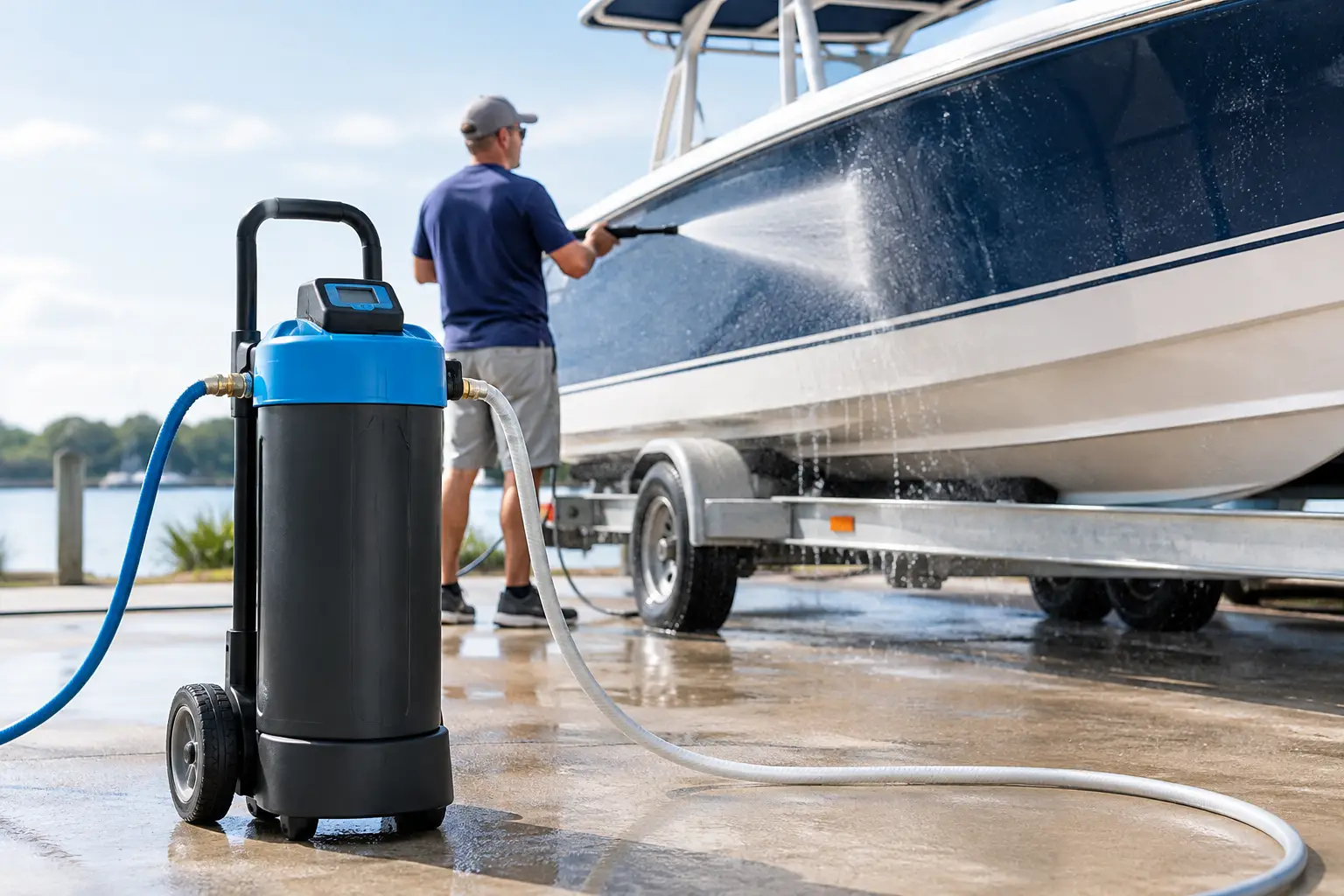
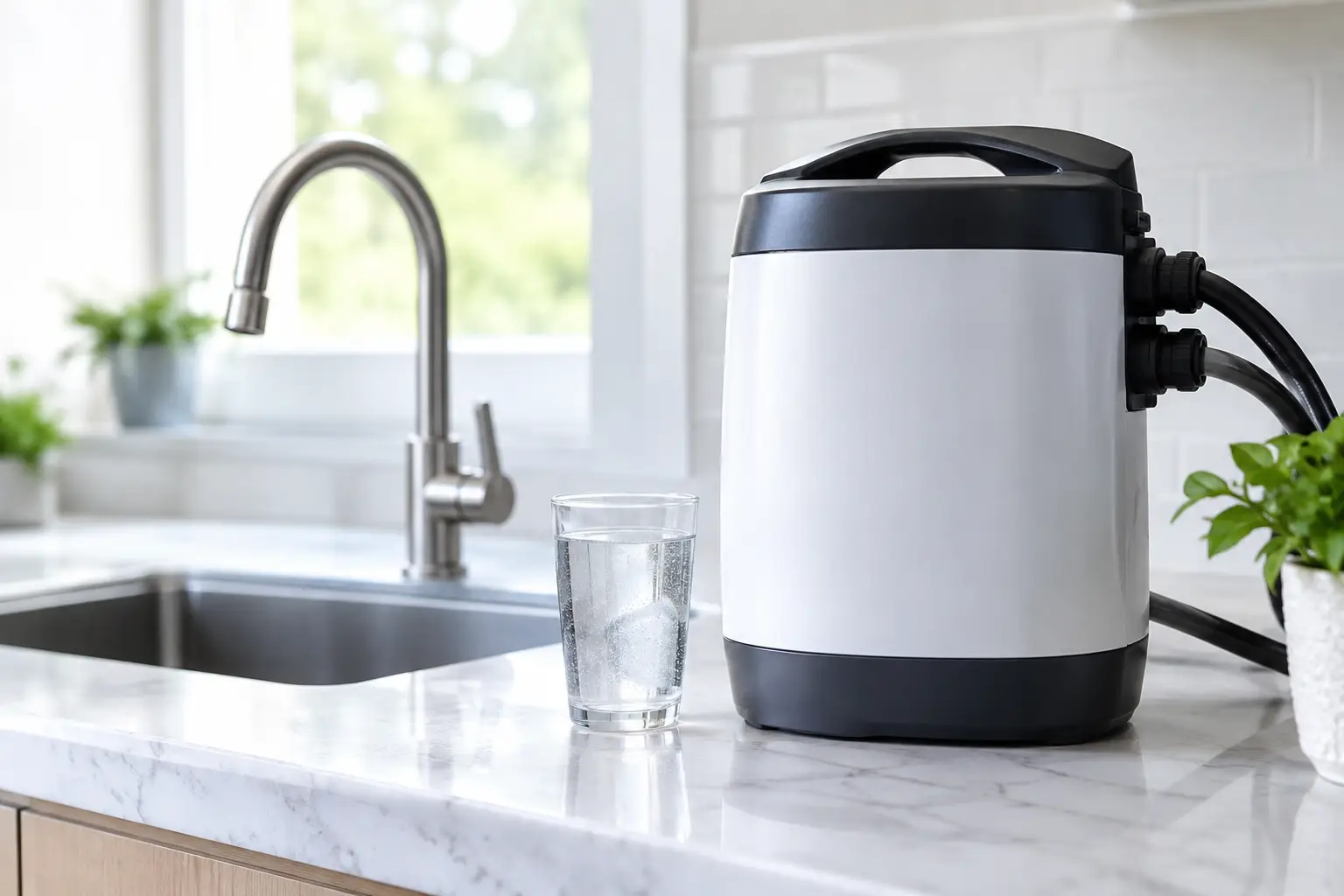
Wet Spot portable systems are built for this exact type of use: soft water where you need it, without an electrical hookup, a permanent installation, or a loss of water pressure. The unit connects to a water supply, conditions the water as you use it, and can be manually recharged when needed. It is a practical setup for marinas, driveways, storage facilities, RV sites, and mobile maintenance work.
Where Soft Water Makes the Biggest Difference
Soft water is especially valuable on surfaces that show every mark. Dark hulls, black trim, tinted glass, polished stainless, and clear enclosure panels can all look poor quickly when hard water dries on them. A soft-water rinse reduces the residue that creates that neglected appearance.
It also pays off in areas owners may not see every day. Shower walls, faucets, washdown lines, water heaters, and appliance components can all collect mineral scale. Using softened water helps keep those systems cleaner and reduces the maintenance burden over the life of the vessel or vehicle.
The right portable unit depends on how much water you use and the size of the asset you are protecting. A small runabout has different demands than a yacht with regular crew washdowns, just as a weekend RV differs from a large motor coach. Choosing capacity for the job helps ensure you have enough softened water between recharges.
How to Reduce Spots During Every Washdown
Start with the water source. If the marina, home, or RV park has hard water, connect your portable softener before washing. This is the step that addresses mineral deposits before they reach the surface.
Wash from the top down so dirt does not travel back onto cleaned areas. Use products appropriate for the material being cleaned, particularly on clear vinyl, non-skid, polished metal, and painted surfaces. Soft water helps soap work more effectively, so you may find that cleaning takes less product and less repeated rinsing.
Rinse thoroughly with softened water. Even with soft water, do not allow dirty soap runoff to sit on the finish. Then dry the remaining water in areas where appearance matters most, using clean towels and light pressure. Soft water reduces the spotting risk, while proper drying delivers the best final presentation.
Afterward, inspect common trouble areas: around deck hardware, window seals, door frames, mirrors, rails, and lower sections where runoff collects. These places often reveal whether the rinse water is leaving mineral residue.
Can Existing Mineral Spots Be Removed?
Often, yes, but the right approach depends on how long the deposits have been present and what surface is affected. Fresh spots may respond to a gentle wash and soft-water rinse. Older deposits may require a cleaner formulated for mineral residue, followed by a thorough rinse.
Use caution with aggressive products. Acidic cleaners can be effective on scale, yet they may not be suitable for every finish, especially clear plastic, certain metals, polished surfaces, and protective coatings. Test a small, inconspicuous area first and follow the care guidance for the material.
If mineral deposits have etched glass, dulled a finish, or become embedded in neglected surfaces, professional correction may be necessary. That is another reason prevention is worth the effort. A portable soft-water system is easier on your finish than repeatedly correcting damage after it appears.
The Practical Standard for Cleaner Results
Water spots are a sign that hard water minerals were left behind. Wiping them away can improve the appearance for the moment, but reducing those minerals before the wash begins is what makes ongoing maintenance easier.
Protect the surfaces you have already invested in. Start every washdown with better water, keep your drying routine simple, and let your boat, RV, vehicle, or aircraft stay clean for longer after the job is done.